
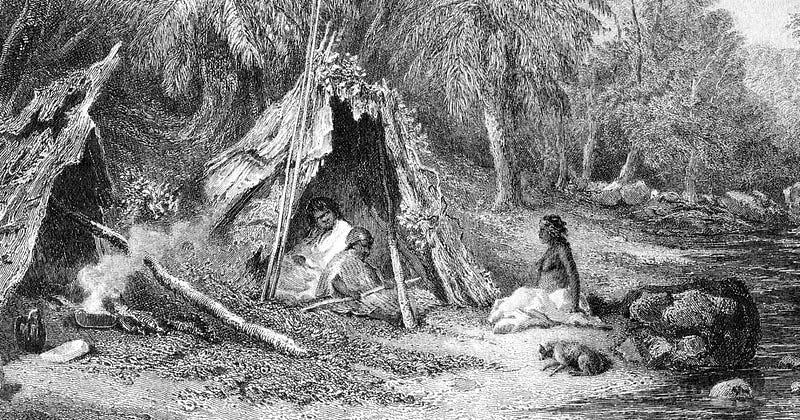
The first architects
‘Gunyah, Goondie and Wurley’ by Paul Memmott, on Indigenous Australian architecture
For someone who has spent most of his career fusing what might be called the sharpish end of digital technology to other things, I’ve paradoxically retained an interest in vernacular architecture and design, which often deploys ancient solutions, refined by age, use and experience. (Ed: Not actually a paradox.)
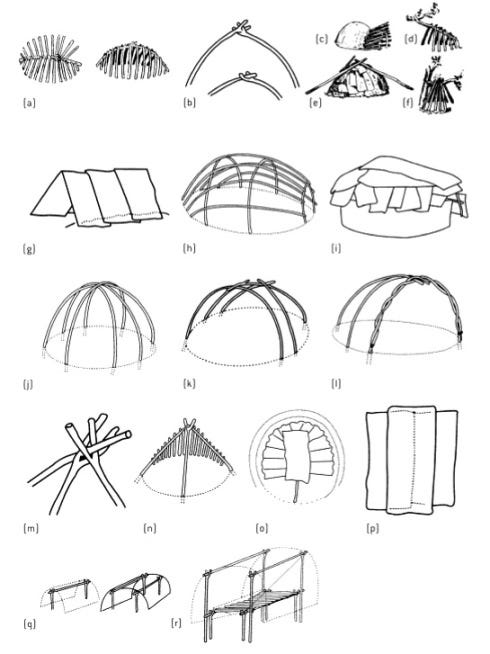
Here in Australia, a relatively new country if an ancient inhabited continent, there are rich vernacular pickings amidst complex histories. Of particular interest are the Queenslander houses seen in Brisbane but also the various architectural strategies and solutions employed by indigenous Australians. This is interesting in part due to the nomadic lifestyle of some indigenous Australians, and therefore related to other transient, portable architecture I’m interested in, and partly due to the inherently ingenious solutions to Australia’s climate and terrain.
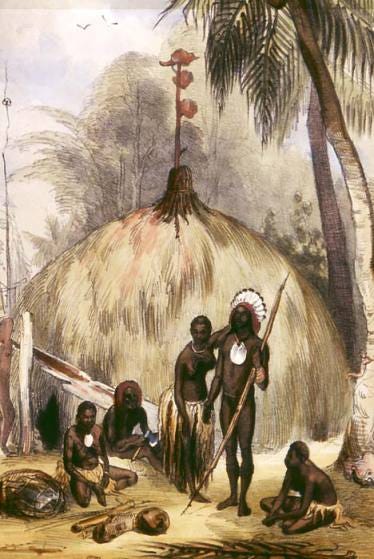
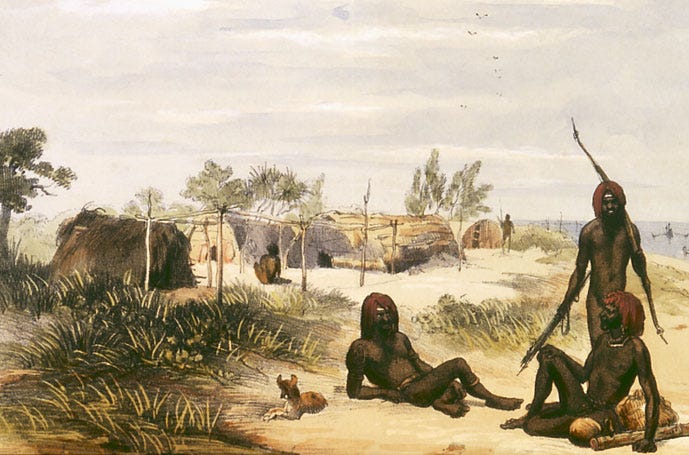
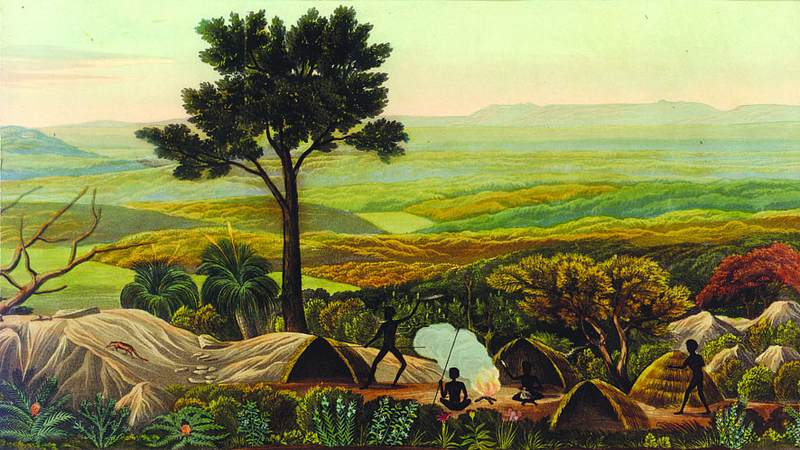
A new book out — Gunyah, Goondie and Wurley, by Paul Memmott, an anthropologist at the University of Queensland’s Aboriginal Environments Research Centre — details the various architecture and design methods that existed before European occupation. (Ed. This piece was originally published at cityofsound.com on October 9th 2007.) Memmott’s book would now seem to be the definitive text on the original Australian architecture. It exposes the idea that ‘Aborigines didn’t build’ as essentially a deliberate and expedient strategy—or rather, lie—conjured up by the typically property-obsessed British invaders to ensure that Australia could be seen, legally, as terra nullis (empty land), and therefore ripe for claiming, clearing and settling. There were in fact numerous kinds of building structures, as varied as the indigenous Australian social structures and the continent’s climate. The nomadic aspects were a way of dealing with extreme climate, as were the forms of architecture, built with varying levels of transience; as such, we might learn a lot from the extreme climates we’re heading into.
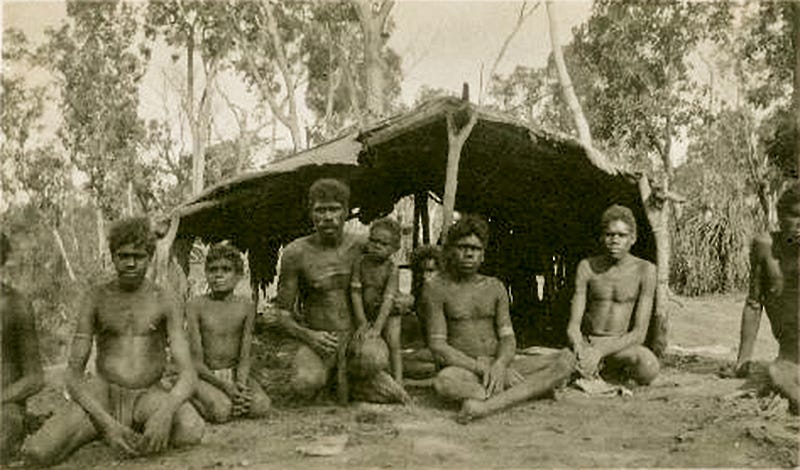
The Sydney Morning Herald has a short article on the book, the architecture, and its sorry obliteration:
“There was a whole range of different shelters built in different styles depending on climate and social factors,” Associate Professor Memmott, who compiled the book over 35 years, said. “There is clear evidence of complex spatial organisation and design based on social rules and structures. It’s additional evidence that the Aboriginal lifestyles were well-organised, which unfortunately still comes as a surprise to people. … Among the most striking designs featured in the book are dome houses that existed in the rainforests of tropical Queensland and northern NSW. The houses were interconnected, allowing clans to interact, and were high enough to stand in, so that the inhabitants could spend extended periods indoors during the wet season. “Winter houses” built around Port Jackson and Warringah in Sydney by the Gai-mariagal people were made using hardwood beams, clay, reeds and animal hides.” … The co-chairwoman of Reconciliation Australia, Jackie Huggins, praised the book for debunking the stereotype of Aborigines being part of a primitive age. “Aboriginal people were among the first architects in the world in terms of ingenuity in providing shelter and accommodation,” Ms Huggins said. [Sydney Morning Herald, 9 October 2007]
Gunyah, Goondie & Wurley: The Aboriginal Architecture of Australia (Penguin Australia / Univ. of Queensland)
Ed. This piece was originally published at cityofsound.com on October 9th 2007.