
The First and the Last Time I Said My Dad “I Love You”
The battle of my dad with pancreatic cancer and how I coped with it

Editorial Note: This story includes a sensitive health condition, and its content may be triggering for some readers.
Why is it sometimes so hard for us to express our own feelings? Not just to anyone but to the people who love us the most and matter the most to us.
I’m sure all well-intentioned people who love us would be very happy if we showed them love and affection. But sometimes we don’t do it anyway. Why? Are we afraid of appearing vulnerable and ‘ruining’ our image as perfectly controlled and composed individuals? What nonsense!
I had recently gotten married and went on a honeymoon to Bali. However, upon my return, I noticed something unusual about my dad.
He was generally healthy and leading a regular life without chronic illnesses. His only problem was varicose (dilated) veins in his lower legs. However, this is a relatively harmless condition, which causes mainly aesthetic problems but usually doesn’t impede the quality of life.
This time, though, the symptoms were different — his left leg was hard and swollen. Concerned about this unusual development, we sent him to the hospital for an examination.
The diagnostic process revealed deep vein thrombosis (DVT), a potentially dangerous condition where a blood clot forms in the veins, with severe consequences if it travels to the heart. The doctors prescribed strict rest and hospitalized him.
While I wasn’t overly worried about my dad, I was glad to see his condition improving. One afternoon, I visited him with my family at the clinical hospital’s vascular surgery department. Everything seemed normal during the visit until I heard something that shocked me.
A Shocking Revelation: The Pancreatic Cancer Diagnosis
My mom’s best friend, who joined us on a visit, tried to discreetly share something with me that my mom shouldn’t hear.
She finally found a perfect moment and quietly revealed, “Your dad is seriously ill,” after a few seconds of shock and silence, she added the keyword — pancreas!
I immediately knew what “pancreas” meant. It means that my dad has pancreatic cancer, the most dangerous and deadly form of all cancer.
I had known several people who suffered from the same disease, and all of them died shortly after diagnosis. In other words, when you are diagnosed with pancreatic cancer, it is a death sentence.
Although I had many questions popping into my mind, that’s all I found out at that time, as my mom’s friend wanted to keep it a secret from my mom, fearing she couldn’t handle the news.
After the hospital visit, eager to gather more information, I immediately called my mom’s friend. Unfortunately, my dark suspicions were confirmed. She mentioned that the cancer was detected through an ultrasound, and the deep vein thrombosis was a symptom of it.
We decided to tell my mom that it was just a cyst requiring surgery. An urgent operation was organized, led by Dr. Branislav Kocman, one of the best abdominal surgeons in Eastern Europe.
He performed the Whipple procedure on my dad, also known as the queen of abdominal surgery. This procedure involves removing half of the stomach, the gallbladder, part of the bile duct, the duodenum, and about half of the pancreas, creating a completely new anatomy in the abdomen.
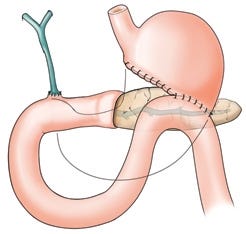
The surgery lasted six hours and was successfully performed. Dr. Kocman said he cleaned up everything he could.
Unfortunately, before the operation, the tumor had already affected several lymph nodes. Although they were removed, it meant that cancer cells had already entered the bloodstream, significantly reducing the chances of survival.
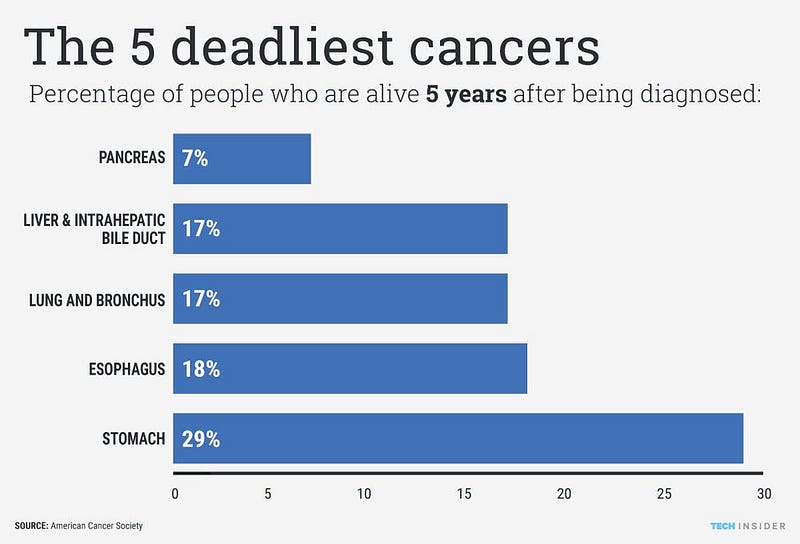
Eventually, my mom and dad found out it wasn’t just a regular cyst. We all became aware that it was pancreatic cancer, the most dreadful of all cancers, with a survival rate of only 7% after 5 years.
Choosing Hope in the Face of Desperation
What treatment to choose in such a hopeless situation?
The fact is that the conventional method of treatment does not yield good results. So, I searched the internet for an alternative solution that could offer hope. That’s when I stumbled upon videos from Rick Simpson, who spoke about the beneficial effects of cannabis in cancer treatment.
In the end, we opted for a combined approach of conventional and alternative medicine, incorporating gemcitabine chemotherapy supported by cannabis oil.
I started growing cannabis in a large tent in my own room and then produced oil from it. I didn’t care that cannabis was illegal; the end justifies the means.
My sole aim was to do the best possible thing for my dad. The oil, as dense as tar, was of excellent quality because I purchased the strongest strains and used the most expensive fertilizers.
Fortunately, I didn’t have to persuade my dad to take a “drug”; he was willing to try anything I recommended, as he had nothing to lose. Fortunately, he possessed a very resilient mindset. In such moments, mindset, as always in life, can play a crucial role.
The Calm Before the Storm: Temporary Improvement
Although gemcitabine is mainly ineffective, the combination of cannabis oil and chemotherapy helped him immensely. His CA 19–9 tumor marker levels dropped by as much as eight times!
Throughout this time, my dad experienced no nausea or pain. The hospital where he received chemotherapy was a 40-minute walk away, and doctors were amazed when he told them he walked there without any transportation.
Despite my parents being conservatives, they saw that the oil was beneficial for him and positively influenced my dad’s recovery. When it ran out, they asked me to produce it again.
Meanwhile, my dad lived quite well over the next two years. He even went on seaside vacations twice and swam regularly.
I consider this a personal success for him, my mom, and me, as all the people with the same diagnosis I heard about didn’t live longer than a few months, enduring unbearable pain.
However, it was just the calm before the storm. The improvement that gave us all hope was only temporary. Over time, my dad lost weight and became weaker, and the CA 19–9 tumor marker levels irreversibly rose. It meant that the tumor was progressing.
His health significantly deteriorated. Although there was a second line of chemotherapy, consisting of a combination of toxic drugs, my dad weakened to the point that doctors believed he couldn’t withstand it.
He walked less and less because he had no strength until one day, he fell at home in the hallway and hit his head. He found himself on the floor, bleeding.
That was the last day he was at home. Emergency services took him to the lung hospital, where the most severe patients were hospitalized. We knew his end was very near.
He lost a lot of weight over time. They gave him oxygen because he was having difficulty breathing. After a few days, communication with him became very difficult, and we expected the worst to happen at any moment.
The Final Act: Saying Goodbye to My Dad
One afternoon, I decided to go to the hospital to see my dad for the last time. Recalling that moment is difficult because tears immediately come to my eyes, just like now.
The hospital porter ushered me to his room. As I entered, I saw four beds with three patients lying down, one of whom was my dad.
The first patient on the left was unconscious and hooked up to life-supporting apparatus. The second, on the right by the entrance, was semi-conscious, occasionally moving with loud, rattling breaths.
Finally, at the end of the room, by the window, there was a bed with my dad connected to oxygen and apparatus.
He lay in a fetal position, with his mouth open like a fish out of water. He was very thin, just skin and bones. He showed no signs of life except for the occasional electronic beep from the apparatus, indicating that he was still alive.
He looked so bad that I was convinced I was seeing him for the last time. After 37 years of shared life and beautiful moments, it was time to say goodbye to the person I loved the most.
I wanted to tell him something I had never said before — that I loved him. But I wasn’t sure if he could hear me.
Supposedly, patients can hear and comprehend even when they don’t show signs of being alive, but my dad was in such a terrible state that I doubted it was possible.
Nevertheless, I decided to proceed. I couldn’t be so foolish as not to say it to the man who loved me wholeheartedly and would do anything for me.
So, I stood by his bed, gathering the strength to say those two final words. I didn’t want anyone to hear me because I dislike appearing vulnerable, so I waited for the patient in the adjacent bed to settle and fall asleep.
After a few minutes, everything was set for the final act, but I still stood there silently, summoning the strength.
I had a huge lump in my stomach mixed with sadness like never before.
Finally, I decided it was time. I brought my face close to his and softly said, “I love you.” It was the first and last time I said it to him.
I felt sorry he couldn’t hear me because I knew how much he cared for me, and I was sure it would have meant a lot to him.
Then I leaned down and kissed him under the eye. Just as my lips touched his skin, I noticed it was wet from a tear rolling down his cheek.
It seemed he did hear and understand me, even though he didn’t move and barely breathed the entire time.
I had finally done something I had held back from doing all my life. I knew how much it would mean to him, yet my pride had prevented me from doing it earlier.
But now, my mission was completed. Pride is such a curse thing that keeps us from connecting better with others and making the world a better place to live for all of us. We sometimes need to set aside our pride and simply do what needs to be done.
Two days later, I was driving to work early in the morning, waiting at a traffic light for it to turn green.
I saw my mom calling. She usually doesn’t call me so early…
Thank you for reading my story.