avatarSimi Press

Summary

In 1958, the Atomic Energy Commission (AEC) attempted to create an artificial harbor in Alaska using nuclear bombs, disregarding the local Iñupiaq community's knowledge and concerns, leading to significant environmental and ethical implications.

Abstract

The article details the true story of Project Chariot, an AEC initiative to detonate nuclear bombs near Point Hope, Alaska, aiming to construct an artificial harbor without practical necessity. The project, supported by politicians and others in Alaska, overlooked the Iñupiaq people's deep understanding of their land and its resources. The local community, who named the AEC scientists "the Firecracker Boys," faced the threat of nuclear material being buried at the proposed site, which leached into local fishing areas. The Iñupiaq's resourcefulness and resistance, including the establishment of the first Native newspaper, The Tundra Times, played a crucial role in halting the project. The narrative draws parallels to the film "Dr. Strangelove," highlighting the arrogance of officials like Edward Teller, who, despite being tasked with safeguarding humanity, pushed for such reckless endeavors. The article suggests that the story of the Firecracker Boys serves as a cautionary tale of environmental disregard and an example of successful Native activism.

Opinions

  • The AEC's Project Chariot is portrayed as a misguided attempt to develop what was perceived as an "enormous wasteland" in Alaska, reflecting a lack of respect for the indigenous community and their ancestral knowledge.
  • The Iñupiaq people's opposition to Project Chariot and their proactive measures to stop it, such as founding The Tundra Times, are seen as a testament to their resourcefulness and determination to protect their land and way of life.
  • The article criticizes the AEC and figures like Edward Teller for their role in proposing and supporting environmentally dangerous projects, drawing a direct comparison to the satirical film "Dr. Strangelove," which caricatures the absurdity of such nuclear ambitions.
  • The author expresses hope in humanity, noting that both the Iñupiaq and other concerned individuals stood up against the project, demonstrating the power of collective resistance.
  • The mention of "The Firecracker Boys" book and its relevance implies that the story is not widely known and that there is a need for more people to be aware of this historical event and its significance in the environmental movement.

The Firecracker Boys

The true story of an attempt to create an artificial harbor in Alaska with a nuclear bomb

Dr. Strangelove or: How I Learned to Stop Worrying and Love the Bomb, directed by Stanley Kubrick | Still from Dr. Strangelove

In 1958, the Atomic Energy Commission tried to explode a series of nuclear bombs right next to the Native community of Point Hope, Alaska to create a huge artificial harbor for no practical reason. Officially named Project Chariot, the idea was that Alaska was an enormous wasteland just waiting to be developed, and the project had support from politicians and others in Anchorage and Fairbanks, without giving wind to the Iñupiaq, who had lived there thousands of years, knew the land, its immense resources and science, and knew better.
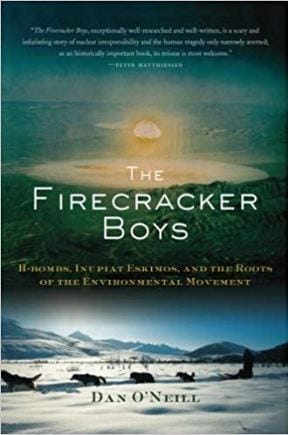
Locals dubbed these scientists “the Firecracker Boys” and it later became a book. In the process of writing it, Dan O’Neill discovered that the AEC had buried nuclear material at the proposed site by Point Hope and just left it there, leaching into the river where everyone fished, when the project was abandoned. The Iñupiaq of Point Hope were, and still are, resourceful. When they did discover the project they banded together to stop it, started the first Native newspaper (The Tundra Times), and the movement grew until there was enough resistance to stop it.

Edward Teller was the brains behind the AEC and Dr. Strangelove was Stanley Kubrick’s caricature of the likes of Teller (Can you see the resemblance?) and the stupidity of those who were supposedly in charge of safeguarding the human race. It’s a good example of white people trying to tell Natives what is good for them and screwing things up. The fact that the movie exists, and that people (not just Iñupiaq) did stand up to stop it, gives me hope in the humans.
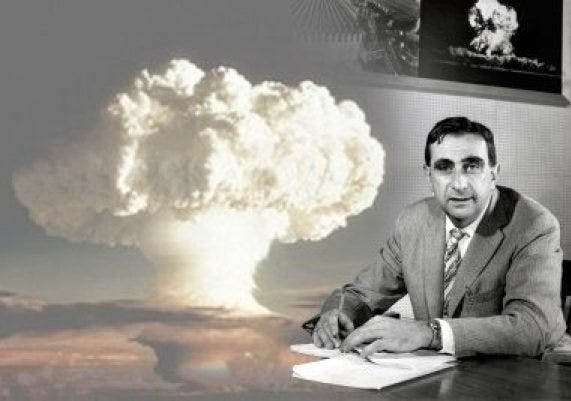
Edward Teller, in 1958, as Director of Lawrence Livermore National Laboratory | File:EdwardTeller1958.jpg licensed with PD-USGov-DO

The Firecracker Boys is published by Basic Books, but it deserves mention here because more people need to read it.

Simian Editions, March 19, 2020

Atomic Bomb
Native Americans
Alaska
Book Review
Alaska Native
Recommended from ReadMedium