
The Female Apostle
Christianity cancelled Junia—but she’s back.
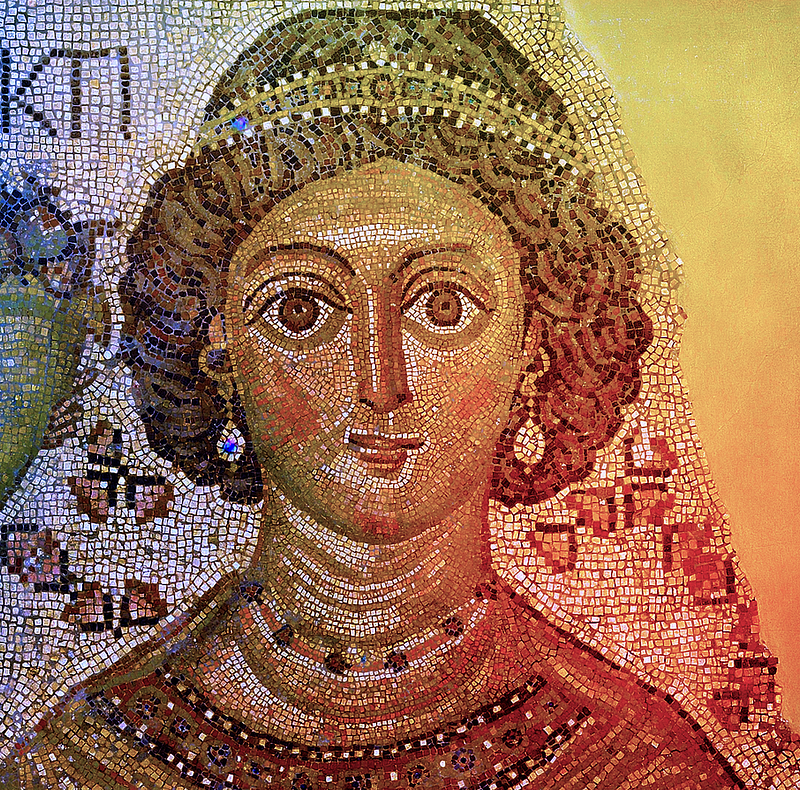
In 1977, Bernadette Brooten was a Ph.D. student at Harvard, studying the New Testament. “At that point, if you were a Catholic woman, you had to become a theologian because you couldn’t become a priest,” she’d say in a 1998 interview. She’d taken up a research project: trying to find a man she didn’t think was there. Christianity said he was there. In Romans 16:7, a ‘Junias’ was “among the apostles.”
But Brooten had noticed Elisabeth Schüssler Fiorenza, the feminist Bible scholar, making a provocative suggestion. This could be a female name. Read a different way, the Latin Iounian could be ‘Junia’.
With some digging, Brooten found some clues this might, in fact, be true.
The name ‘Junias’, for example, was not a Latin name at all, and Christian writers, for the first thousand years of the faith, had called this figure a woman.
“What reasons have commentators given for this change?” she wrote in a paper. “The answer is simple: a woman could not have been an apostle.”
The gender of an old Latin name wouldn’t seem like blockbuster material. And yet, to identify ‘Junia’ as as apostle of a religion committed to exclusively male clergy was—as they say on Twitter—🔥🔥🔥.
I wrote Brooten, trying to put together the story of Junia’s re-emergence.
Did she think this issue could be big?
“A female apostle would definitely rock the boat,” she replies, “which is why there was so much at stake and why scholars insisted with vehemence, but no evidence, that the apostle named in Romans 16:7 was a man.”
In the background was the Catholic controversy over ordaining women. But something bigger began to emerge in the Junia foment. It began to seem possible that Christianity, a millennia into its existence, had changed the Bible to enforce its growing misogyny.
And Bible scholars had rubber-stamped it. Not a great look.
It feels meaningful to me that Junia’s ‘coming out’ coincided with Brooten’s own. She says in 1998: “I came out to myself, as a lesbian, in May 1979 when I fell in love with a woman. From then on I rearranged everything in my identity. I felt I needed to work on the New Testament because that was the principal text that authorities within and outside the Church were using against lesbians and gay men.”
Thinking about Junia’s emergence—in 1977, the year of Anita Bryant’s anti-gay crusade, and the birth of Pride—it did seem she’d manifested as a presiding saint, marking a point at which humans refused to be sex-shamed and sex-changed anymore.
The old translations of Romans 16:7 began to seem like time capsules.
They told the story of a Christianity that associated “goodness” with maleness.
Greet Androni′cus and Ju′nias, my kinsmen and my fellow prisoners; they are men of note among the apostles, and they were in Christ before me. (RSV)
It was a story of male apostles, doing male spirituality, as only males could do.
Evangelical scholars leapt into action—combing the records of the ancient world, intent on proving ‘Junias’ existed.
There were many theories! Perhaps Iounian was a Hebrew name, not Latin at all. Or perhaps ‘Junias’ was a Latin name, though no mentions of it remained. Or maybe — if Junia was a ‘female apostle’, she was a lower kind, not the upper level male apostle. But sadly little evidence.
It was too much even for the NIV, which currently reads:
Greet Andronicus and Junia, my fellow Jews who have been in prison with me. They are outstanding among* the apostles, and they were in Christ before I was.
The asterisk offers a variant reading, a bone thrown to the traditional reader. Junia could be “esteemed by” the apostles.
Point after point, the objections were shot down.
I’m reading the new journal article, “Junia: An Apostle Before Paul” by Yii-Jan Lin. The idea of Junia being “esteemed by the apostles,” she notes, runs into the problem of Paul never caring what other apostles think.
She writes: “Such reliance on human approval contradicts every indicator of Paul’s stance on human judgment.”
But even “esteemed by” was a glaring problem for traditional Christianity—which hadn’t allowed women to speak in public!
Women were imagined, over and over, as ‘fallen’, carnal, seductive.
Feminist Bible scholarship, meanwhile, went on to even bolder suggestions.
Why does Paul, for example, in Galatians 3:28, seem to dismiss sexual biology in that “no male or female” passage. And then, notice, he refers to himself in female terms? He’s a woman in labor (Gal 4:19); he’s breastfeeding a child (1 Thess 2:7), or a weaning mother (1 Cor 3:2).
As Beverly Roberts Gaventa notes in 1995: “Just as we failed to ask about the apostle Junia and the household of Chloe, we failed to notice these astonishing references to the maternity of a male apostle.” Her papers on the theme were gathered into a 2007 book, Our Mother Saint Paul.
It might even seem that femaleness was part of spirituality — part of God. And always had been.
Male Bible scholars began to take on anti-Junia colleagues.
In 2002, Richard Bauckham, in Gospel Women, dismisses the “highly tendentious, even misleading” arguments of prominent Evangelical scholars. In the polite world of Bible scholarship, that kind of talk wasn’t too ladylike.
Then Bauckham proceeds on. In the New Testament, he notes, people often have two names, a Jewish name and a Gentile name. Though ‘Junia’ is only mentioned once, she is well-known, and a Jew. She might be referenced in earlier narratives.
She might be, he suggests. . . Joanna.
And that was also 🔥🔥🔥.
A startling new biography began to open up, going to the heart of Christian imagination.
In the mind’s eye, only men tend to be around Jesus. But actually, in the gospel narratives, there are women all over. When the male disciples flee the crucifixion, “many” women come, as in Matthew 27:55–56.
In what way, one wonders, are the men superior? In showing they were able to run faster?
If one sees women at the crucifixion, one might begin to wonder where they are previously. As Larry Hurtado notes, in thinking about these “many” women, the reader “retroactively inserts them into the whole preceding account of Jesus’ activities.”
There are other references to them.
In Luke 8:1–3, women like Joanna, Susanna and “many others” were “helping to support them out of their own means.” They’re funding the ministry.
Jesus, after all, seems not to work, and he seems to be unable to touch money—which was minted in pagan temples, and bore images of deities. In Matthew 17:24–27, he asks Peter to pay the Temple tax on his behalf.
The rest of the time, it seems, women handle the money. The scene with Peter and money illuminates all the times when the male disciples weren’t handling money. Women were.
To think about the “many” women around Jesus, we get into a suddenly vast realm of possibility. Jesus is the Temple, as the theology goes, and we know one thing about temples. They’re guarded by women. We see them in Exodus 38:8 and 1 Samuel 2:22 — “the women who served at the entrance of the tent of meeting.”
This tells us something about God.
In order to talk to Him, you have to go through a woman. If she doesn’t let you in, you don’t get in.
Susan Ackerman’s 2010 paper, “Mirrors, Drums, and Trees,” excavates the Old Testament references, noting the Hebrew language for these women suggest a military context. They are guards.
The primary guarding the women do is not against human intruders, but against spiritual ones. In Exodus 38:8, these women carry copper mirrors, which seem to function as weapons. As Ackerman details, “any demonic being that might approach the tent of meeting’s entrance would be driven away when confronted with its own horrific reflection.”
In the Bible, to fight evil, you show it what it looks like.
If Junia is Joanna, then we have references spanning decades.
It’s a coherent biography of a woman who was close to Jesus, who supported and protected him, and who attended the crucifixion at great peril. As in Luke 8:3, she’d be a young Jewish woman — “Joanna the wife of Chuza, the manager of Herod’s household” — whom Jesus finds is possessed of “evil spirits and diseases.”
He cures her, and she becomes a follower. Her Hebrew name means ‘YHWH has been gracious’. She may be among the male and female disciples sent out “two by two” in Mark 6:7, to do exorcisms of their own.
If Joanna is Junia, then we have some context for understanding her as being very well known. Being “outstanding among the apostles,” as Bauckham notes, she and the man she is then associated with “must certainly have been leaders of considerable significance among the Roman Christians.”
And it’s possible we know even more about her.
In 1983, an ossuary — or small stone coffin — was found northeast of Jerusalem, apparently, in a small village called Hizma. Such archaeological discoveries are made regularly, but this one had an unusual inscription.
Yehohanah Yehohanah daughter of Yehohanan son of Theophilus the high priest
‘Yehohanah’ is Joanna, and she is the daughter of Yehohanan, or Jonathan, who is the son of Theophilus the high priest.
The details were written up in an archaeological report in 1986. And some New Testament scholars noticed it, and began to think.
The gospel of Luke was written to a “most excellent Theophilus.” Though Christian tradition did not know who this was, many had begun to suspect it might be Theophilus ben Ananus, who had served as High Priest at the Jewish temple from 37 to 41 C.E.
Then Joanna appears in the gospel of Luke.
And she’s Theophilus’ granddaughter? Her father is Jonathan? The name ‘Joanna’, incidentally, is the feminine form of ‘Jonathan’.
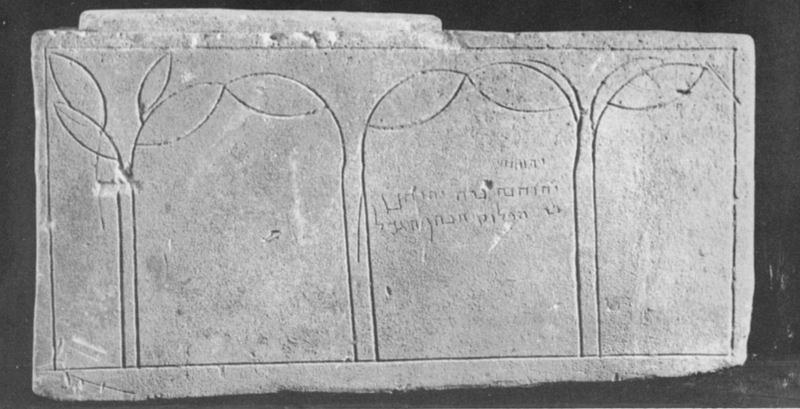
An Evangelical Bible scholar named Richard H. Anderson took up the case in a series of journal articles and a 2011 book, Who are Johanna and Theophilus? He lays out a speculative history as might unfold if Joanna was the granddaughter of the High Priest.
For a Christian man named Luke to write the High Priest begins to look like an effort to communicate the full Jesus story to the Jewish spiritual authority. And Joanna may be making the connections possible.
“The two brief mentions of Johanna in the Gospel of Luke are now seen to have a far greater role than previously recognized,” he writes. “Luke has effectively enlisted Johanna, the granddaughter of Theophilus, the High Priest as one of his witnesses.”
She was the daughter of the most important Jewish family—and was married off to a Roman official.
Her husband was ‘Chuza’, and he was Herod’s manager. Chuza is not a Jewish name. This begins to look like intermarriage, and political marriage to bridge the divide between the Jews and the Roman authority.
Intermarriage was religiously problematic, but the Jews were on the ropes, and intent on keeping the Temple functioning. A daughter of the High Priest’s family was now married to a member of the Roman government.
But while married, Joanna is afflicted by demonic possession. This would have to be embarrassing, if not seen as a violation of Jewish law and grounds for capital punishment. Her family was sacred! And they can’t help her? One might imagine the talk. A demon-afflicted daughter.
But then…Jesus can help her?
In being helped by him, it’s possible she is now even more of a problem to her family because Jesus and the Jewish authorities are not on such great terms.
And a daughter of the High Priest’s family becomes a woman “serving” at a new temple that Jesus represents? She is opposing her own family in supporting him, and yet perhaps also trying to convince them of Jesus’ worth — working on them.
She is married to Herod’s manager, and in Luke 9:9 and 23:8, Herod had heard a great deal about Jesus. She might be helping with that.
She may be sitting next to Luke, filling him in on what happened. His narratives may be, substantially, the story she is telling.
And I suddenly wonder if the “esteeming” in Romans 16:7 was being done by Christ himself.
What became of Junia/Joanna after Romans 16?
If she was buried outside of Jerusalem, perhaps she went back there. Interestingly, the 1986 scholarly report on the ossuary observes her name was engraved in a rough style, then below it, later, were added the two additional lines “in beautiful formal style, mentioning her father and grandfather.”
Does that tell a story? As her name was listed alone, the archaeologists surmise she was unmarried, and “probably not buried in the tomb of her family, for reasons which elude us.”
Maybe, as a Christian, she was a shame to her Jewish family? She had found a new Christian family. Maybe, in the end, she went back to Jerusalem to try to tell them, the last time, the ‘good news’.
I think of the Bible as laying out a vast set of possibilities.
And, you might think, that’s God telling you your life is one as well.