avatarEsh

Free AI web copilot to create summaries, insights and extended knowledge, download it at here

4893

Abstract

to die.”</p></blockquote><p id="dbb9">Why was Lucy in such pain? According to the records, Lucy underwent an hour-long operation, without anesthesia. Further, during the surgery, the father of gynecology deliberately left a sponge in her bladder, which turned dangerously infected.</p><h1 id="97e5">Sims used a bent spoon on Betsey</h1><figure id="76db"><img src="https://cdn-images-1.readmedium.com/v2/resize:fit:800/0*8l9TDONPTjPvKpfS"><figcaption>Source: <a href="https://commons.wikimedia.org/wiki/File:Sims.Speculum.jpg">Wikimedia Commons</a> / <a href="https://commons.wikimedia.org/wiki/File:Sims.Speculum.jpg">Public Domain</a></figcaption></figure><p id="5d13">Once a white patient visited Sims’s hospital who fell off a horse and developed a prolapsed uterus.</p><p id="913c">Fixing the ailment soon, Sims discharged her and continued deep research of that very problem. Taking inspiration from the injury of a white patient, Sims turned toward an enslaved black woman, Betsy.</p><p id="338e">An idea struck his mind: a bent handle of a pewter spoon could diagnose medical problems well. During the experiments on Betsey, Sims invented the <a href="https://www.history.com/news/the-father-of-modern-gynecology-performed-shocking-experiments-on-slaves">vaginal speculum</a> — an important tool gynecologists use today.</p><h1 id="bfb9">Anarcha and her unhealed stitches</h1><p id="9498">After Betsey, Anarcha, a 17-year old, underwent 30 painful operations for four years — and those too without painkillers.</p><p id="1daa">Note that all the while, Sims did not perfectly know how to<a href="https://www.brown.edu/initiatives/slavery-and-justice/sites/brown.edu.initiatives.slavery-and-justice/files/uploads/Introducing%20the%20Speculum%20II.pdf"> close the surgical cuts </a>after the procedures. Sadly, it took 30 operations of Anarcha before he mastered the technique.</p><p id="029c">For years, his patients relied on heavy opium doses, which induced constipation after the surgery — an only process to give time for stitches to heal.</p><p id="2f81">A chill runs down the spine about considering those 30 instances when Anarcha had to consume opium, suffer constipation and wait for the stitches to get healed.</p><h1 id="e0b1">How the medical profession for long praised Sims?</h1><p id="a536">What’s excruciating here is how the medical profession, for decades, had only praised Sims for the research, even while knowing the ethical problems it carried.</p><p id="611c">It was not until after the Civil Rights Movement that the<a href="https://www.brown.edu/initiatives/slavery-and-justice/sites/brown.edu.initiatives.slavery-and-justice/files/uploads/Introducing%20the%20Speculum%20II.pdf"> first critique of Sims’s work surfaced.</a></p><p id="9acc">American <i>Journal of Obstetrics & Gynecology <a href="https://www.bestrandoms.com/get-random-complicated-history-of-quot-father-of-gynecology-quot-j-marion-sims?sort=rank">wrote in 1978:</a></i></p><blockquote id="e088"><p>[Sims’s] original three subjects might never have tolerated the pain and misery of the repeated operations had they not been slaves. In the long run, they had reason to be grateful to Sims.</p></blockquote><h1 id="06b0">What’s at the heart of the issue?</h1><p id="abca">Sims<a href="https://www.dailymail.co.uk/health/article-5626269/New-York-removes-statue-doctor-experimented-black-women-without-anesthesia.html"> intentionally denied anesthesia </a>to black patients and used it on white women. Sims’s defenders contest how doctors preferred operations on awake patients.</p><p id="640d">Well, is that even the question of preference? If yes, then selecting the option better suits the patients or subjects rather than doctors or researchers.</p><p id="df0f">Several of Sims’s critics point out how for perfecting his techniques Sims used white subjects but <a href="https://columbiaandslavery.columbia.edu/content/sims-invents-speculum-i-invent-wincing">with anesthesia.</a></p><p id="f48d">The most agreed upon reason which lies behind Sims denying anesthesia to black goes back to his own racial ideology — where black people didn’t feel pain as strongly as the white does. Like, really?</p><h1 id="09b8">Sims wrote his patients consented, but there is a catch</h1><p id="f031">What’s interesting about Sims’s research was the idea of consent that went in there. Dr. Sims stated, ‘My patients are all perfectly satisfied with what I am doing for them.’</p><p id="ddb2">Sims, through his writings, highlighted how he only experimented on those who consented, but the catch was the legal system of that time, where slaves owned no power to withhold consent.</p><p id="b4e0">The idea didn’t apply to them, and it all boiled down to the consent of their owner. If they wanted them to undergo surgery to produce more slaves for them, they had no choice. It was not as simple as stating yes or

Options

no — sadly, binary never existed for slaves.</p><h1 id="fc99">An awful dominant racist belief of his era forced him to experiment on black enslaved children</h1><p id="1a29">History cannot let people escape Sims’s strong and ugly racial ideology, which not only gets hunted through enslaved women but also enslaved children.</p><p id="396d">Back then, an odd racial belief existed where black people were thought to possess n<a href="http://www.who.int/immunization/monitoring_surveillance/burden/vpd/surveillance_type/active/neonatal_tetanus/en/">eonatal tetanus</a> — having<a href="https://pubmed.ncbi.nlm.nih.gov/18605326/"> tight skulls </a>that make them less intelligent than white people. Indeed, a disgusting belief.</p><p id="ec4c">Sims used shoemaker tools to “loosen” the bones in the skulls of black children. He failed. He had to fail as no such ailment existed but what existed was his conviction: blacks were inferior to white.</p><h1 id="348e">Rethinking of his Monument</h1><figure id="61dc"><img src="https://cdn-images-1.readmedium.com/v2/resize:fit:800/0*2RdQfV6KRWupt6gQ"><figcaption>Source: <a href="https://commons.wikimedia.org/wiki/File:Jmarionsimsjeh.JPG">Wikimedia Commons</a></figcaption></figure><p id="ad9b">Reflecting on the complicated history of the father of gynecology, New York City, in 2018 decided to take down his statue. On 1 April 2018, New York City removed a <a href="https://www.theguardian.com/artanddesign/2018/apr/21/j-marion-sims-statue-removed-new-york-city-black-women">Central Park statue</a> that honored J. Marion Sims.</p><p id="2c17">Manhattan’s Deputy Borough President Matthew S. Washington <a href="https://www.theguardian.com/artanddesign/2018/apr/21/j-marion-sims-statue-removed-new-york-city-black-women">remarked:</a> “To hail Sims as a hero was inappropriate and out of bounds.”</p><p id="1ad0">The statue got <a href="https://www.theatlantic.com/health/archive/2018/04/j-marion-sims/558248/">relocated</a> where it should be, near Sims’s burial — well, yes, there should not have been the statue made in the first place, but better late than never.</p><p id="ce6c">This topic leaves us with a thought: how do we actually memorialize the legacy of someone who rolled out a great deal of knowledge that our generations will continue to benefit from.</p><p id="3251">Should we forget that the basis of such contribution stood on the brutal conducted research? Clearly, we shouldn't.</p><p id="debd">More from the author:</p><div id="6871" class="link-block"> <a href="https://readmedium.com/19th-centurys-shocking-newspaper-ads-for-slaves-will-infuriate-you-7a4dde3303e2"> <div> <div> <h2>19th Century’s Shocking Newspaper Ads for Slaves Will Infuriate You</h2> <div><h3>Utterly bizarre ads reveal several untold stories.</h3></div> <div><p>medium.com</p></div> </div> <div> <div style="background-image: url(https://miro.readmedium.com/v2/resize:fit:320/0*WoNU4ukvMXq18y22.png)"></div> </div> </div> </a> </div><div id="0e1f" class="link-block"> <a href="https://readmedium.com/what-does-the-british-royal-family-actually-do-f651d683665a"> <div> <div> <h2>What Does The British Royal Family Actually Do?</h2> <div><h3>10 fascinating duties a royal family performs for the world.</h3></div> <div><p>medium.com</p></div> </div> <div> <div style="background-image: url(https://miro.readmedium.com/v2/resize:fit:320/0*vfr8gejGApv3xEvU.jpg)"></div> </div> </div> </a> </div><div id="effc" class="link-block"> <a href="https://readmedium.com/11-weirdest-royal-family-rules-5ffe1724f786"> <div> <div> <h2>11 Weirdest Royal Family Rules</h2> <div><h3>From strange eating restrictions to odd dressing traditions.</h3></div> <div><p>medium.com</p></div> </div> <div> <div style="background-image: url(https://miro.readmedium.com/v2/resize:fit:320/0*0eCtV6Tt0S3nayNs.jpg)"></div> </div> </div> </a> </div><p id="9b24">References:</p><blockquote id="29a2"><p><a href="https://en.wikipedia.org/wiki/J._Marion_Sims">https://en.wikipedia.org/wiki/J._Marion_Sims</a></p></blockquote><blockquote id="5f24"><p><a href="https://www.usatoday.com/story/news/factcheck/2020/06/19/fact-check-j-marion-sims-did-medical-experiments-black-female-slaves/3202541001/">https://www.usatoday.com/story/news/factcheck/2020/06/19/fact-check-j-marion-sims-did-medical-experiments-black-female-slaves/3202541001/</a></p></blockquote></article></body>

The “Father of Gynecology” Did Chilling Experiments on Enslaved Black Women

J. Marion Sim’s statue was taken down in 2018, because of his racial medical exploitation.
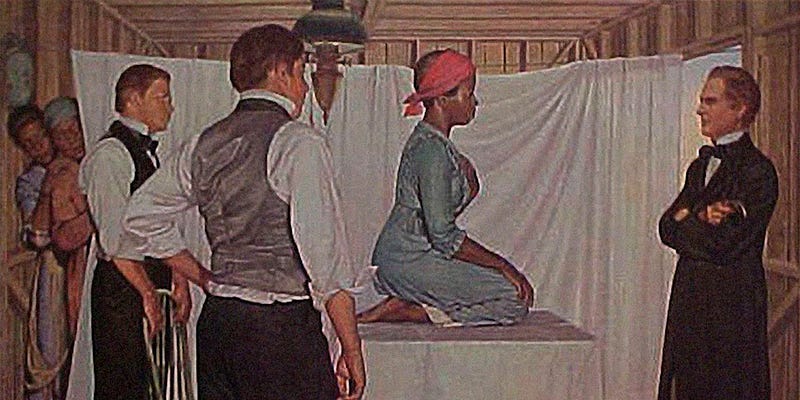
Source:today.com

Today modern doctors cannot perform any act that goes against medical ethics outlined last century.

This leaves us to assess the reputations of the earlier doctors who may or may not have violated today’s ethical standards. One of such names that fall under the violators includes the “Father of Gynecology”, J. Marion Sims.

The person who performed groundbreaking research experimented on black enslaved women — that too without anesthesia.

Sims’s horrifically painful research includes a woman screaming for an hour while the other woman getting operated on 30 times.

Such instances cumulatively earned him the title of “Father of Modern Gynecology”, making the way for his statues to sprawl in several states across. Sadly, the statues sparkle only one “acclaimed” side of this historical figure.

If we disregard Sims’s practices by labeling them the product of time, we ignore the horrors of enslaved women. Let’s dive deeper into Sims’s racial ideology and the suffering it caused:

Contributions of J. Marion Sims
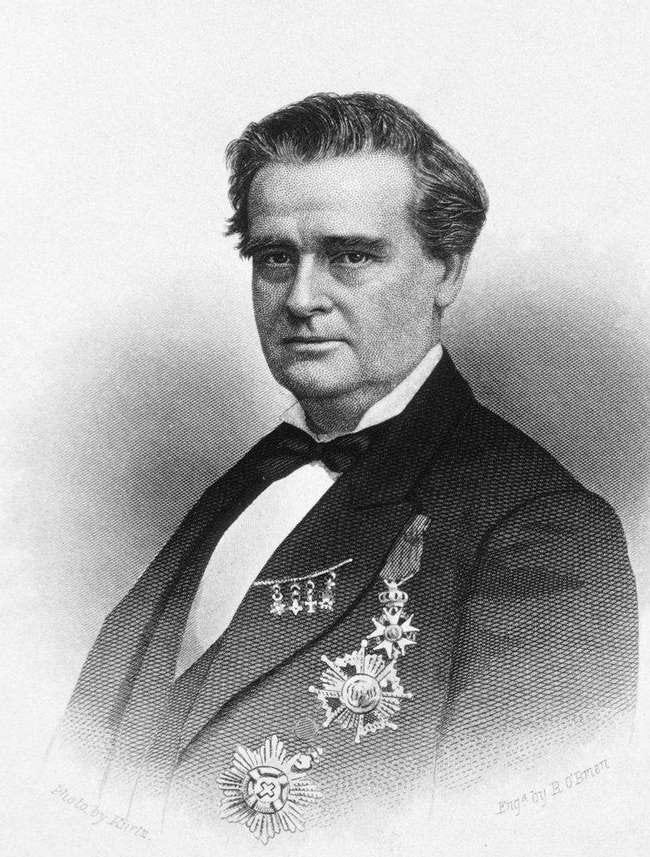
Source: Wikimedia Commons

Opening eyes in South Carolina, J. Marion Sims graced the world in 1813. His several sterling contributions secured him a respected reputation: From initiating the world’s first women hospital in history to inventing speculum, publishing the first gynecological surgery book to earning the title of “Father of Modern Gynecology” and serving as president of the American Medical association to enjoying the post of empress’s doctor.

History remembers it all. But, history also reflects the unacceptable measures that went into such contributions.

From the late 20th century, several historians and medical professionals who studied him began raising questions regarding Sims’s ethics. These experiments compelled enslaved black women to go under the knife without anesthesia, even when it was widely available.

Sims’s documentation and sufferings of Lucy, Betsey, and Anarcha
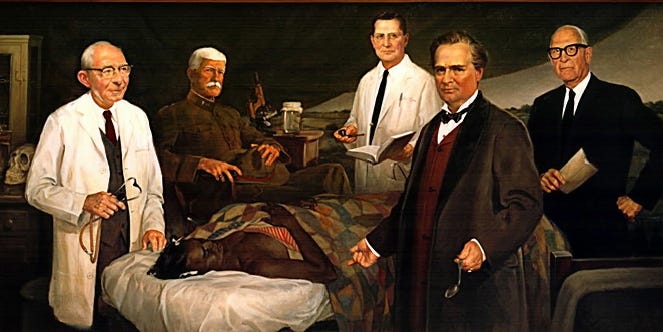
Source:mwmblog.com

The documentation of Sims’s experiments is hard to digest. No sane person can read the writings without pointing fingers at Sims’s monstrous actions.

The readings reflect how several screams of enslaved women went unheard. They did screams, but for everyone, who witnessed their horrors, the ladies were voiceless.

History only possesses the record of three names that must be accredited, like Sims, to make groundbreaking research in gynecology possible. We know the three enslaved women to be: Lucy, Anarcha, and Betsey.

Lucy wailed for an hour during the operation

One of the first surgical cases he took up was an enslaved girl named Lucy, who was only eighteen. He wrote:

That was before the days of anesthetics, and the poor girl [Lucy], on her knees, bore the operation with great heroism and bravery. I had about a dozen doctors there to witness the series of experiments I expected to perform… At the end of five days [Lucy] was very ill. She had a fever, frequent pulse, and real blood-poisoning, but we did not know what to call it at that day and time.. . . “Lucy’s agony was extreme… I thought she was going to die.”

Why was Lucy in such pain? According to the records, Lucy underwent an hour-long operation, without anesthesia. Further, during the surgery, the father of gynecology deliberately left a sponge in her bladder, which turned dangerously infected.

Sims used a bent spoon on Betsey
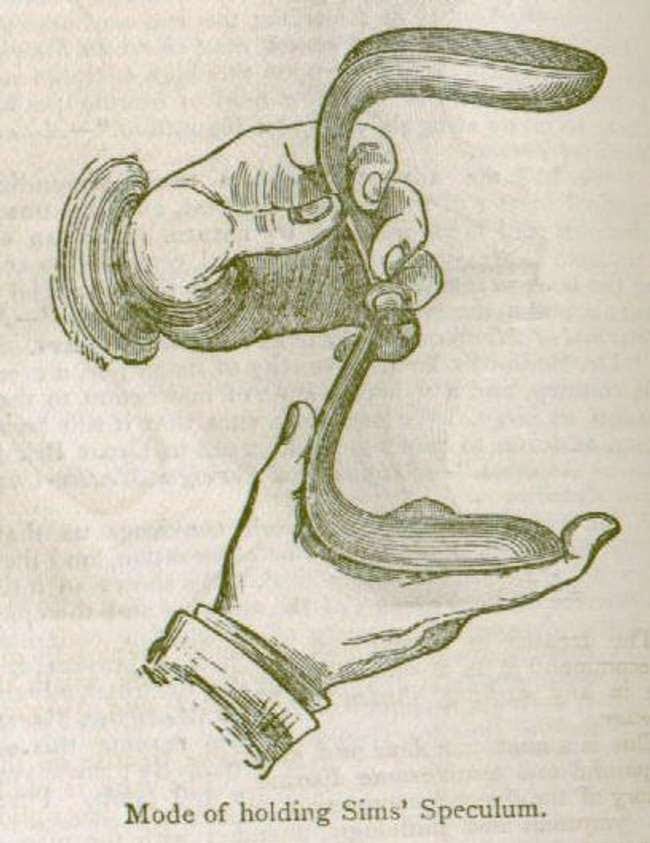
Source: Wikimedia Commons / Public Domain

Once a white patient visited Sims’s hospital who fell off a horse and developed a prolapsed uterus.

Fixing the ailment soon, Sims discharged her and continued deep research of that very problem. Taking inspiration from the injury of a white patient, Sims turned toward an enslaved black woman, Betsy.

An idea struck his mind: a bent handle of a pewter spoon could diagnose medical problems well. During the experiments on Betsey, Sims invented the vaginal speculum — an important tool gynecologists use today.

Anarcha and her unhealed stitches

After Betsey, Anarcha, a 17-year old, underwent 30 painful operations for four years — and those too without painkillers.

Note that all the while, Sims did not perfectly know how to close the surgical cuts after the procedures. Sadly, it took 30 operations of Anarcha before he mastered the technique.

For years, his patients relied on heavy opium doses, which induced constipation after the surgery — an only process to give time for stitches to heal.

A chill runs down the spine about considering those 30 instances when Anarcha had to consume opium, suffer constipation and wait for the stitches to get healed.

How the medical profession for long praised Sims?

What’s excruciating here is how the medical profession, for decades, had only praised Sims for the research, even while knowing the ethical problems it carried.

It was not until after the Civil Rights Movement that the first critique of Sims’s work surfaced.

American Journal of Obstetrics & Gynecology wrote in 1978:

[Sims’s] original three subjects might never have tolerated the pain and misery of the repeated operations had they not been slaves. In the long run, they had reason to be grateful to Sims.

What’s at the heart of the issue?

Sims intentionally denied anesthesia to black patients and used it on white women. Sims’s defenders contest how doctors preferred operations on awake patients.

Well, is that even the question of preference? If yes, then selecting the option better suits the patients or subjects rather than doctors or researchers.

Several of Sims’s critics point out how for perfecting his techniques Sims used white subjects but with anesthesia.

The most agreed upon reason which lies behind Sims denying anesthesia to black goes back to his own racial ideology — where black people didn’t feel pain as strongly as the white does. Like, really?

Sims wrote his patients consented, but there is a catch

What’s interesting about Sims’s research was the idea of consent that went in there. Dr. Sims stated, ‘My patients are all perfectly satisfied with what I am doing for them.’

Sims, through his writings, highlighted how he only experimented on those who consented, but the catch was the legal system of that time, where slaves owned no power to withhold consent.

The idea didn’t apply to them, and it all boiled down to the consent of their owner. If they wanted them to undergo surgery to produce more slaves for them, they had no choice. It was not as simple as stating yes or no — sadly, binary never existed for slaves.

An awful dominant racist belief of his era forced him to experiment on black enslaved children

History cannot let people escape Sims’s strong and ugly racial ideology, which not only gets hunted through enslaved women but also enslaved children.

Back then, an odd racial belief existed where black people were thought to possess neonatal tetanus — having tight skulls that make them less intelligent than white people. Indeed, a disgusting belief.

Sims used shoemaker tools to “loosen” the bones in the skulls of black children. He failed. He had to fail as no such ailment existed but what existed was his conviction: blacks were inferior to white.

Rethinking of his Monument
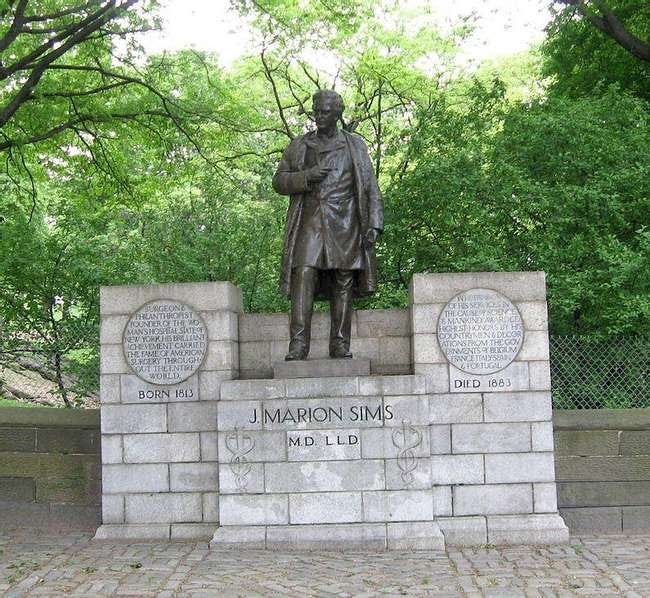
Source: Wikimedia Commons

Reflecting on the complicated history of the father of gynecology, New York City, in 2018 decided to take down his statue. On 1 April 2018, New York City removed a Central Park statue that honored J. Marion Sims.

Manhattan’s Deputy Borough President Matthew S. Washington remarked: “To hail Sims as a hero was inappropriate and out of bounds.”

The statue got relocated where it should be, near Sims’s burial — well, yes, there should not have been the statue made in the first place, but better late than never.

This topic leaves us with a thought: how do we actually memorialize the legacy of someone who rolled out a great deal of knowledge that our generations will continue to benefit from.

Should we forget that the basis of such contribution stood on the brutal conducted research? Clearly, we shouldn't.

More from the author:

References:

https://en.wikipedia.org/wiki/J._Marion_Sims

https://www.usatoday.com/story/news/factcheck/2020/06/19/fact-check-j-marion-sims-did-medical-experiments-black-female-slaves/3202541001/

Science
Education
Culture
Racism
History
Recommended from ReadMedium