
The Fastest Way I Make Money with Python 3 Web Scraping
So, if you’re feeling stuck in your job search or tired of the same old side hustles, give web scraping a try.

Hey there! Today I want to share my journey on how I made money with web scraping in Python. As a broke college student, I was always looking for ways to make extra cash, and that’s when I stumbled upon web scraping. It’s a fun and lucrative way to earn some extra dough, and I’m here to show you how to do it too!
🤑 The Struggle is Real: Why Web Scraping is the Answer
Let’s face it, we’ve all been there — scrolling through endless job postings on LinkedIn, only to find out they require years of experience or an advanced degree.
Or maybe you’re tired of the same old side hustles like selling your clothes online or driving for Uber.
Well, I have good news for you — web scraping is a low-cost and accessible way to make money online.
With web scraping, you can extract valuable data from websites and use it to your advantage. Whether it’s finding deals on products, tracking prices, or analyzing trends, the possibilities are endless.
Plus, you can do it all from the comfort of your own home (or dorm room, in my case)!
👨💻 Getting Started: The Basics of Web Scraping in Python
Before we dive into the nitty-gritty, let’s go over the basics of web scraping in Python.
In a nutshell, web scraping involves extracting data from websites using code. Python is a popular programming language for web scraping due to its simplicity and ease of use.
To get started, you’ll need a few things:
- Python installed on your computer
- A text editor or IDE (I recommend using Visual Studio Code or PyCharm)
- A web scraping framework (we’ll cover some popular ones later)
Once you have everything set up, you can start writing your code.
Here’s a simple example of how to scrape data from a website using Python:
import requests
from bs4 import BeautifulSoup

url = 'https://www.example.com'
response = requests.get(url)
soup = BeautifulSoup(response.content, 'html.parser')
title = soup.find('title')
print(title.text)
This code uses the requests library to send a GET request to the website, and the BeautifulSoup library to parse the HTML and extract the title tag. As you can see, it's not too complicated!
📈 Making Money with Web Scraping: Real-Life Examples
So, you’ve learned the basics and found some data to scrape — but how can you actually make money with web scraping? Here are some real-life examples:
Price Tracking: Use web scraping to monitor prices of products on e-commerce websites like Amazon or eBay.
You can then resell the products at a higher price, or use the information to inform your own purchasing decisions.
Lead Gen: Use web scraping to collect email addresses or contact information from websites related to your business or industry. You can then use this data for targeted marketing or sales campaigns.

💻 Code Snippets: Examples of Web Scraping in Python
Here are some code snippets to give you a better idea of how web scraping works in Python using the Beautiful Soup framework:
Extracting text from a website:
import requests
from bs4 import BeautifulSoup

url = 'https://www.example.com'
response = requests.get(url)
soup = BeautifulSoup(response.content, 'html.parser')
text = soup.get_text()
print(text)
Extracting links from a website:
import requests
from bs4 import BeautifulSoup

url = 'https://www.example.com'
response = requests.get(url)
soup = BeautifulSoup(response.content, 'html.parser')
links = [link.get('href') for link in soup.find_all('a')]
print(links)
Extracting data from a table on a website:
import requests
from bs4 import BeautifulSoup

url = 'https://www.example.com'
response = requests.get(url)
soup = BeautifulSoup(response.content, 'html.parser')
table = soup.find('table')
headers = [header.get_text() for header in table.find_all('th')]
rows = []
for row in table.find_all('tr'):
    rows.append([data.get_text() for data in row.find_all('td')])
print(headers)
print(rows)
🌟 Popular Web Scraping Frameworks: Which One Should You Use?
There are several web scraping frameworks available in Python, each with its own strengths and weaknesses.
Here are some of the most popular ones:
FrameworkDescriptionData You Can ScrapeBeautiful SoupA Python library for pulling data out of HTML and XML filesText, links, images, tables, formsScrapyAn open-source and collaborative web crawling frameworkStructured data, images, documentsSeleniumA web testing framework that can also be used for web scrapingDynamic content, JavaScript, AJAX
For beginners, I recommend starting with Beautiful Soup. It’s easy to use and has a gentle learning curve.
Scrapy is a more advanced framework that requires some programming experience, but it’s great for more complex projects.
Selenium is best for scraping dynamic websites that require user interaction.

🔎 Finding Data to Scrape: Tips and Tricks
Now that you know the basics and have chosen a framework, it’s time to find some data to scrape.
Here are some tips and tricks to get you started:
- Choose a website with a clear structure and consistent layout
- Look for websites with publicly available data (e.g. government websites,
- Start with small projects and gradually work your way up to more complex ones
- Be respectful of website owners and follow ethical scraping practices (e.g. don’t overload their servers with requests)
📊 Framework Comparison: What Data Can You Scrape?
Here’s a comparison table to show what kind of data you can scrape with each framework:
FrameworkData You Can ScrapeBeautiful SoupText, links, images, tables, formsScrapyStructured data, images, documentsSeleniumDynamic content, JavaScript, AJAX
As you can see, each framework has its own strengths when it comes to scraping data.
Beautiful Soup is great for extracting text and links, while Scrapy is better suited for more complex projects that require structured data.
Selenium is best for scraping dynamic websites that require user interaction.
👨💻 Web Scraping is a Valuable Skill to Have

🤔 Ethical Considerations: How to Scrape Responsibly
While web scraping can be a lucrative way to make money, it’s important to do it responsibly and ethically. Here are some tips to keep in mind:
- Always check a website’s terms of service to see if web scraping is allowed
- Don’t overload a website’s servers with requests — be respectful of their bandwidth and resources
- Don’t scrape personal information or sensitive data
- Always give credit to the website or source of the data you scrape
By following these guidelines, you can ensure that your web scraping activities are legal and ethical.
💰Web Scraping is the Ultimate Side Hustle
Web scraping is a fun and accessible way to make money online. With Python and a web scraping framework, you can extract valuable data from websites and use it to your advantage. Whether you’re looking to start a side hustle or just earn some extra cash, web scraping is definitely worth exploring.
Section 3: “Creating Python Tools and Libraries”
Another way to make money with Python is by creating your own tools and libraries. If you have an idea for a tool that could help other programmers, you can create it and sell it on platforms like Gumroad or GitHub. This is a great way to earn passive income, as once you’ve created the tool, you can continue to sell it without putting in additional work.
Creating libraries is another option. If you’ve created a useful library that other developers could use, you can offer it for free or charge a small fee. This can help establish you as an expert in your field and bring in some extra income.
Section 4: “Frequently Asked Questions”
Q: Is it necessary to have a computer science degree to make money with Python?
A: No, a degree is not necessary. Many successful Python developers are self-taught.
Q: How much money can I make as a Python developer?
A: It depends on your skill level and experience. Entry-level developers can make around $70,000 a year, while more experienced developers can make over $120,000.
Q: What are the best resources for learning Python?
A: There are many great resources out there for learning Python, including Codecademy, Udemy, and the official Python website.
In conclusion, I believe that Python is an excellent language for making money. Whether you’re freelancing, creating your own tools and libraries, or working for a company, there are many opportunities to earn a good income with Python. I think the key is to find something that you enjoy doing and focus on becoming an expert in that area. This is what I would do if I were starting out today.
Of course, like any skill, it takes time and effort to become proficient in Python. But with the right mindset and dedication, it’s definitely possible to make a good living with this language.
That being said, it’s important to remember that making money with Python isn’t a guarantee. It takes hard work, dedication, and a bit of luck to succeed. So don’t expect to get rich overnight. But if you’re willing to put in the effort, the rewards can be substantial.
In my experience, the key to making money with Python is to stay up-to-date with the latest trends and technologies. Keep learning new skills and stay engaged with the Python community. Attend meetups and conferences, and participate in online forums and discussions. This will help you stay on top of new opportunities and make connections that can lead to more work.
At the end of the day, Python is just a tool. It’s up to you to use it in creative and innovative ways to solve problems and make money. So go out there and start experimenting with this amazing language. Who knows, you might just discover the next big thing in Python development!
In addition to the tips I’ve already mentioned, there are a few other things to keep in mind when trying to make money with Python. First, don’t be afraid to specialize. Instead of trying to be a jack-of-all-trades, focus on a specific area of Python development, such as web development or data analysis. This will help you become an expert in your field and make it easier to find work.
Second, don’t be afraid to ask for help. Whether you’re struggling with a particular problem or just need some advice, the Python community is incredibly helpful and supportive. So don’t be afraid to reach out to others and ask for their input.
Finally, be patient. Making money with Python takes time, and you’re bound to encounter setbacks and challenges along the way. But if you stay committed and keep pushing forward, you’ll eventually reach your goals.
In conclusion, Python is an incredibly powerful and versatile language that can be used to make money in a variety of ways. Whether you’re freelancing, creating your own tools and libraries, or working for a company, there are many opportunities to earn a good income with Python. But it takes hard work, dedication, and a willingness to learn and grow. So if you’re up for the challenge, give Python a try and see where it takes you!
Here are some code snippets for creating a Python library:
# Define a function
def greet(name):
    return f"Hello, {name}!"

# Define a class
class Dog:
    def __init__(self, name):
        self.name = name
    def bark(self):
        print(f"{self.name} says woof!")
# Define a variable
PI = 3.14159
To create a library, simply save this code to a .py file and give it a name. Then, you can import it into other Python programs using the import statement:
import my_library

print(my_library.greet("Alice"))  # Output: "Hello, Alice!"
dog = my_library.Dog("Fido")
dog.bark()  # Output: "Fido says woof!"
print(my_library.PI)  # Output: 3.14159
Creating a library is a great way to share your code with other developers and contribute to the Python community. But how does it compare to freelancing or working for a company?
Here’s a quick comparison table:
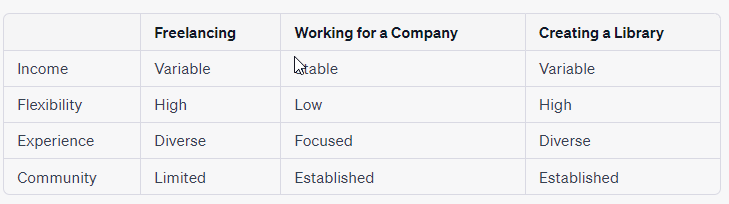
As you can see, creating a library offers a high degree of flexibility and a diverse range of experience. It also allows you to contribute to the Python community and potentially earn passive income. However, it does come with variable income and limited community support compared to working for a company. Freelancing offers high income and flexibility, but can be unstable and limited in terms of experience and community support. Working for a company offers stable income and established community support, but can be less flexible and focused in terms of experience. Ultimately, the best choice for you will depend on your goals and priorities as a Python developer.
So, what are you waiting for? Grab your laptop, fire up Python, and start scraping your way to success!
👋 Thanks for reading, and happy scraping!
I hope this article has been helpful to you. Thank you for taking the time to read it.
💰 Free E-Book 💰
If you enjoyed this article, you can help me share this knowledge with others by:👏claps, 💬comment, and be sure to 👤+ follow.
Who am I? I’m Gabe A, a seasoned data visualization architect and writer with over a decade of experience. My goal is to provide you with easy-to-understand guides and articles on various AI-related topics. With over 150+ articles published across 25+ publications on Medium, I’m a trusted voice in the data science industry.
Wait a second. To write on Medium and earn passive income, use this referral link to become a member.
Stay up to date. with the latest news and updates in the creative AI space — follow the AI Genesis publication.