avatarKabir

Free AI web copilot to create summaries, insights and extended knowledge, download it at here

2915

Abstract

was found in the religious depictions of Jesus. During the Gothic period, the arches, windows, vaults, and porches of cathedrals are based on Vesica Piscis geometry.</p><figure id="6fde"><img src="https://cdn-images-1.readmedium.com/v2/resize:fit:800/1*bE_HcOL7tNBrPJdwf1Ow0A.jpeg"><figcaption></figcaption></figure><h1 id="05b8">Vesica piscis as a womb of the universe</h1><p id="27aa">In Greek and Roman mythology, vesica piscis (mandrola) was associated with Goddess Venus and Aphrodite and had a mythical connection with the fish. <b>It was understood as a token of fecundity, procreation, and renewing of life.</b></p><blockquote id="37a1"><p>In the Buddhist tradition, fish is a symbolic footprint of Buddha and denotes the emancipation from desires and attachments. Buddha himself is described as a Fisher of Men.</p></blockquote><p id="5142">In Christianity, Jesus, the “son of God” depicted in mandrola that resembles the birth canal or gate of life.</p><blockquote id="e37f"><p>Christ’s death and Resurrection opened the only possible gate between heaven and earth — the mandorla of divine Glory.</p></blockquote><p id="6cce"><b>The mandrola is compared with a woman’s vagina or vulva.</b> Between the 12th to 17th centuries, churches of England, Ireland, and Wales whose origin was a mixture of Pagan and Christian traditions had seen stone carvings of a naked woman called “ “Sheela-na-gig”. And the exaggerated vulva represents vesica piscis.</p><blockquote id="88ad"><p>Sheela-na-gigs are described as disgusting, offensive or even evil. Euphemistically they were called “fertility figure” and because of their naked and “rude” bodies and certain connection with the ancient cult of the Mother Goddess, they were considered as pagan idols.</p></blockquote><figure id="b1bf"><img src="https://cdn-images-1.readmedium.com/v2/resize:fit:800/1*_d6Fu2226EF3FkI-y_2_IQ.jpeg"><figcaption><b>A 12th-century “Sheela na gig” on the church at Kilpeck, Herefordshire, England</b> Source-<a href="https://en.wikipedia.org/wiki/Sheela_na_gig#/media/File:SheelaWiki.jpg">Wikipedia</a></figcaption></figure><h1 id="718d">Vesica piscis in modern architecture</h1><p id="2c97">Vesica piscis has been evolved from Christian iconography to modern buildings. For example, the Washington Monument and St. Peter’s Square in Rome depicts this symbol.</p><figure id="f80c"><img src="https://cdn-images-1.readmedium.com/v2/resize:fit:800/1*k71aFGNEAEuUmiY8Z52VBg.jpeg"><figcaption></figcaption></figure><figure id="87c2"><img src="https://cdn-images-1.readmedium.com/v2/resize:fit:800/1*WRNkbarinSZH7hlFCrlacw.jpeg"><figcaption><b>The Washington Monument (left) and St. Peter’s Square (right)</b> Source-Public Domain</figcaption></figure><p id="5b49">The proportions of vesica piscis have been included in the Sphinx and pyramid of Giza by the Egyptians.</p><figure id="850d"><img src="https://cdn-images-1.readmedium.com/v2/r

Options

esize:fit:800/1*8xILNYiZKs7ohmljQAKJHQ.jpeg"><figcaption><b>The pyramids of Giza</b> Source-Public Domain</figcaption></figure><h1 id="ce70">Mathematical interpretation of vesica piscis</h1><p id="2dfb">The Pythagoreans discovered some unique properties of this symbol. In sacred geometry, the straight lines correspond to masculine energy and the curved lines to feminine energy. So when masculine and feminine energy was added, three numbers were discovered that have the same infinite properties as Pi (<b>π </b>3.1415926…). These numbers are √2, √3, and √5.</p><ol><li>The first number √2 is a sacred number used in Solomon’s temple in Jerusalem and in Tor in England.</li><li>The second number is √3 and the proportions of mandorla (265:153) match with this number that is discussed in detail in Christian iconography.</li><li>And √5 is the number with which <a href="https://en.wikipedia.org/wiki/Golden_ratio">Golden Ratio</a> can be found. This is an important ratio used abundantly in our art and architecture.</li></ol><h1 id="4342">Conclusion</h1><p id="4ae0" type="7">Vesica piscis is the most stable visual symbol in the history of human beliefs and culture. It denotes divine femininity, the beginning of new life, and unity.</p><p id="109c">However, in Orthodox Christian iconography, the feminine and vaginal notion of vesica piscis has completely undermined and has been used only as a visual device for depicting the “Glory of God”. In Roman Christianity imagery, some hues of the archetypal feminine meaning are retained.</p><div id="f5bf"><pre>References- <span class="hljs-number">1.</span> An Introduction <span class="hljs-built_in">to</span> <span class="hljs-keyword">the</span> Vesica Piscis, <span class="hljs-keyword">the</span> Reuleaux Triangle <span class="hljs-keyword">and</span> Related Geometric Constructions <span class="hljs-keyword">in</span> Modern Architecture <span class="hljs-number">2.</span> A lot <span class="hljs-keyword">of</span> knowledge <span class="hljs-keyword">in</span> <span class="hljs-literal">two</span> circles: The Vesica Piscis – Sacred Geometry <span class="hljs-number">3.</span>THE MIGRATING SYMBOL: VESICA PISCIS FROM THE PYTHAGOREANS TO THE CHRISTIANITY</pre></div><p id="4a13">You might like another article <i>Blunders of Art Restoration</i></p><div id="d86b" class="link-block"> <a href="https://readmedium.com/blunders-of-art-restoration-5a0ad54b9215"> <div> <div> <h2>Blunders of Art Restoration</h2> <div><h3>The most botched art restorations in history</h3></div> <div><p>medium.com</p></div> </div> <div> <div style="background-image: url(https://miro.readmedium.com/v2/resize:fit:320/1*psDUiVMDU2ynDsbUJGCCkw.jpeg)"></div> </div> </div> </a> </div></article></body>

The Fascinating Iconography of Vesica Piscis

How the sacred symbol evolved from Christianity to modern architecture
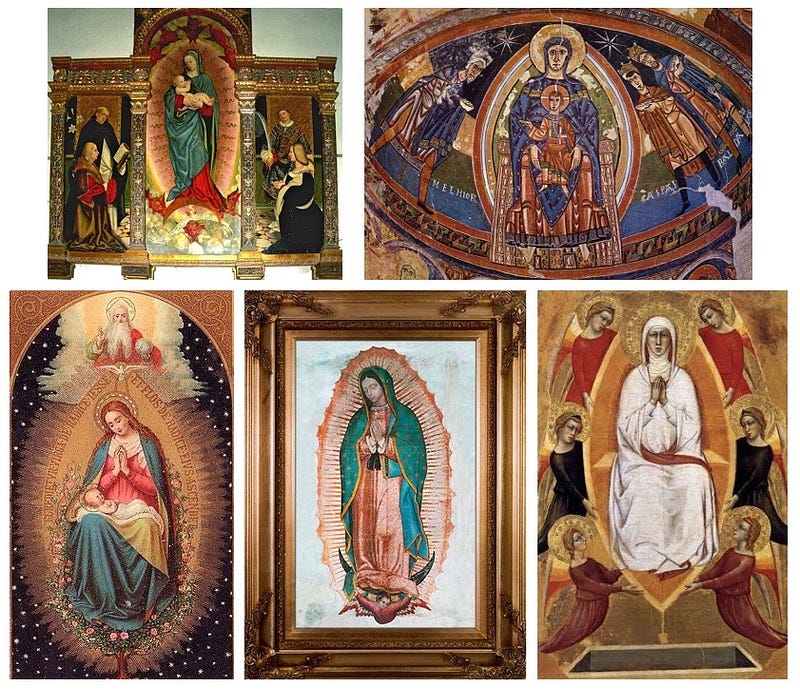
The depiction of Jesus in Vesica Piscis Source-Public Domain

Vesica piscis is considered to be a sacred symbol that is made of the intersection of two circles of the same radius and the center of each circle lies on the circumference of the other. The exact origin of the symbol is unknown but the symbol prominently originated from Pythagorean history traversed to Christian iconography and evolved in several modern architectures.

This sacred symbol portrays the divine feminity, female fertility, and birth of life. But, in Christianity, the feminity notion is subdued and it mainly reflects the glory of God.

The etymology and origin of vesica piscis
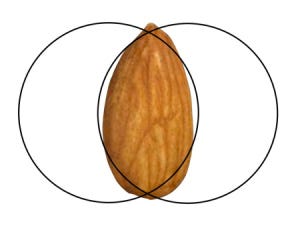
Vesica Piscis — The intersectional area is called Mandorla (An Italian word for little almond) Source-Public Domain

The vesica piscis is a Latin word and when literally translated it means the “Vessel of the Fish”. It is derived by taking two circles of equal diameters and overlaying them in such a way that their circumferences touch each other’s epicenters.

The intersectional area is also called “mandorla” which is an Italian word for little almond and looks like the shape of an almond.

Vesica Piscis in Christian iconography

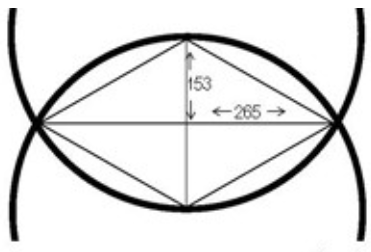
Vesica piscis (Left) and four equal right triangles with height as 265 and width as 153 in mandorla (right) Source-Public Domain

The fish had been a symbol in Christian iconography from the time Jesus told his disciples to cast their net into the sea and they pulled exactly 153 fishes.

The Vesica Piscis can be divided into four equal right triangles whose height and width are expressed in the ratio 265:153. Thus, the number 153 holds a special significance in the Book of John.

The division of 265:153 is condensed to 1.73203 and the closest square root to number 3. Hence, √3 is called the “measure of the fish”.

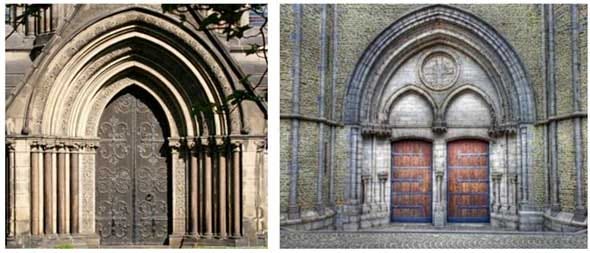
In Orthodox Christianity, Vesica Piscis was found in the religious depictions of Jesus. During the Gothic period, the arches, windows, vaults, and porches of cathedrals are based on Vesica Piscis geometry.
Vesica piscis as a womb of the universe

In Greek and Roman mythology, vesica piscis (mandrola) was associated with Goddess Venus and Aphrodite and had a mythical connection with the fish. It was understood as a token of fecundity, procreation, and renewing of life.

In the Buddhist tradition, fish is a symbolic footprint of Buddha and denotes the emancipation from desires and attachments. Buddha himself is described as a Fisher of Men.

In Christianity, Jesus, the “son of God” depicted in mandrola that resembles the birth canal or gate of life.

Christ’s death and Resurrection opened the only possible gate between heaven and earth — the mandorla of divine Glory.

The mandrola is compared with a woman’s vagina or vulva. Between the 12th to 17th centuries, churches of England, Ireland, and Wales whose origin was a mixture of Pagan and Christian traditions had seen stone carvings of a naked woman called “ “Sheela-na-gig”. And the exaggerated vulva represents vesica piscis.

Sheela-na-gigs are described as disgusting, offensive or even evil. Euphemistically they were called “fertility figure” and because of their naked and “rude” bodies and certain connection with the ancient cult of the Mother Goddess, they were considered as pagan idols.
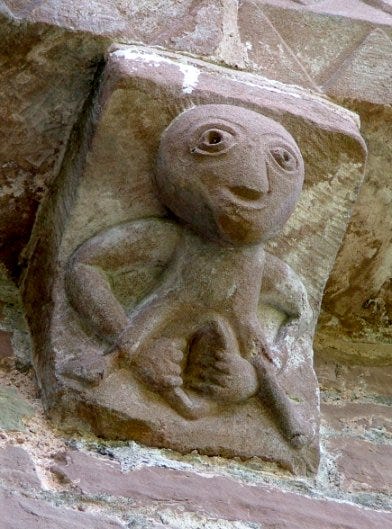
A 12th-century “Sheela na gig” on the church at Kilpeck, Herefordshire, England Source-Wikipedia

Vesica piscis in modern architecture

Vesica piscis has been evolved from Christian iconography to modern buildings. For example, the Washington Monument and St. Peter’s Square in Rome depicts this symbol.
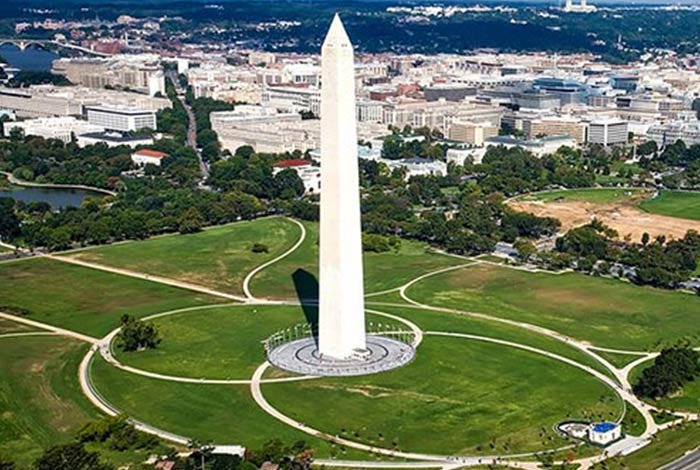
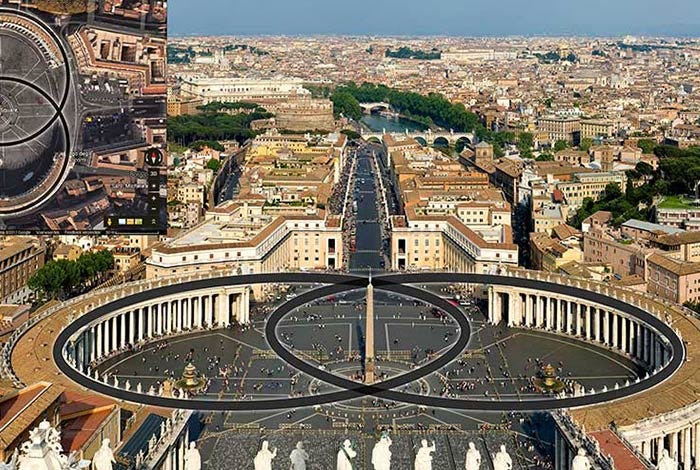
The Washington Monument (left) and St. Peter’s Square (right) Source-Public Domain

The proportions of vesica piscis have been included in the Sphinx and pyramid of Giza by the Egyptians.
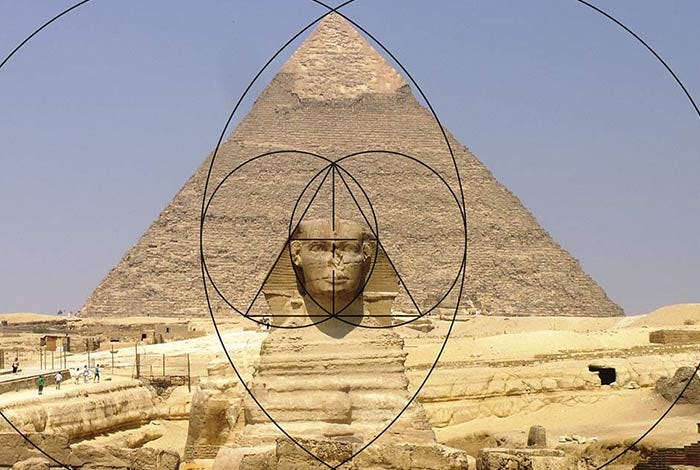
The pyramids of Giza Source-Public Domain

Mathematical interpretation of vesica piscis

The Pythagoreans discovered some unique properties of this symbol. In sacred geometry, the straight lines correspond to masculine energy and the curved lines to feminine energy. So when masculine and feminine energy was added, three numbers were discovered that have the same infinite properties as Pi (π 3.1415926…). These numbers are √2, √3, and √5.

  1. The first number √2 is a sacred number used in Solomon’s temple in Jerusalem and in Tor in England.
  2. The second number is √3 and the proportions of mandorla (265:153) match with this number that is discussed in detail in Christian iconography.
  3. And √5 is the number with which Golden Ratio can be found. This is an important ratio used abundantly in our art and architecture.

Conclusion

Vesica piscis is the most stable visual symbol in the history of human beliefs and culture. It denotes divine femininity, the beginning of new life, and unity.

However, in Orthodox Christian iconography, the feminine and vaginal notion of vesica piscis has completely undermined and has been used only as a visual device for depicting the “Glory of God”. In Roman Christianity imagery, some hues of the archetypal feminine meaning are retained.

References-
1. An Introduction to the Vesica Piscis, the Reuleaux Triangle and Related Geometric Constructions in Modern Architecture
2. A lot of knowledge in two circles: The Vesica Piscis – Sacred Geometry
3.THE MIGRATING SYMBOL: VESICA PISCIS FROM THE PYTHAGOREANS TO THE CHRISTIANITY

You might like another article Blunders of Art Restoration

Art
History
Culture
Christianity
Mathematics
Recommended from ReadMedium