
The Fascinating and Hidden World of the Modern Technical Manuals
Not just books, not just data, but so much more!
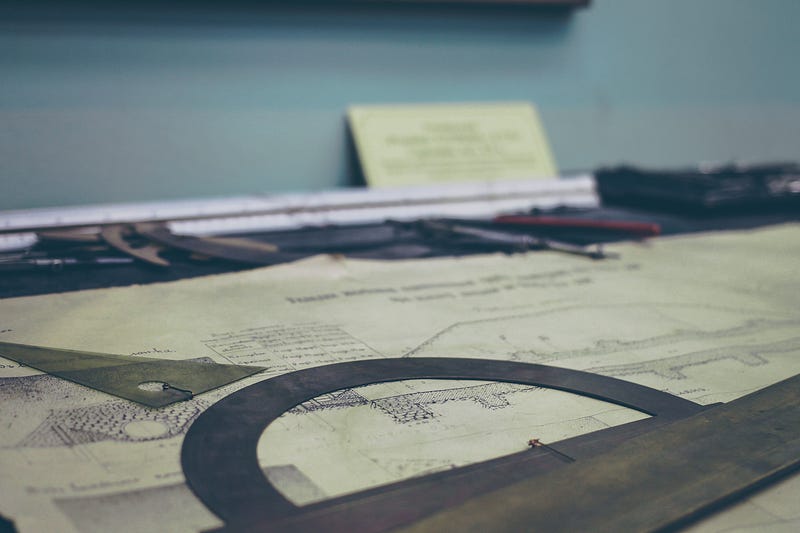
How I became immersed in the world of technical publications
Have you ever resented a technical manual or a sheet with instructions you got with a new device you bought?
I did for many years until I got a job in Spring of 2004 where the team I was part of was responsible for consolidating the requirements and how an international standard called S1000D was implemented in a large organization.
Later, I worked for a company offering consultancy and building software systems to support those who produced technical documentation adhering to this standard. Today, I am a self-employed writer and consultant, who among others, creates resources in the form of books and templates for those who implement this specification.
S1000D
Here is a concise introduction to S1000D from its website:
S1000D, “International specification for technical publications using a common source database”, is an international specification for the production of technical publications. Since its inception over 30 years ago, S1000D has grown to where it is now used widely around the world. Currently, its uses include:
- Defense systems — including land, sea, and air products
- Civil aviation products
- Construction industry products
- Ship industry products
The specification is publicly available and is free to download from this web site. Downloads include the specification, schemas, sample files, and much more.
It’s much more than just a book or data.
It took me some time to realize that I was immersed in the world of technical publications and manuals. I also realized that they were not just annoying and boring books that one needed to consult to take an apparatus into operation or to repair something.
When you look closer into them, and, even better, immerse into the world of their making, especially nowadays, you will discover the magic.
If you have a manual for your car handy, then I invite you to look inside. You will see textual information, tables with data, technical illustrations, photographs, and so much more.
Now, imagine such a manual for an aircraft.
You will realize that there are many manuals there. Some of them are meant for the pilots and the crew, the others for those who maintain and repair different parts of the airplanes. There will also be catalogs with all the spare parts and units comprising these fascinating, complex vehicles.
The complexity of modern technical publications
Nowadays, many of the manuals are in digital form and often interactive. The information and data they comprise are reused for informing and educating all who are meant to do anything on or for that aircraft or other sophisticated technology pieces.
And that in various environments and nations. We live in a highly interconnected world, both physically and online. And still, many practices in each part of our globe might differ from the other. Parts produced by companies in various countries might fit the same machine and work wonderfully. And still, they might have at least slightly different operational and maintenance procedures to them.
Any variation in those parameters leads to a multi-dimensional adjustment in your technical manual.
And nowadays, the update of those interactive technical publications needs to be done on the spot, especially for the critical bits. The operator needs to have up-to-date information any time she or he consults the manual, whichever format it might be. And it must be not only up-to-date but also up-to-location and the circumstances the machine and its operator or maintainer are in.
The more I immersed myself in a world where technical publications were the focus, the more respect I got for them and the community involved in producing and maintaining them.
Often, lives depend on the accuracy and the correctness of the presented information. Just think of a missing or wrongly presented warning of the danger of incorrect operation or access to a unit on a complex technical product.
There’s so much to it!
When you look at a car or an aircraft, you would rarely consider the technical manual or publication connected to it. You would be fascinated with the sophisticated technology. Still, I doubt that many outside of the world working on producing technical publications would spare too much thought on what it takes to create all that textual, numeric, and graphical information and put it all together.
Let’s go back to those industries, which implement S1000D. They include those producing complex defense systems, civil aviation products, construction products and facilities, including the logistics, and ship industry. Even some large energy companies have been looking into this XML-employing specification.
To keep all those large and complex systems serving humanity and the world as they are supposed to do, it takes a lot of effort and organization.
This is well visible by the international standards describing all those complex and interconnected processes. S1000D is just one in a long list of technical specifications called “S-Series suite of ILS specifications”:
“S-Series suite of ILS specifications is managed currently jointly by multinational teams from the Aerospace and Defence Industries Association of Europe (ASD) and Aerospace Industries Association (AIA) reporting to the AIA/ASD ILS Council” — Wikipedia
ILS stands for Integrated Logistics Support. This term is in the process of becoming Integrated Product Support to better describe the complexity of producing, operating, repairing, maintaining, and discarding sophisticated technical systems.
Technical publications as the mirror reflecting many sophisticated processes
The whole lifecycle of a sophisticated product is a fantastic world in itself. But, I must say, I can’t stop being fascinated by the world of technical publications. And I don’t think it is coincidental that S1000D, the international specification for technical publications, is the first in the S-Series of the ILS world.
Any change in the parameters of a part of a unit on a product will lead to various changes for all those phases and processes of producing, operating, testing, repair, maintenance, discarding, training, and many others. All these phases have a standard attached to each of them, plus specification to interaction processes between different fields of the integrated logistics (product) support.
But one thing is a fact. All those multi-dimensional changes must be reflected and documented accurately, clearly, and often fast in technical publications. And all those other disciplines and all who work in those areas feed on and depend on the accuracy, precision, conciseness, and clarity of a technical publication or manual.
Thank you for reading!
If the article above made you curious about the fascinating world of technical publications and S1000D, then I invite you to check out the resources I offer on this topic here.
P.S.
To stay in touch, join my e-mail list, Optimist Writer.