
“The Farewell” is the Perfect Antidote for Summer Movie Fatigue
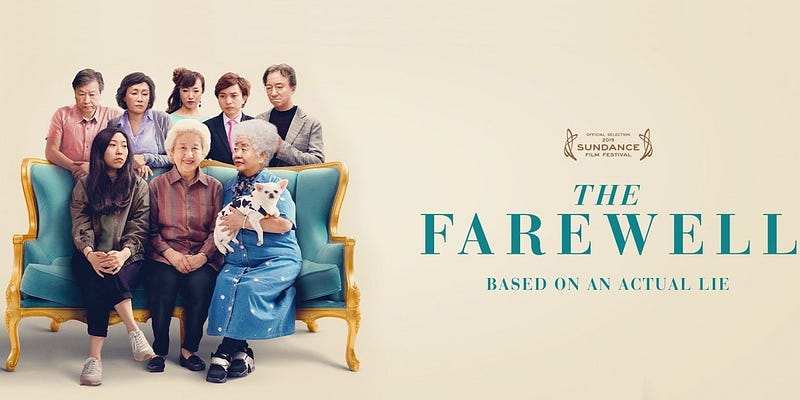
Lulu Wang’s tale of a Chinese family struggling with the impending loss of their matriarch is a breath of fresh air in a summer of mostly disappointing and unoriginal cinematic fare. It is also a landmark achievement in Asian-American cinema.
The Late Summer Doldrums at the Cinema
Let’s face it. The summer of 2019 was at best a mixed bag at the cinema. It started promising enough with Avengers: Endgame being far better than it needed to be and the arrival of Booksmart and Rocketman, two bracingly original and wildly entertaining smaller films. But it was mostly down hill from there. New installments in the Godzilla and Men in Black franchises barely made a blip and the remakes of Aladdin and The Lion King were entertaining enough but resoundingly pointless. Even the generally good films that made it to screens had their detractors — the latest Spiderman had to fight Marvel fatigue, Toy Story 4 had to work hard to justify its existence after a seemingly perfect ending to the story with Toy Story 3, and despite its considerable merit Once Upon a Time … in Hollywood fell short of being the classic I was hoping it would be.
And then came The Farewell.
Enter The Farewell
The Farewell amassed significant buzz when it screened at the Sundance Film Festival this past January. It was rapturously received by critics and led to a bidding war among the studios that ended up with A24 paying $7 million for worldwide distribution rights. It was released in the U.S. in 4 theaters on July 12 and garnered the biggest per-theater gross of 2019 in its opening weekend. In the weeks since, it has expanded to over 700 screens and has grossed $11 million. These are highly respectable numbers for a film that cost only $3 million to make is largely not in English and features only a single recognizable actor who has never anchored a film before.
The film’s success stems from many sources. First and foremost is the immense wit, soul, and vulnerability that writer and director Lulu Wang brings to the screenplay. The story is based on her own family and chronicles a young Chinese American named Billi who travels from New York to Changchung, China to visit her grandmother who — unbeknownst to her — has received a diagnosis of terminal cancer. Her elders have decided to keep this information hidden from the grandmother and rush Billi’s cousin’s wedding to create an excuse to get the family together one last time before the matriarch dies. In a brief 98 minutes, Wang tells a deeply intimate story while touching on big themes related to acculturation, family loyalty, emotional expression, the conflict between collectivism and individualism, and many others. There are laugh out loud moments and devastatingly sad ones woven together in a manner that beautifully reflects real life.
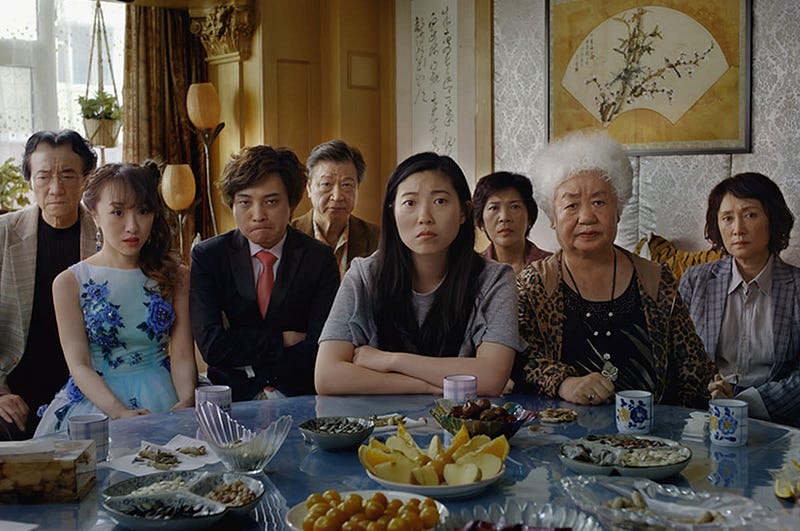
The second factor is the sensational acting. At the risk of overusing an oft-misused descriptor, Awkwafina’s performance here is truly a revelation. The 31-year-old actress was not widely known prior to last summer, when she had scene-stealing supporting turns in the hit films Crazy Rich Asians and Ocean’s 8. She garnered big laughs in both, but neither performance even hinted at her ability to nail such a nuanced leading role with numerous tricky dramatic moments. As good as Awkwafina is, this is hardly a one-woman show. The entire ensemble is superbly cast, with other standouts being Tzi Ma as Billi’s father, Diana Lin as her mother, Jiang Yongbo as her uncle, and Zhao Shuzhen as her grandmother. In fact, Shuzhen is the indisputable MVP of the film, in a zesty performance full of sharp zingers. Her character could have so easily been a one-dimensional plot device, but in the hands of Shuzhen she becomes the film’s most interesting character.
The third factor contributing to The Farewell’s success is its impressive production values. Wang and cinematographer Anna Franquesa Solano do an excellent job of capturing the essence of urban New York and China and ensure that the intimacy of the film never becomes claustrophobic. Editors Michael Taylor and Matthew Friedman ensure that the film is tightly focused and briskly paced (an increasing rarity). And thankfully the whole crew behind the scenes seems fully willing to step back and let the words and performances run the show.
I am hardly the first to rave about The Farewell. The film holds a stunning 99% recommendation on Rotten Tomatoes and an equally impressive average rating of 90/100 on Metacritic. In fact, the film seems well-poised to stick around through the award season. At this point, I think it has excellent shots at nominations for Best Picture and Best Original Screenplay, and solid shots in Best Director (which would make her the first woman of Asian descent to be nominated in the category and only the 6th woman overall), Best Actress (Awkwafina), and Best Supporting Actress (Zhao Shuzhen). It definitely deserves them all.
A Landmark Achievement in Asian-American Cinema
When the push for more on-screen and behind-the-scenes diversity in Hollywood finally gained some long-overdue traction over the past decade, I was vocal about my disappointment that the predominant narrative seemed to be focused on black people. Although increasing the quantity and quality of representation of the black experience in Hollywood is vitally important, I was saddened that there did not seem to be a similar interest or passion in increasing inclusivity among the many other massively underrepresented and misrepresented groups in the U.S. (including Asians and Asian-Americans, Hispanics and Latinos, and Indigenous Americans).
Thankfully, this is starting to change. Never were the shifting tides more apparent than with last summer’s release of Crazy Rich Asians, the first film with a predominantly Asian cast produced by a Hollywood studio in a quarter century (since 1993's The Joy Luck Club). The film was an enormous critical and commercial hit, grossing $238.5 million off of a $30 million budget. A few weeks after Crazy Rich Asians was released, Searching hit theaters. This highly underrated film in which John Cho played a man searching for his missing daughter grossed $75.5 million off of a $880,000 budget and garnered positive reviews across the board. The success of these films continued the narratives stoked by the recent successes of Wonder Women, Get Out, and Black Panther that inclusivity can be a boon at the box office.
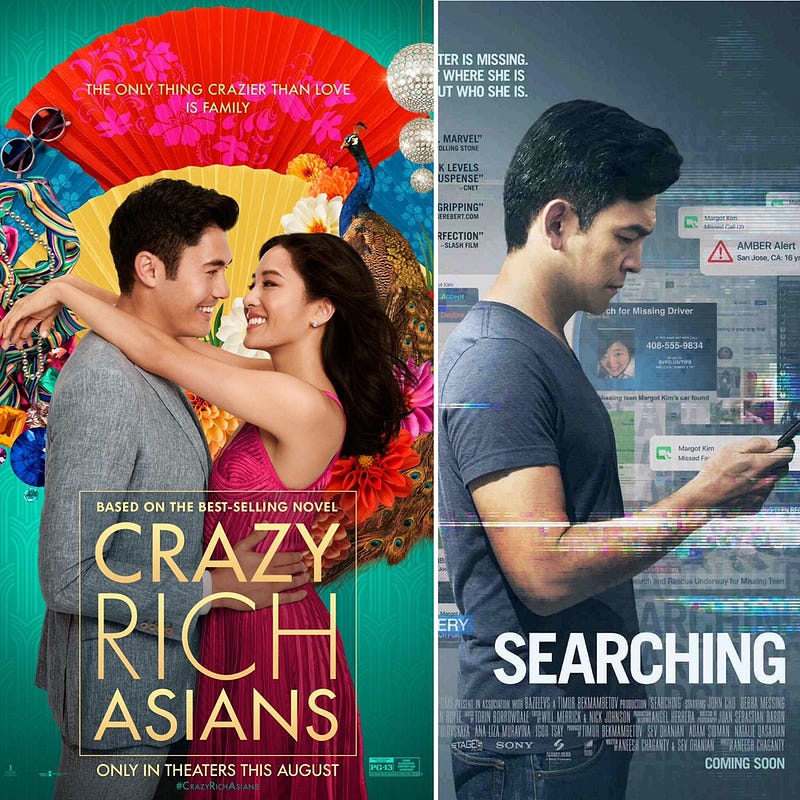
The Farewell takes this narrative a step further. It demonstrates that not only are filmgoers willing to embrace stories about people of color, but that if they are well made even stories that don’t fit tidily into a genre and put things like relationships between women, cross-cultural themes, and (gasp) foreign languages front and center can also be embraced.
The Farewell is the rare film that is a cultural milestone and a truly great film.
Rating for “The Farewell”: 5/5 stars


