
The Fall of Weed-Whacker Bosses
If only us leaders could spend more time leading.
Running a business has never been so frenetic. Booked back-to-back before we walk in the door. Meeting after meeting. Problem after problem. Crisis after crisis. Who has time to think? Much less, do our work.
Up and down the organization, leaders face this same gauntlet. Trouble-shooting. Fire-fighting. Reacting to the latest emergency.
Nothing is more frustrating. I hear it from my Coaching clients all the time. Starting with best intentions. Focused on strategic, impactful work. Only to have the day consumed by one’s calendar.
Many cite the pandemic effect. Complications of remote work teams. Or the Great Resignation. Hamstringing staffing levels. Piling on workloads. Not to mention inflation. Supply chain bottlenecks. And gyrating markets.
Absolutely. No doubt. All sound rational. Viable justifications. Or maybe it’s just the sun in our eyes. The dog ate our homework. Alien abduction.
Truth is, us leaders have always been busy. Crazy busy. Doing what, exactly?
Too often, just going through the leadership motions.
If we’re honest, we’ll admit much of our time is spent on management routines. Checking in with our peeps. Updating status. Progress. “How’re we doing?” “How’s it going?” “Where do we stand?” Ensuring things are on track. Reviewing, checking, double-checking. Signing off. Granting approvals.
And relaying this info up the chain. Debriefing. Reporting results. Numbers vs. plan. Keeping the brass up to speed. In the loop.
Sure, this is all part of a leader’s role. But this is not leading. This is scorekeeping. Supervising. Hall monitoring.
Does any of this prepping and apprising move the needle? Yet, so much of our week is consumed doing so. And what about the impact on our people? Executing tedious busy work is exhausting. Mind-numbing. Inhibiting them from growing. Developing. Getting better.
And Job One as leaders is to make our people better.
Fortunately, there is a better way. And any leader, no matter how advanced or experienced, can make this change. Starting tomorrow.
Scorekeeping
Every firm has annual goals. Forecasts. Budgets. This is good. Giving the organization direction. A trajectory of growth.
The Board is on board. Investors. Management team. Everyone starts the year in agreement. Numbers to reach. Comp plans to hit.
Soon enough, the questions start trickling down. Innocuous, at first. “Are we getting the year off well?” “How’s the quarter coming along.” If results get squirrely, the window narrows. “What’s the month looking like?” “How’s the week tracking?”
Before you know it, the organization is in full micro-reporting mode. Updating the higher ups. Almost daily. On where we stand. Churning out decks about why we are where we are. Re-running numbers. Adjusting forecasts. Changing budgets.
Scorekeeping.
Countless hours by countless people are diverted. Distracted. From the important work. To keep investors and bankers satiated. And out of our hair.
Hey, the stakeholders have a right to ask. And we have a responsibility to answer. But let’s all recognize the cost of this process. Productivity lost. Tension and anxiety heightened. Without moving the needle one iota.
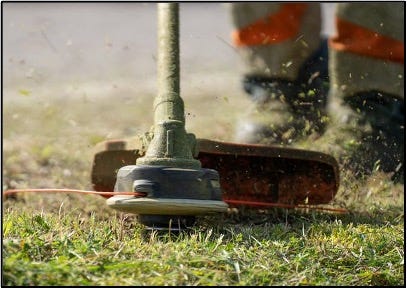
Weed-Whacker Bosses
Then human nature kicks in. When someone is looking over our shoulder, we feel compelled to do the same. To our staff. Making sure we’re on top of things. In command. Total control. Of organizational output.
As the pressure heats up, leaders become more directive. Telling rather than teaching. Less tolerant of failure. Or risk-taking. Even grabbing the reins ourselves. In the name of expediency. Executing the work. Which is quicker. And ensures things are done right.
This is the leadership trap. Spending too much time working in the business instead of working on the business. Micro-managing.
Nobody wants to be a micro-manager. We all want to be helpful. But too often “helping” is less about leading and more about making ourselves feel secure.
Skeptical? Consider the following:
Check the calendar. How many of our meetings focus on short-term issues? The problems of the week. Rehashing of results. Digging into details. Tactical issues. That frankly, others can handle without us.
Assess the decisions we make every day. How many choices truly require our experience and expertise? If a decision is simply for us — up or down, right or left, black or white — why are we still involved?
These are signals that we’re too deep in the weeds. Getting involved unnecessarily. Where we’re adding minimal value. Like checking the score. Monitoring progress. Hovering over our teams.
Weed-Whacker bosses.
Saying “No.”
Becoming better leaders starts with saying, “No.” A lot. Being especially stingy with our time. Attention. And mind-share. While adhering to the toughest leadership precept: Only do what only we can do. The strategic. The long-term. Concentrating on what’s over the horizon. Rather than gazing at our navel.
This means giving stuff away. Delegating. As much as possible. Tasks. Along with the decisions.
Focusing instead on teaching. Training. Coaching. Developing. Encouraging. Inspiring. Investing in others. Most of one’s time dedicated to people. Half the day. Or more. Every day. Because when team members grow, the firm grows.
And this is a culture people want to work in. A culture where individuals have ownership. Real autonomy. Trust. That they can deliver. On their own. Enabling them to thrive. Flourish. Be creative. Innovative. Pioneers.
A culture without Weed-Whacker bosses.
This can begin tomorrow. By each of us leaders saying, “No.” To recurring meetings. Round-robin style updates. Check-ins. Publish status reports instead. On Slack. Or Teams. Don’t ignore the numbers. Just stop obsessing about them.
Conducting more frequent One-on-Ones. Weekly. Concentrating on team member’s development. Providing feedback. Discussing strategies for the future rather than problems of the day. Identifying opportunities and experiences to help team members stretch.
Restructuring team gatherings around connection. Bonding. Steps to build cohesion. And trust. Among one another. Stronger teams create stronger results.
And by the way, when we stop going through the management motions, leadership becomes more engaging. Meaningful. Fulfilling. For each of us.
And any leader can make this happen. Starting tomorrow.


