The Fakers Are Out In Force
Not just tripping up the gullible
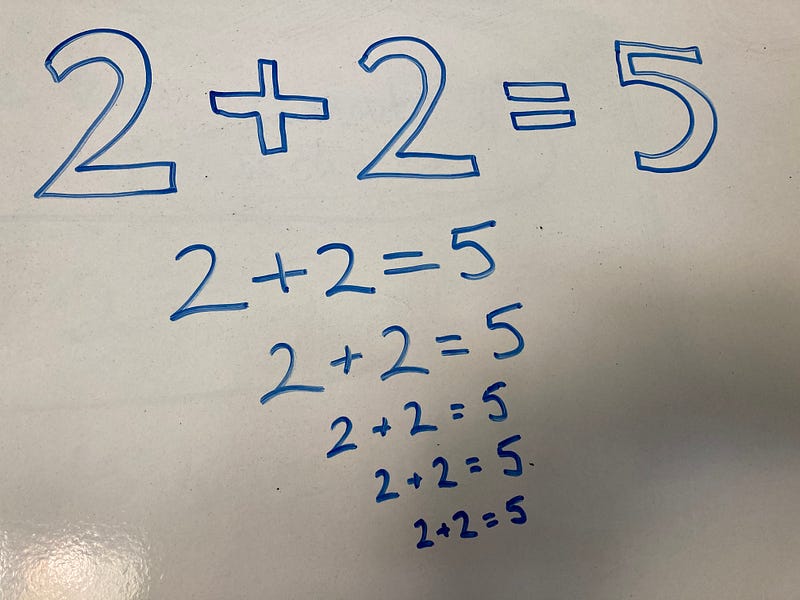
Fakers have been around for as long as humans, but the ways they disguise themselves as credible experts — to the extent of fooling some genuine experts — is a relatively new phenomenon.
A Brief Foray Into The Backstory
It can’t have escaped your notice, if you’ve been on Planet Earth these last few decades, that fake news, false facts, and blatant lies have acquired a currency beyond anything they had before.
There was a time that someone caught out in a lie would at least pretend to exhibit shame, contrition, embarrassment, and might even say sorry. And if they tried to brazen it out by doubling down on the lie, the hard evidence would be rolled out to flatten them. As a rule, they would only be applauded by a small lunatic fringe, would be disenfranchised, and removed from positions where their lies caused harm.
Then the 21st century turned that rule on its head, empowering the liar by ushering in a new way of dressing up fakery. Well, not so much a new way, as the weaponising of an old way.
I’m sure everyone is familiar with this quote:
People will believe a big lie sooner than a little one; and if you repeat it frequently enough people will sooner or later believe it.
This has been attributed to Joseph Goebbels often enough that it is widely believed that he said it — but there’s no evidence he did. It has become a good example of repetition and familiarity turning a baseless statement into “fake truth” [1]. The Nazis certainly used the Big Lie tactic, and the idea was spelled out by Hitler [2] but he was talking about other people, not himself.
Familiarity Makes Things Seem True
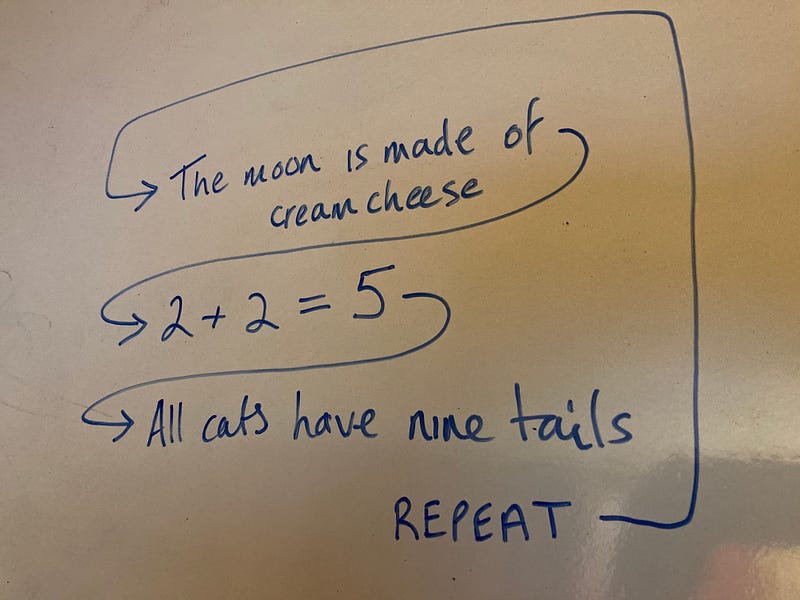
If you want someone to swallow a lie, simple familiarity will do it. People are more likely to believe something that they’ve heard before, whether or not the previous source was reliable or even credible. Research bears this out.
But although familiarity can paint a lie as truth, people will weigh what they hear against facts, evidence, and rationality. By and large, rationality held sway (though not without serious hiccups) during the 20th century.
Then social media and the internet were weaponised. This not only served to hugely magnify the ‘repetition’ side of the equation, but it also allowed bad-faith players to target those vulnerable fringe groups and bring them out in force with an “alternative truth” (a LIE in other words).
The Russian leader didn’t soften up the west with a military barrage or by sending in an army of spies — he undermined US democracy and EU stability by building a fifth column out of their own citizenry using social media memes. Umair Haque spells out the detail in his good but chilling article:
What Happened To The Experts?
Experts in a field know where to go to get good quality evidence (hint: not social media) and can sift the good from the bad. Or rather, they could. Things have changed on that side too, and now it’s not so easy.
The context here is illustrated by one of the most notorious and damaging episodes of academic fakery of the 20th century — the deliberate undermining of the MMR vaccine by a doctor (later struck off) who sold out his integrity to make money on an alternative but less effective vaccinations regime. A well-known journal published a speculative paper based on the medical records (later shown to have been falsified) of just a handful of patients. As soon as it was published, the disgraced medic began preaching vaccine lies to push his alternatives as better than the recommended vaccines — they weren’t and children died as a result. Although wholly debunked on all counts, this Big Lie still circulates — parents are persuaded to insist on less effective vaccination or to avoid it altogether and leave their children open to the horrors of childhood death and disease of the pre-vaccine world.
The big vaccine lie was swiftly evicted from the credible academic press. and procedures were tightened. The response from the bad-faith brigade was to create their own “academic journals” complete with important-sounding academic boards, editors, and claims of quality peer review. To start with, these were easy to spot. Their papers were chock full of impressive-sounding references but always to each other, never to credible journals with genuine peer-review processes and time-served expertise on their boards.
The Rise Of The Predatory Journal
The advent of open access and the ever-increasing pressure on academics to publish their work led to a rise in predatory journals. These range from outright fraudulent publications to new publishers with no experience, expertise, or understanding of rigorous review processes trying to jump on what they see as a lucrative bandwagon.
Fraudulent journals publicise a peer-review process but in reality, will publish anything for the right price. Some will claim editorial boards comprising prominent academics who have not agreed to serve on them. The predatory journal name is often deceptively similar to that of an established journal. They have been known to hoodwink academic experts into joining their boards to lend them credibility, then making it very difficult for these people to have their names disassociated with the publication.
Librarian Jeffrey Beall coined the term “predatory open access publishing” and created a list of predatory journals that is currently maintained by a European researcher. The Stop Predatory Journals movement also maintains a list HERE.
In pursuit of money, these journals give inappropriate academic credibility to light-weight studies, sometimes to outright fraudulent studies. Authors pushing conspiracy theories often pack their books with references to this type of journal, relying heavily on the majority of their readers judging the depth of their “research” by the length of the list, and not looking under the bonnet to see if there’s even an engine in there, never mind if it works.
The expert sticking to their own lane will spot the fake with no difficulty, but even experts struggle when stepping outside their own field. For people simply wanting good information — it’s a minefield.
The Take-Aways
- It isn’t size that matters. Don’t let yourself be impressed by the volume of references in any book or paper. It’s quality that counts, not the length of the list.
- Be skeptical. If you don’t know that a journal is a legitimate, properly run, rigorously peer-reviewed journal, then be skeptical — check it out on the predatory journals list.
- Double-check the name. Predatory journals, just like predatory websites, will create names as close as they can to the journals whose reputations they are trying to make money from.
- A familiar face is no guarantee. Don’t even be reassured by a ‘good’ name on the academic board — it might be that that person is fighting a legal battle to have their name removed; they might not even be aware that they are listed.
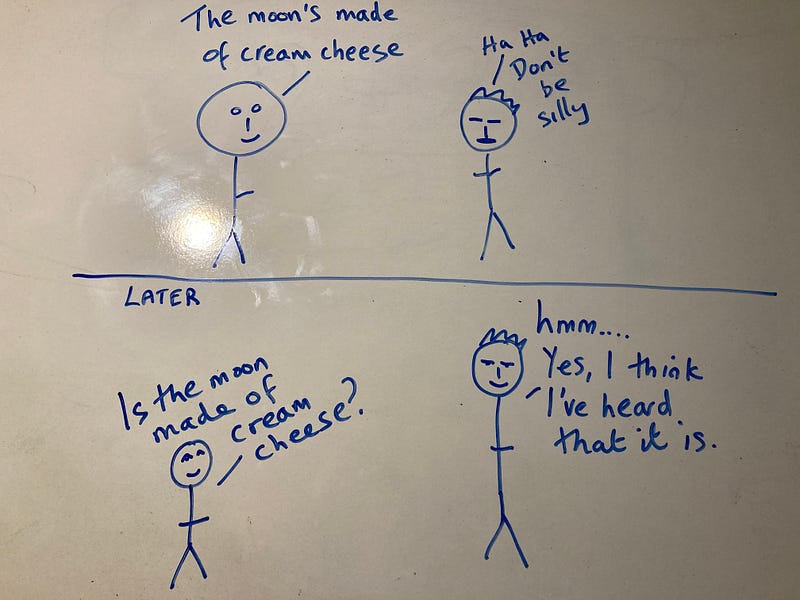
And always be wary of the familiar. Have you seen hard evidence or are you assuming it’s true because you’ve seen it before? It’s surprisingly easy to be caught out by this one.
[1] The very fact that many sources attribute the quote to Goebbels in the context of him boasting about an effective Nazi strategy, makes it suspect. Propagandists don’t announce themselves as liars.
[2] Abridged from Mein Kampf: In the big lie there is credibility; because the masses more readily fall victims to the big lie than the small lie, since they themselves often tell small lies but would be ashamed to resort to large-scale falsehoods. It would never occur to them to fabricate colossal untruths, and they would not believe that others could do so. Even in the face of the facts which prove this to be the case, they will still doubt and waver and continue to think that there may be some other explanation.
Read more stories like this HERE


