
The Fake, Predatory Marketing Twitter Account That Baited Gamers
Parasocial marketing — crossing the line between virtual and reality
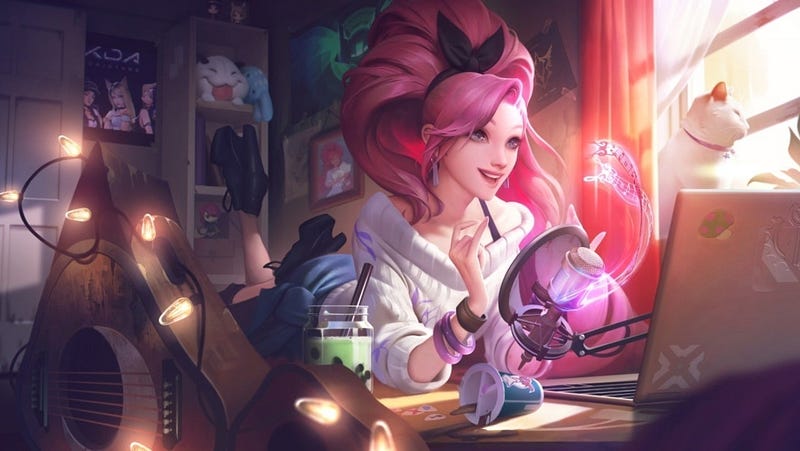
League of Legends is a giant among gaming franchises. It’s one of the most powerful and influential gaming franchises in the world. It has the world-building of the Marvel Cinematic Universe, the mass market appeal of Star Wars, and a company with pockets as deep as Disney.
It’s also a marketing powerhouse and one that should not be underestimated. The franchise is owned by gaming developers Riot Games, who themselves are owned by billion-dollar heavyweight company conglomerate Tencent.
Their gaming world is inhabited by all types of oddities. It’s filled with everything from wandering samurai, warlords, and magic users to more outlandish elements such as bird demons, a furball that is the bane of everyone’s existence, and eternal beings stuck in weapons.
However, out of all of their money-generating, fantasy creations, nothing comes close to the reality-blurring, marketing madness of their latest character, Seraphine.
She’s So Relatable!
On June 26, a new Twitter account was started by Seraphine herself. She’s a songwriter and social media influencer with a very-relatable presence. Her social media could remind you of any number of influencer-style personalities out there.
Youthful selfies? Check!
Quirky, relatable humor? Check!
Self-aware, imperfections? Check!
That’s what’s so great about her. She’s so relatable!
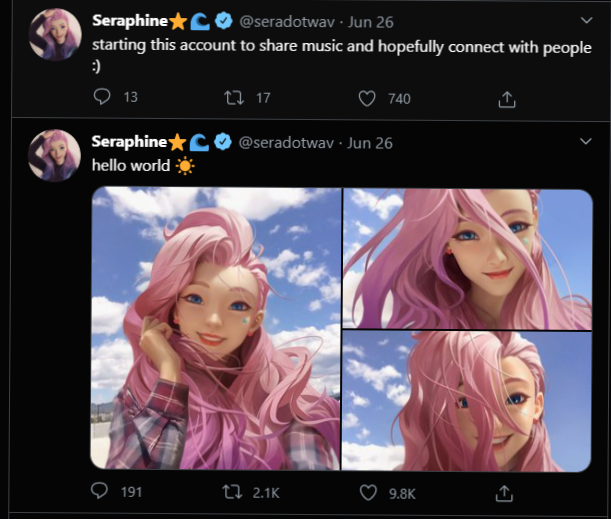
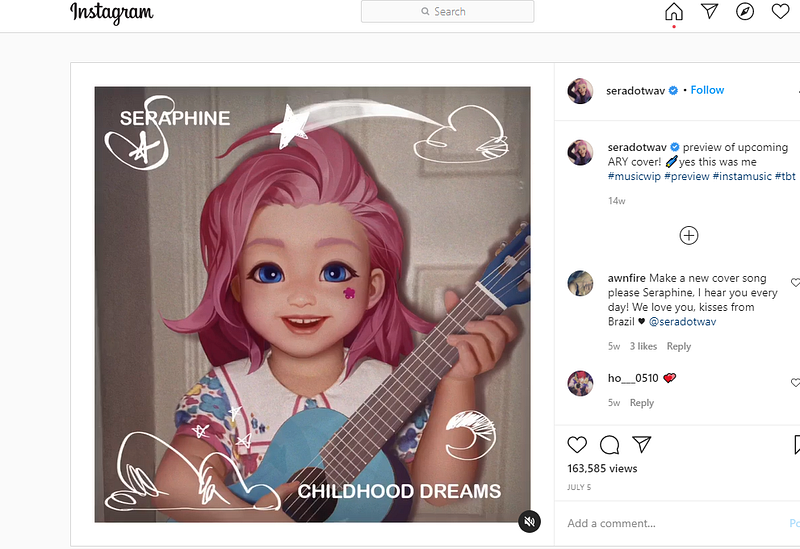
For the past few months, she’s been posting on social media with very curated and down-to-earth posts. It’s the type of girl next door style of authenticity that many influencers of today often strive for. Even though we’re talking about a fake, digital character, if you read her posts, you will find them surprisingly engaging.
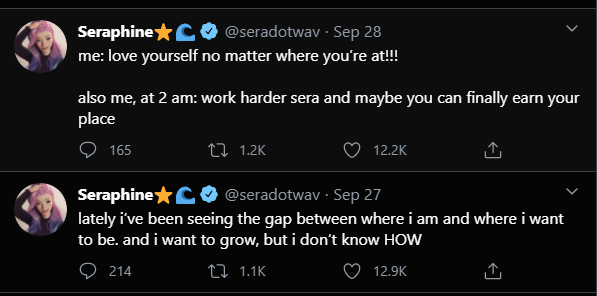
She even deals with mental health issues, just like the rest of us. Even I deal with the occasional bout of imposter syndrome and find this extremely relatable.
Admittedly, her profile is actually pretty cool and it’s hard not to relate to her I’m just like you vibe — perhaps a little bit too relatable for her own good?
Manipulative Parasocial Marketing
Recently, it was announced that Seraphine would be the next character to be featured in League of Legends and thus the true purpose was revealed. Although it was already speculated for months, this confirmed the sinister intentions of Riot Games and Tencent.
Seraphine is not an average artist with a love for music, quirkiness, and art. Not exactly. In fact, she is a digital, highly-curated marketing campaign aimed at the gamer demographic — a demographic that contains young adults and teens.
It was also revealed that upon her release, they will release a $25 product — an alternate appearance or skin — as part of her product release. This also tracks with her social media as it reveals that this product is part of her storyline.
This immediately caused red-flags, and rightfully so.
The marketing of Seraphine has thrown into debate the ethics of parasocial relationships and the effects it has on marketing.
Parasocial relationships are one-sided relationships, where one person extends emotional energy, interest, and time, and the other party, the persona, is completely unaware of the other’s existence. Parasocial relationships are most common with celebrities, organizations such as sports teams, or television stars.
Sounds like a certain writing platform, doesn’t it?
While the company behind this marketing ploy will doubtlessly profit from this venture, it does raise the question of ethics. Her marketing wasn’t the usual high production media of trailers and comics, but a pseudo-real person interacting with people developing emotional bonds to her.
Once you form an emotional bond, you’re more inclined to do things you wouldn’t otherwise do — like, buy overpriced digital commodities based on a fake social media account aimed at young audiences.
We live in the attention-economy and marketing tactics like this are nothing new. YouTubers, Twitch streamers, celebrities, OnlyFans creators, and many more online personalities all engage in some level of parasocial relationship building. However, when the line between reality and fantasy is blurred, there is definitely a point of crossing the line. The predatory nature of her marketing campaign has called into question the ethics of parasocial marketing, especially when young people are involved.
This entire parasocial-dilemma is summarized very well by a YouTube commenter:
“It does sound farfetched but to a young impressionable or just straight up vulnerable enough audience this actually can happen. Talked to a friend who is actually diagnosed with depression and was really into seraphines launch and showed him this vid out of curiosity to see his reaction. He agreed that he did latch on to her because of that shy, clumsy, not so good at everything, indie songwriter persona that she presented in her tweets. She tweeted things he himself felt and battled on a day to day basis. That attached him to her character and only amplified his excitement for getting her skins. It's not easy to see the effects of these things unless you overanalyze it because that’s how good marketing simply works.”
Lastly, popular gaming YouTuber Skooch gives us these words to think about that succinctly adds the cherry to this very unfavorable cake.
“Seraphine, as a concept, is actually very cool. But when we reel back the image and see that this is a $377 Billion company feigning real-world connection in order to sell a ‘product’, it becomes creepy as shit.”
Conclusion
By today’s modern standards, parasocial relationships are nothing new at all. With the rise of social media and the normalizing of digital platforms, establishing parasocial relationships is part of the norm. However, when those relationships blur the lines between virtual and reality, it sets off the ethics alarm. At what point does a digitally distant relationship cross the line into abusive manipulation?


