The Failed Plan of Andrew Yang’s New Party
Social media skills should not be the basis of a new political party.
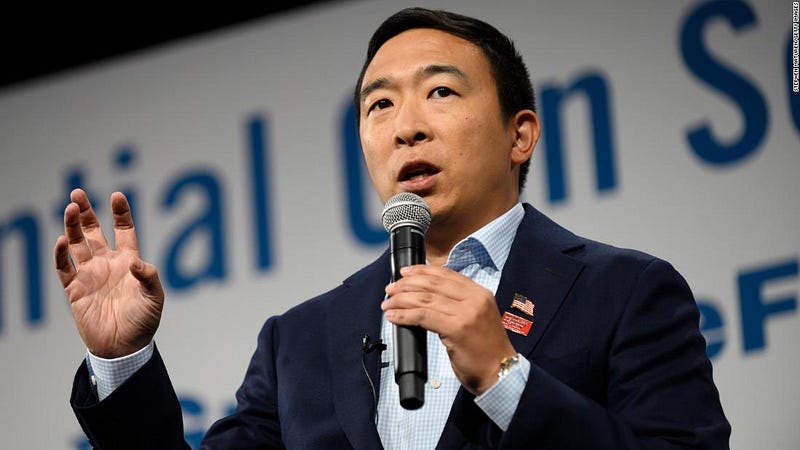
Before the midterm elections have even begun, much of the country’s political media has already shifted its focus to the 2024 presidential election. Republican observers are obsessed with the Ron DeSantis campaign and if the Florida governor will be able to overthrow former president Trump. Democrats are focused on Joe Biden’s health and if he is interested in running for a second term. There have already been several profiles and speculative pieces on the top candidates and what the future might hold for the next presidential election.
There is also talk about a new party. The Forward Party, led by former presidential candidate Andrew Yang, is in its nascent stages. This party suffered a disastrous initial rollout earlier in August, when Yang was heavily criticized for his unspecific platform. The next two years will certainly show whether or not a celebrity- and social media-driven group, focused on procedural reforms with no concrete platform, will have any sort of impact on the country. But the odds of a total collapse are high and growing every day.
Andrew Yang has built his entire political career on a combination of personal funding, social media, and campaigns focused on visible positions. His hope is that he can remain relevant through these avenues even though his specific ideas are speculative at best. Yang correctly understood that he could gain immediate visibility through a long-shot presidential bid. He then ran for mayor of New York, another top-tier position close to the nation’s media hub. With his new party, Yang believes he can repeat this pattern and provide maximum visibility to his political ideas.
Yang is correct to assume that a new party could be a way to be remembered by history. Political parties have an outsized role in the telling of American history. They are a way that historians have attempted to discover ideas that fell outside of the political mainstream. History textbooks frequently discuss third parties that only had a few thousand or hundred members. Yang most likely believes his movement can, if it never gains substantial power, become the next Liberty or Union-Labor Party, one that is discussed and remembered as standing for something.
Observers are also worried about this party as part of Andrew Yang’s self-promotional projects. Yang is a known commodity. He has a vast social media following and appears on popular television shows and podcasts on a regular basis. Liberals in particular remember the damage that Ralph Nader and Jill Stein did to them in the past. They are not worried about Yang siphoning votes from the Republicans, since that party appears lockstep behind former president Trump. Instead, they know that a portion of the electorate that might otherwise vote Democratic may vote for Yang simply because they recognize his name or remember his appearance on Joe Rogan’s podcast.
Both the hopes and fears of Yang’s party rest on several misconceptions. First, they assume that Yang is famous and that this fame will translate to votes for his party in 2024. But the threshold for “fame” is much lower than it once was. Individuals rise and fall in the political sphere on a daily basis. Yang does not have the television show or the political office that allows him to make news on a regular basis. Appearing on news shows and podcasts to say that he believes in “moving forward” will eventually grow stale and lead to fewer bookings.
In addition, it is not necessarily the case that Democrats will be any more amenable to third party interest than Republicans in 2024. Observers forget that third party candidates in 2016 took votes from both candidates. Democrats and Republicans were almost equally unhappy with their candidates and sought out other options. The vast majority of Democrats did not think Donald Trump would win, and some were comfortable throwing away their votes for a third party. This tendency was much less pronounced in 2020, when the percentage of third party votes declined by more than 60 percent from 2016.
Andrew Yang could always shock the political world. His charisma and social media skills have gotten him much further than most failed presidential candidates. But his movement must gain substance at some point for him to make a long-term impact on our political life. Simply being famous will get him on CNN, but it will not sustain a new political party in the 21st century.