avatarSharika Hafeez

Free AI web copilot to create summaries, insights and extended knowledge, download it at here

3674

Abstract

rounded by ancient oak trees and the high-pitched call of eagles, that Emperor Jahangir liked to spend his time, with his wife Noor Jahan, in between their travels to and from Kashmir.</p><p id="ffba">And so it was here that he wanted to be buried after his death.</p><figure id="1763"><img src="https://cdn-images-1.readmedium.com/v2/resize:fit:800/1*7CuAnm-7Hy82ZTNnDsSm0w.jpeg"><figcaption></figcaption></figure><figure id="4cf4"><img src="https://cdn-images-1.readmedium.com/v2/resize:fit:800/1*UX6OnTunNu8yPm36LBD3qA.jpeg"><figcaption>Left: The mausoleum of Emperor Jahangir | photo by <a href="undefined">Sharika Hafeez</a>. Right: The Akbari Sarai | photo by my friend, Rabia Naqvi</figcaption></figure><p id="05b4">A straight, brick-paved avenue leads towards the <i>Akbari Sarai,</i> a caravan inn originally built for travellers and caretakers of Jahangir’s Tomb. It serves as a colossal, impressive portal to the Tomb of Emperor Jahangir, decorated with stunning stonework on red sandstone, a typical feature of Mughal architecture.</p><p id="d016">This arched entrance leads to a fountain, beyond which stood the square mausoleum, flanked by four octagonal minarets in each corner, and its exterior, too, is made of red sandstone and <a href="https://en.wikipedia.org/wiki/Tomb_of_Jahangir#:~:text=The%20mausoleum%27s%20fa%C3%A7ade%20is%20embellished,architectural%20styles%20from%20Central%20Asia.">inlaid with white marble motifs</a>. The burial chamber within this is surrounded by richly-decorated arcades, and the tomb in itself is made of white marble, and is octagonal-shaped.</p><p id="9401">These tranquil gardens not only serve as the last resting place of Jahangir, but also of Jahangir’s brother-in-law, Asif Khan, and Jahangir’s wife, Noor Jahan, the tombs of whom are located to the west of Jahangir’s tomb.</p><figure id="3043"><img src="https://cdn-images-1.readmedium.com/v2/resize:fit:800/1*l8SM2d3wtX06xiJfhb8iFw.jpeg"><figcaption>A soar of eagles circle the skies overhead | photo by my friend, Rabia Naqvi</figcaption></figure><p id="6d29">A soar of eagles circle the cloudless skies overhead, swooping towards the distant towers of the mausoleum, atop which they have — probably — built their nests.</p><h1 id="055f">The Lahore Fort</h1><p id="268c"><i>15th July, 2022</i></p><p id="1f31">You don’t often get to feel like you’re in an old Bollywood movie, running through the long hallways of an ancient castle, the hem of your red <i>lehenga </i>trailing behind you… but that was exactly how I felt when I entered the Lahore Fort — although I was definitely not wearing a <i>lehenga.</i></p><figure id="cd92"><img src="https://cdn-images-1.readmedium.com/v2/resize:fit:800/1*UY-6aRfJ8UMKOyEXlr-HZQ.jpeg"><figcaption></figcaption></figure><figure id="a9c9"><img src="https://cdn-images-1.readmedium.com/v2/resize:fit:800/1*InIPmW9c4ne40KhXokh5jQ.jpeg"><figcaption></figcaption></figure><figure id="0f2c"><img src="https://cdn-images-1.readmedium.com/v2/resize:fit:800/1*vmn2ufCqwQVsKdB8I_3o0w.jpeg"><figcaption>The interior of the fort | photos by <a href="undefined">Shahzaib Mumtaz</a></figcaption></figure><p id="0d24">Rebuilt from its old ruins during the zenith of the Mughal empire, the Lahore Fort as we know it today is an impressive citadel to the north of the Walled City of Lahore. It was meant primarily to guard the northwest frontier of the Mughal empire, and many new structures were added to it over the years, as a new emperor came to power.</p><p id="bbf1">I remember hallways upon hallways, a cobweb-like assortment of towers and spires, and arched entrances leading to lush gardens and majestic castles, and nooks and cr

Options

annies hiding the best views of the city, revealing itself only to those who dare to venture to little-explored places within this ancient fortress.</p><figure id="68e5"><img src="https://cdn-images-1.readmedium.com/v2/resize:fit:800/1*7UTfKtshGqNntFFHP4EufA.jpeg"><figcaption></figcaption></figure><figure id="2d36"><img src="https://cdn-images-1.readmedium.com/v2/resize:fit:800/1*a7MHRNZ-_EbNeN5uhOsbkQ.jpeg"><figcaption>Glimpses from the Lahore Fort | Left: by <a href="undefined">Sharika Hafeez</a>, Right: by <a href="undefined">Shahzaib Mumtaz</a></figcaption></figure><p id="dc7d">But what fascinated me the most within the Lahore Fort was its Palace of Mirrors (<i>Sheesh Mahal</i>). The interior of the hall is decorated with thousands of tiny mirrors, coloured glass and precious stones. It would have been a dazzling sight, once, when the candles were lit at night and their light bounced off the mirrors in a thousand mesmerising patterns.</p><h1 id="92d5">Badshahi Mosque</h1><p id="e52c"><i>15th July, 2022</i></p><p id="4f99">Located close to the Lahore Fort, and built by the Mughal emperor Aurangzeb, Badshahi Mosque is a testament to the intricate nature of Mughal architecture. Made with the typical red sandstone inlaid with white marbles, it is the largest mosque built during the Mughal era.</p><p id="d388">A staircase leads to an imposing arched entrance (where you have to leave your shoes behind), decorated with elaborate stone carvings and marble inlay, which opens up to a massive courtyard, probably filling up with worshippers during special gatherings and prayers.</p><figure id="3f58"><img src="https://cdn-images-1.readmedium.com/v2/resize:fit:800/1*zyToMIG_ybpmoSKcsV5Nqg.jpeg"><figcaption></figcaption></figure><figure id="8fde"><img src="https://cdn-images-1.readmedium.com/v2/resize:fit:800/1*VmNudsWKdqJfjNP2rK2kUw.jpeg"><figcaption>Left: A staircase leads to the Mosque’s imposing arched entrance. Right: The main prayer area | photos by <a href="undefined">Shahzaib Mumtaz</a></figcaption></figure><p id="9517">Beyond the courtyard is the main prayer hall, and its walls are decorated with stunning floral designs, stonework, and carvings. If you look up, you’d be instantly transported to a different era.</p><figure id="6ad4"><img src="https://cdn-images-1.readmedium.com/v2/resize:fit:800/1*9oWNQC-awLZ9FoF_X-ka0w.jpeg"><figcaption></figcaption></figure><figure id="fee3"><img src="https://cdn-images-1.readmedium.com/v2/resize:fit:800/1*NqFVc2XKy7D_404aiFo9gQ.jpeg"><figcaption></figcaption></figure><figure id="0674"><img src="https://cdn-images-1.readmedium.com/v2/resize:fit:800/1*waGm1Ku86reI3rF_50tSZw.jpeg"><figcaption>The majestic domes of the Badshahi Mosque from different angles | photos by <a href="undefined">Shahzaib Mumtaz</a></figcaption></figure><p id="0515">But when you look from the distance, it’s not the crowds of tourists or the cacophony caused by the vendors that you’d notice — it’s the three majestic domes rising up to the skies that would draw your attention, cutting through the raucous city and presenting a serene picture: preserving some of its grandeur from olden times.</p><p id="71e8">Most of the details of my visit to Lahore Fort and Badshahi Mosque are now hazy and half-forgotten. It has been two years, and I regret not writing down small details, snippets of our unhinged conversations, fleeting moments of yearning for something I cannot quite put into words… but why do I still remember the taste of the awful breakfast we had from a small hotel that day, and the colourless, flavourless cup of tea with a teabag that looked as though it had been used twice before?</p></article></body>

The Fading Remnants of the Mughal Empire

How the tides of time wash away the last remains of a mighty empire
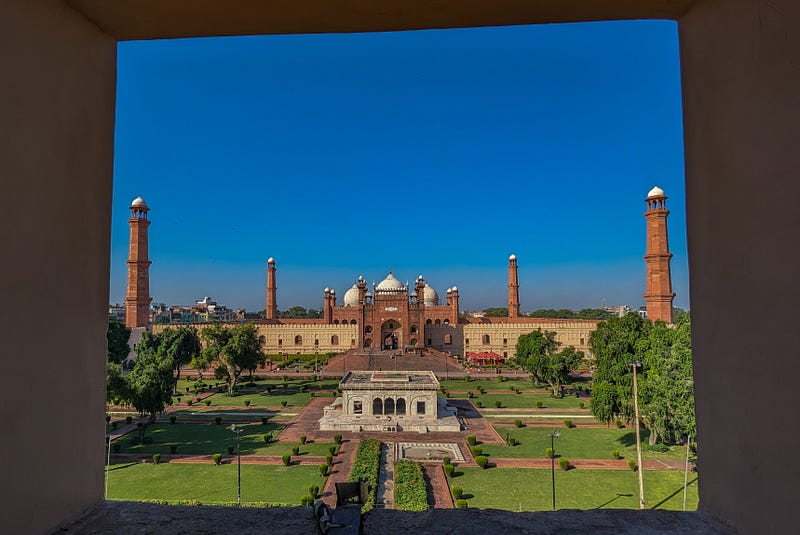
A glimpse of Badshahi Mosque | photo by my friend, Shahzaib Mumtaz

Lahore is a history lover’s dream.

From the ruins of old castles to remnants of ancient fortifications to tombs of mighty emperors to the crumbling havelis — Lahore is alive with the fragments of bygone eras, still carrying with it the memories of majestic empires and the whispers of fallen princes.

But, in the midst of all these fascinating pieces of history lies a bustling metropolis, home to nearly twelve million people. In Lahore, you will see a monolith of a city centre from the streets, looming above you with all its splendour… and as you go around the city centre, you will find yourself within the ruins of an ancient majestic empire and tombs of legendary emperors.

Here is a compilation of three Mughal architectural feats that survive to this day, in Lahore, and which I visited during my two brief visits to this legendary city.

The Tomb of Emperor Jahangir

March 14th, 2023

The rickshaw makes its way precariously through the heavy flow of traffic, squeezing in through the narrowest gaps between vehicles, as we — me and my two companions — jolt around within, consumed by laughter and hysteria. The aloo paratha we had consumed that morning, a testimony to our friend Rabia’s excellent cooking skills, bounces within our stomachs. We’re engulfed in smoke, expelled by vibrant trucks, and dust, swept our way from the construction sites. Lahore’s traffic — and its pollution levels — are notorious. Our conversations are indistinguishable as the rickshaw drives over potholes and speed bumps.

Is it terror we’re feeling — or exhilaration?

But this is part of the whole experience, we tell ourselves. We are here in Lahore for adventure, not comfort.

As I bounce along in the rickshaw, I notice small details —the far wall of several alleys is made of red bricks that look worn out and centuries old… and it hits me, then, that perhaps it really is centuries old. This entire place looks ancient, and I feel as though I’ve stepped back in time, to the era of Mughal emperors.

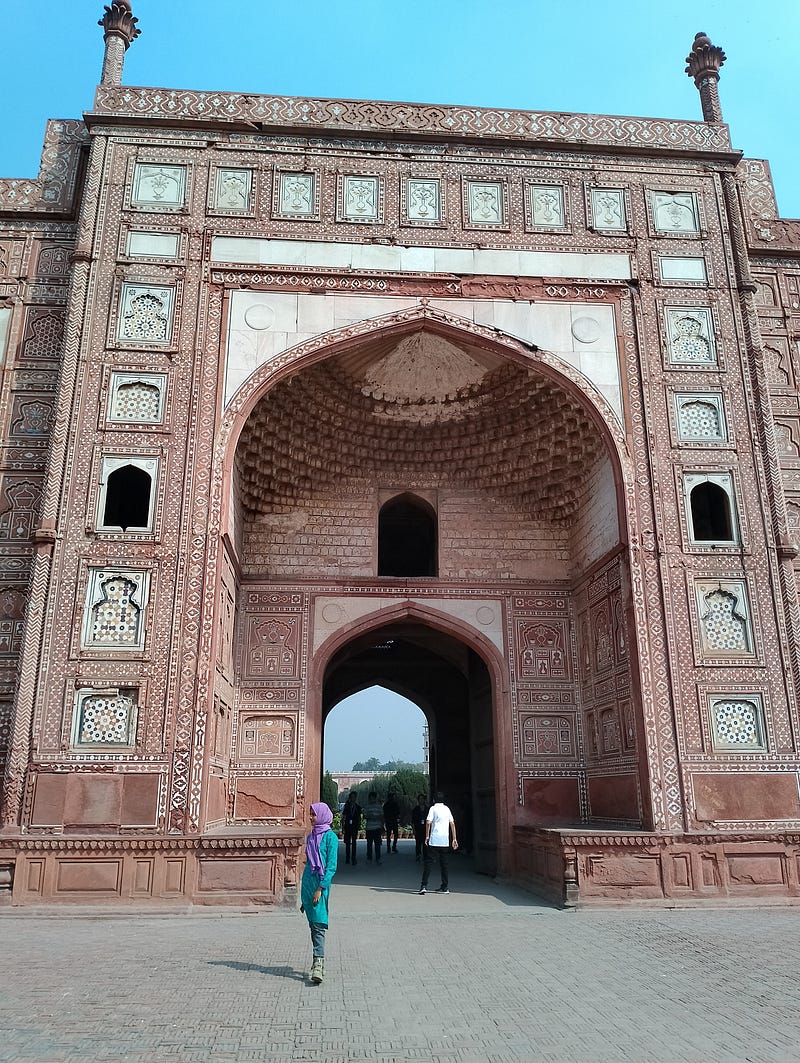
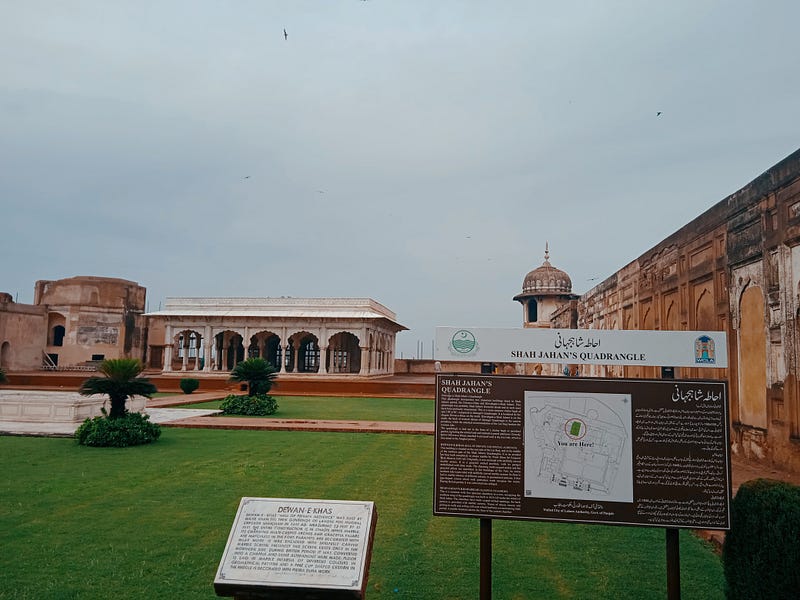
The arched entrance to the Tomb of Emperor Jahangir bears striking resemblance to the Mughal architectural feats we’ve seen on pictures and history books. Faded, cracked brick walls curve to either side of it, and extend to as far as our eyes could see.
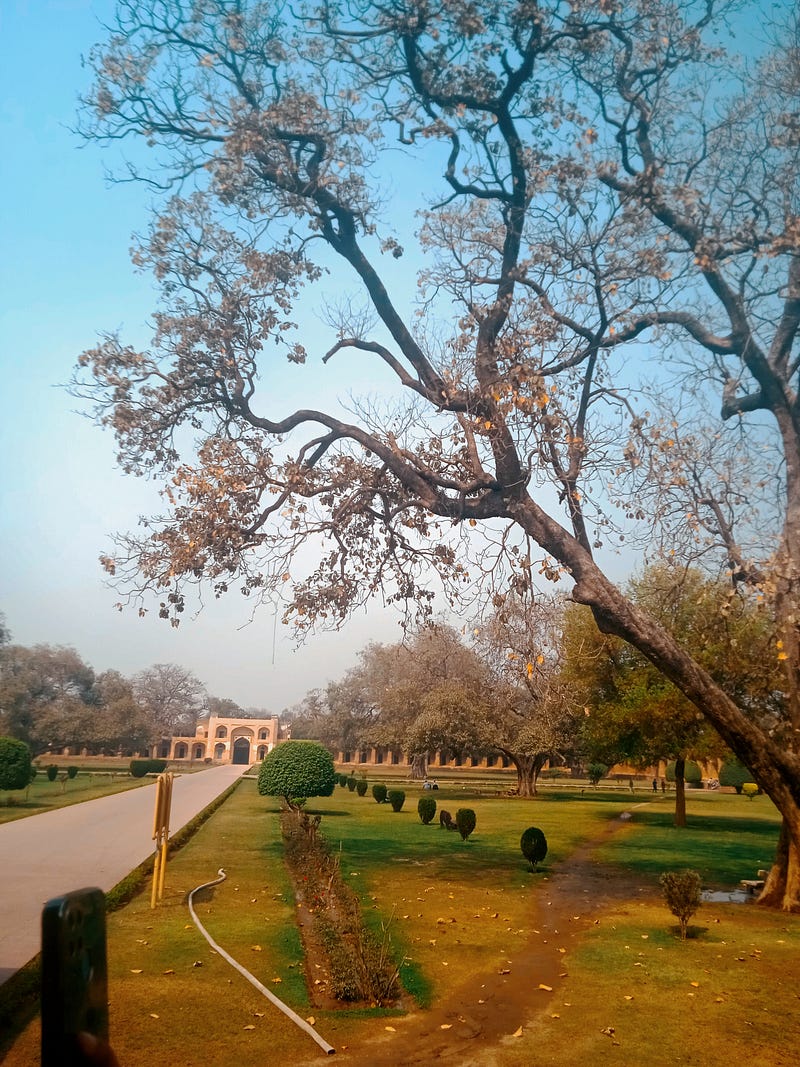
These gardens and courtyards were frequent haunts of Emperor Jahangir | photos by Sharika Hafeez

It is a majestic sight, one that would have stopped passers-by in their tracks, back in its day. Today, it blends in with the decrepit surroundings, its previous grandeur now a fading memory.

As we walk through the gates, we are met with the sight of an expansive, well-kept garden, which I later found out was called Dilkusha Garden. It was in these tranquil gardens, surrounded by ancient oak trees and the high-pitched call of eagles, that Emperor Jahangir liked to spend his time, with his wife Noor Jahan, in between their travels to and from Kashmir.

And so it was here that he wanted to be buried after his death.
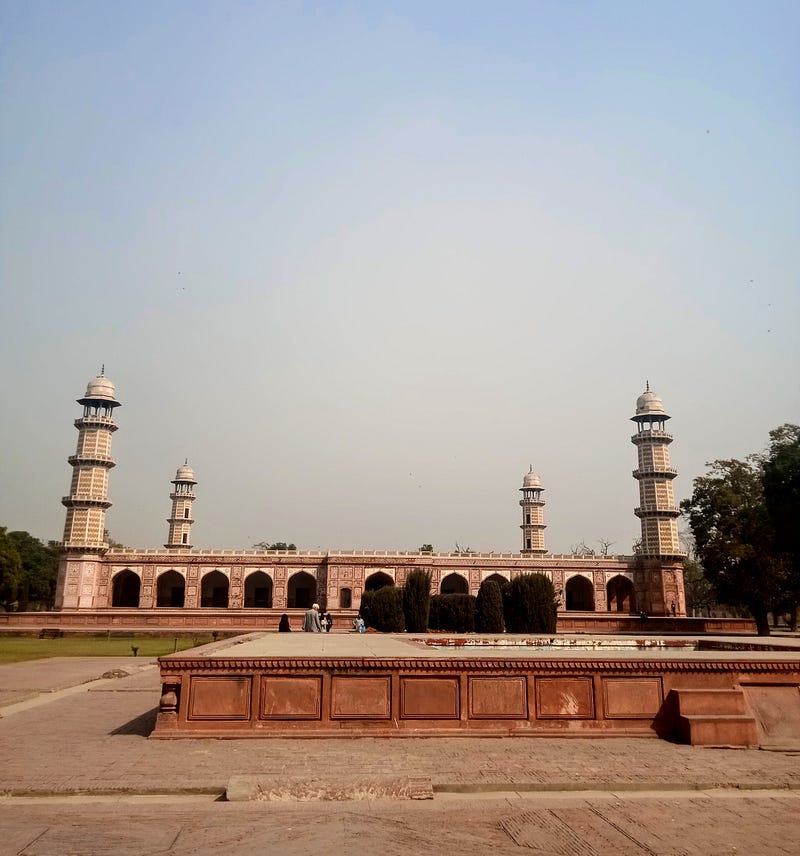
Left: The mausoleum of Emperor Jahangir | photo by Sharika Hafeez. Right: The Akbari Sarai | photo by my friend, Rabia Naqvi

A straight, brick-paved avenue leads towards the Akbari Sarai, a caravan inn originally built for travellers and caretakers of Jahangir’s Tomb. It serves as a colossal, impressive portal to the Tomb of Emperor Jahangir, decorated with stunning stonework on red sandstone, a typical feature of Mughal architecture.

This arched entrance leads to a fountain, beyond which stood the square mausoleum, flanked by four octagonal minarets in each corner, and its exterior, too, is made of red sandstone and inlaid with white marble motifs. The burial chamber within this is surrounded by richly-decorated arcades, and the tomb in itself is made of white marble, and is octagonal-shaped.

These tranquil gardens not only serve as the last resting place of Jahangir, but also of Jahangir’s brother-in-law, Asif Khan, and Jahangir’s wife, Noor Jahan, the tombs of whom are located to the west of Jahangir’s tomb.
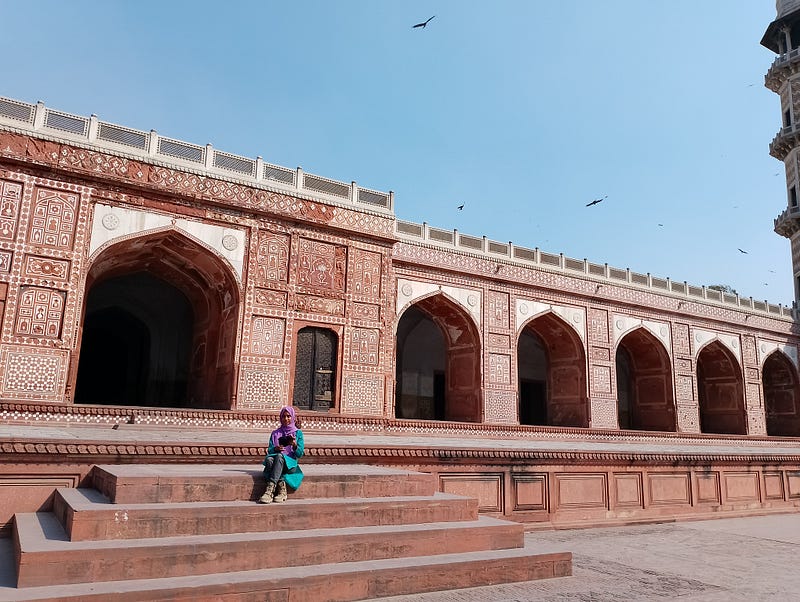
A soar of eagles circle the skies overhead | photo by my friend, Rabia Naqvi

A soar of eagles circle the cloudless skies overhead, swooping towards the distant towers of the mausoleum, atop which they have — probably — built their nests.

The Lahore Fort

15th July, 2022

You don’t often get to feel like you’re in an old Bollywood movie, running through the long hallways of an ancient castle, the hem of your red lehenga trailing behind you… but that was exactly how I felt when I entered the Lahore Fort — although I was definitely not wearing a lehenga.
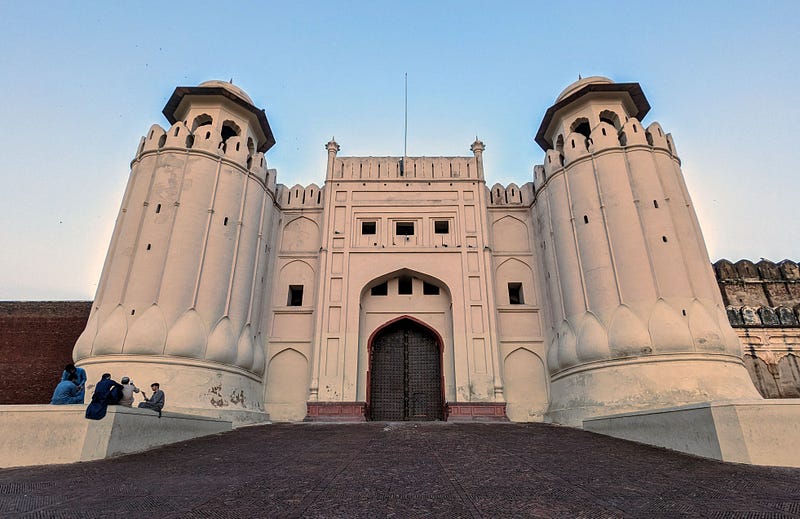
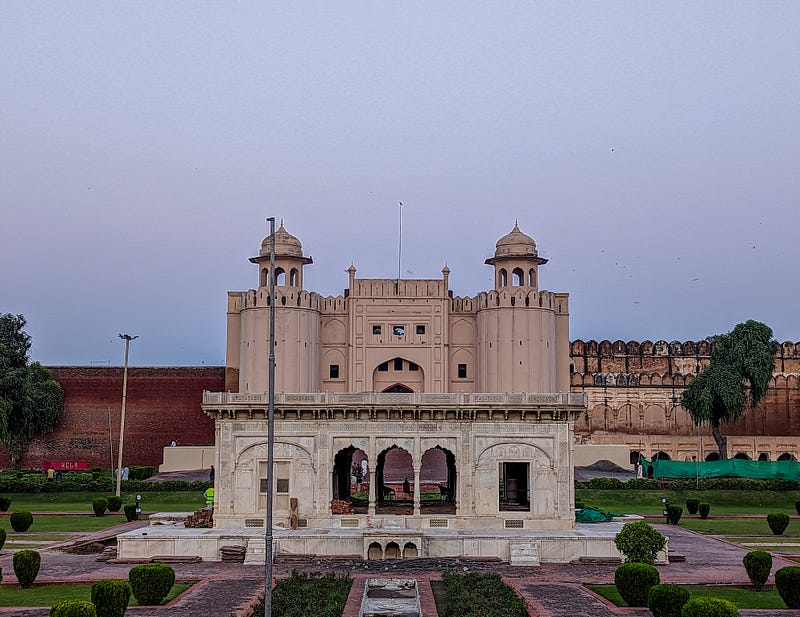
The interior of the fort | photos by Shahzaib Mumtaz

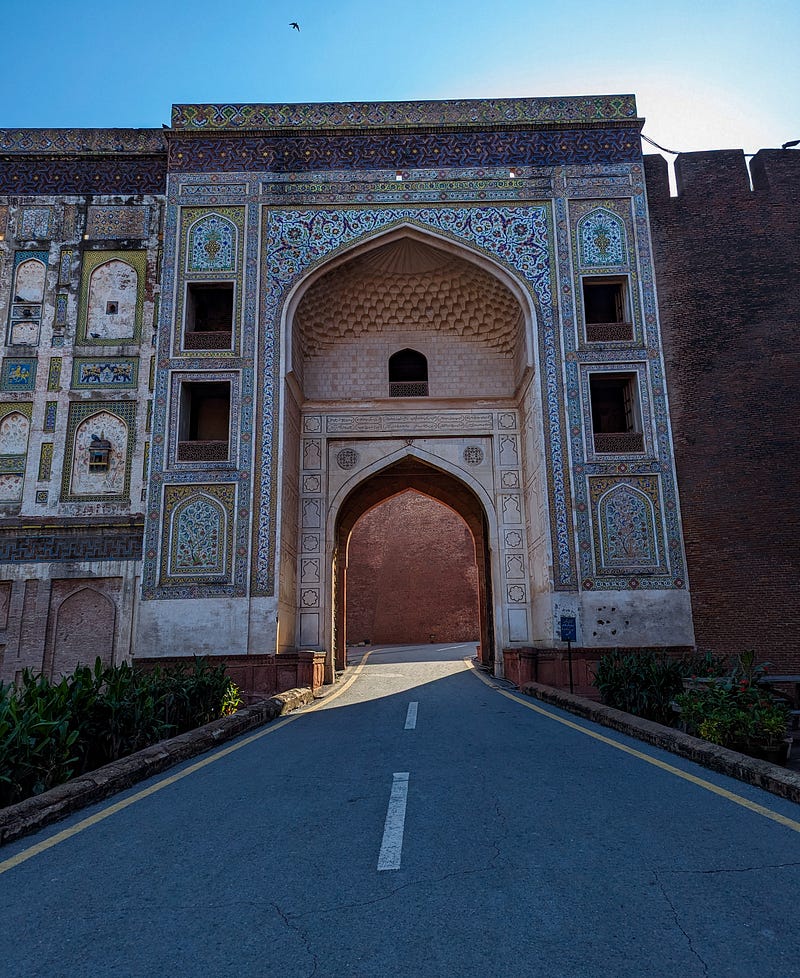
Rebuilt from its old ruins during the zenith of the Mughal empire, the Lahore Fort as we know it today is an impressive citadel to the north of the Walled City of Lahore. It was meant primarily to guard the northwest frontier of the Mughal empire, and many new structures were added to it over the years, as a new emperor came to power.

I remember hallways upon hallways, a cobweb-like assortment of towers and spires, and arched entrances leading to lush gardens and majestic castles, and nooks and crannies hiding the best views of the city, revealing itself only to those who dare to venture to little-explored places within this ancient fortress.
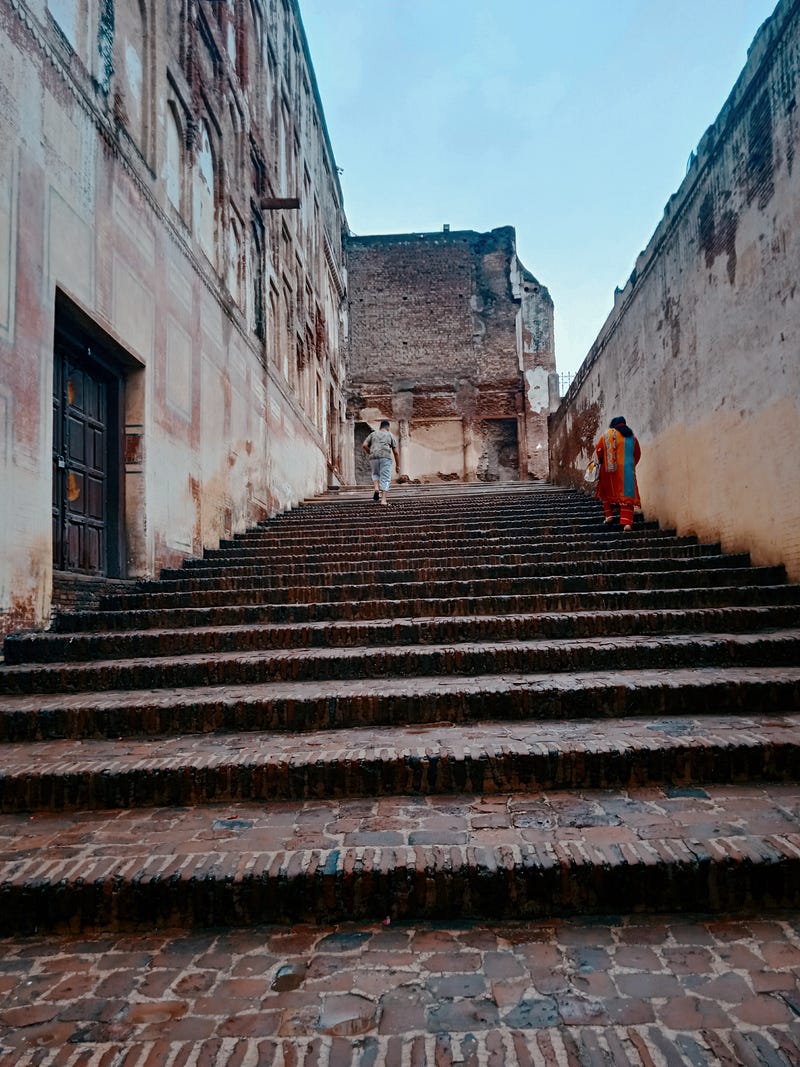
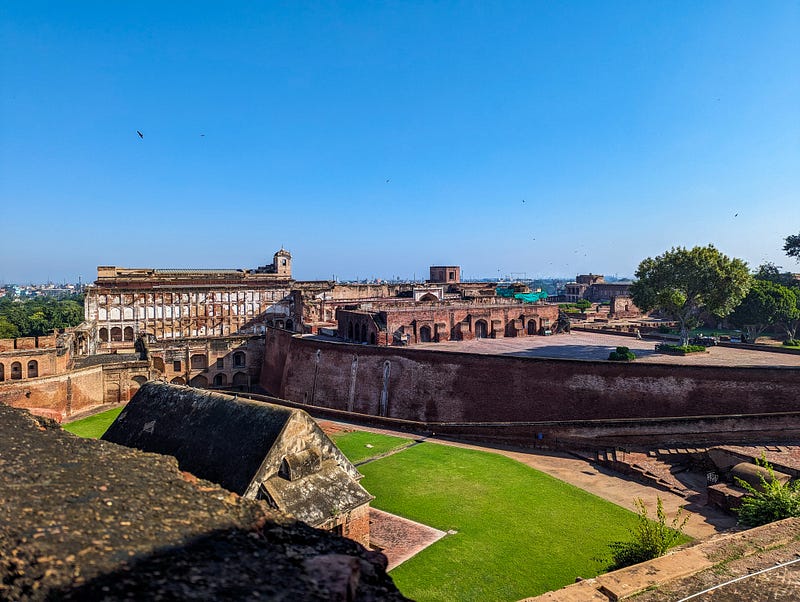
Glimpses from the Lahore Fort | Left: by Sharika Hafeez, Right: by Shahzaib Mumtaz

But what fascinated me the most within the Lahore Fort was its Palace of Mirrors (Sheesh Mahal). The interior of the hall is decorated with thousands of tiny mirrors, coloured glass and precious stones. It would have been a dazzling sight, once, when the candles were lit at night and their light bounced off the mirrors in a thousand mesmerising patterns.

Badshahi Mosque

15th July, 2022

Located close to the Lahore Fort, and built by the Mughal emperor Aurangzeb, Badshahi Mosque is a testament to the intricate nature of Mughal architecture. Made with the typical red sandstone inlaid with white marbles, it is the largest mosque built during the Mughal era.

A staircase leads to an imposing arched entrance (where you have to leave your shoes behind), decorated with elaborate stone carvings and marble inlay, which opens up to a massive courtyard, probably filling up with worshippers during special gatherings and prayers.
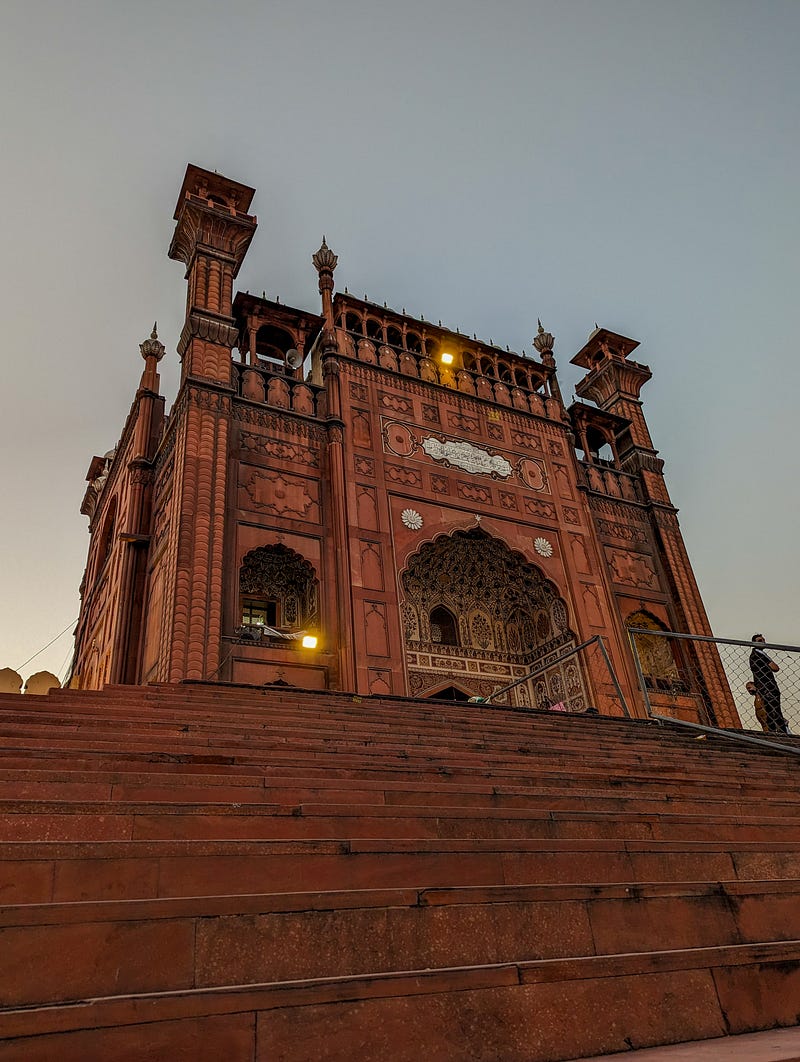
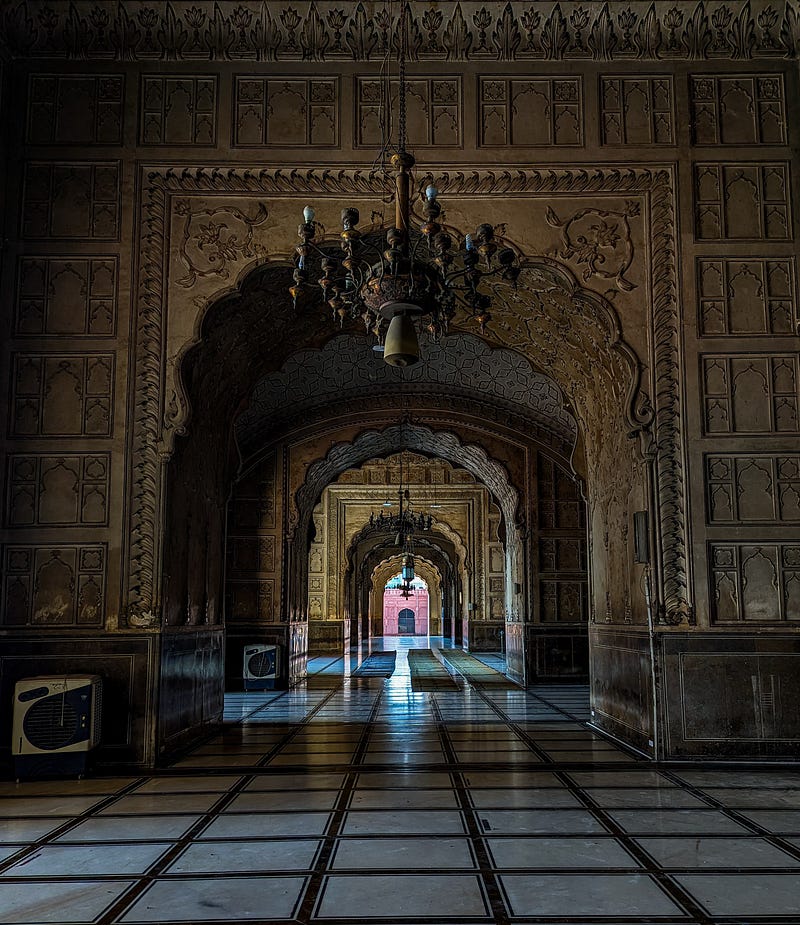
Left: A staircase leads to the Mosque’s imposing arched entrance. Right: The main prayer area | photos by Shahzaib Mumtaz

Beyond the courtyard is the main prayer hall, and its walls are decorated with stunning floral designs, stonework, and carvings. If you look up, you’d be instantly transported to a different era.
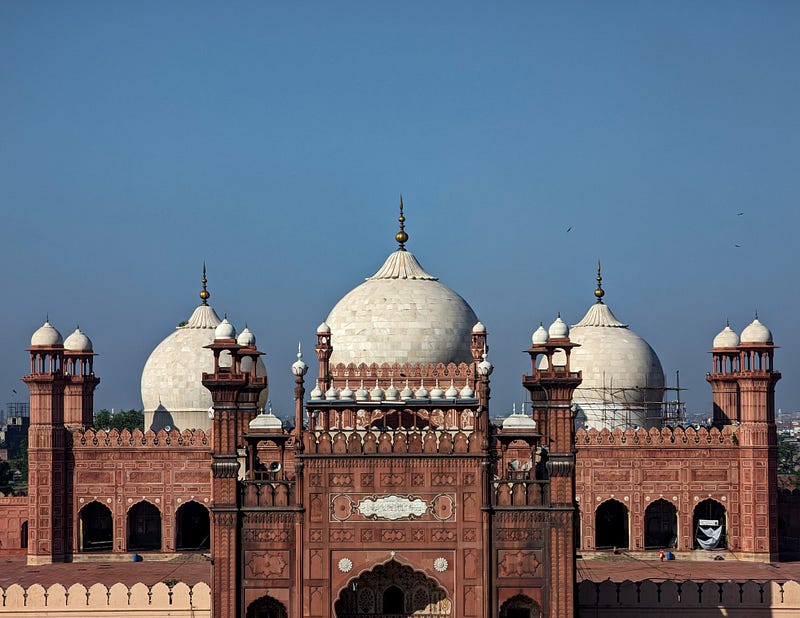
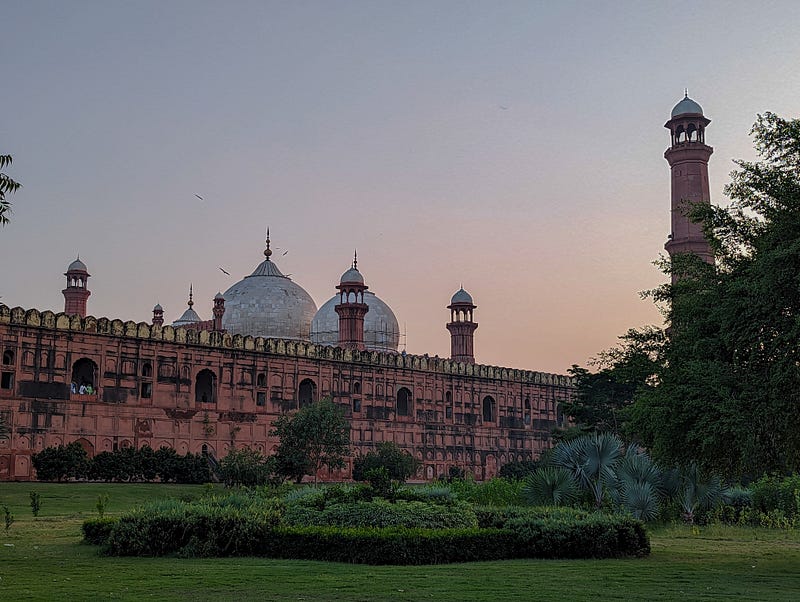
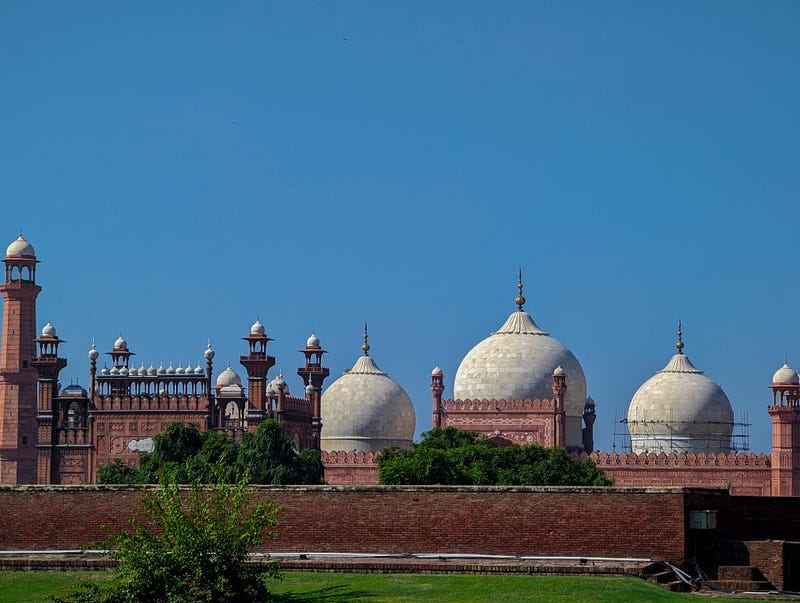
The majestic domes of the Badshahi Mosque from different angles | photos by Shahzaib Mumtaz

But when you look from the distance, it’s not the crowds of tourists or the cacophony caused by the vendors that you’d notice — it’s the three majestic domes rising up to the skies that would draw your attention, cutting through the raucous city and presenting a serene picture: preserving some of its grandeur from olden times.

Most of the details of my visit to Lahore Fort and Badshahi Mosque are now hazy and half-forgotten. It has been two years, and I regret not writing down small details, snippets of our unhinged conversations, fleeting moments of yearning for something I cannot quite put into words… but why do I still remember the taste of the awful breakfast we had from a small hotel that day, and the colourless, flavourless cup of tea with a teabag that looked as though it had been used twice before?

Travel
History
Culture
Nonfiction
Travel Writing
Recommended from ReadMedium