
The Reflective Eclectic
The Face of the Other
Universal survivor’s guilt as a basis for ethics
You’re a survivor. You’re the result of an intense competition between hundreds of sperm seeking to impregnate an egg. Only one made it, becoming you; the rest died. You feed yourself off the flesh of others. If you eat meat, hundreds of beings die to give you sustenance; and if you’re a vegan, plants give their lives for you. You insensibly step on ants, slaughter microbes with every breath, and commit genocide on bacteria just to combat an infection. But, it’s not just lower beings you butcher. Many people have died in your place. You could’ve just as easily been where they were or done what they did. Soldiers have fought for your safety. Workers have worked themselves into an early grave. Planes fall from the sky, miss you, and hit someone else. Cars crash a minute after you pass an intersection. Dozens perished to show physicians how to cure diseases that they cure for you. To exist means to survive in place of others. You have survivor’s guilt the moment you’re born. You stand accused.
The philosopher, Emanuel Levinas, wanted you to know all that. He was a French Jew, who survived the Holocaust. He knew about survivor’s guilt, the special kind of guilt you feel when you survive when others haven’t. He thought our universal survivor’s guilt gave us a basis for ethics.
To get this, you’ve got to understand the situation at the time and place he was writing, just after WWII. The certainties of the Middle Ages were long gone. Christian religious faith had taken a hit in the enlightenment. Jewish religious faith was all but down for the count after the Holocaust. Without God telling us what to do, how do we know what to do? Levinas thought he had an answer. Look at the face of the Other.
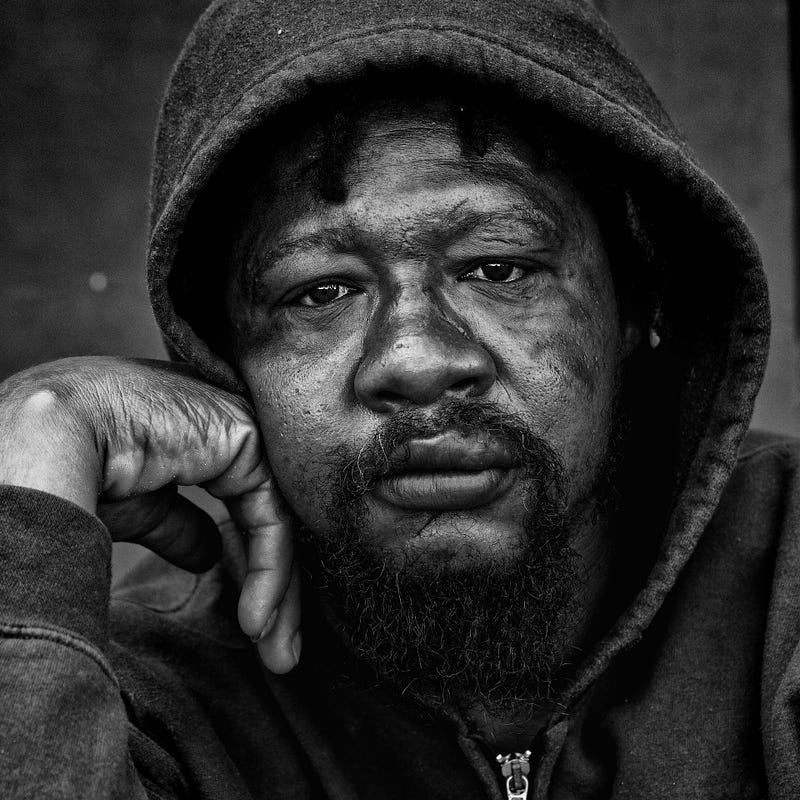
When you look at another person’s face, you see something like your face: an outlet for all your emotions, a portal into your feelings. Just as you are, they are. If you feel vulnerable, they feel vulnerable; it shows on the face. Their face, like your face, shows a self consciousness you don’t see when you look at rocks, trees, or figures on a spreadsheet. It’s impossible to disregard a face, because you have a face. Just as you are not a number, a category, or a tool to be used, neither are they, because they have a face. The face is a reminder of your survivor’s guilt; the fact that you stand accused, but not strictly culpable. The face reminds you that you’re in debt to and dependent on others for your very existence.
As a therapist, I’m faced with the face of the Other every day. It’s my job to look at that face. I suspect most of the time, it doesn’t matter what I say to the you, just as long as I look at you. When you feel seen, your humanity is affirmed. No matter what else is happening, at least you are seen.
You know what cold reality is like. You’ve called that big corporation and been put on hold. If you saw them face-to-face, they might take you more seriously. The bullet that hits you doesn’t care if it hurts your soft flesh; but most executioners must hide your face before they can do their job. The sea doesn’t hesitate before it drowns you; but the sea can’t see your face. When your number is up, it’s up; the sun, the clouds, the moon, and the stars will only look on and yawn; but they have no face. There doesn’t seem to be anything in nature that cares if you live or die. If there’s a God in heaven, He’s in the face of the Other.
If you try to read Levinas, you will have a very hard time. Instead, go find a face and look at that; preferably a foreign, alien face, or a face of someone with whom you disagree. Look deeply into the face. If you are fully human, you will not be able to dismiss, discount, or depreciate that person again.


