
The Fabricated Importance Of Time — Could We Live Without It?
Food for thought from the people of Sommarøy to the time-obsessed society
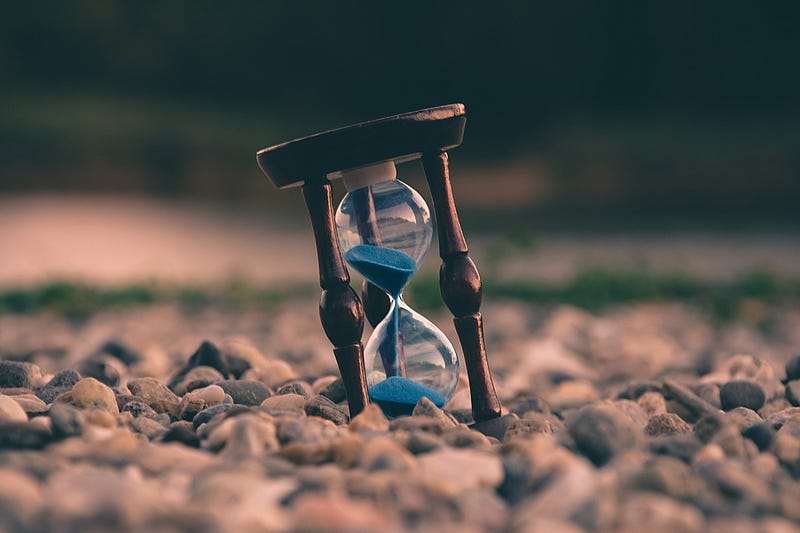
A Norwegian island that is host to the midnight sun in the summer has come up with an interesting way to attract tourists. Before entering the island, people should leave their watches on a fence, abolishing time for the duration of their stay at the island.
The locals argued that they should do whatever they want whenever they want during the summertime when the sun never sets. Therefore, time becomes irrelevant, and they asked for becoming the world’s first time-free zone.
Although turned out to be a publicity stunt, the idea of abolishing time that the people of Sømmaroy introduced is thought-provoking. Inspired by their concept, this article aims to shed some light on the invention of time, question its importance, and provide an impulse to imagine an alternative world.
Is time an illusion?
From a psychological point of view, time passing is a construct that our minds created. In the article “The Illusion of Time: What’s Real?”, R. L. Kuhn interviewed multiple physicists on their study of time. According to Julian Barbour, a British physicist, time does not really exist and is just a reflection of change. “From change, our brains construct a sense of time as if it were flowing.”
Huw Price, a professor of philosophy at Cambridge University, argues that present, past, and future come from our mental states. “A present moment that is special; some kind of flow or passage; and an absolute direction.” And MIT physicist Max Tegmark, claims “The only reason I feel like I have a past is that my brain contains memories.”
How come then that we consider time to be one of the fundamental pillars of our life and, more importantly, derive our identity from it?
To answer this, we should look at where time came from, when it was introduced and why. It can be surprising to many that modern time-keeping is pretty recent.
A brief history of time
Time has been measured by different cultures for 30,000 years. Previous (and some current) civilizations measured it by observing nature: seasons, moon, stars, rivers. William J. H. Andrewes, a specialist in the history of time measurement explains that over 5,000 years ago, Egyptians and Babylonians invented calendars to “organize and coordinate communal activities and public events, to schedule the shipment of goods and, in particular, to regulate cycles of planting and harvesting.”
The ways in which people had measured time were so many and depended on their traditions and locations. For some cultures time was linear, for others it was cyclical. People living close to the equator based their time on moon cycles, people living in the North based it on seasons.
On account of industrialization and improved technology, the need for measuring time in more precise ways — hours — has increased. Human labor started to be paid by the hour to address the “challenges” of shorter winter days. As Goldhill explains, “Employers started to carefully track work attendance, with timestamps marking employees’ arrival and departure every day.”
“All units of time are arbitrary inventions used for industrial means.” — Olivia Goldhill
However, the many differences between cultures’ tracking of time posed significant challenges to the slowly globalizing world. Steadily rising international travel and trade at the end of the 19th century brought with it the need for a unified time and calendar. Under these circumstances, standardized time based on the Greenwich meridian was established.
Criticism of the time reform
“Time has always been a product of the human imagination — and a source of tremendous political power.” — Ian P. Beacock
However, the time reform that stemmed from the European need was met with resistance. Natural rhythms and local traditions were disrupted in the advantage of a new mandated time framework, often strange to these populations. Indigenous time-keeping was rendered irrelevant for the sake of Europen values, such as progress and efficiency.
According to Ian P. Beacock, a modern European history professor at the University of British Columbia, “Time reform was modernity defined in Western terms, developed to suit the interests and assumptions of the world’s wealthiest and most powerful citizens.” In an attempt to maintain at least some part of their culture, numerous nations enacted a double-time: the traditional one as well as the standardized one.
Importance of time today
With technological advances, our life has become dependent on time. We have become obsessed with it, and stress most of the day about time-sensitive issues.
Digital innovations, supposedly improving our life, presuppose that our day is split into time-slots allotted to each activity, precise to a minute. As optimistic as it sounds, the same technology defines how we should live.
So the question is not whether we could abolish time in our current lifestyle; but rather, could we change our lifestyle so that we could abolish time?
As explained, time is absolutely necessary when it comes to international matters, such as trade and travel. It would also be definitely challenging in big crowded cities, with people living a few meters from each other, educational systems set strickly by hours, and where work is the central point of peoples’ lives.
However, it could remain a viable option for day-to-day life in locations such as the peaceful island of Sommarøy, where people know each other, are considerate to not interfere with others’ lives, where education could be more of a democratic institution.
It would definitely make life less convenient. But if we think in terms of happiness, convenience is not absolutely necessary. At the end of the day, what counts the most is how content we and the people around us are.
All in all
In my opinion, living without time would account for more communal life, dependent on real-life interaction and actual communication with people. And studies (as well as our own instincts) have shown that meaningful communities are important to leading a fulfilling life. The happiest people are most engaged with their community.
As appealing as it may sound, our lifestyle would need to be changed drastically, and in many metropolitan places, that remains a far-fetched idea. However, in many removed communities or off-the-grid living solutions, time does not play such an important role in daily life. There, the flow of time may very well reflect the one Huw Price has described.
Ian P. Beacock says: “Our sense of time has everything to do with how we relate to one another and understand our place in the universe.” I would add that our sense of time is not dependent on a mechanical clock. It lies in our senses, observational abilities, and internal compass.


