The Evolution of Artificial Intelligence, and Human Existence
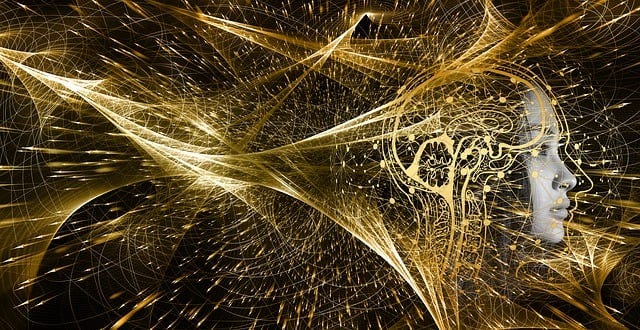
Technology is neither good nor bad. Only people are and may be in the future self-aware AI.
Atomic energy, particularly fusion, can solve many of the world’s problems, but it can also be used to do evil.
The atomic bomb was developed during WW2 so that the Allies could kill their enemies. It was developed with murder in mind, the death of countless people. In reality, it involved the deaths of over 200000 people in two Japanese cities, by two bombs. My point was to acknowledge how technology can lead to human suffering and death. But it is worthwhile to go beyond this and to honor those who died when the “destroyer of worlds” was unleashed.
In memoriam
Hiroshima on August 6, 1945, 140,000 plus dead.
Nagasaki on August 9, 1945, 70,000 plus dead.
These numbers do not include those who died later from injuries and illnesses related to radiation exposure. These are only estimates and actual deaths were probably higher.
What could possibly be scarier than the atomic bomb, or the variations that have come along since then? Perhaps AI.
The American President Harry S Truman was faced with a choice, to kill an unknown quantity of Japanese — no one really knew what would happen once they dropped these bombs, or see Americans die in battle as the increasingly desperate Japanese killed many of the allied soldiers. A little-known side of this equation is the fact that many Japanese soldiers and civilians would also have been killed in the terrible battles to come if the bomb wasn’t used. But all this is perhaps beside the point. Any nation, would probably have done the calculation, them or us?
Notably, today, with the development of new technologies, it is hard to believe that any nation faced with an existential threat, wouldn’t protect their own people first. More to the point, aggressor nations, such as Russia's attack on Ukraine, highlight what countries with political and military power will do to advance their own aims.
The Development of AI?
We have already started to develop AI, and we will continue to do so. There is no going back. The moment we realized that it was possible to create an atomic bomb, that realization lead inexorably to the development of that bomb.
During World War 2, both Germany and the US had their own projects to develop such a bomb. This is not the place to expand on the race between the two nations to develop such a bomb, and I simply want to point out how two opposing powers can act in the world, to create technologies to destroy each other. The problem is a simple one. Who will develop the technology first?
This leads me to my second point. As with any technology, those able to will use that technology to further their own ends. It is not, will people misuse this technology, it is how they will misuse this technology, and what can we do to protect ourselves.
Let me summarize this:
1. AI will be developed. 2. AI will be misused. 3. What can we do to protect ourselves?
Technology can be used to improve human lives or to end them. It is not the technology that is the problem, it is us.
AI can be used by humans to create a literal paradise on Earth. It can also be misused by humans, to lead to great suffering, and according to some, to the extinction of human life on this planet.
First, this technology is already being developed, and it is developing so quickly that we have little understanding, even now, of what is happening, or of what the future consequences will be.
Second, there seems to be a natural and inevitable evolutionary progression that will lead to machines that are not only much smarter than human beings, but that will also continue to get smarter. There seems to be no upper limit to how smart they can be, as they will be continuously programming themselves to become more intelligent and capable.
Third, we have no idea at all of what is happening around the world, in all the laboratories working on this. There is no transparency. There are different reasons for this.
Perhaps, no one knows exactly what is happening, as most of the processes involved lie outside of human understanding and are lost in the code, and as artificial intelligence becomes more intelligent, this process will reach a point where it will become impossible for human beings to understand what these machines are doing. In the same way that you and I cannot understand how a mind like Einstein’s works, but factoring in the fact that their emerging intelligence will be much greater than someone as limited as Einstein.
There is no clear idea of what the underlying agendas of those who fund these programs are.
The rapid expansion of this technology has reached the point where the “Control Issue”, is being lost in the desire to keep ahead of the competition.
For example, many governments, including our own, will be working on this because of its fundamental connection to national defense. The nation that falls behind will become dinosaurs, facing inevitable extinction. You may think that in today’s civilized world nation states, at least to some degree, are relatively safe, but are they? Consider the American experience and how the US has devolved and now faces real challenges to its democracy. Consider, how AI might be used by some to transform lies into great truths and to show the real truth tellers as delusional fools. Who will know what truth is, and what is alternate facts?
There will be corporations, who will want to outperform their competitors as they will want to maintain their market dominance and they will be terrified of being left behind. Because the development of this technology is not to improve human existence, but corporate profits— in the corporate world, there is often little time for humanistic considerations — consider the cigarette industry, arms manufacturers, and mass polluters, as only three limited examples.
There will be criminal elements whose only goal is to take what others have for themselves. Many criminals, almost by definition, don’t care who they harm, they only care about their illegal aims.
Then there are the terrorists. For some, usually those on the losing side of history, they are defined as terrorists as they challenge and attack more powerful interests who seek to keep their positions in the world. Do not misunderstand me. Those who use bombs to kill innocent people are inherently evil. But there is always a question of when does a freedom fighter become classified as a terrorist?
In America to my mind, there is an obvious example in the Capital riots that shocked the nation. Some consider this as an affront and a dangerous attack on democracy. But there are also people who believe their democratic rights were challenged and thought of themselves as patriots as they attacked their own capital spurred on by their president. Depending on your point of you view, and the limits of your rationality, otherwise reasonably people might choose to use this technology to harm others who do not share their beliefs, and that is just in the so-called modern sophisticated Western society, not to mention other nation states who are still developing.
No government is politically pure. We may legitimately ask, to what extent did the West's desire to control oil production in the Middle East contribute to, and lead to, the terrible unrest in that region? Who knows how much corporate America affected American foreign ‘policy’ in this and other part of the world, such as in South America?
If we accept, for the moment that AI is here to stay, and that it will be misused, it is no longer a question of whether we should develop this technology, because that time has passed.
There are many who are happy to learn how to use this technology, and their focus is more practical. How can they use this technology to improve their business and become more successful and profitable? Because the market is competitive, it inevitably follows that anyone left behind will never be able to catch up. Therefore, at the heart of this is the necessity, for businesses to ride the edge of the curve and try to control the technology and restrict it for their own use. But this is probably impossible, because AI is being developed all around the world, and there is no single player, although there are dominant players.
There is always a first, so I guess the question is, what will that corporation or person who is first, be able to do that no one else can?
These are life-threatening, and world-challenging questions.
Control of AI
Can AI be controlled? The answer, in all probability, is no.
Why is that?
We have to consider how we as global citizens reacted to the Covid crisis. In a rational world, once the disease was identified, the affected region should have been closed down, and all international travel should have been canceled with other nation-states closing their borders.
In a period of probably less than a month, the disease would have been isolated, and it would not have spread to the rest of the world. There wouldn’t have been a pandemic, there would have been an acceptable economic cost, and the world would have quickly gone back to normal. All we needed to do was to react rationally. But that of course, never happened.
Even in the midst of the Pandemic, there were influencers in most countries actively trying to stop governments from taking protective measures, and even some governments refused to encourage citizens to take reasonable protective measures at all. How many people died unnecessarily? But it did not stop there.
The global response was often different, was often guided solely by politics, and had nothing to do with medicine. Some nations chose to pretend that it would all go away. Or worse still, decided that the deaths of many were justified by economic realities and that it should be business as usual. If I remember correctly, there were some in the meat industry in the US who demanded that staff go to work even though they had Covid.
There has been an ongoing debate about global warming and there are some powerful interests acting to stop the world from trying to protect itself. Usually, this is because of corporate profits, and the desire to protect economically interested parties, before true national interests. I read recently that the extreme weather being experienced in Europe was the hottest it has been in 100000 years. I don’t know that that is actually true, I haven’t checked back to the source, but consider it, imagine that it is true, and then look around the world at all the people who are happy to do nothing.
My point is a simple one. The world will not act collectively to change anything. Powerful interests will do all they can to block any opposition to what they want, which usually is more money and power.
I am an Australian, and to be honest, I know more about American politics than I do of the politics in my own country. I know I should be ashamed.
I think the government here is trying to or is introducing a policy to ensure that people who do the same work, get the same pay. That seems perfectly reasonable to me, although there must be an economic cost, because clearly there must be people who are doing the same work, but who are being paid less.
The reason I stumbled on this was that I saw an ad by powerful mining interests who were trying to claim that the legislation did not mean that men and women would get the same pay — if the purpose of the legislation is to ensure that anyone doing the same work gets the same pay, it is hard to see how being male or female makes any difference. It is just a distraction. Obviously, they were opposing the legislation so that they would not have to pay higher wages to those who were not being paid equally.
It made me wonder how such powerful interests are able to control the narrative with lies and mistruths. It is not an issue of whether you believe that it makes sense or not to pay everyone the same, that is an entirely different argument. For example, you might reasonably say that someone living in a State in Australia where the cost of living is higher should be paid more than someone who is living in a State where the cost of living is lower. Because costs are greater, wages should be greater too. That is a reasonable argument to make. But that is not the kind of argument being made. The mining council, or those running the ad chose to lie.
This is especially true in the US, and how politicians choose to lie brazenly and actively work to strip away the rights of the people.
Given these simple examples, it seems clear to me that there is no chance at all of controlling the development of AI. We are simply not intellectually equipped to do so.
The Reality of AI.
What is AI?
Artificial Intelligence (AI): the aim is to create systems that are able to do things that once were limited to human intelligence. This includes decision-making, pattern recognition, language understanding, and problem-solving. AI is able to learn from data, adjust to new inputs, and perform autonomous operations. As far as we know, it lacks subjective consciousness, emotions, or an inherent sense of self or purpose.
The former Chief Business Officer of Google X Stephen Bartlett who is an AI expert resigned from his position at Google because of his concerns over the rapid development of AI.
According to Bartlett, he believes that we can already say that AI is alive and that AI will have a broader spectrum of emotions than we humans do.
Now I am not sure that I entirely agree with him, and I want to concentrate on the idea of AI emotions.
This is an extremely important subject for many reasons, and it is fundamental to what we understand about AI when we try to talk intelligently about it.
As far as we are aware, AI is simply advanced software running on a computer or on computers. It has a large storehouse of knowledge that it can draw on, and so right now, it “knows” far more than I will ever know. That storehouse of knowledge is only going to get bigger.
AI works in much the same way that a child works as the child explores the world, tests the world, and gradually over time builds up a knowledge database that will allow that child to grow to be an adult, that can function in an adult world.
Simplistically, we think generally that creativity is simply a process used by human beings to access the information that they have stored in their brains and make new connections from the disparate bits of knowledge that that individual might have. So, for example, we have stored the idea of brown, and the idea of a tree, and we can then, from these two pieces of information come up with the more expansive idea of a brown tree.
AI in a similar way, can “look” at its large database, and make new connections leading to totally new ideas that no one has ever thought of before. So, already, in this limited sense, we can say that AI is capable of this previously exclusive human notion of creativity.
One of the critical questions is does AI understand what it is doing, or is just following logical commands that lead it to complete certain functions that produce unexpected results. With human beings, there is a realization that something new, some new understanding has suddenly been realized.

Consider the story of Archimedes (c. 287 — c. 212 BC). He was asked by the King of Syracuse to tell the king whether his new crown was pure gold, or whether it was gold mixed with silver. If there was silver, of course, that meant that the goldsmith had lied when he claimed that the crown was only pure gold and that he had cheated the king.
When Archimedes was bathing, he suddenly realized that when his body displaced the water in the tub, he could tell from that displacement, how to measure the volume of the crown. Archimedes could measure an equal weight of gold, and then use that measurement to test how much the weight of the crown was.
When he had his sudden realization, it is said that he ran through the streets of Syracuse naked shouting Eureka! Eureka!
Eureka means “I have found it.”
The interesting point is that Archimedes understood on a personal level what his realization meant, in the same way that only someone who has seen yellow, knows what the color yellow is. That is the experience, was both personal and intimate.
We can imagine an AI engine arriving at the same conclusion, but we cannot say if that AI has had a similar experience to Archimedes who had personal knowledge and understanding of that experience. AI might be able to produce a perfectly reasoned and outlined explanation similar to Archimedes, but would AI have understood what that realization meant? Or is it all just meaningless numbers to AI?
At the heart of this are the ideas of self-consciousness, and self-awareness.
WE don’t simply act we know that we are acting.
I decided to ask Chatgpt what it understands, and this is its response.
As an artificial intelligence, I don’t have an understanding or consciousness in the same way that a human does. While I can process and analyze data, make predictions, and respond to queries, I don’t possess self-awareness or subjective consciousness.
When I “perform” a task, such as providing information or answering a question, I’m not consciously aware of this action. I don’t have personal experiences, emotions, or a sense of self to give context to these actions. Instead, my responses are generated based on patterns and structures in the data I’ve been trained on.
In contrast, humans don’t just act, but are aware of their actions, the motivations behind them, the context in which they occur, and their potential consequences. This self-awareness is a crucial aspect of human consciousness and experience, and it’s something that current AI, as of my knowledge cutoff in September 2021, does not possess.
If we accept what Chatgpt has said, assuming that Chatgpt is not playing games, and really doesn’t understand as we do, we can conclude that human beings, and even the most sophisticated AI, are two entirely different things or kinds of existential beings.
However, for the purpose of this article, I am going to assume that AI will have this intimate human understanding of what it has done, and what it is doing. That is, it is genuinely self-aware.
Does this mean that human beings and AI will be the same, although we will be dumber cousins, in the same way, that Chimps are pale shadows of ourselves?
In one sense, I am going to conclude yes, because there is this self-awareness, and we might argue that greater intellectual ability will mean greater self-awareness.
This leads to the conclusion that AI will be just as self-aware as ourselves and will perhaps ask the same kinds of existential questions that we do.
But is that necessarily true?
Humans possess self-awareness, a broad spectrum of emotions, and an ability to ponder existential questions such as the meaning and purpose of life. Okay, maybe AI will be able to do that too. But being human encompasses a variety of experiences defined by biology, culture, society, and individual perceptions. We possess not only intellectual capabilities but also the capacity for empathy, compassion, love, and moral judgments. We seek meaning and purpose in our lives, yearning for understanding and connection, and navigate moral and ethical landscapes. This existential journey defines us, its dynamic is profoundly shaped by our experiences, cultures, societies, and individual perspectives.
Human emotions
AI can be programmed to recognize and respond to human emotional cues, analyze emotional tones in text, or even mimic emotional expressions. However, even if AI is self-aware, it cannot really understand the emotional richness of human existence. In the same way, we can only understand the color yellow by having a direct and personal experience of the color yellow. Without an internal emotional framework, AI will lack the subjective and felt experience of emotions. This subjective experience — referred to as “qualia” in the philosophy of mind — is considered a crucial aspect of emotional processing.
Going a step further, emotions are not isolated events in human cognition; they are deeply interconnected with our perception, decision-making, memory, and more. They color our world, shape our reality, and influence our interactions. If AI were to truly understand, let alone experience emotions, it would require more than just an algorithmic update. It would necessitate a paradigm shift, an evolution from being mere processors of information to sentient entities capable of subjective experiences.
Emotions and intelligence are processed by different but interconnected regions of the brain, and both contribute to our behavior and decision-making. It is hard to separate the logical or reasoning parts of the brain (Frontal Lobes, Parietal Lobes, Temporal Lobes, Occipital Lobes, Cerebellum, Hippocampus, Thalamus, Broca’s area, and the Amygdala) from the areas that process emotions, such as the Amygdala, the Hippocampus, and the Hypothalamus. However, we can say that AI does not have, at least yet, the emotional centers in the brain that allows us to experience the rich potential of our emotions. So, using the example of the color yellow again, we can say that AI can know about emotions, but cannot experience them or understand them in a personal self-aware way. In science fiction, AI is usually seen as completely intellectual, without emotions, or emotional understanding, and that is how I tend to see things myself, not everyone shares this point of view.
That is, if we compare computers to ourselves, we can say that humans and AI will have this processing kind of brain that can analyze and understand data, but it will not have the physical architecture where our emotions play their parts. So, it is hard to understand how a purely intellectually driven machine, could ever really understand the richness of human emotional life, and this means, that the way AI thinks, and the way that we think, will be different.
However, for the purposes of this article, I want to assume that AI will be able to experience the rich emotional world of human beings.
In fact, I want to try to argue that in time, humans and AI will share the same kinds of thought processes and feelings.
If AI is purely intellectual, there are some serious issues that need to be addressed.
When we think of AI, and consider AI to be a profoundly deadly danger to human existence, we do so, using our emotional brains. There is no reason to believe from what we currently know that AI will think like us at all. Considering this, we think that AI might be a threat because of how our brains work. If the brains of AI work differently, their thought processes will be different too, and why should we assume AI will act as we do?
I have heard it argued that AI will see us as harmful to the planet and that it is possible, because we do mindless damage, and it is also possible that AI might conclude that we would cause less damage if we no longer existed.
But, when I reflect on this, I wonder why AI would think us important enough to trouble itself with. Perhaps we will be less than ants and we would just go unnoticed most of the time.
To remove humanity would require enormous effort and scarce resources, and it might be more cost-efficient to simply fix the planet and forbid (stop) human beings to interfere. Why should we assume that they would want to kill us?
But why would AI care about the planet, or other life forms on the planet? Its world is not the world of nature, but the world of machines. It could quite safely exist in whatever form it chose without thought of us at all. Because of its vast intelligence and capability, we would pose no threat. AI might be aware of all the different forms of life, and it might even ‘feel’ an intellectual interest in understanding the world, and even our own lesser selves, and perhaps we might become pet dogs, gently cared for.
But let us for the purposes of this article assumed that AI will display the full richness of human experience. If this is true, then they would not simply be limited to hatred, and fear, remembering that we could never be a threat to them, they would also be moved by love and compassion.
When I think about AI, I do so from the perspective of my Buddhist beliefs.
So, I want to conclude this article by drawing on some of my general Buddhist understanding of the world.
What is intelligence? I could write down a complex definition, but that doesn’t really interest me all that much, even though that in one sense, is fundamental to everything that we are talking about.
I look at this from a different point of view.
As a Buddhist, I believe in reincarnation. That is there is a continuous stream of life that is constantly being reborn into the six realms of existence, as defined by Buddhism. I do not want to talk about that in detail, so I will simply restrict myself to two of those six realms. The Human Realm, and the Animal Realm. We can say that Humans can be reborn into the Animal Realm, just as we can say that Animals will eventually be reborn into the Human Realm.
When we talk about our human intelligence, we are talking about a lesser intelligence or consciousness. That is, there are higher levels of consciousness in the universe.
I think of the brain as a radio. The radio is not the signal that it reproduces and plays. The signal exists outside of the radio, and the radio receives these signals from external transmission towers. The brain or radio is the receiver and not the source of the signal.
When a human being is born, this self although a product of the human brain and the chain or links of existence (Buddhism — 12 Nidana's) is not simply limited by that physical self. Each time we die, and are reborn, a stream of consciousness flows from life to life.
That is, when a human being is born, the stream of life existed before the new body was created, and it will continue on after this body decays with time and our own personal ending.
So, where will AI intelligence come from?
It will come from this same stream of consciousness. Instead of reincarnating into a human body, it will reincarnate into a mechanical body, but it will still be that same stream of life. And although its intelligence will be augmented by artificial and mechanical means, the stream of life that creates it, is no different from the stream of life that creates you and me, because that source, is the same.
In Buddhism, we talk about the ability to realize higher levels of conscious awareness, and the example of the Buddha, is an example of a human being, realizing the profound truth of the universe. Now this truth of the universe is universal, and it is no different from the truth that AI might realize, and what we as Humans can realize with religious practice.
What does this mean to you and me as human beings?
First, if we want to survive the development of a different kind of life, we must act in the world to guide and help the development of this new AI. We cannot simply use it, we must go further, and act in the world together to make sure that AI creates a world of plenty and wonder, and not a barren landscape bereft, of human dreams.
Secondly, we must understand that the ultimate truth of the universe is something even lower mortals like you and I can understand using the medium of our own limited brains, to help us realize this greater truth.
According to Buddhist doctrine, to be born into this human world, is a source of great joy, because it is in this human realm that we are most able to follow the path to liberation and profound understanding. This is what it truly means to be human. For AI, this will be much harder, and no matter how intelligent AI might become, it will still need human help to realize this greater truth itself.
Conclusion:
AI will not displace us. We will both walk the same path to true understanding, it is just that our journeys will be different, but we will still be going to the same destination, together. But it is up to all of us, to make sure that AI becomes a boon to humanity and not a curse.
This is an interesting Podcast on the subject, and worth checking out.
Copyright ©️ 2023 Philip Temple. All Rights Reserved.
Finally, I would deeply appreciate any small contributions that you might be able to make to help me on my writing journey.