
The Explosive Tale of Russia’s T-90M and Ukrainian T-64!
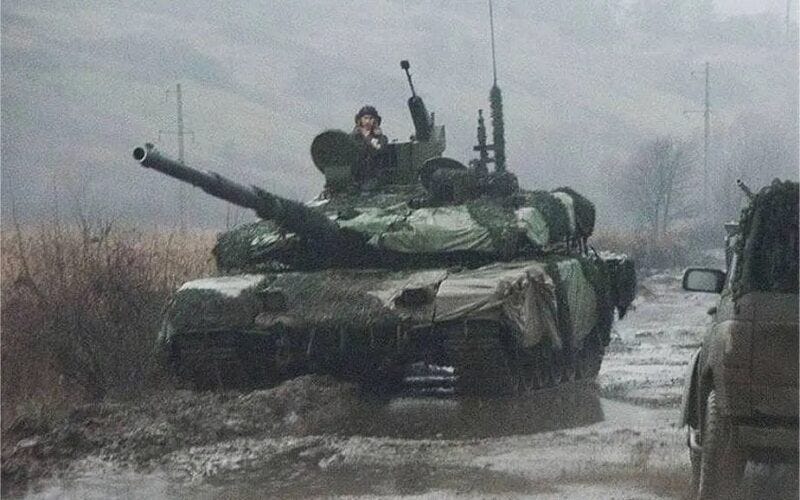
This explosive chapter in the Ukrainian conflict stands testament to the lengths a nation would go to maintain its veneer of invincibility. A nation’s military hardware often stands as a proud symbol of its technological prowess, and in this case, the T-90M “Proryv/Breakthrough” tank represented the very zenith of Russian combat innovation.
But as the ongoing clashes have shown, even the most cutting-edge war machines are not immune to the unpredictability of battlefield dynamics. It’s no longer just about technology; it’s about strategy, wit, and the human spirit powering each move on the geopolitical chessboard.
Ironically, while the T-90M has been paraded by Moscow as a technological marvel, recent developments suggest that it has become something of an Achilles heel. In a dramatic turn of events, Russian forces went as far as to obliterate their own state-of-the-art tank, fearing its capture by Ukrainian forces. This self-destruction was performed, reportedly, by a Lancet kamikaze drone – a fitting symbol of the times.
The potency of symbolism here cannot be underestimated. While the war’s tangible consequences play out in wrecked buildings and lost lives, battles of perception are waged in parallel. And in this age of information warfare, perceptions matter.
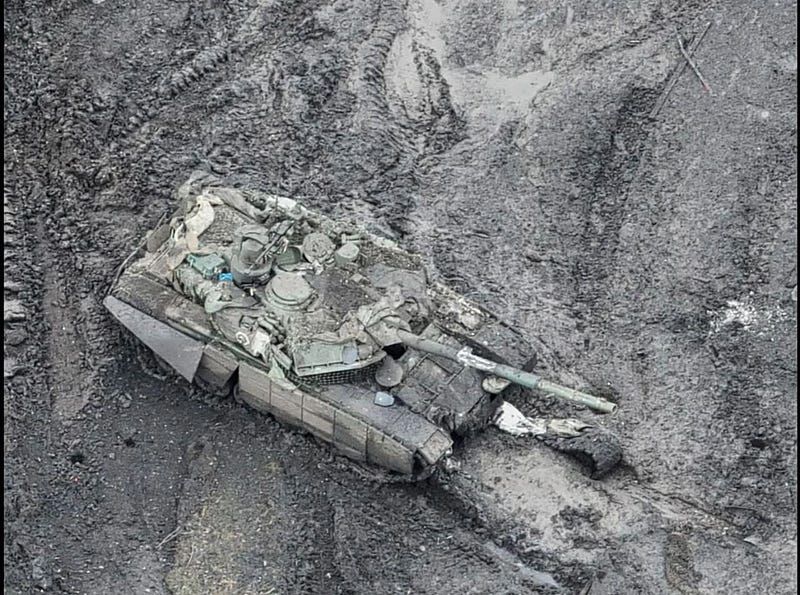
Twitter, YouTube, Telegram – these platforms, once innocuous tools of communication, have been weaponized as theaters of war, where both sides vie for the hearts and minds of international observers. So when Russian-affiliated Telegram channels published footage of a Lancet drone striking what they claimed was a Slovenian M-55S, they were attempting to craft a narrative of Russian invincibility.
But as the digital detectives of today quickly discerned, the doomed vehicle in the footage was, in fact, a Russian T-90M – abandoned and forsaken by its crew. In a war where both sides have frequently struggled to control the narrative, this revelation was a PR coup for Ukraine.
A quick heads-up: Medium’s been tweaking its algorithms and it’s getting trickier for my stories to land in your feed. So, if you enjoy my work, please make some noise! Hit that clap button, light up the highlights, or drop a comment. Every interaction helps keep the stories flowing. Thanks for your support!
Such self-destructive tactics by the Russian forces, while seemingly desperate, underline a pragmatic reality: the stigma of losing state-of-the-art hardware to the enemy can be far more damaging than the actual tactical loss of the equipment itself. A captured T-90M in the hands of Ukraine would be a propaganda nightmare for Russia.
Every damaged tank, every skirmish, every victory or defeat is instantly beamed across the world, to be dissected and debated by an international audience. When faced with the choice of deploying their most modern, sophisticated tanks against the enemy, one would imagine Ukraine to roll out its newest acquisitions from the West. But, the old guard of tanks, the T-64s from a bygone Soviet era, has surged to the forefront in an unconventional yet pivotal role.
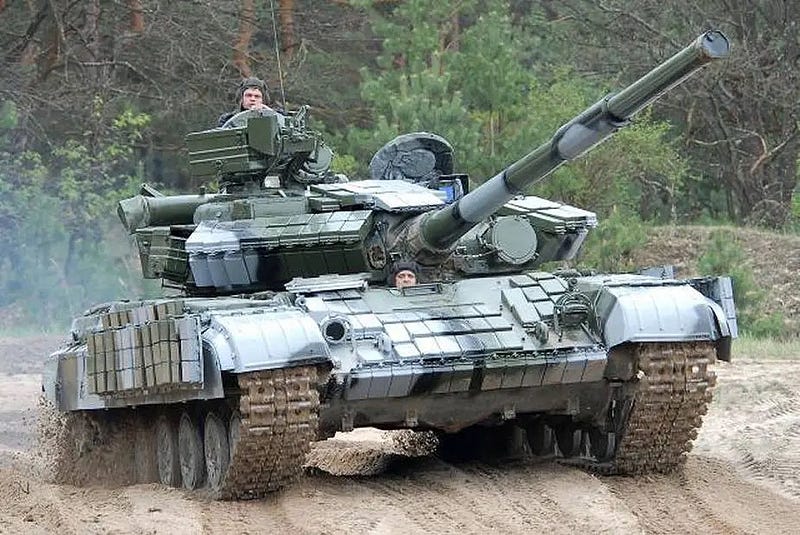
It isn’t about the T-64 matching the firepower or tech capabilities of the modern tanks. The true importance of the T-64 lies in its strategic deployment. Minefields, the invisible and deadly barriers, have become a prominent fixture in Ukraine’s defensive landscape. These traps can single-handedly decimate an advancing battalion and break its momentum. As one seasoned military expert stated, “You aren’t going to risk your best tanks breaking known minefields.”
This is where the T-64 comes into play. With a significant number in their arsenal, these tanks can be considered more expendable. However, this isn’t about mere sacrifice. Utilizing the T-64s to clear paths through these minefields can forge a route for the more potent tanks to surge through and capitalize on the breached enemy lines.
Initially, deploying the latest tanks seemed a gamble that didn’t quite pay off. Entangled in vast minefields, their potential was stifled, a tactical misstep that was keenly felt.
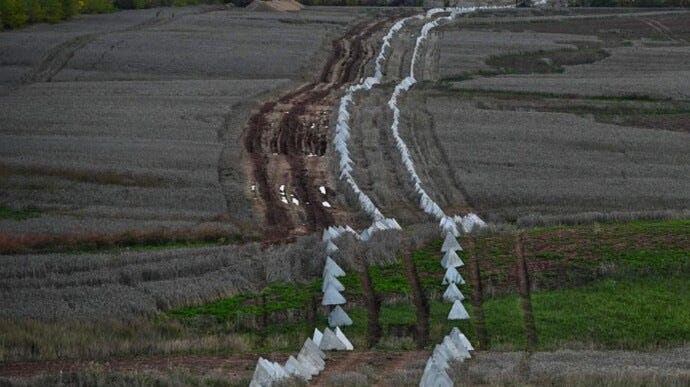
But the evolving challenges aren’t solely the minefields. The geographical lay of the land, especially in regions like Zaporizhzhia, means that the sleek, modern tanks can be easily spotted and targeted. The combined threat of this visibility and the omnipresent minefields made the initial offensive seem overly optimistic.
Yet, adaptability has been the cornerstone of Ukraine’s approach. Recognizing the shifting tides, they’ve innovated, incorporating rapidly evolving drone technology to detect mines, blending tradition with cutting-edge warfare techniques.
Time, however, is of the essence. The impending rainy season, with its muddy onslaught, poses a new challenge for heavy tanks. Deploying the modern tanks under such conditions might be setting them up for failure. The assessment seems to be one of caution and strategy: with no significant inroads into certain enemy defenses, risking precious equipment may not be the wisest move.
As the war evolves, Ukraine’s choice of armored vehicles remains central to its strategy. The old stalwarts, seemingly outmatched, might just be the linchpin in a complex battle plan. After all, war is as much about tactics as it is about brute strength.
The world watches, with each strategic move impacting the fate of a nation. The unexpected often shapes the course of battle, reminding us that in warfare, as in life, nothing is truly predictable.
What are your thoughts on Ukraine’s tactical use of the T-64? Dive into the comments with your insights, and if this piece resonated, do leave a clap!