
The Exotic Tibetan-Eared Pheasant: A Beautiful Bird from Tibet and India
Discover the Colorful Beauty of This Rare and Fascinating Species!
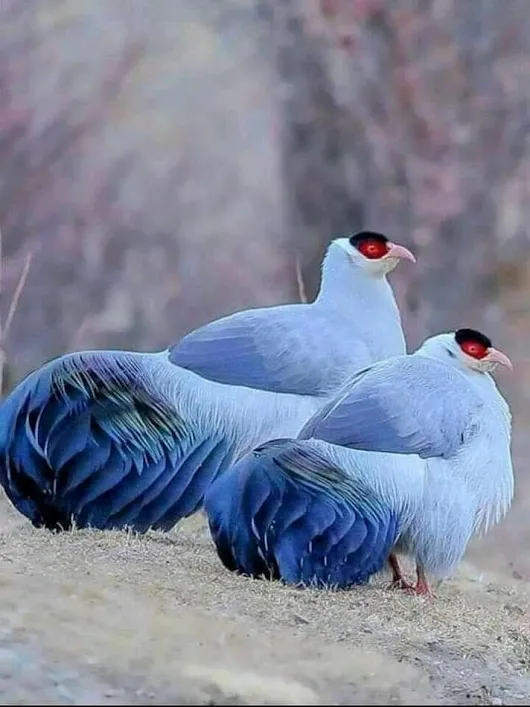
The Tibetan-eared pheasant: (Crossoptilon harmani)
is a stunning bird species in the family Phasianidae, also known as Elwes’ eared pheasant, that roams the high altitudes of southeast Tibet and northern India.
The species has a limited distribution and is found only in Tibet, northern India, and northern Bhutan.
Appearance:
With its unique and striking appearance, this bird is a sight to behold! You can catch a glimpse of it between 3,000 and 5,000 meters above sea level, making for an unforgettable experience.
The magnificent Tibetan-eared pheasant has distinguishing physical characteristics. It bears short ears and a droopy tail, common traits it shares with the white-eared pheasant (C. crossoptilon). Both species also produce similar calls and are known to crossbreed in the Salween Valley.
The similarities between the two birds are so striking that experts speculate they may belong to the same species. The Tibetan-eared pheasant can grow to an impressive length of 30–33 in, with females slightly smaller than males. Its striking appearance and unique features make it a fascinating bird to study and admire.
Habitat:
These birds are usually seen in boreal and temperate forests, clearings with bushes and grass, rhododendron thickets, and tall, dense scrub in valleys. Unfortunately, their habitats are being destroyed and hunted, which puts them in danger. During spring, they form monogamous pair bonds, and the females lay their eggs from May to July. The females then incubate the eggs, and it’s fascinating to see how they care for their young ones.
The Tibetan-eared pheasants are terrestrial, non-migrant birds.
The International Union for Conservation of Nature has rated C. harmani as a “near-threatened species” due to the loss of its natural habitat. The birds are also hunted in many areas, contributing to their decline. Additionally, there has been a reduction in the number of suitable places for the birds to roost, which is another factor that could be affecting their population.
Diet:
Pheasants are omnivorous birds that primarily feed on food found on the ground. Their flexible diet includes various foods such as berries, seeds, nuts, grains, shoots, roots, worms, insects, and arthropods. Some species of pheasants also hunt small animals like rodents and lizards.
Unique varieties of the Tibetan eared pheasants:
There is also a slate-grey pheasant with a red face, fan-shaped tail, and white whiskers that resemble ears.
This bird has distinguishing features such as a black cap, pale grey rump, and whitish belly. It is found only in the southeastern Tibetan Plateau, where it prefers areas with dense scrubby or brushy cover.
Below is a photo of a slate-grey Tibetan-eared Pheasant:
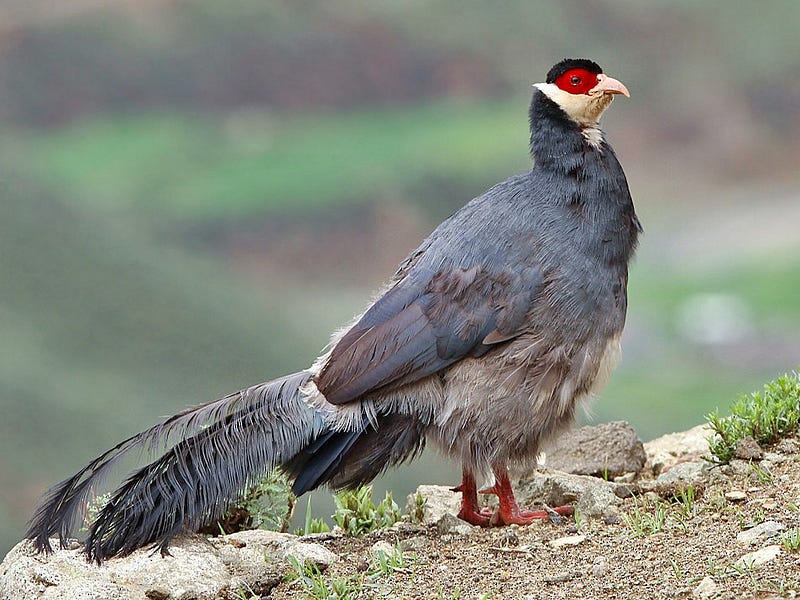
A closer look at the features & coloration.
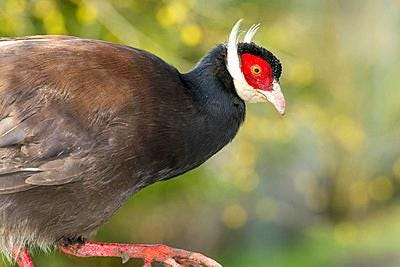

Below is an image of a pair of Tibetan white-eared pheasants.

The status of these beautiful pheasants:
It’s disheartening to learn that the Tibetan-eared pheasant, once a common sight, is now at risk of becoming endangered. The International Union for Conservation of Nature reports that clearing the bird’s natural habitat and hunting in many areas has contributed to this unfortunate situation.
Furthermore, the decrease in suitable places for roosting may further threaten the existence of this beautiful bird. We must work together to protect these creatures and their natural habitats for future generations to enjoy.
Source: https://en.wikipedia.org/wiki/Tibetan_ eared -pheasant
Source: https://animalia.bio/tibetan- eared-pheasant
If you have time, please watch a short video showcasing these lovely birds’ beautiful sounds.
Thank you, dear readers, for your time, your love of nature, and your unwavering support.
Join Medium for as little as US$5 a month or US$15 a month to become a “Friend of Medium” and enjoy the experience of being paid for publishing your articles and reading wonderful stories & great poetry, on this unique platform.