The Exodus of the Waves
Where were you when the last whale sang?
The waves ran away from the ocean forever — splashing themselves on the rocks of the shoreline. The sea reeked of a billion man-made toxins — oil and piss and the carcinogens of the gods.
The maritime morning was dead calm. Not a breath of wind dared to stir. A slash of red light sliced like a razor across the horizon. The morning sun whispered a prophecy of useless warmth.
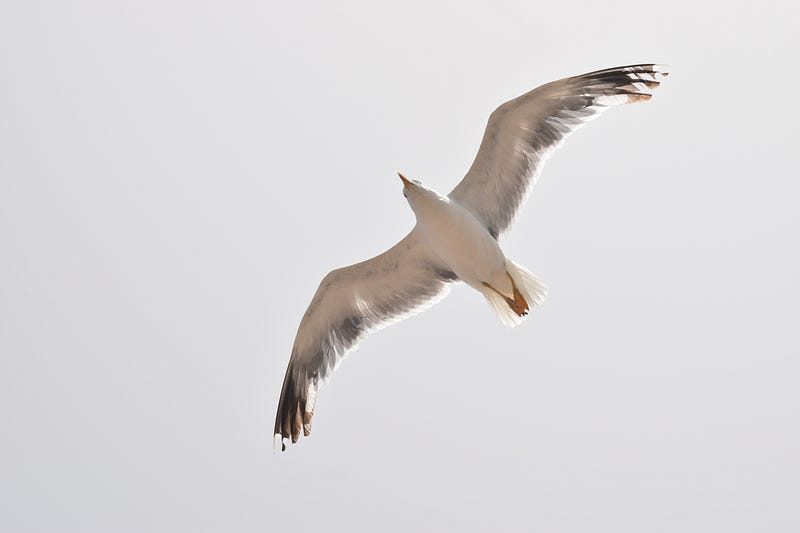
The patient seabirds drifted overhead.
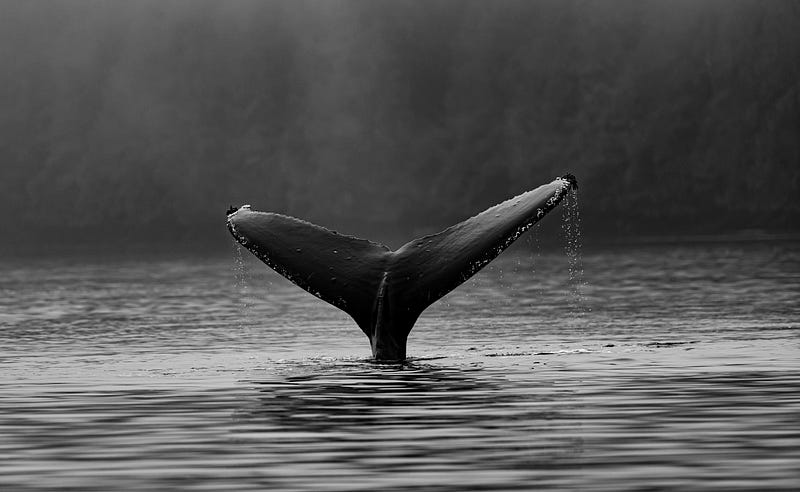
The first whale rose.
She rode the water easily, a study in calm buoyant serenity. Her mouth was frozen into that perpetual whale smile that has left generations of marine biologists scratching their heads in perplexed wonder.
And then she began to sing, casting her voice out over the water, and from the cold and lonely depths her song was answered as whale after whale solemnly surfaced, each clan of whale and near-whale and almost-whale waiting as the sea growing chowder-thick with their sleek cetaceous floating bodies.
The air moistened from their spouting.
They waited all morning long — a water-bound display of beauty and terrible dignity. They did not frolic. They did not feed. They merely waited, near dead in the water.
The seabirds continued to circle.
The first whale gazed towards the waiting shoreline. Strange emotions swam within the mystery of her deep and lonely eyes. Thinking, dreaming, reflecting — whatever her thoughts were she kept them to herself.
She kept her thoughts secret and hidden.
As the morning moved on — the fleet of whales was joined in their lonely vigil as wave after wave of smaller fish filled the surrounding water.
Something was happening.
The sea held her breath.
A crowd of curious humans had gathered upon the shoreline. The first whale could feel the weight of their collective curiosity as they gazed out upon the waterborne spectacle. The media joined the mob, pumping the message out to the waiting nation.
The whales were gathering and no one knew why.
And still, the whales continued to sing. Their song, soft and fugue low, echoed from wave to wave like God skipping a smooth water-worn stone over the sea. They sang out in a series of long sad whistles and low shivery moans in a hauntingly toned pibroch, one last long lament — their voices uniting and soaring like birds in flight, harking back to a time when the sea belonged to them.
And then slowly, one by one, the whales grew silent.
The last note died.
Then — as one — the doom-bound leviathans moved towards the shore, slapping their great flukes in a cold unison like an end-of-the-world cannonade. The smaller fish followed dutifully, riding the wake generated by the passing of the momentum-inspired waves.
The mass of people choking the shoreline drew back in a collective display of unthinking panic, seeking the imagined safety of some unseen higher ground.
Some made it.
Most did not.
Some were trampled.
Some stayed to watch.
A few mad souls ran straight into the sea, their arms wide open as if seeking to embrace each huge onrushing oceanic beast.
Only the smallest of whales stood any chance of actually making it to the shoreline. The larger whales remained content to grind themselves onto the shallows. They gutted themselves upon the ocean’s hidden teeth, suffocating as their great weight, unbuoyed by the sea’s kind and lifting hand, crushed the breath from within their lungs.
Like the crashing of mindless breakers upon the shoreline, the lesser fish followed. Minnow and tuna, mackerel and cod — a winnowing horde of sharks, slashing madly left and right in one final feeding frenzy before they pulverized their carcasses upon the hungry rocks.
All through the long morning anything that crept, swam, or drifted through the sea, advanced upon the dying grounds. The coastline darkened with clotting blood. Flies and ants and hungry beetles crawled and drowned themselves in the slowly congealing feast. Masses of mindless plankton and krill sifted slowly and patiently onto the beaches. Seaweed and dead fish drifted in stately funereal silence, coaxed inwards by the patient waves.
By the end of the day, the sudden mass of suicide was over. The beach was buried in a monstrous organic spill. The few surviving people stood and stared entranced. Those who had tried to flee had been trampled by the unimaginable force of humanity that had now begun to push itself slowly toward the sea.
Everyone had to come and bear witness. Television was suddenly not immediate enough of an experience. People across the continents climbed into their cars and piled into planes or simply began to walk towards the coastline. Every sea and every shore was a massive graveyard. The sea left her indecipherable suicide note scrawled upon every square inch of the world’s coastline.
The people began to push forward.
It was hard to say whether anyone at all truly tried to resist — but even if they had it was futile.
Today was the day that the world said goodbye.
Mothers dragged their infants, husband walked with wives. Entire churches joined hands and one kindergarten class ran skipping into the sludge of gutted fish, the sea water turned to charnel. The animals followed — dogs and cats and field mice and deer and cattle. Snakes and frogs and house flies.
The world waved goodbye.
The last to go was the buffalo, stinking of fear and unseemly dung, its hooves trampling through the gelatinous swamp of mass extinction.
And then it was over.
The devastation was unparalleled.
The stink was nearly indescribable.
Far above the clotted rocks, the birds watched and waited their turn, not daring to disturb the stark unspooling below. They circled in slow and patient spirals, like offstage actors pacing out their lines.
And then the first bird dropped, like the first trembling grain in a forever hourglass, giving way to the momentum of planet-wide extinction.
The first bird dropped, like the sun waiting for the morning to open her cage.
The first bird dropped, like a stone cast from heaven.
The first bird dropped and died.