
The First Digital Nomads
The Mad Monks spit out the first mobile magazine from 1986 — 2000 traveling the country and publishing out of a 26-foot RV
On the inside cover of my copy of Mad Monks on the Road, Michael Lane wrote in black marker, “Meet me at the grocery parking lot, and below it James Crotty scribbled, “What a Great Day! Let’s Do it Again” and signed his name, Jim, aka Mad Monk. It is one of my most cherished possessions.
They were the eccentric trailblazer nomads to our Digital Era who created the first literally traveling magazine, Monk: Mobile Magazine, published mostly on the road for 14 years with a gonzo, stream-of-consciousness, irrelevant style.
They were the descendants of Jack Kerouac. Beat poets with a Mac. They chronicled their zigzagging meanderings across the United States (no mapped out direction) in a newsletter they mailed out to their family and friends.
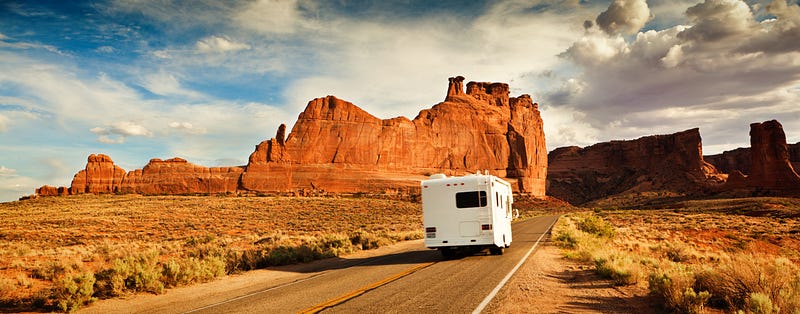
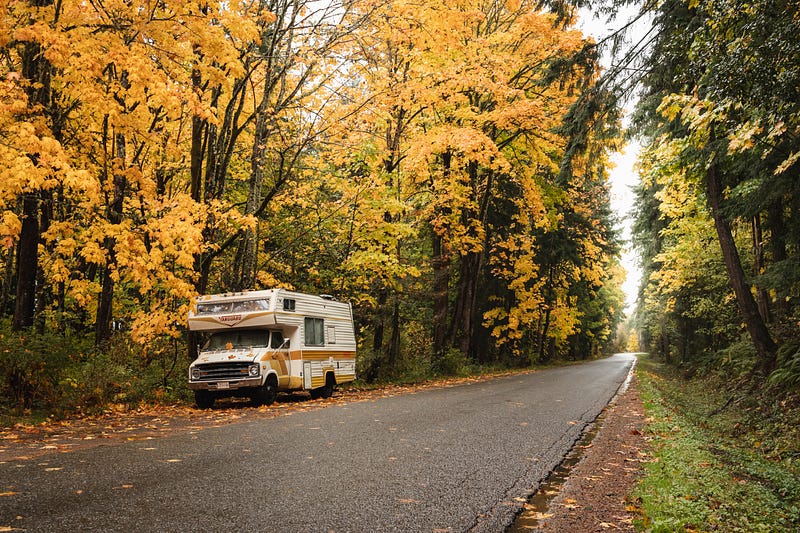
They traveled in a 26-foot motorhome they nicknamed the “The Monkmobile” where I interviewed them in a Von’s parking lot one afternoon in Santa Monica, California, in 1989, to write a story about them for a newspaper.
Their newsletter mailed to family and friends of their adventures snowballed into a national magazine with a glossy cover, big name advertisers and 40,000 subscribers.
They were dubbed the Mad Monks by friends and family. They lived a spartan lifestyle to make ends meet and their magazine shared bits and pieces of their travels the way people now share stories on Instagram and Facebook today.
Digital Nomads
Meet James Crotty and Michael Lane who lived the “laptop lifestyle” before the term was invented. Via Monk, the duo pioneered the term “the mobile office” (Portable Computing Magazine) and invented “dashboard publishing” (Factsheet Five) through documenting their adventures in their motorhome.
“The idea was to create, as Robert Fripp would put it, a mobile intelligence unit — roam the planet, have your communications tools with you at all times and, basically, be a digital nomad,” Crotty said in a 1997 Wired magazine article.
The Monks wrote about everybody from New Mexico shamans and Nebraska bingo addicts to country singers and B-movie actors and a man they met named Mr. Apple Pi in Sedona, Arizona, who offered to join them to “explore the vortexes” to dancers, nudists, music icons and strangers in RV parks.
“We wanted to show how ordinary people are extraordinary,” Crotty said in video on the Monks that is linked at the end of this article.
A State of Mind
Monk: Mobile Magazine was a state of mind. After they met in 1985 on April Fools Day in San Francisco, Crotty and Lane discovered they shared a mutual wanderlust and, a year later, they quit their jobs and sold all their possessions and hit the road in a RV with their two traveling cats, Nurse and Nurse’s Aide.
Lane was a bookkeeper and former ’60s hippie, and the younger Crotty did publicity for a radio station before the former yuppies pursued their love for adventure and travel with the crazy idea to start the first mobile magazine.
“It was Michael’s mother who first said, `Hey, this could be a business,’ ’’ Crotty recalls.
Their magazine went from $500 in start-up capital to raking in $40,000 in advertising per issue, according to a description of their travel guide of New York on betterworldbooks.com.
They created guidebooks on New York and Los Angeles, featuring fresh, bold and witty perspectives on traditional and eccentric, less-known places and a 298-page book chronicling their wacky adventures across the United States.
An asphalt odyssey
Lane described their book Mad Monks on the Road: a 47,000-Hour Dashboard Adventure Across America — From Paradise, California to Royal, Arkansas, and Up the New Jersey Turnpike (Simon & Shuster) as an asphalt odyssey. It didn’t turn into a bestseller, but it enjoyed a cult following among Monk’s readers.
It was a hybrid of Jack Kerouac’s On the Road, Tom Wolfe’s Electric Kool-Aid and a Lonely Planet guide to traveling across America with the influence of Hunter Thompson participatory journalism style mixed into the storytelling.
“It’s the kind of book young hipsters like you would want to read,” Crotty told me when I interviewed and we ate ham sandwiches with vanilla cream soda.
Lane published his own book, Pink Highways, a travelogue taking readers to a 1993 gay rights march in Washington, D.C. and travels across America, citing the gay experience in Maine, the Southwest, the Ozarks, and other locations.
Monk: Mobile Magazine
“We like to say we’re Charles Kuralt meets Jack Kerouac with a little Laurel and Hardy thrown in,” said Crotty, a state debate champion in Nebraska in high school and two time national qualifier before going Northwestern University.
When I asked them in 1989 if they foresaw the success of Monk, Crotty said: “No, I think we started the newsletter mainly to keep from looking like we’re a couple of sleazy bums wandering through America in a pink motorhome.”
Thus began the nation’s first literally traveling magazine created and published solely on the road. The first newsletter was a modest four pages, but it quadrupled to 24 by the second edition and continued expanding.
“Our first issue read like a long postcard written to our friends,” Crotty admitted. “Many of them had contributed to our $500 start-up costs.”
Their third issue grew to 2,000 copies, and they began to seek advertising to keep up with the publishing costs. Growing by word-of-mouth mostly from East and West coast readers, Monk shot up to 10,000 copies by issue four.
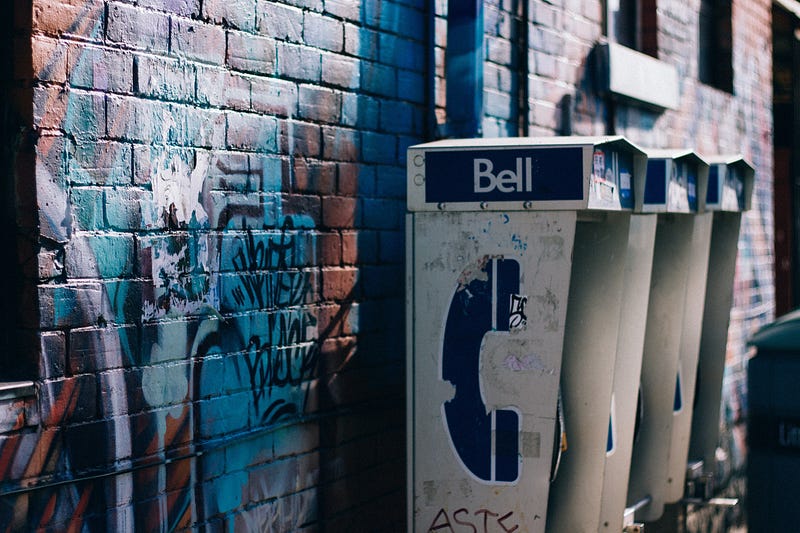
While their magazine gained a national distribution and some foreign readers, Lane and Crotty published Monk on the road via a solar-powered Mac computer in the pre-cell phone era, calling on advertisers from pay phones.
“I look for side by side phones, so I can make and receive calls at the same time,” Crotty, the ad manager, told me. “Sometimes, it gets extremely difficult while I am talking with one advertiser and the other phone rings at the same time.”
Road Warriors
Their 26-foot pink motorhome (in homage to the LBGTQ community) had an 1–800 number painted on the side for people to call for a subscription. It was also the phone number the Monks’ family and friends used to get in touch.
The Monks interspersed stories of their travels and encounters with regular folks with interviews with musicians like Kurt Cobain, film director Gus Van Sant and performance artist-sexologist Annie Sprinkle. Each issue had a page full of portraits of interesting people they met along the way in their travels.
Here’s a breadcrumb from Crotty interviewing Cobain:
JIM: Tell me about Aberdeen. That’s where you grew up, right?
KURT: It’s a really small place. A very small community with a lot of people who have very small minds. Basically, if you’re not prepared to join the logging industry, you’re going to be beaten up or run out of town.
JIM: And that’s what happened to you?
KURT: Yeah, I was run out of town. They chased me up to the castle of Aberdeen with torches. Just like the Frankenstein monster. And I got away in a hot air balloon. And I came here to Seattle.
JIM: Is this metaphor or literal reality?
KURT: It’s a wet dream
Living on the road in an RV
One of the subjects touched upon in the documentary on the Monks (with a link coming at the end of this article) is the experience of living together on a daily basis in the cramped quarters on the road 24/7 in a recreational vehicle.
Lane shares his view in the documentary outside The Pleasure Chest in West Hollywood as Crotty explores the store for their next issue. He riffs on how Crotty is non-stop entertainment like a tv show from his very talkative nature.
“I don’t need a tv or to go outside the motorhome with Jim around,” he says.
He talks about the challenge of living in the cramped quarters of an RV.
“It’s not a piece of cake,” he says. “It takes an exceptional person to do this.”
Media Folk Heroes
With the success of their mobile magazine and the publication of their book, the Mad Monks gained a modest amount of fame, with stories on them in The New York Times, Los Angeles Times, Newsweek, Wired, Rolling Stone and appearance on Good Morning America, Fox News, CNN, MTV and NPR.
Here’s what some of the media wrote about the Monks:
“Reading these guys is like watching a grainy, irreverent film about America — real, unreal, surreal. A magazine like no other this side of the astral plane.”
— The Boston Globe
“[The Monks] don’t simply document a chosen city or region. They dissect it, demystify it, revel in its oddities.”
— San Diego Union Tribune
“The David Lynch version of Travels with Charley”
— Whole Earth Review
Kerouac’s of the 1990's
I’ll chime in my view from the copies of the magazine the Monks gave me. They have a Conde Naste Traveler, edited by Jack Kerouac, feel which reminded me of their aim to avoid posh places and embrace the offbeat.
Readers loved Monk for being different than mainstream publications. One reviewer named Virginia from Fairfax Country, Virginia, gushed about the Monks’ book (available at Thrift Books) and Monk Magazine on Goodreads.
“I love the Mad Monks. I’ve hoarded all of the issues of their magazine since I first discovered it. Their books are totally worth it if you can track them down. Simply because they tell you about all the cool shit in New York City that nobody else knows or cares about because they’re busy ogling the shirtless models at Abercrombie & Fit hon Fifth Avenue.”
The Monks’ legacy
Monk magazine had a incredible run from 1986 to 2000, most of which Crotty and Land spent full-time on the road, before they pursued other ventures.
The Monks’ legacy to me was the audacity of their venture. They were the Masters of Everything Nomadic (MONK), following their own crooked path while zigzagging the country and publishing the first mobile magazine.
One story Lane told me sticks in my mind the most about the Monks. He shared how they were traveling through Minnesota to go to Mardi Gras in New Orleans when their van (pre-motorhome days) skidded into a ditch.
“We had about 30 people come out with shovels to rescue us,” he said. “That’s the highlight of our travels for me because it showed the goodness of people.”
I asked the Monks if they foresaw the success of Monk when we met in 1989.
“We didn’t set out to create a magazine to make money for ourselves,” Lane told me inside the quarters of The Monkmobile in 1989. “We set out to travel and to see the country and meet the people, and we plan to keep doing it.”
Below is a 14-minute video that gives you a visual glimpse of Crotty and Lane in the midst of exploring Los Angeles, stopping at cool, offbeat places such as a Korean food store with a Wall of Kimchi and the aptly named Pleasure Chest.
Post Monk life
What’s the most amazing part of the Mad Monks’ story is what happened when they left living on the road and publishing Monk magazine. I almost forgot to include this part of the story, and I’m glad I did more research.
It was hard to find any information on Lane, but Crotty became a debate instructor for inner city students in the Bronx, helping them to become “academic athletics” by learning to master the principles of debating.
His experience became a documentary, “Crotty’s Kids,” as he broke through the teacher-student barrier to become more than an instructor to his students.
The documentary chronicled the team’s victories and losses, and Crotty mentored his charges in debate and the real life issues facing kids living near the poverty line and the team become a second family for each other.
A surprise ending
Crotty also wrote about education, politics and culture for Huffington Post and Forbes before the ex-nomad who once lived in a motorhome for seven years became communications director for senator, Jeff Fortenberry (Nebraska).
The former writer on off-the-beaten path people and places now crafts, with the Congressman, his weekly Fort Report, a nuanced take on an issue of the day that’s unique for its deft mix of philosophy, policy, and storytelling.
It sounds like the meeting of Monk Magazine and US congressional politics.
Hey, I’m Scot. Check out my YouTube video on my journey as a writer. Or, you might like to read my favorite or most read stories on Medium.
If you are not a Medium member yet and would like to receive unlimited access to all Medium content, you can sign up here. It’s just $5 a month. I will receive a small referral bonus, at no additional cost to you, when you sign up using my link.
You can share your outstanding stories and inspire others. Just click the below image and be a writer for The Masterpiece.


