avatarPaul Coogan

Free AI web copilot to create summaries, insights and extended knowledge, download it at here

1461

Abstract

igure><p id="8cc3">The 50s saw a revival of the western and cowboy heroes with Gary Cooper, Alan Ladd, John Wayne, James Stewart, and Charlton Heston who gets a bonus point for playing Moses.</p><p id="7ace">The hero of the 1960s lost most of the trail dust but continued the tradition of clean-shaven, square-jaw with the roles of Spartacus, James Bond, and T.E. Lawrence (of Arabia), Butch Cassidy, and the Sundance Kid. Numerous tough male roles were cast with Burt Lancaster, George Kennedy, John Wayne, Lee Marvin, Michael Caine, Peter O’Toole, Richard Burton, Steve McQueen, and at the apex, Sean Connery.</p><p id="3d9e">The 1970s brought bell-bottom trousers and a darker, meaner tough guy that that could eat a bowl of nails for breakfast. General George S. Patton, Harry (make my day) Callahan, Jimmy “Popeye” Doyle, Frank Serpico, Rocky Balboa, and Han (shot first) Solo.</p><figure id="b72c"><img src="https://cdn-images-1.readmedium.com/v2/resize:fit:800/1*TeG9j87MCLm16PP2wnu3Cw.jpeg"><figcaption>Clint Eastwood as a rough hero. Sergio Leone, Public domain, via Wikimedia Commons</figcaption></figure><p id="87a3">This era also saw the first appearance of a female leadership hero in <i>Norma Rae</i>, played by Sally Field, paving the way for Meryl Streep and Sigourney Weaver in <i>Silkwood</i> and <i>Alien</i> in the following decade.</p><p id="a283">The 1980s began to see variation in heroes via the roles of Batman, Gandhi, and Indiana Jone

Options

s. This widening definition of a hero came into full blossom in the 90s with more strong female heroes in <i>The Silence of the Lambs</i>, <i>Thelma & Louise</i>, and <i>Fargo</i>. Male roles also took on more social justice roles in <i>Schindler’s List</i> and <i>Philadelphia</i> following the footsteps of <i>To Kill a Mockingbird</i>, <i>12 Angry Men</i>, and <i>Gandhi</i>.</p><figure id="98c1"><img src="https://cdn-images-1.readmedium.com/v2/resize:fit:800/1*9wJRmXoWBQROFKVfC_U_gA.jpeg"><figcaption>Lobby Card. Universal Pictures, Public domain, via Wikimedia Commons</figcaption></figure><p id="c876">The story of hero diversity continued to unfold in the 2000s with <i>Charlie’s Angels</i> breaking new ground in action movies. Unfortunately, no real progress was made for POC leading roles in the genre until <i>Black Panther</i> in 2018. I am excluding the blaxploitation genre from the action movie group due to being a niche (sorry Shaft). I hope the studios will heed the growing demand for films with Black heroes where the story is not biopic or niche.</p><p id="2452">The need for LGBTQ, Latino, and Native American characters in hero roles is dire. A Google search for “Native American movies” results in white male leads in four of the first 5 movies listed. Thank heavens for <i>Smoke Signals</i> but the time has come for an intersectional hero that can add depth to a film without it being the focus of the story.</p></article></body>

Movies

The Evolution of the Cinematic Hero

The heroes’ journey has miles to go
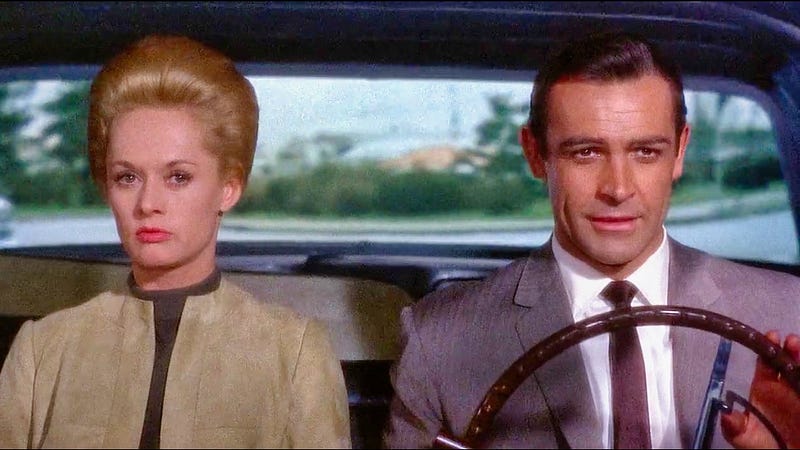
Tippi Hedron and Sean Connery. Trailer screenshot, Public domain, via Wikimedia Commons

The 1930s brought us handsome square-jawed leading men doing daring and dashing things. Johnny Weissmuller swinging from a vine in the jungle as Tarzan or Errol Flynn swinging aboard a ship with cutlass in hand or out of a tree in the Sherwood Forest. Tyrone Power was reknown for swinging a blade a swashbuckler or as Zorro. It seems leading men in Hollywood were swingers.

The role of the hero in the 1940s was given to Humphrey Bogart. The leading man in 30 films that decade included High Sierra, The Maltese Falcon, Casablanca, To Have and Have Not, The Big Sleep, Dark Passage, The Treasure of the Sierra Madre, Key Largo, and Tokyo Joe. It seems Bogie bogarted roles as well as cigarettes.
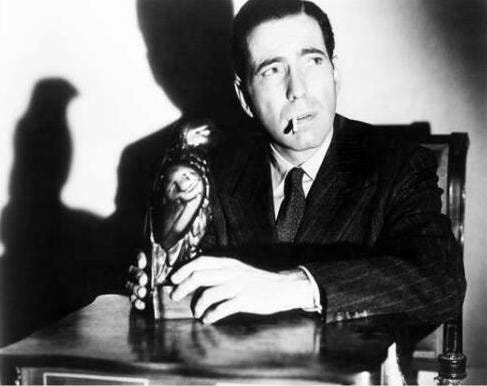
Bogie bogarts a bird in The Maltese Falcon. Warner Bros., Public domain, via Wikimedia Commons

The 50s saw a revival of the western and cowboy heroes with Gary Cooper, Alan Ladd, John Wayne, James Stewart, and Charlton Heston who gets a bonus point for playing Moses.

The hero of the 1960s lost most of the trail dust but continued the tradition of clean-shaven, square-jaw with the roles of Spartacus, James Bond, and T.E. Lawrence (of Arabia), Butch Cassidy, and the Sundance Kid. Numerous tough male roles were cast with Burt Lancaster, George Kennedy, John Wayne, Lee Marvin, Michael Caine, Peter O’Toole, Richard Burton, Steve McQueen, and at the apex, Sean Connery.

The 1970s brought bell-bottom trousers and a darker, meaner tough guy that that could eat a bowl of nails for breakfast. General George S. Patton, Harry (make my day) Callahan, Jimmy “Popeye” Doyle, Frank Serpico, Rocky Balboa, and Han (shot first) Solo.
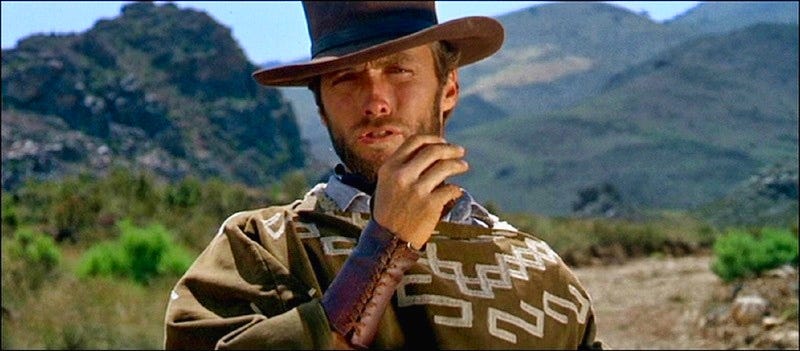
Clint Eastwood as a rough hero. Sergio Leone, Public domain, via Wikimedia Commons

This era also saw the first appearance of a female leadership hero in Norma Rae, played by Sally Field, paving the way for Meryl Streep and Sigourney Weaver in Silkwood and Alien in the following decade.

The 1980s began to see variation in heroes via the roles of Batman, Gandhi, and Indiana Jones. This widening definition of a hero came into full blossom in the 90s with more strong female heroes in The Silence of the Lambs, Thelma & Louise, and Fargo. Male roles also took on more social justice roles in Schindler’s List and Philadelphia following the footsteps of To Kill a Mockingbird, 12 Angry Men, and Gandhi.
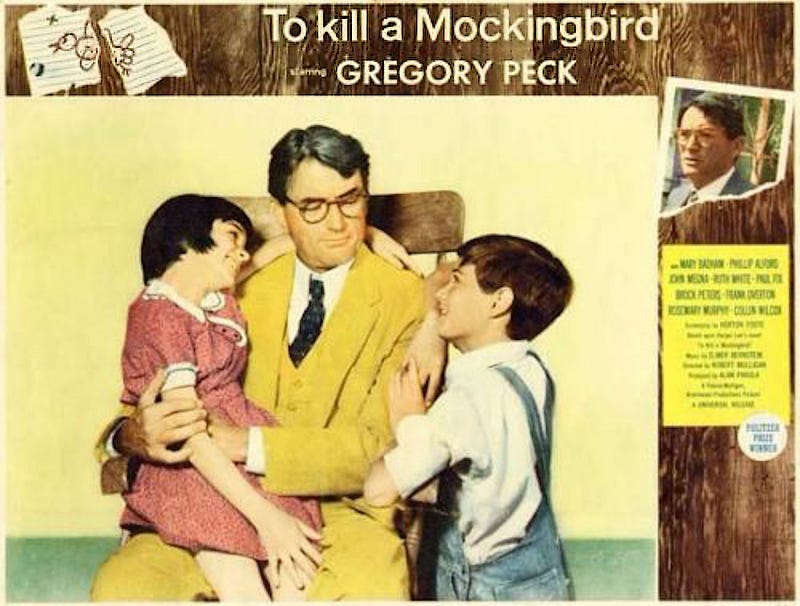
Lobby Card. Universal Pictures, Public domain, via Wikimedia Commons

The story of hero diversity continued to unfold in the 2000s with Charlie’s Angels breaking new ground in action movies. Unfortunately, no real progress was made for POC leading roles in the genre until Black Panther in 2018. I am excluding the blaxploitation genre from the action movie group due to being a niche (sorry Shaft). I hope the studios will heed the growing demand for films with Black heroes where the story is not biopic or niche.

The need for LGBTQ, Latino, and Native American characters in hero roles is dire. A Google search for “Native American movies” results in white male leads in four of the first 5 movies listed. Thank heavens for Smoke Signals but the time has come for an intersectional hero that can add depth to a film without it being the focus of the story.

Movies
Heroes
Hollywood
History
Change For The Better
Recommended from ReadMedium