
The Evolution of My Tech Skills
I went from being uncomfortable with computers to working as a data engineer at a tech startup. Here is how it happened.
2016: It was an ordinary informatics class in my high school in Latvia. The teacher explained Microsoft Excel and how to work with basic formulas, such as =IF(A2 > 1, ‘group1’, 'group2') . I was panicking as I didn’t understand; the test was upcoming, and I didn’t even have a computer at home to practice. I had to cheat by asking my classmates to do my test.
2017: I was about to go to university. My mom gave me her laptop as, at the last moment, we realised that I would need a personal computer to study, and handing in my work on paper is not the university standard.

2018: End of year one bachelor’s program in Economics at the University of Amsterdam. We needed to write the first study by presenting statistical results using research methods. That meant we needed to install and use the statistical software Stata. I was panicking again. I was far from understanding what it meant and why we couldn’t simply calculate the average value.
This was the turning point. I liked Statistics class, and I could calculate everything on paper. I don’t remember how, but I forced myself to complete that assignment. I remember writing those 50 lines of commands and being the most proud of myself.
January 2019: The study continues. Econometrics, Mathematics, Research Methods, Portfolio Theory and all the other subjects that include work with statistical software or computations have become my strongest. I was close to finding what I liked in my career.
May 2019: I was considering a minor in Data Science next semester. However, I freaked out when I saw that the guys who registered for it were way more advanced in tech skills and already knew Python programming. I missed the application deadline and chose Dutch language skills instead (one of my worst university regrets).
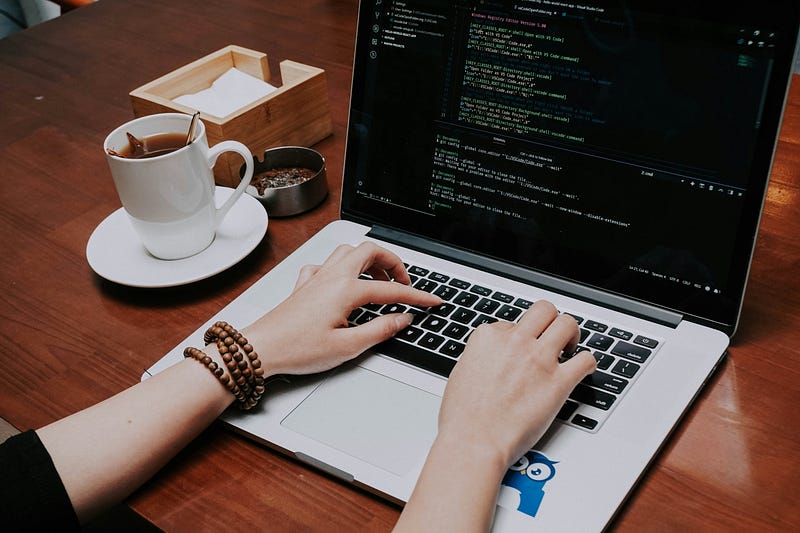
February 2020: I got my first internship. They were most excited about my “strong” tech skills, which were just Excel at the time. I have mastered all the functions and solution-googling and was starting to create some powerful visualisations, as they referred to in consulting.
May 2020: The course “Introduction to Python” became mandatory for all Finance track students. However, the course was not adjusted to finance concepts. We had to learn some random manipulations and how to program tic-tac-toe. I was disappointed.
June 2020: Powered by Cola Zero, I was writing my thesis, in which Stata was the main character. By then, I had fully mastered running Econometrical models; I helped other lost students and received a 9 for my work.
As a cherry on top, I quickly learned Latex to write the thesis, another tech skill greatly appreciated in academics.

September 2020: I started my master’s in Quantitative Finance at the University of Amsterdam. The Python skills had to appear magically.
We specialised more in financial data, and I found it enjoyable. Seeing how customizable Python is, I challenged myself to script the research models for my upcoming thesis in Python rather than Stata.
February 2021: My data science skills were skyrocketing after I accepted a challenging part-time job in research.
June 2021: I handed in the master thesis with the model scripted in Python — and completed my own challenge.
September 2021: I was hired as a Financial Data Analyst at a Dutch bank where Python is my primary skill.
May 2022: First Kaggle competition with other data science enthusiasts from the bank.
July 2022: I admitted that the banker job was not technically challenging enough, and I started learning smart contract development on the side to see if I could get into the blockchain startup space.
January 2023: I received a job offer for a data engineer position at a tech start-up.
December 2023: My first promotion and continuation of being happily employed.
Thank you for reading!
I went from corporate banking to [data] engineering at a privacy startup. I code, enjoy remote living, explore life, read books and dance ballet.
Check out these other resources if you want to connect with me:


