avatarChristopher P Jones

Free AI web copilot to create summaries, insights and extended knowledge, download it at here

3151

Abstract

l into its shell, and draws away from the spectator.”</p></blockquote><p id="f218">In terms of light and dark, Kandinsky argued that the natural emphasis of yellow is to become lighter (with the addition of white paint to the mix) whereas the emphasis of blue is to become darker (with the addition of black).</p><figure id="d2dd"><img src="https://cdn-images-1.readmedium.com/v2/resize:fit:800/1*Euk70hpaW9P89-K09WTjaA.jpeg"><figcaption></figcaption></figure><p id="06c1">The meaning of such emphasis is to demonstrate the deeper energy that resides within each colour. Yellow is characterised as terrestrial with a human-like energy that is insistent, aimless and aggressive — and according to Kandinsky, lacking the possibility of profound spiritual meaning.</p><p id="c850">Blue on the other hand is a spiritual colour, “the typical heavenly colour,” evoking cool calm.</p><p id="1d78">Kandinsky goes on to say that the combination of blue and yellow yields green, reaching an equilibrium or visual “motionless”. With red, vibrant and energetic colour that exudes warmth and strength.</p><figure id="dfc6"><img src="https://cdn-images-1.readmedium.com/v2/resize:fit:800/1*FF2jz2NjSoPPIiNVyTc0Mg.jpeg"><figcaption></figcaption></figure><h1 id="241e">Music as a Metaphor</h1><p id="a72a">For Kandinsky, the characteristics of different colours were essential tools for the artist. He repeatedly used music as a metaphor for the painter’s use of colour: when artists used colours in their paintings the effect was akin to composing a musical score.</p><blockquote id="c4dc"><p>“Colour is the keyboard, the eyes are the hammers, the soul is the piano with many strings. The artist is the hand that plays, touching one key or another purposively, to cause vibrations in the soul.”</p></blockquote><p id="59cc">The experience of one sense prompted by another fascinated Kandinsky — a perceptual phenomenon we now call “synaesthesia”.</p><p id="cd35">He wrote of “a Dresden doctor” who reported that one of his patients could not eat a certain sauce without seeing the colour blue.</p><p id="26b6">Kandinsky himself experienced a similar phenomenon when sat in the Moscow Royal Theatre watching a performance of Wagner’s <i>Lohengrin</i>. As the music pulsed and raced through the auditorium, Kandinsky spontaneously began visualising colour in time with the music.</p><p id="e571">He later wrote: “I saw all the colours in my mind’s eye. Wild lines verging on the insane formed drawings before my very eyes.”</p><h1 id="7907">A Coming New Age</h1><p id="bab8">The correspondence of music and colour was for Kandinsky more evidence of an underlying reality beyond the visible world. Through abstract forms and colours he felt he could render the spiritual visible.</p><p id="68b8">This was an era of profound discoveries about the make up of reality. Kandinsky took a keen interest in contemporary science, at one point recording his amazement at the discovery of radioactivity: “In my soul the decay of the atom was the same decay of the whole world.”</p><p id="47b6">Additionally, he was also a follower of the spiritualist teacher Helena Petrova Blavat

Options

sky, the co-founder of the Theosophical Society — a movement that claimed an “ancient wisdom” linked all religious, philosophical and scientific knowledge in one.</p><p id="32b4">A central conceit of Madame Blavatsky’s was that the material world would soon disappear, being “absorbed” into the universal Divine Principle. For Kandinsky, the prospect of a coming New Age — with the whole world moving from matter to spirit — corresponded with his belief in the metaphysical power of colour.</p><figure id="9c4b"><img src="https://cdn-images-1.readmedium.com/v2/resize:fit:800/1*RhgsKD2pjGLlzv5-tlDMQA.jpeg"><figcaption>Yellow-Red-Blue (1925) by Wassily Kandinsky. Oil on canvas. 127 × 200 cm. Georges Pompidou Center, Paris, France. Image source <a href="https://www.wikiart.org/en/wassily-kandinsky/yellow-red-blue-1925">WikiArt</a></figcaption></figure><h1 id="7617">Applying the Theory in Yellow-Red-Blue</h1><p id="1ce4">From 1922 to 1933, Kandinsky taught at the Bauhaus, the school of art and design. In his lectures he continued to further develop his theories on colour, exploring the colour triad of yellow-red-blue.</p><p id="b9bc">Indeed, in one monumental work painted in 1925, he examined these colours directly. Looking at a painting like <i>Yellow-Red-Blue</i>, made when Kandinsky was at the full maturity of his abilities, it’s noticeable that he used the three primary colours to act as the overall organising formula, allowing him to scrutinise colour harmonies against these three foundation tones.</p><p id="909f">What’s significant is the isolation of the yellow area to the left, surrounded by graphic and linear motifs. Notice how the yellow zone is confined within a rectangular shape that seems to resemble a human figure. Remember that yellow “can never have profound meaning” — it is the earthly, corporeal element.</p><p id="e0dc">On the other hand, the red and blue regions intersect with each other, taking on fluid, organic shapes that seem to float within the composition. These areas are accentuated by a winding black line that hints at the inherent tension between colour and form. Through this composition, Kandinsky aspires to evoke an emotional and spiritual response from the viewer, utilising the transformative power of colour to create a transcendent experience.</p><figure id="2671"><img src="https://cdn-images-1.readmedium.com/v2/resize:fit:800/1*igQbKCOI4qGLg6JzYP7H9w.png"><figcaption></figcaption></figure><p id="4a19">If you liked this, you may also be interested in my book <a href="https://www.chrisjoneswrites.co.uk/masterpieces-of-art-explained/"><i>Masterpieces of Art Explained</i></a><i>, </i>an examination of some of art’s most enthralling images.</p><h1 id="90ea">Would you like to get…</h1><p id="beaa">A free guide to the <i>Essential Styles in Western Art History</i>, plus updates and exclusive news about me and my writing? <a href="https://www.chrisjoneswrites.co.uk/sign-up-art/">Download for free here</a>.</p><h1 id="3e39">Join me…</h1><p id="3a99">On <a href="https://www.instagram.com/greatpaintingsexplained/">Instagram</a> for more great paintings on the go!</p></article></body>

The Evolution of Kandinsky’s Colour Theory and Spiritualism in Art

Making vibrations in the soul
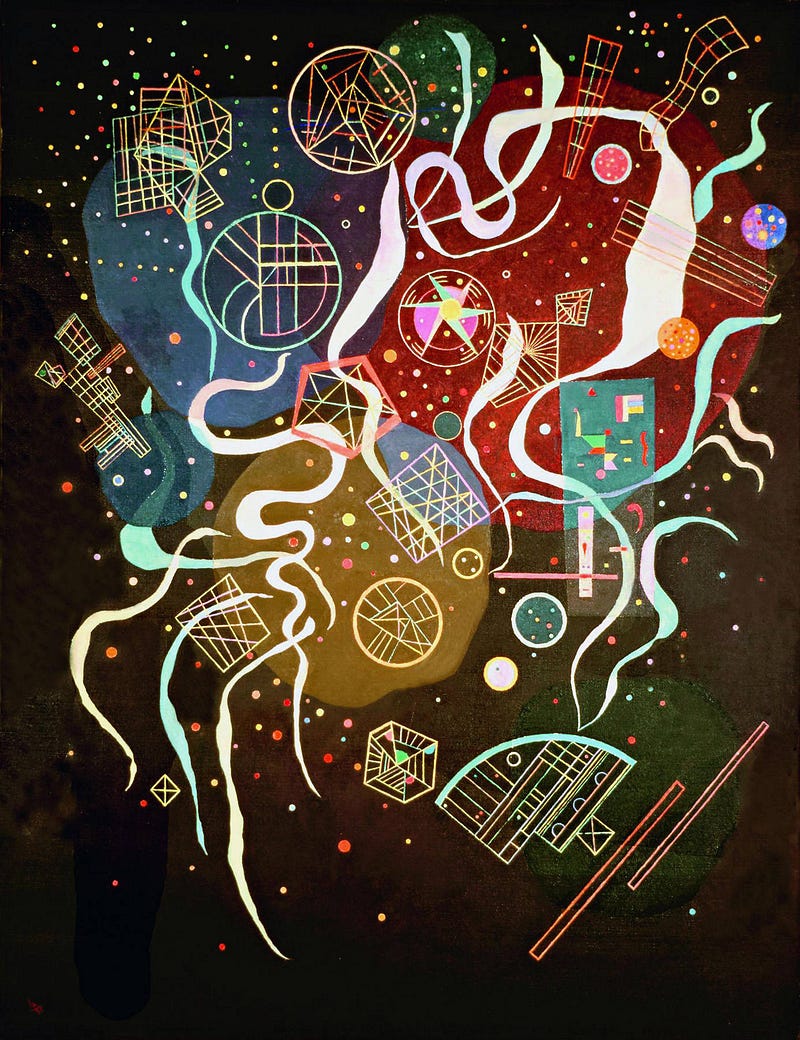
Movement I (1935) by Wassily Kandinsky. Mixed media on canvas. 116 × 89 cm. Tretyakov Gallery, Moscow, Russia. Image source WikiArt

Christopher P Jones is the author of How to Read Paintings, an examination of art’s most enthralling images and their meanings.

The artist Wassily Kandinsky was obsessed with colour.

He ardently believed that through his colour-drenched abstract paintings, everyday reality could be transcended, giving access to a higher, immaterial order of experience.

In 1896, he relocated from his native Moscow to the city of Munich — a vibrant hub of artistic and scientific discourse. He steadily made a name for himself as an innovative figure in the avant-garde art world, alongside fellow artists like Franz Marc, Alexej von Jawlensky and Paul Klee. Together, they championed the concept of art as a fusion of word, picture and sound.

Later in 1911, Kandinsky published Concerning the Spiritual in Art, his key text for understanding his theories on colour, in which he wrote: “Generally speaking, colour directly influences the soul.”

The Spiritual Connotation of Colour
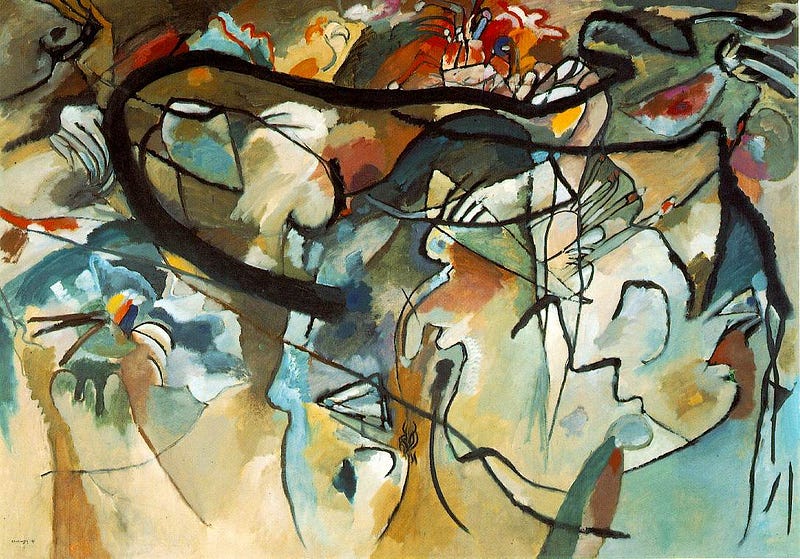
Composition V (1911) by Wassily Kandinsky. Oil on canvas. 190 × 275 cm. Private collection. Image source WikiArt

According to Kandinsky, colour has an intense spiritual connotation and awakes within the viewer’s emotions rooted in the soul. He explained that “to a sensitive soul, the effect of colours is deeper and intensely moving. They produce a corresponding spiritual vibration…”

His colour theory centred around two related contrasts: warm versus cool and light versus dark.

For Kandinsky, yellow and blue represented warm and cool respectively. He believed that yellow tones move towards the viewer, expanding and leading outward from the canvas, whereas blue moves away from the viewer, receding and shrinking into the picture.
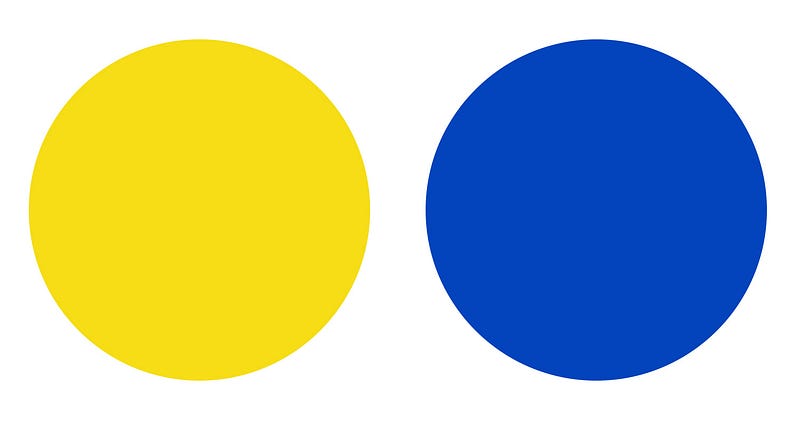
He captured the idea in his description:

“If two circles are drawn and painted respectively yellow and blue, brief concentration will reveal in the yellow a spreading movement out from the centre, and a noticeable approach to the spectator. The blue, on the other hand, moves in upon itself, like a snail into its shell, and draws away from the spectator.”

In terms of light and dark, Kandinsky argued that the natural emphasis of yellow is to become lighter (with the addition of white paint to the mix) whereas the emphasis of blue is to become darker (with the addition of black).
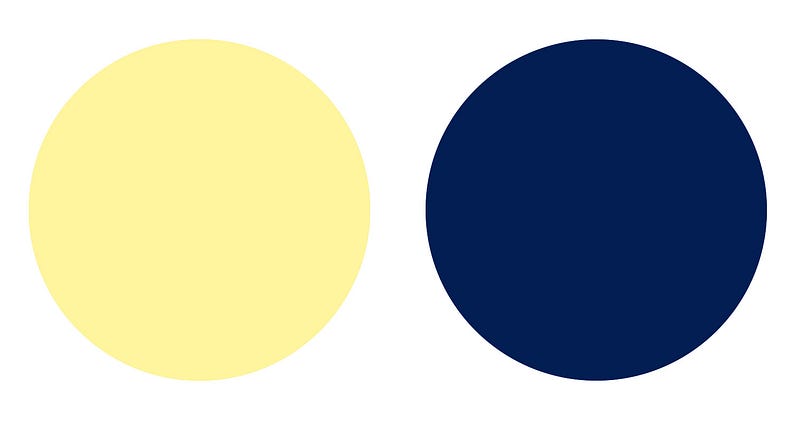
The meaning of such emphasis is to demonstrate the deeper energy that resides within each colour. Yellow is characterised as terrestrial with a human-like energy that is insistent, aimless and aggressive — and according to Kandinsky, lacking the possibility of profound spiritual meaning.

Blue on the other hand is a spiritual colour, “the typical heavenly colour,” evoking cool calm.

Kandinsky goes on to say that the combination of blue and yellow yields green, reaching an equilibrium or visual “motionless”. With red, vibrant and energetic colour that exudes warmth and strength.
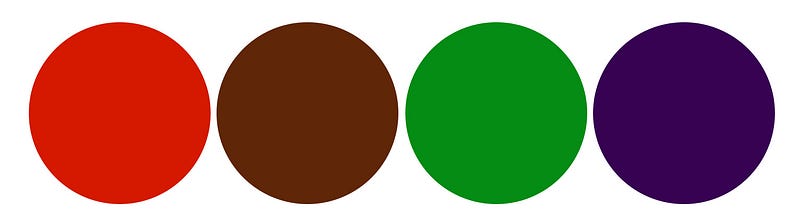
Music as a Metaphor

For Kandinsky, the characteristics of different colours were essential tools for the artist. He repeatedly used music as a metaphor for the painter’s use of colour: when artists used colours in their paintings the effect was akin to composing a musical score.

“Colour is the keyboard, the eyes are the hammers, the soul is the piano with many strings. The artist is the hand that plays, touching one key or another purposively, to cause vibrations in the soul.”

The experience of one sense prompted by another fascinated Kandinsky — a perceptual phenomenon we now call “synaesthesia”.

He wrote of “a Dresden doctor” who reported that one of his patients could not eat a certain sauce without seeing the colour blue.

Kandinsky himself experienced a similar phenomenon when sat in the Moscow Royal Theatre watching a performance of Wagner’s Lohengrin. As the music pulsed and raced through the auditorium, Kandinsky spontaneously began visualising colour in time with the music.

He later wrote: “I saw all the colours in my mind’s eye. Wild lines verging on the insane formed drawings before my very eyes.”

A Coming New Age

The correspondence of music and colour was for Kandinsky more evidence of an underlying reality beyond the visible world. Through abstract forms and colours he felt he could render the spiritual visible.

This was an era of profound discoveries about the make up of reality. Kandinsky took a keen interest in contemporary science, at one point recording his amazement at the discovery of radioactivity: “In my soul the decay of the atom was the same decay of the whole world.”

Additionally, he was also a follower of the spiritualist teacher Helena Petrova Blavatsky, the co-founder of the Theosophical Society — a movement that claimed an “ancient wisdom” linked all religious, philosophical and scientific knowledge in one.

A central conceit of Madame Blavatsky’s was that the material world would soon disappear, being “absorbed” into the universal Divine Principle. For Kandinsky, the prospect of a coming New Age — with the whole world moving from matter to spirit — corresponded with his belief in the metaphysical power of colour.
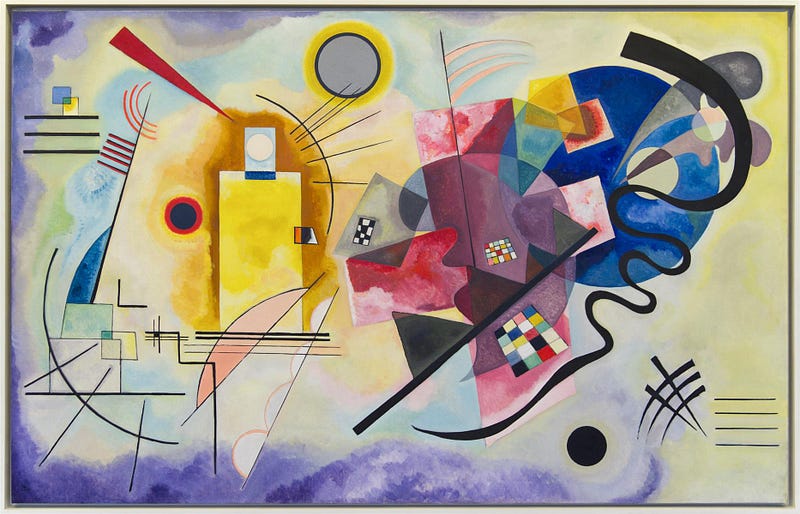
Yellow-Red-Blue (1925) by Wassily Kandinsky. Oil on canvas. 127 × 200 cm. Georges Pompidou Center, Paris, France. Image source WikiArt

Applying the Theory in Yellow-Red-Blue

From 1922 to 1933, Kandinsky taught at the Bauhaus, the school of art and design. In his lectures he continued to further develop his theories on colour, exploring the colour triad of yellow-red-blue.

Indeed, in one monumental work painted in 1925, he examined these colours directly. Looking at a painting like Yellow-Red-Blue, made when Kandinsky was at the full maturity of his abilities, it’s noticeable that he used the three primary colours to act as the overall organising formula, allowing him to scrutinise colour harmonies against these three foundation tones.

What’s significant is the isolation of the yellow area to the left, surrounded by graphic and linear motifs. Notice how the yellow zone is confined within a rectangular shape that seems to resemble a human figure. Remember that yellow “can never have profound meaning” — it is the earthly, corporeal element.

On the other hand, the red and blue regions intersect with each other, taking on fluid, organic shapes that seem to float within the composition. These areas are accentuated by a winding black line that hints at the inherent tension between colour and form. Through this composition, Kandinsky aspires to evoke an emotional and spiritual response from the viewer, utilising the transformative power of colour to create a transcendent experience.

If you liked this, you may also be interested in my book Masterpieces of Art Explained, an examination of some of art’s most enthralling images.

Would you like to get…

A free guide to the Essential Styles in Western Art History, plus updates and exclusive news about me and my writing? Download for free here.

Join me…

On Instagram for more great paintings on the go!

Art
Art History
Inspiration
Creativity
Spirituality
Recommended from ReadMedium