The Evacuation
My Battle With The Junk of Ancestors
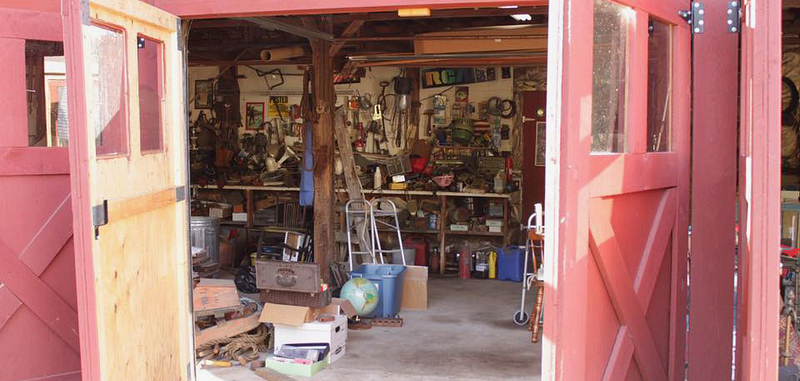
Where do I begin this epic tale? Do I start by telling you that my father is the luckiest man on earth? Should I open with the image of me standing in his barn in the center of what the Boss and I came to call the “toxic fairy ring”, a collection of containers compiled in a circle, each filled to the brim with the poisonous chemicals of yesteryear. The two points are closely related. My father is lucky for many, many reasons, but one of them is that he has a five sons who, in combination with nieces, nephews, and in-laws, helped move him from his house of thirty years into a charming and comfortable condo in the middle of town. Those “helpers” were not created equal. There was one, poured into the dysfunctional “hero” mold during adolescence by the before-mentioned old man’s alcoholism, who stood above the rest. That hero was me. I told you this was an epic tale. I am the Siegfried of it. Cúchulainn’s got nothing on me. I moved the 90-year-old “Squire of Low Pines” out of his house and down to the river, where he hoards and feeds and sleeps to this day. For the purpose of epic tale making, I could describe him as a combination of BOTH Grendel and Grendel’s mother, but with a TV and an iPad… and a phone to call me on, but really he is his own beast. The Man is unto himself. I get ahead of the story. We should start at the beginning.
If I sound bitter it is because I am, but I try not to be bitter because it’s not his fault. My father is a sweet guy. He is a kind man. He was deeply appreciative of everyone’s help and expressed it regularly. Most of his frustration stemmed from the fact that he couldn’t do more himself, but even that frustration was often buried behind daily good humor and willingness to do what he could. My friend Paul, who had gone through much the same ordeal, visited in the middle of the summer and told me that I had it easy. His father, an artist, had fought over every single object. There was nothing that could be sold, given away, or thrown out without serious discussion. If you have spent a lifetime marveling at the aesthetics of objects, what does it mean when they go away? Are you abandoning the beauty of your world? I witnessed Mr. W’s dissertation about a brass ampersand that had been “sold for too little”. He had plans to go into the store where the buyer worked and see about getting it back.
So, when it comes to my father, maybe all of what I am about to tell you is not his fault. It’s not his fault that he is the luckiest guy to ever walk the earth. It’s not his fault that he filled a house and two barns with the most astonishing collection of useless crap our family has ever seen. It’s not his fault that the cat ruined an oriental rug once appraised for $45,000. It’s not his fault, but of course I blame him. I blame him for everything.
My grandfather had a farmhouse in Deering, New Hampshire that he bought in 1932 after selling a house in Howichport, MA because the Cape was “getting too crowded.” As a child, my father spent his summers and weekends by driving north into the New England countryside to escape Boston.
The countryside it was. In the 30s and 40s rural New Hampshire was rural. Even when I was a kid in the 70s there wasn’t any electricity in much of my grandfather’s house. We used kerosene lamps for light in the living room and went to bed carrying a candle. The house had been retrofitted for indoor plumbing and there was a gas stove, but the well was an open one and the no-longer-used outhouse was still attached to the kitchen.
Throughout the Depression, my grandfather kept adding to the amount of land he owned by buying any adjoining parcels that had been timbered off. Treeless land was considered “worthless”. He could buy the land cheep. He ended up owning 600 acres. By the time I was a kid most of it was forested again.
I tell you this to explain my father. To take out the trash in Deering, we collected the household refuse in paper shopping bags, drove down the driveway to a turn in the road, got out, and threw the trash over a stone wall. There was, in effect, a family “dump” somewhere on the family property. Almost all of the trash broke down. There was some glass and a lot of tin cans. Those didn’t break down. My father took a beer bottle collector to the spot about 20 years ago. It was a bonanza for the guy. He asked, “You know of any other Irish-Catholic families from Boston that had a house in New Hampshire?”
That memory, of just dumping the trash over the wall, isn’t dissimilar to one I have of sailing in Long Island Sound with an uncle on my mother’s side. If I remember correctly, we would take a full bag of garbage, poke holes in it, and throw it overboard while underway. I don’t remember when we stopped doing that, but I do remember one of my cousins telling my uncle that he shouldn’t throw a banana peel overboard. “It’s biodegradable” he said. “Yea,” she replied, “But no one wants to find a banana peel on the beach when they go swimming.” She was lifting the shade on a new era.
You may wonder what we did with larger items in Deering. Many of them just sat behind the barn. There were several old cars and a couple of old trucks in the woods. We spent many hours as kids pretending to drive those cars. It was our playground.
When my father acquiesced to moving, there were at least seven vehicles on his property. For a decade I had been worrying about what those cars were leaking. Oil? Antifreeze? Gasoline? My father never worried about it, just as nobody in his generation had worried about the cars and trucks rotting behind the barn in Deering.
I often kid that my father is a “Younger Brother of the Greatest Generation.” He was in high school during WWII. Greatest Generation or not, he is from a distant time. The Old Man still smokes when he pours kerosene. “It’s fine,” he says, “kerosene is hardly combustible.” He pours spent motor oil or solvents out on the ground, behind a tree, or “in the woods”. I tell him, “you can’t do that.” He says, “Of course you can.” He‘s right. Of course you can. He does. He‘s done it for his whole life. When I tell him he can’t throw lithium batteries in the trash, he asks me what a lithium battery is.
The house that my grandfather bought in Deering had been a working farm, and one of the crops on the farm was cranberries. There was a cranberry bog and a cranberry “house”. The Cranberry House was a tidy white clapboard building. It was a small single-room warehouse, with windows and a fireplace.
There were also two barns on the property, an ox barn and a cow barn. The ox barn blew down in the hurricane of ’38. The cow barn was still standing when I was young, and in it were housed four carriages and two sleighs from the age of horses. The rest of the barn was relatively empty, and off limits. Tempted as we were to go up into the lofts and see if there were any snakes in the cisterns, the rule was that you couldn’t be in the barn without an adult.
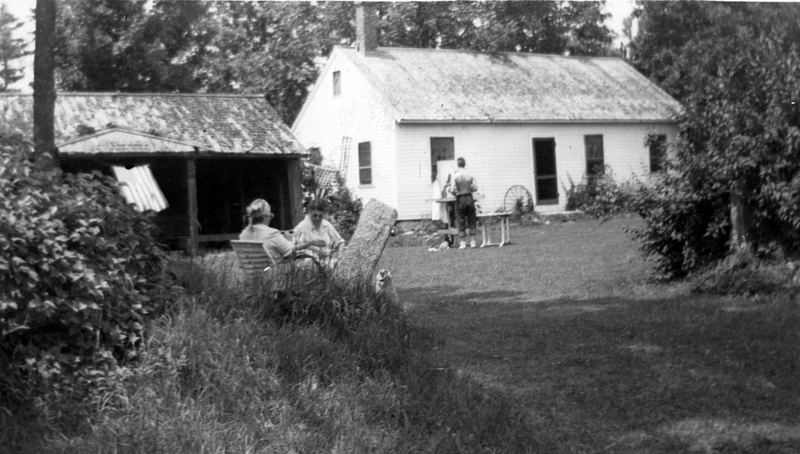
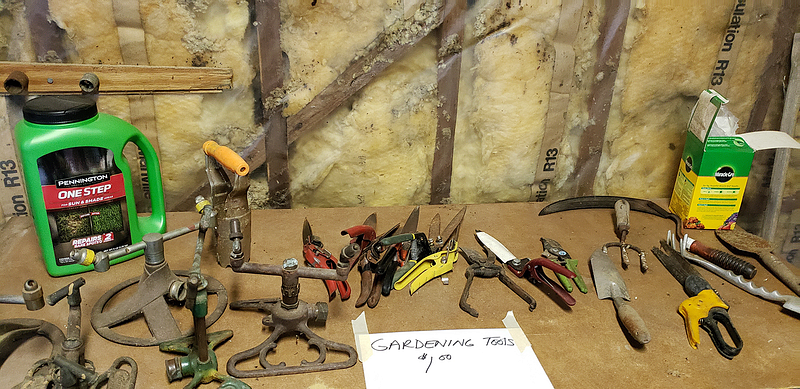
We were allowed in the Cranberry House, though, and unlike the barn, the Cranberry House was full of stuff. Just as my grandfather was ever in the hunt for cheap land, he spent some of his time on the weekends going to estate sales and auctions looking for “deals”. He had filled the building. In time, the Cranberry House had been transformed into a disorganized museum dedicated to unwanted Second Empire furnishings and the agricultural detritus of Hillsboro County, NH. There was a wooden wheelchair made of bamboo with a rattan seat. There were barrels made from a single tree. There were horsehair couches and brass beds, ice tongs, cross-cut saws, steamer trunks, and a beautiful bingo set with wooden balls and a giant steel hopper.
All of that stuff went at auction when my grandparents sold the house in in 1975. The land and “stuff” that my grandfather had acquired didn’t provide a giant financial windfall. Had the family held on to the land on the Cape and not moved to New Hampshire, or held on to the Deering property for another twenty years, it would have been a boon.
There are a couple of points to be gleaned from this digression. My grandfather was the son of a laborer, born into a Boston Irish ghetto, and you could argue that he grew up “wanting”. He made good as a stock broker, and then lost a lot of money in the stock market crash of 1929. He never discussed finances, and despite whatever setback he endured in the crash, he still managed to raise a family of seven children quite comfortably. Is it any wonder that he sought to take advantage of the financial distress of the time and “lay up” some things for the future? If there is anyone whose hoarding could be justified by their emotional history it would be him, right? And, at that, he only filled one, relatively small, out building. He had a lot of other space that could have been filled.
To my mind, this is part of my father’s culpability. You can say he was from a different generation, but he had watched this play before. He was a second generation shit compiler, and not only did he not learn from his father’s pointless collecting, he managed to fill two barns instead of one modest Cranberry House. In other words, he DOUBLED his father’s folly. How did he not learn the ancestral lesson? How did he not see the downside of filling buildings with stuff you don’t use?
I have the answer. You have to remember my father is the luckiest man alive. He is the second-youngest of seven. My grandparents moved from a big house in West Roxbury and into a small condo in Brookline before they sold the house in Deering. It must have been quite a “downsize.” I don’t think my father was involved… at all. What I mean to say is that my dad had nothing to do with the move. When Deering sold, he didn’t even go to the auction. My grandfather gave birth to the Greatest Generation. He fought in WWI. He didn’t need his kids to help him move. He tidied up his affairs and died at 81.
How the House Got Filled: Many Lifetimes of Crap
My mother and father bought a house in Hastings-on-Hudson, NY in 1960. It’s the house I grew up in. I talk about it and have some pictures of it here:
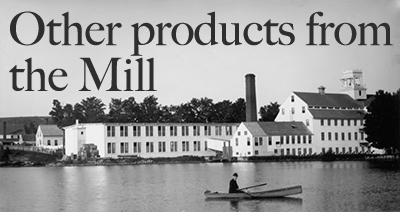
My mother liked to brag that she only bought four pieces of furniture in her life. Everything else in the house came from other family members. A lot of it came from my mother’s great uncle, John. I’m not sure how we ended up with so much of Uncle John’s furniture. The oriental rug I mentioned earlier was from Uncle John. My mother came from a family of New England industrialists that manufacture elastic webbing (the stuff that keeps your underwear up, your bra on, or, more importantly, your World War I gas mask affixed to your face). Uncle John was famous for setting up a rival Mill. He went into business in competition with his own father and did OK. When he died, everyone in the family hoped to inherit his money. It turned out that he had secretly married one of his mill workers and had a child by her. Nobody got nothing, except the furniture.
That house in Hastings was chock-o-block full by the time my parents sold it in 1990. At one point they had built an “addition” to add a fourth bedroom. Part of the addition was a shed attached to the house that my parents called the “storage area.” I think they called it the “storage area” because that’s what the architect wrote on the blueprints, but make no mistake, they had requested a storage area. My younger brother points to this as the warning sign everybody missed. “They had a full basement and an attic. Why was one of the first “improvements” an effort add more storage?”
The Storage Area turned out to be quite useful… for smoking pot. My friends were willing to sit on tires and push aside collections of rakes, shovels, and axes, to party in the clubhouse.
When my parents moved out of the house in Hastings after thirty years, they discarded nothing. The house they bought in New Hampshire was larger than the one in which they had raised five sons. My mother had movers pack up the entire house in New York, move it to New Hampshire, and unpack it in an approximation of where things were in Hastings. For the first two years in the new house if you asked anybody where something was, my mother would say, “Where it was in Hastings.”
Why didn’t they take the opportunity to clean things out when they moved? My mother was not a hoarder, but she was cheap. She didn’t like being called “cheap”. She said she was “sensible”, but if you live in New England you would call her a “Yankee”. She saved tin foil and plastic bags. “Look”, she would say while lining a wastebasket with a plastic bag from Market Basket, “a penny saved is a penny earned.”
The point is, the stuff from Hastings all got moved up to New Hampshire. When my mother died, we cleaned out the tin foil drawer and threw out the spices bought from an A&P two hundred miles to the south. I never saw my mother use turmeric in her life. My guess is that the turmeric we tossed was at least 50 years old.
I was going to detail how the new house in New Hampshire got so full of shit, but just trying to write about it sends the needle of my emotional barometer towards “riot”. One contributing factor was the fact that there were four or five other houses in that house. My father is the last of his generation. As siblings died, and remember, these were the sons and daughters of the man who filled the Cranberry House, many of the “ancestral items”… the “memorabilia”… ended up with my father. Add to that the fact that my father, who has been retired for 30 years (didn’t I say he was the luckiest man alive?) looked for “deals” just as his father had before him. He wasn’t a huge flea market, yard sale, or antique store maven, but he certainly looked, and when he found something that was “neat” (and here you have to understand the the word “neat” means things like a chicken debeaker from the 1940s) being offered “at a good price” he bought it. To these shit streams you must now add the the real culprit, the truly pathological part of the Old Man’s behavior, and then you end will up where I started this story.
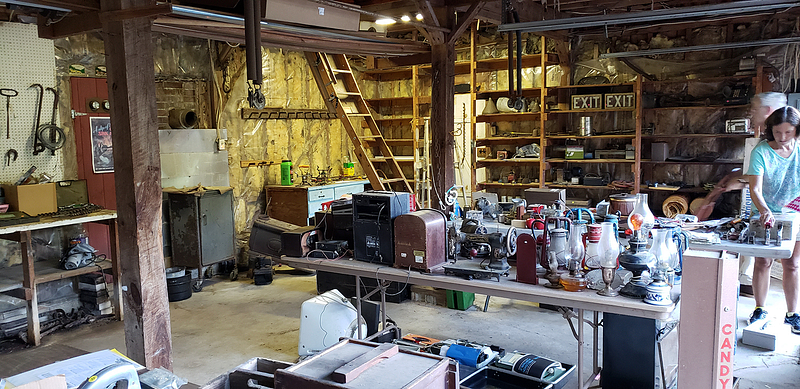
The real culprit was the Dump. Our town does not have roadside trash pickup. You have to bring your trash and recyclables to the dump, which isn’t really a dump anymore. It’s a transfer station, so all of the bulky trash sits around in giant piles until it gets hauled away. Those piles can be “picked”. For three decades my father had been picking the dump two or three times a week. He had, in essence, moved some fraction of the junk at the town dump twenty miles east under the mistaken impression that the things he was taking had some “value.” He had created a satellite dump in his barns. Imagine his surprise when I explained to him in very clear terms that not only was the stuff in the barn “worthless”, he was going to have to pay real money to get rid of it all.
Let the Emptying Begin
My mother died over a decade ago. My father, unlike many of his generation, can take care of himself. Most of the men of my dad’s age are “big babies.” I could tell you countless stories about friends of his who once presided over corporations but could not boil an egg or make a doctor’s appointment after their wives died. I wouldn’t exclude my old man from the “big baby” label, but even before my mother died he was pretty good at the basics. He cooks, cleans, does laundry, and keeps the place up. He has never done the bills. My mother handled the finances for their entire marriage. When she got sick, she passed the job onto me.
Prone to romantic pronouncements and with a childlike disregard for practicalities, my father often stated that he would be “carried out of his house in a box.” It sounds good. It sounds grand. The fact that he could make such a pronouncement without any thought of what it might mean for the people around him is astonishing, unless you are familiar with the mores of the “Little Brothers of the Greatest Generation.” Like his father before him, he was going to call the shots, even if he no longer had the ability to make any shots.
The comeuppance came last winter when he got dehydrated. We went to the Emergency Room because he was really sick. The nurse checked his blood pressure. His blood pressure was fine. The ER doctor listened to his lungs. His lungs were clear.
I said to the doctor, “That guy has been smoking since he was fifteen.”
The doctor replied, “not everyone who smokes gets COPD.”
I said, “I’ll make sure not to tell that to the middle schoolers I teach.”
He said, “please don’t.”
The long and the short of the visit was that my father was sick, but in remarkably good shape. That said, someone had to stay with him in his house for two or three weeks. The Boss, Mayor McFreaky, and myself took turns. After he recovered he was always cold. He had a hard time moving around. His money was running out from heating and taxes. I floated the idea that he might want to look into a renting an apartment downtown. When he came back with “maybe that would be a good idea,” I knew I had my chance. The planets were aligned. The plates had shifted. Birnam Wood was coming to Dunsinane. The Old Man had acquiesced.
I called my little brother, the banker. I was mean to him when we were young and I sincerely regret it, for I love him dearly. Nobody who knows him now knows what he was like as a kid. He was a brawling, mischievous, stubborn terror of a child. Now he is a banker who plays golf. I like to tell him that he “farts dust” because, you see, I can’t stop being mean to him, as much as I try.
While my brothers and I all agree, more or less, on the general outline of the psychological gyre that is my father, we all relate to him differently. That difference is important, because when I said to my baby brother, “Do you want to buy a condo for dad so he can sell his house?” My brother thought for a while and said, “I can do that.”
“I can do that” meant that he would “be willing to do that.” If I had called any of my other brothers and they had said “I can do that” the second part would not have been implied.
This is the essence of privilege; getting bailed out of situations you created deus ex machina, and a huge part of my father’s great luck is that his was a well educated white man living in New York during the 50s and 60s. He likes to tell the story of going into the Stuben store on Fifth Avenue on the day before Christmas Eve. He was taking the train to Boston that night and needed to get a present for his mother. He looked at the glass in the Stuben shop and found something that he wanted to buy. He didn’t have enough cash to purchase it. He asked if they would take a check. They said they would, and then he discovered he didn’t have a check on him. The salesgirl said, “No problem. Do you have a business card?” He did. That was all she needed. She wrapped up the gift and handed it to him. When he got back from Boston he sent a check to the Stuben store. He tells this story to illustrate how much “things have changed.”
He doesn’t understand that things have changed a lot for white guys in business suits who used to own midtown Manhattan. Let me show you this. It is the opening to the television show “The Odd Couple”.
You see that? You see the depiction of maleness. That was the high-water mark for privileged white guys in the City. My father had a big piece of that.
The purge began with the closets. In one downstairs closet my father had four or five trench coats, just as many overcoats, countless suit jackets and suits. There was a lifetime of sartorial acquisition packed in must, and dust, and molding. You know what is sick? As the Boss and I schlepped bag after bag of clothing… two huge bureau drawers of dress shirts that hadn’t been worn in two decades… to the Planet Aid and Salvation Army drop points, I kept noticing what was missing. What ever happened to mom’s ermine and mink jackets? Did we throw out my grandfather’s racoon-skin coat when we were in Hastings? Where is the Sherlock Homes hat that Uncle Robin gave you?
Why do we have such memory for things? How come I can recall so many teeny tiny objects from my childhood? Almost everything that was “missing” turned up somewhere when we cleaned out the house. A silver cigarette box that nobody had seen since Hastings, a vase that used to be in the living room, a doll from Copenhagen that my mother had be given as a child. Almost everything was accounted for, but why the need for accounting? These things are much bigger in their absence. Let me assure you as one who has spent the last year “recovering” lost treasures. Once found, what are we going to do with the plates and glasses from the house in Rhode Island? I mean, there they are in the box where they’ve been for forty years. I remember them vividly and was wondering where they went, but WHAT DO WE DO WITH THEM NOW?
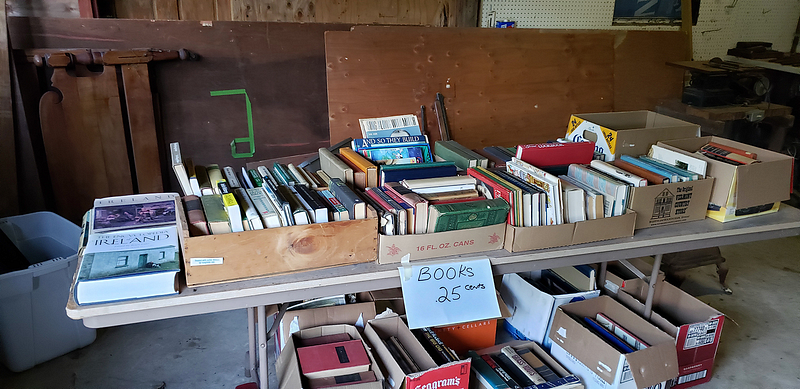
One of the closets was full of books. My son, Mayor McFreaky, was kind enough to set up tables in the Great Room and organize the contents of the “bookshelves” as the closet disgorged its contents. The sorting took two weeks. There used to be about a dozen semi-prosperous used book shops in our area. Amazon and retirements led to their extirpation. My fathers is “friends” with the proprieter of the last one standing. The book man came to the house to take a look at the Old Man’s “collection”. After an hour he paid my dad $500 and left with one box of books. That left a ROOM FULL OF BOOKS ON TABLES. The collection of signed books was untouched, as were the art books, the collection of Trains magazine, and the volumnes of Irish History. My father was dumbfounded.
It reminds me of the time that one of my aunts told me that women of her age (she was about 75 at the time) were shocked to discover that the “family silver” was not only unwanted, but worth a lot less money than they thought. For a generation of women, the silver was “theirs” because wedding gifts belong to the bride. It represented an escape hatch and failsafe. “If the family blows up, I can always buy some time by selling the silver,” they thought. My aunt explained that at least two of her friends had, after offering the silver to their kids, decided to “cash in” and maybe use the money for a vacation, only to discover that the silver was worth its weight. The dealers would melt it down. Times had changed.
The book closet was a microcosm of what was to come. Pulling on anything led to an explosion of stuff. There was constant recognition, some amazement, and sometimes joy, but all discoveries finally ended with the question, “what are we going to do with it?” I cleaned out my mother’s desk. In it were all of the passports the family had ever had, my brother’s social security card (he’s 60), our State of New York birth certificates (which we didn’t think we had), boxes of her stationary, financial records, letters to her now deceased brother, a couple of matchbooks that were printed for her wedding. Lots and lots of stuff. Only one thing from the desk turned out to be worthwhile.
It was a form my brother had filled out in preparation for his first communion. On it, there was a question that asked, “What can you do to be closer to Jesus?” My brother had written, “Be kind”, “Not Fight”, and “Rake Leaves.” I put all such documents in a tub and gave the tub to Billy, my brother’s partner of thirty years. My brother would throw that stuff out, but I knew that Billy might be interested. Sure enough, “Get the rake” has become a new catch phrase in their house, even though they live in Manhattan. “Why should he get the rake?” I asked Billy when I visited them earlier this year. He replied, “Because he’s not being kind and we’ve already had a fight, so unless he starts raking he’s going to Hell.”
There is a sickness that infects families that have inherited a lot of junk from wealthier relatives that can be summed up in the phrase, “that’s worth some money.” My whole life I’ve lived with the belief that tiny baubles, or a forgotten painting, might turn out to be worth a lot of money. It’s the sickness that underpins “Antique Roadshow.” There are treasures, right? Some of them might be REAL treasures.
But I’m here to tell you that I oversaw the dissolution of a generation’s worth of crap, and there was precious little that had any real value. What did have value was packed off to the condo. We have maybe three rooms of “stuff” that’s worth a damn, and I even with that, the condo hosts a couch so stained and ugly that I was embarrassed moving it in. My father likes it. “It’s comfortable,” he says, meaning that it is good to sleep on.
There were a few… precious few… “finds”. Things that we didn’t really know existed.
In the closet of a room most recently used by one of my brothers before he got packed off to alcohol rehab, Mayor McFreaky found a cardboard tube. Inside the cardboard tube were posters, and when I started to unroll them I ripped two at the exact same moment that I realized they were Peter Maxx posters.
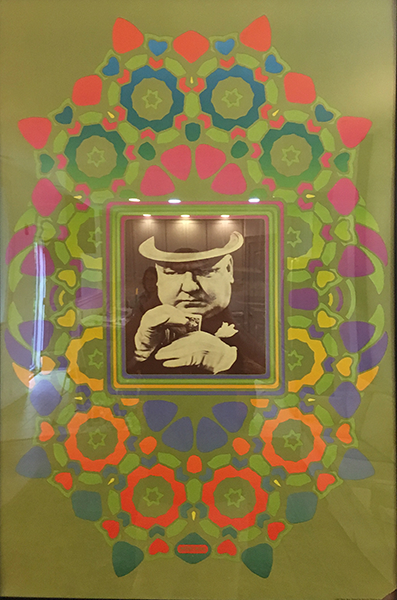
The outside of the tube had a date, 1967, and the names of the Art Directors at Sales Marketing Executives International (SMEI), the trade organization on Madison Avenue that my father headed in his Halcyon days.
We unpacked the tube and put the posters in frames. Then, when my dad came over one Sunday, I asked if he had ever seen them before. He had no idea what they were. I showed him the tube. His best guess was that the printing company that SMEI used must have sent them as a “thank you” for their business. When I told him what they might be worth he decided they should go in the condo.
Each of my brothers said, quite emphatically, that they wanted “nothing” from the house. Knowing better, I started making regular dump runs of things I was pretty sure were useless, but I took pictures and texted them to the family before I went to the dump. It turns out that nobody wanted the meat grinder that had cost my older brother the tip of his finger
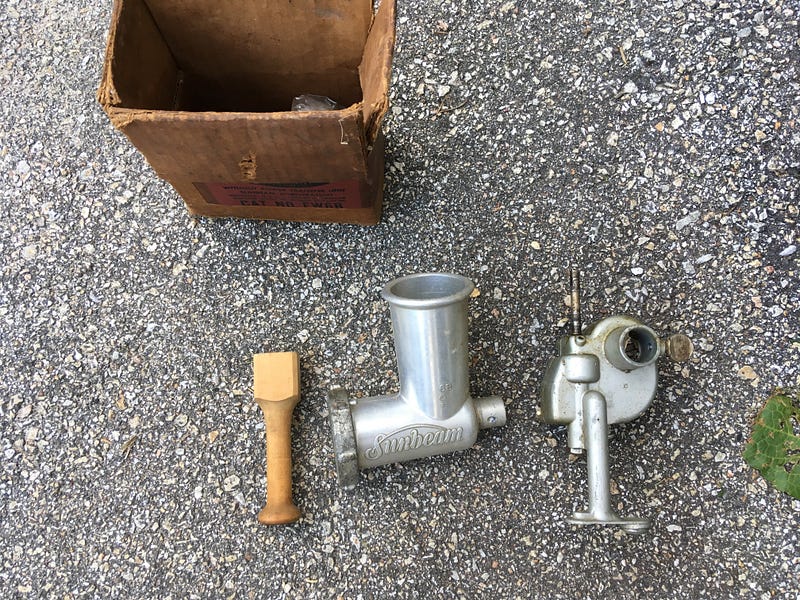
As I write this, I can’t really fathom how it happened. The story is that my brother stuck his finger in that meat grinder when my mother was making meat loaf. He had to go to the hospital and he lost the tip of his finger. How small would your hand have to be to fit in that thing? Where was my mother? How much hamburger was she grinding? Is that thing even electric? Anyway, it went to the swap shop.
While I was right that most of the stuff I selected for dumping was, in fact, “crap”, the “I want nothing” brigade didn’t live up to their name. My younger brother asked me to save this:
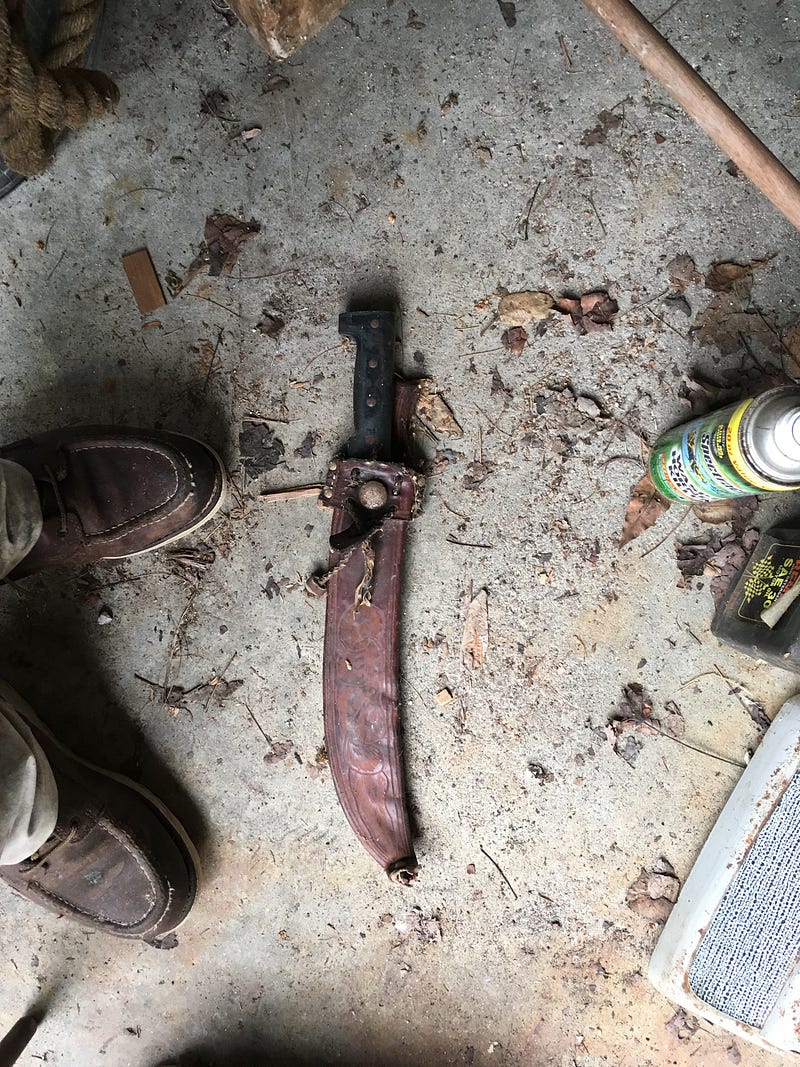
That’s a machete he bought in Puerto Rico was he was eight. It’s a long story. My mother forgot his birthday. She realized her mistake after she had put him to bed and heard him crying. He hadn’t said anything because he was convinced he was getting a surprise party. When she asked him “What’s wrong?” He said, “It’s my birthday.” She replied, “Oh my God, it is.” Guilt ridden, she told him that she was going to take him to Puerto Rico, then went downstairs and booked the cheapest trip she could find.
My brother has often said that he wished he had managed to say “mini bike” through his tears. “Mom wanted to go to Puerto Rico because my birthday is in January. I wanted a mini bike.”
He didn’t get to buy or ride a mini bike in Puerto Rico. He came back instead with a straw hat and a machete. We were dumbfounded that mom let him have a machete. We asked him what he did in Puerto Rico. He said he “played video games in the bar at the hotel.” We were jealous. Back in those days, you had to go to a bar to play video games. Fucker got to play video games and eat macadamia nuts just because mom forgot to invite our cousins over to eat hot dogs and play pin-the-tail-on-the-donkey. What a lucky bastard.
To be fair, my brother claims he didn’t want to save the machete. He says his daughter asked him to save it from the dump. “That’s the machete?” She texted him. “You have to keep that!” Some day, sixty years from now, a grand-niece or nephew of mine is going to be vaporizing the excess shit in their house with a destructor ray and they will have to aim it at that fucking machete. I just hope it doesn’t cost too much to rent the a destructor ray.
The machete is emblematic of the a strange reality. You can’t fathom what people, even people you know quite well, want to keep. We had a big 90th birthday party for my father during the summer, with a tent, and a band, and the entire clan gathered. Since all of the brothers were going to be home we used the opportunity to divide up what wasn’t going to the condo.
After the first round of “picks” we couldn’t stop laughing. Two of us had chosen beer posters that had been hanging in the kitchen for decades. Our sons “really wanted them.” My oldest brother had taken a salad bowl. The Hunt chest, the Royal Doulton vases, the before-mentioned Stuben bowl… all the things that “may be worth a lot of money”… were passed over. We, and our spouses, were picking over our childhoods, and it turns out that what we wanted were the things that simply reminded us of a different time.
The cousins came. I have twenty-six cousins on my father’s side and many of them have grandchildren by now. We offered up whatever was there. Remember, I haven’t even started talking about the barns. There was a lot of stuff. A lot of stuff went, but after the party the big work began.
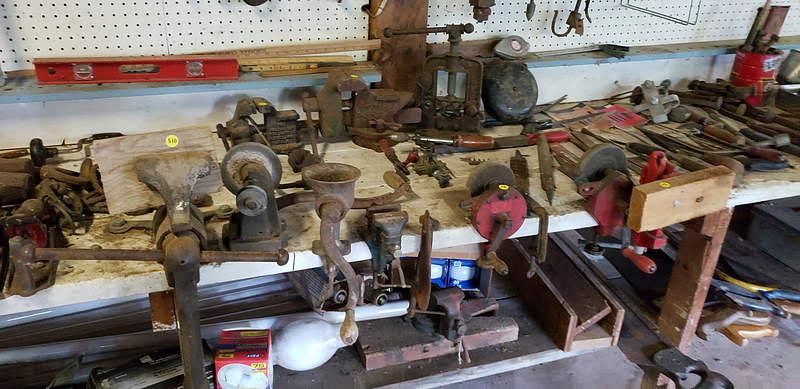
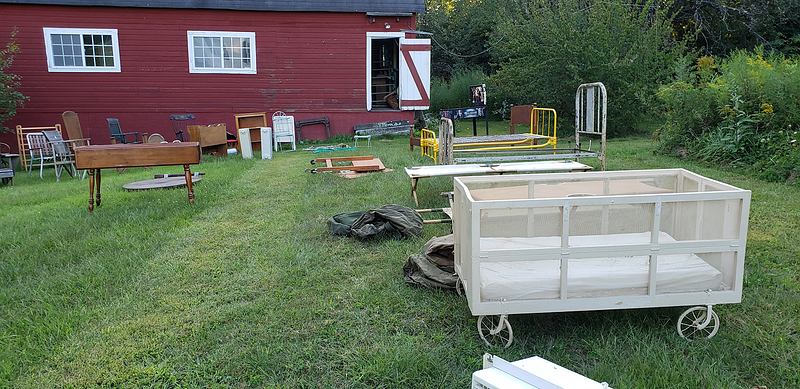
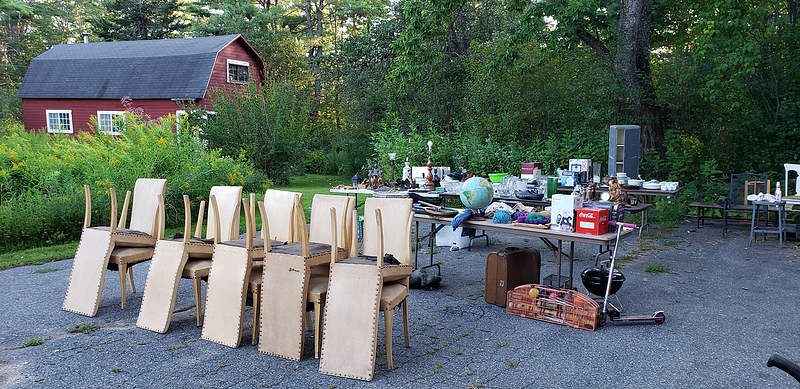
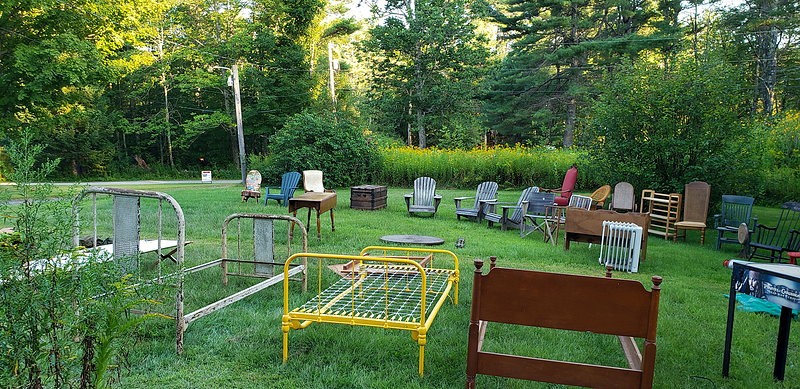
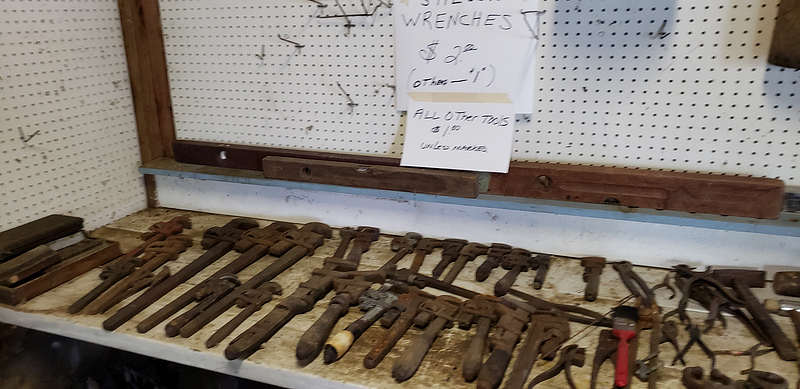
The Boss and I started tossing things out in earnest. We rented a 30 yard dumpster that could hold three tons. We organized things for a yard sale. I bought signs and stickers through Amazon. We advertised in the local paper. My media-savvy cousin came up and spent two days helping out. She took pictures and posted them on a Facebook “garage sale” group for our region that has over 1000 members. We pulled everything out of the barns. We made lists of what was inside the house so people would know that everything in there had to go too. We had perfect weather on a late summer weekend. A lot of people came to the sale. Once it was over, we had $600 and more than 12 tons of crap still on the property
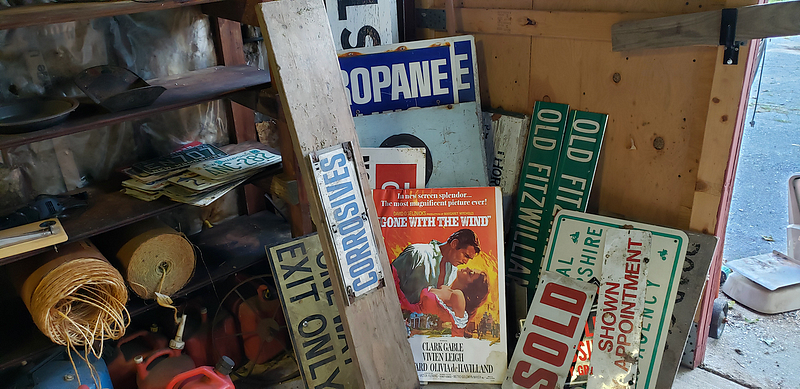
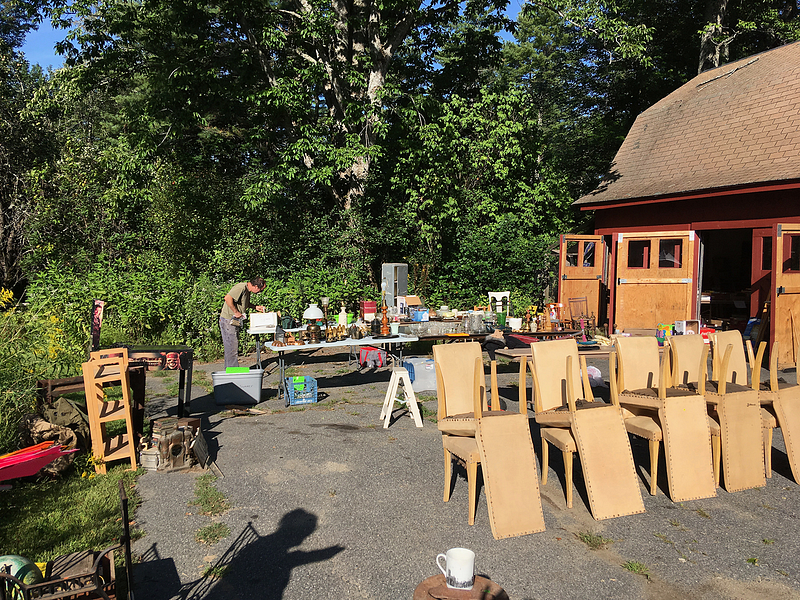
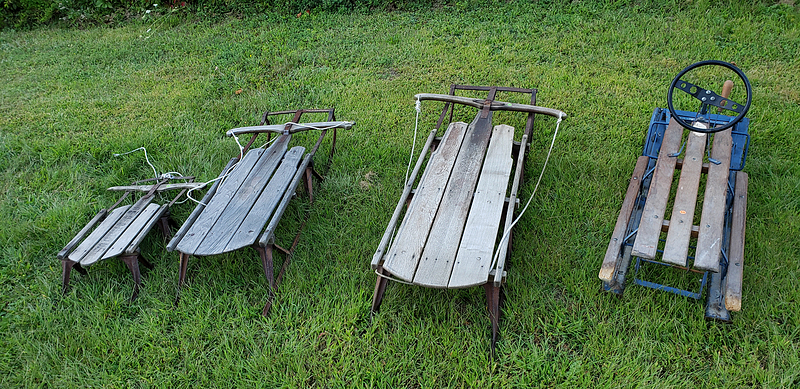
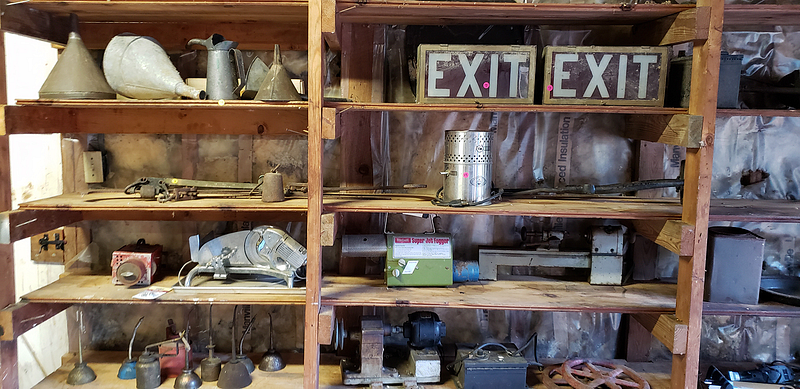
Get Rid of It, Get Rid of It All
The Boss and I had already filled up the 30 yard dumpster with four tons of junk. We had to pay for the overage. After the cousins and the yard sale, we had hire a Big Blue Wrecking Crew. The local carting company… the same guys who were renting us the dumpster… showed up with four young men and a tractor. They emptied the barns and the house of EVERYTHING. In a moment of genius the Boss took the cable box and modem that was sitting in the room that once had the TV. That was a $400 catch.
The bill, when all was said and done, was about four thousand dollars. My father, who had, I must admit, been a great sport while watching all of HIS BELONGINGS get given away, sold, or thrown in a dumpster was contrite and maybe even a little embarrassed.
I tried to ease his pain. “For the last thirty years,” I said, “your biggest hobby has been picking the dump and filling those barns. At four thousand dollars, picking the dump was a lot less expensive than smoking. You could have been gambling or breeding dogs. Both would have been more expensive.”
The Lessons
If this were a real essay, instead of a stupid blog post, I would have thought this through and been able to artistically reveal the conclusions of the saga here. The truth is, I haven’t figured it all out yet. I’m still chewing on the bitterness. Here are some of my thoughts:
- We should have done this 20 years ago. My grandparents died when their children were in their 30s and 40s. My father is 90. Had we broken up the house twenty or thirty years ago, my brothers and I may have taken more furniture, but we all have full houses now. We’re ten years away from downsizing ourselves. There was a sea chest from the barkentine Esmerelda that I always thought I wanted. When it was time to take it, I thought, “Why am I going to drag that heavy chest to my house? I’m just going to have to get rid of it in a decade.”
- We invest so much emotional energy into things, and not all of it is bad. There was a set of dishes from my grandmother’s house that were headed for the dumpster. I couldn’t stand it, so I took them to use at school. I now drink my coffee out of one of the tea cups and when a kid needs a plate or a bowl I have them use a piece from the set instead of using paper plates. I wash them after school. You know what? It gives me great joy to see them used. I’m really attached to this stupid set of plates.
- We have great memory for “things”. I’m not kidding when I say that almost everything was accounted for. As soon as you saw an object get dragged out of somewhere you knew what it was and where it had been. You would find one long lost item and then someone would ask about another. I unearthed the Radiola that my father had bought when he was in the Woolworth Management Training Program. It was on a counter in our kitchen for most of my childhood, but it triggered the question, “what happened to the Blaupunkt portable radio we got from Lotha Amenda?” A discussion ensued. Objects have histories that weave through the places of the past and the now dead people who carried them.
- There used to be outhouses. We don’t have outhouses anymore because there are too many people. The same is true about stuff. We can’t just throw it over the stone wall. All of it is a liability, but this is a problem that has developed in my lifetime. I played in the town dump at Hastings when I was a kid. It was a big pit. For as long as Hastings had been there, everything had been burined IN THE TOWN. My father is oblivious to the problem of stuff because he was born before stuff was a problem. When the Big Blue Wrecking Crew came to initiate the clean sweep, my father said, “This is a big job, huh?” One of the kids working said, “This is nothing. We go into houses where everything is there. The breakfast dishes are on the table, and we go in and junk it all. Some of those places are really full.”
So there it is. I told you I was a hero, but like most heroes I’m transformed by the adventure and maybe permanently injured. We need a new culture. A culture that helps us relate to the word, and each other, and objects in a way that is sustainable. I don’t like to think where the contents of those four dumpsters went. Maybe they are now buried in the ground somewhere in the middle of the country or down in South America, where the contents of our possessiveness will fester and grow until a true monster is born. A Godzilla-like creature that forms in the swirling detritus of our junked oceans, that crawls back on land and comes crashing back upon us as fire and wanting.
The Boss and I didn’t stop at my father’s place. Since then we have been doing due diligence at our own house. The trips to Planet Aid, the book bin, the swap shop, and the recycling center continue. There is no easy way out.
I’ll end with this. Below is a picture I took of the art my little brother created by carving into the kitchen table with a butter knife while bored. Again, it was there for years. We know it so well that when I traced it and asked one of my brothers what it was, he recognized the shape immediately.
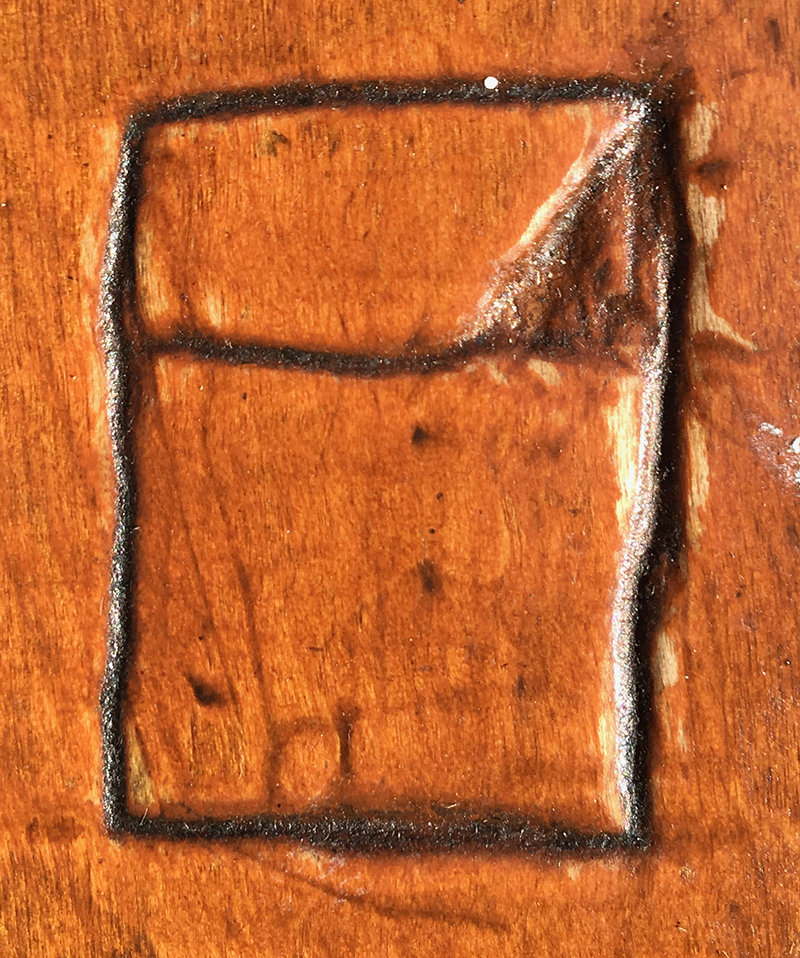
I took several pictures of it. I have them on my machine along with 22,000 other photos. Do I really need to keep this? Is my son going to curse me when he has to take all my hard disks to the E-waste guys and they charge him $200,000 to get rid of my photos?