avatarWill Lockett

Free AI web copilot to create summaries, insights and extended knowledge, download it at here

2371

Abstract

this critical point, which means we can now save the planet without destroying our civilisations.</p><p id="6583">However, this progress is not enough. As it stands, <a href="https://euobserver.com/green-economy/156763">only 22% of the EU’s energy mix comes from renewable sources</a>. That’s right; after two decades of expanding renewable energy, less than a quarter of the EU’s energy is renewable. If you take the current adoption rates and extrapolate, <a href="https://www.eea.europa.eu/ims/total-greenhouse-gas-emission-trends">you can see that the EU will miss its 2030 goal of 40% renewable energy and then miss the all-important 2050 goal of carbon neutrality</a>.</p><p id="0730">Over the next seven years, the EU needs to nearly double its renewable energy capacity if it is going to keep its Paris Agreement promises! Yet despite that, a recent study found that the EU will meet this target. How?</p><p id="c536">Well, over the past year, <a href="https://euobserver.com/green-economy/156763">renewable energy adoption has skyrocketed</a>. Putin’s barbaric invasion of Ukraine kicked off an energy crisis in Europe. It became too expensive or politically complex to import fossil fuels or even some types of nuclear fuel (read more about Putin’s nuclear mafia <a href="https://readmedium.com/putins-nuclear-mafia-has-the-west-under-its-thumb-a21951bc5c8d">here</a>), which caused the price of energy to shoot up. The whole of Europe then realised that their energy grids depended on countries like Russia, leaving them open to blackmail and energy besiegement.</p><p id="a53a">Suddenly, every country in Europe got super interested in expanding their renewable energy sectors. It’s ironic that they saw Putin’s energy crisis threat as more important than the threat of climate change, but that is a conversation for another day.</p><p id="34be">Over the past few years, <a href="https://www.carbonbrief.org/solar-is-now-cheapest-electricity-in-history-confirms-iea/">solar and wind power have become substantially cheaper</a> as the production of panels and turbines has scaled and more efficient technology has been adopted. This <a href="https://www.bloomberg.com/news/articles/2021-06-23/building-new-renewables-cheaper-than-running-fossil-fuel-plants?leadSource=uverify%20wall">price drop means that it is now cheaper to close coal power plants premature

Options

ly, not seeing a full return on their expensive construction, and replace them with brand-new solar and wind technologies</a>. This milestone was passed in 2020, yet despite that, solar and wind adoption stayed consistently behind where it needed to be.</p><p id="f316">This fantastic economic quirk of renewables has enabled the EU to adopt them at a breakneck pace to combat Putin’s influence without breaking the bank.</p><p id="ddc7">But is this sustainable? Are we just going to see a burst of adoption and then a return to the not-good-enough transition to renewables? Well, <a href="https://www.solarpowereurope.org/press-releases/eight-actions-to-solar-power-eu-energy-independence-new-report">the EU is incredibly keen to achieve energy independence</a>. So <a href="https://commission.europa.eu/strategy-and-policy/priorities-2019-2024/european-green-deal/repowereu-affordable-secure-and-sustainable-energy-europe_en">several union-wide and national schemes have been set up to ensure this rate continues for the foreseeable future, with the aim of increasing their energy security</a>.</p><p id="870d">This is where a recent study comes in. Thanks to these new schemes, it was found that the EU will smash its 2030 goal of 40% renewables in its energy mix. In fact, the study found that by 2030, the EU will have more than double its targeted solar power capacity!</p><p id="f16f">Not only does this mean the EU is on track to meet its Paris Agreement promises, but it also means that they are getting a head start on the targets further down the road, like carbon neutrality by 2050. Therefore, other climate-critical technologies, such as carbon capture, can get more time, effort, and funding. So while this is only a stepping stone to halting climate change, it is a significant one! All thanks to Putin’s stupid war. Who’d have thought?</p><p id="016d"><i>Enjoyed this article? Then check out my latest book, “50 Ways To Save The World,” on Amazon <a href="https://www.amazon.com/dp/B0BRPPVR5Z">here</a> or my YouTube channel <a href="https://www.youtube.com/channel/UClnY1J4ZzDfWTIb0PTPBEog">here</a>!</i></p><p id="0a8f">originally posted on <a href="https://www.patreon.com/posts/eu-is-poised-to-79734165?utm_medium=clipboard_copy&amp;utm_source=copyLink&amp;utm_campaign=postshare_creator&amp;utm_content=join_link">Patreon</a></p></article></body>

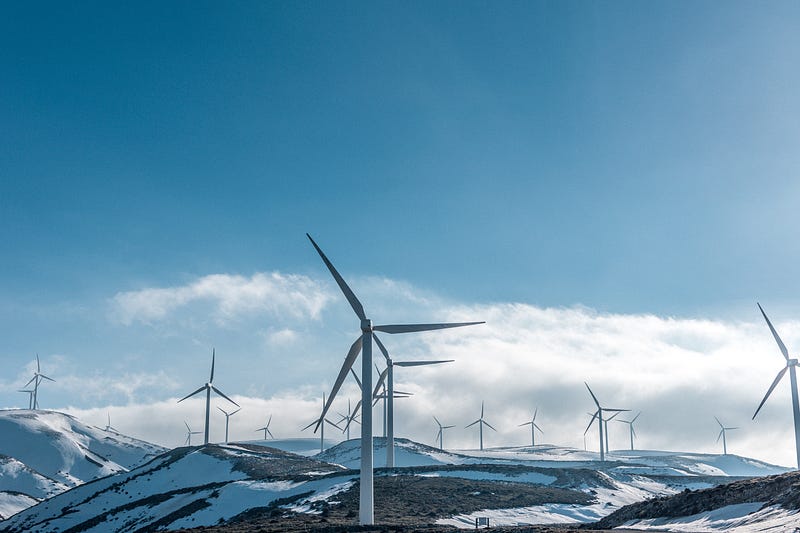
Photo by Jason Blackeye on Unsplash

The EU Is Poised To Smash A Major Climate Milestone

This is a huge leap forward, thanks to an unusual source.

Way back in 2015, the famous Paris Agreement was signed, which laid out the roadmap humanity must take to save the planet from our self-made apocalypse. However, in the years following, we have dragged our heels in acting on these recommendations, and predictions have shown that we are highly likely to miss our targets by some margin. That was until recently, as a new study proposes that the EU will exceed these targets. But why has this change of direction occurred? And is it sustainable?

In reality, the EU hasn’t dragged its heels. Its population and GDP have increased yearly, with the exception of a slight population dip in 2021. Despite this growth, its carbon emissions have fallen year on year from 1990, when it emitted 4,700 gigatonnes of carbon dioxide, to 2020, when it emitted only 3,000 gigatonnes. This dramatic change was achieved by raising industrial standards, adopting low-carbon technology like nuclear power, and tightening vehicle emissions standards.

This carbon footprint reduction is itself a significant milestone. For years, many economists linked carbon emissions to population growth and rising GDP. They theorised that we could only save the planet once these factors were decoupled; otherwise, countries would be sabotaging themselves. For this to happen, climate technology would need to be cheaper and more scaleable than its fossil-fuel equivalents. And, as the data shows, we have reached this critical point, which means we can now save the planet without destroying our civilisations.

However, this progress is not enough. As it stands, only 22% of the EU’s energy mix comes from renewable sources. That’s right; after two decades of expanding renewable energy, less than a quarter of the EU’s energy is renewable. If you take the current adoption rates and extrapolate, you can see that the EU will miss its 2030 goal of 40% renewable energy and then miss the all-important 2050 goal of carbon neutrality.

Over the next seven years, the EU needs to nearly double its renewable energy capacity if it is going to keep its Paris Agreement promises! Yet despite that, a recent study found that the EU will meet this target. How?

Well, over the past year, renewable energy adoption has skyrocketed. Putin’s barbaric invasion of Ukraine kicked off an energy crisis in Europe. It became too expensive or politically complex to import fossil fuels or even some types of nuclear fuel (read more about Putin’s nuclear mafia here), which caused the price of energy to shoot up. The whole of Europe then realised that their energy grids depended on countries like Russia, leaving them open to blackmail and energy besiegement.

Suddenly, every country in Europe got super interested in expanding their renewable energy sectors. It’s ironic that they saw Putin’s energy crisis threat as more important than the threat of climate change, but that is a conversation for another day.

Over the past few years, solar and wind power have become substantially cheaper as the production of panels and turbines has scaled and more efficient technology has been adopted. This price drop means that it is now cheaper to close coal power plants prematurely, not seeing a full return on their expensive construction, and replace them with brand-new solar and wind technologies. This milestone was passed in 2020, yet despite that, solar and wind adoption stayed consistently behind where it needed to be.

This fantastic economic quirk of renewables has enabled the EU to adopt them at a breakneck pace to combat Putin’s influence without breaking the bank.

But is this sustainable? Are we just going to see a burst of adoption and then a return to the not-good-enough transition to renewables? Well, the EU is incredibly keen to achieve energy independence. So several union-wide and national schemes have been set up to ensure this rate continues for the foreseeable future, with the aim of increasing their energy security.

This is where a recent study comes in. Thanks to these new schemes, it was found that the EU will smash its 2030 goal of 40% renewables in its energy mix. In fact, the study found that by 2030, the EU will have more than double its targeted solar power capacity!

Not only does this mean the EU is on track to meet its Paris Agreement promises, but it also means that they are getting a head start on the targets further down the road, like carbon neutrality by 2050. Therefore, other climate-critical technologies, such as carbon capture, can get more time, effort, and funding. So while this is only a stepping stone to halting climate change, it is a significant one! All thanks to Putin’s stupid war. Who’d have thought?

Enjoyed this article? Then check out my latest book, “50 Ways To Save The World,” on Amazon here or my YouTube channel here!

**originally posted on Patreon**

Science
Technology
Sustainability
Environment
Climate Change
Recommended from ReadMedium