
The EU Coup Taking Control Of Poland Ahead Of NATO False Flag: Unveiling the Hidden Agenda
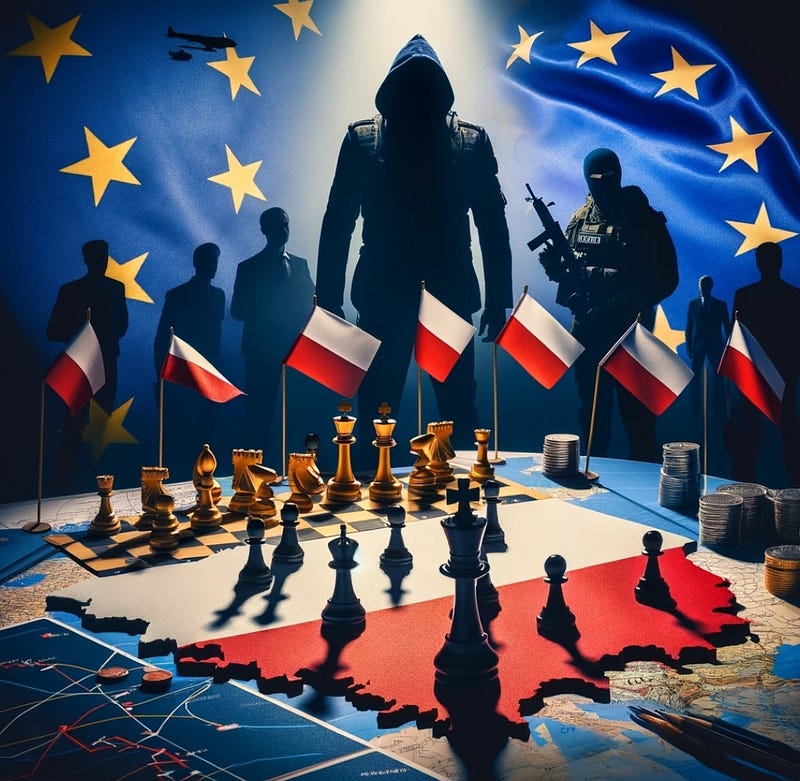
Recent events in Poland have sparked concerns about a covert power struggle, with implications reaching far beyond its borders. This article delves into the intricate web of political maneuvers that suggest an EU-backed coup in Poland, paving the way for a NATO false flag operation. The evidence points towards a strategic orchestration to undermine national sovereignty, implicating key political figures and institutions.
Tusk’s Ambitious Agenda and Duda’s Resistance
Donald Tusk, the current Polish Prime Minister and former President of the European Council, is steering Poland towards deeper EU integration. His administration faces significant resistance, notably from President Andrzej Duda, a known ally of the conservative Law and Justice (PiS) party. The Tusk government’s efforts to dismantle the previous government’s influence, especially in the judiciary and media, are seen as pivotal to aligning Poland with EU directives. The PiS party, under Duda’s indirect support, accuses the Tusk regime of authoritarian tactics, particularly in the media sector, echoing the dark era of communist rule (Euronews, Politico).
Media Revolution or Authoritarian Grip?
One of the most contentious actions of the Tusk government is the overhaul of state media. The previous PiS government is accused of using state media as propaganda tools, which Tusk aims to rectify. However, this move has been met with severe backlash from PiS loyalists, who decry it as a violation of media freedom and an authoritarian grip on free speech. The situation escalated when the new administration took control of public media outlets like TVP, leading to protests and accusations of illegal and brutal tactics (Politico, Euronews, Al Jazeera).
Economic Leverage and NATO Dynamics
The economic implications of these political shifts are significant. Tusk’s government is viewed as a pathway to rejuvenating Poland’s economy and strengthening its EU ties, especially concerning the adoption of the euro and central bank reforms. This economic pivot is crucial in the context of the ongoing conflict in Ukraine, as Poland positions itself as a key NATO ally. The Tusk administration’s alignment with EU and NATO interests is perceived as a strategic move to consolidate Western influence in Eastern Europe, amidst the rising tensions with Russia (Euronews).
Conclusion
The unfolding events in Poland suggest a sophisticated EU coup, backed by influential figures like Donald Tusk, aimed at realigning Poland with EU and NATO objectives. The resistance from President Duda and PiS loyalists highlights the deep divide within the country. This power struggle has profound implications, not only for Poland’s sovereignty but also for the broader geopolitical landscape in Europe, especially in the context of the Ukraine conflict and NATO’s strategic interests.
References
- Euronews: Coverage on Tusk’s challenges and Poland’s divided nation.
- Politico: Reports on the political battle over media control and the rule-of-law crisis.
- Al Jazeera: Insights into the dismissal of state media chiefs and the new government’s agenda.
The unfolding narrative in Poland raises critical questions about sovereignty, media freedom, and the broader geopolitical chess game in Europe. The actions and responses of key players like Donald Tusk and Andrzej Duda offer a glimpse into the high-stakes power dynamics at play.