avatarPeggy Jones

Free AI web copilot to create summaries, insights and extended knowledge, download it at here

3173

Abstract

ref="https://commons.wikimedia.org/wiki/File:Its_no_longer_ethical_for_me_to_have_kids._-Melbourneclimatestrike_IMG_5188_(48765008992).jpg">Wikimedia Commons</a></figcaption></figure><p id="f32f">That’s why Meghan Kallman and Josephine Ferorelli co-founded <a href="https://conceivablefuture.org/testify">Conceivable Future</a>. It’s a grassroots network of Americans concerned about having kids against the backdrop of climate chaos.</p><p id="862b">CF doesn’t take a stand for or against having children. Kallman and Ferorelli are both in their 30s and wrestling with the decision. The group’s ultimate goal is to end U.S. fossil fuel subsidies.</p><p id="5a77">Meanwhile, they throw house parties and invite people to post online <a href="https://conceivablefuture.org/tagged/testimony">testimonies</a> about how climate change affects their reproductive decisions.</p><p id="be94">Please read these testimonies or even submit one. There are now about 100 mostly anonymous testimonies. Kallman <a href="http://There are two concerns that people at our house parties frequently show up with. One is: What kind of harm will my child do to the world? The number of diapers these kids produce would eventually circle the Earth; they’ll create X tons of carbon, X tons of trash. And then the other question is: What kind of harm would a hotter and less stable and more potentially violent world do to my kid?">groups</a> their concerns into two categories.</p><blockquote id="907b"><p>One is: What kind of harm will my child do to the world? The number of diapers these kids produce would eventually circle the Earth; they’ll create X tons of carbon, X tons of trash. And then the other question is: What kind of harm would a hotter and less stable and more potentially violent world do to my kid?</p></blockquote><p id="1098">Let’s look at both of those concerns in more depth.</p><h2 id="363e">How does climate change hurt children?</h2><p id="4c7a">Heat and conflict go hand in hand. People are more likely to get violent with each other in hot weather. As temperatures rise, so do tempers.</p><p id="db51">A 2015 <a href="https://www.nber.org/papers/w20598">research paper </a>found that every 1 degree Celsius increase in temperature increases conflict between individuals (assault, murder) by 2.4 percent and conflict between groups (riots, civil war) by 11.3 percent.</p><p id="21d0">Climate change makes heatwaves hotter and longer, making it difficult for kids to get out and play. That compounds a significant health problem for many children — obesity.</p><p id="341e">Heat plus droughts can cause wildfires. Wildfires produce severe air pollution that worsens asthma attacks and promotes respiratory infections, including pneumonia.</p><p id="22bf">Floods bring outbreaks of diarrhea, which can be life-threatening for babies and young children. There’s also the trauma of losing homes and schools. Droughts, floods, and food shortages may force people to leave places that become unlivable, increasing the potential for conflict and insecurity.</p><p id="6238">More heat also makes more ozone, an air pollutant that harms the lungs. Ozone affects <a href="https:

Options

//www.hsph.harvard.edu/multitaxo/topic/maternal-health/">pregnant women</a> and their growing fetuses, causing premature and small babies with chronic health problems.</p><h2 id="e6ce">How do births impact climate change?</h2><p id="9076">More people means more demand for oil, gas, coal, and other fuels that spew carbon dioxide into the atmosphere, trapping warm air like a greenhouse. More people means more carbon emissions. Every additional person is another carbon emitter.</p><p id="e304">An American is responsible for 40 times the emissions of a Bangladeshi. No one emits more per capita than the United States. Yet people in the world’s poorest nations are most likely to suffer severe climate impacts.</p><p id="5ee6">Adding to the challenge, the world is expected to add several billion people in the next few decades, each producing more emissions.</p><p id="454e">Choice in parenthood can’t be taken for granted, even in wealthy countries. In the U.S., the Supreme Court’s reversal of the precedent set in <i>Roe </i>means for women across the nation, choosing if and when to have a child will be more difficult.</p><h2 id="fc82">Don’t read the comments</h2><p id="317b">Worried prospective parents are beginning to post their concerns on forums like Reddit. Without exception, the same objections pop up. Here’s a sample.</p><ul><li>“The world needs the next generation to fight climate change.”</li><li>“There have always been bad times.”</li><li>“You don’t know what the future will bring.”</li><li>“We’ll figure it out–you have to have hope.”</li><li>“Make decisions based on your personal situation, not based on what the news media tells you.”</li></ul><p id="236b">All of these comments betray an ignorance of the immediacy of the situation. By the time the next generation is old enough to fight climate change, we’ll have passed several tipping points. Besides, how ethical is it to expect them to save the world? Don’t they get to be kids?</p><p id="f1a0">Yes, the world has always been full of chaos, but the scale of climate change dwarfs past events. The planet is dying. It’s not something the “news media” is cooking up. We can’t close our eyes and make the problem go away.</p><p id="e3d9">Steve Hilton branded AOC a fascist for even bringing up the subject. But many young people grapple with the moral implications of bringing children into a world on fire. They deserve a forum for voicing their concerns without being insulted or dismissed.</p> <figure id="567e"> <div> <div> <img class="ratio" src="http://placehold.it/16x9"> <iframe class="" src="https://cdn.embedly.com/widgets/media.html?src=https%3A%2F%2Fwww.youtube.com%2Fembed%2FE0i5OnJnUkA%3Ffeature%3Doembed&amp;display_name=YouTube&amp;url=https%3A%2F%2Fwww.youtube.com%2Fwatch%3Fv%3DE0i5OnJnUkA&amp;image=https%3A%2F%2Fi.ytimg.com%2Fvi%2FE0i5OnJnUkA%2Fhqdefault.jpg&amp;key=a19fcc184b9711e1b4764040d3dc5c07&amp;type=text%2Fhtml&amp;schema=youtube" allowfullscreen="" frameborder="0" height="480" width="854"> </div> </div> </figure></iframe></div></div></figure></article></body>

CLIMATE CHANGE

The Ethics of Reproducing as the World Burns

Rock-a-bye baby, bye-bye
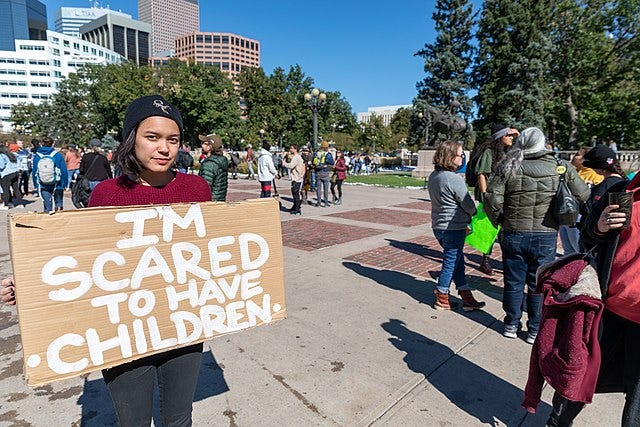
courtesy of Wikimedia Commons

Each generation has its spokespersons. Boomers had the Beatles. Millennials have Mylie Cyrus and AOC. Gen Z has Greta Thunberg. A few have weighed in on a thorny moral question — the ethics of having children in light of the escalating climate emergency.

Cyrus recently told “Elle Magazine”:

We’ve been doing the same thing to the earth that we do to women. We just take and take and expect it to keep producing. And it’s exhausted. It can’t produce. We’re getting handed a piece-of-shit planet, and I refuse to hand that down to my child. Until I feel like my kid would live on an earth with fish in the water, I’m not bringing in another person to deal with that.

In 2019, New York congresswoman Alexandria Ocasio-Cortez (AOC) made headlines for questioning the environmental ethics of having children. She said:

Our planet is going to hit disaster if we don’t turn this ship around… there’s scientific consensus that the lives of children are going to be very difficult. And it does lead young people to have a legitimate question: ‘Is it OK to still have children?’ And even if you don’t have kids there are still children in the world and we have a moral obligation to leave a better world for them.

AOC caught holy hell from Republicans for even raising the question. Fox New’s Steve Hilton called it “fascistic” and a “no-child policy.”

Like AOC, Thunberg doesn’t tell people what to do. Thunberg told the “Guardian”:

I don’t think it’s selfish to have children. It’s not people who are the problem, it is our behavior.

A 2021 study published in The Lancet revealed that, in a global poll of 10,000 people aged 16–25, 39 percent were hesitant to have children because of climate anxiety.
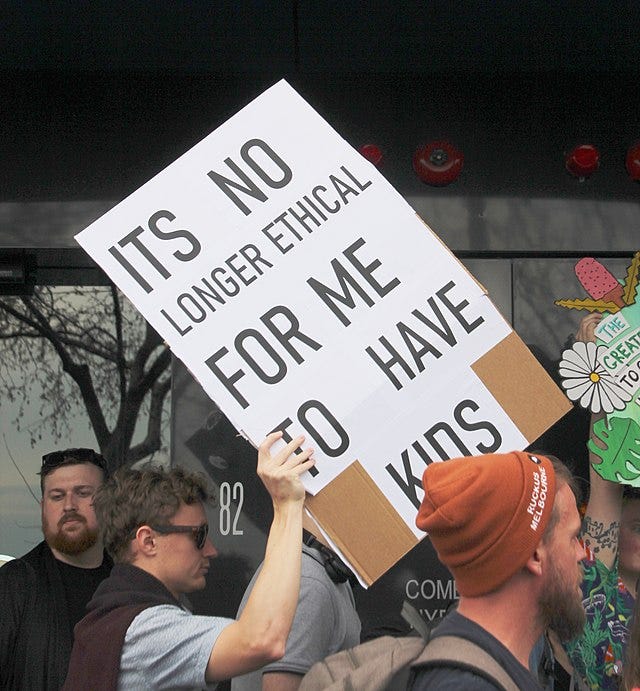
Courtesy of Wikimedia Commons

That’s why Meghan Kallman and Josephine Ferorelli co-founded Conceivable Future. It’s a grassroots network of Americans concerned about having kids against the backdrop of climate chaos.

CF doesn’t take a stand for or against having children. Kallman and Ferorelli are both in their 30s and wrestling with the decision. The group’s ultimate goal is to end U.S. fossil fuel subsidies.

Meanwhile, they throw house parties and invite people to post online testimonies about how climate change affects their reproductive decisions.

Please read these testimonies or even submit one. There are now about 100 mostly anonymous testimonies. Kallman groups their concerns into two categories.

One is: What kind of harm will my child do to the world? The number of diapers these kids produce would eventually circle the Earth; they’ll create X tons of carbon, X tons of trash. And then the other question is: What kind of harm would a hotter and less stable and more potentially violent world do to my kid?

Let’s look at both of those concerns in more depth.

How does climate change hurt children?

Heat and conflict go hand in hand. People are more likely to get violent with each other in hot weather. As temperatures rise, so do tempers.

A 2015 research paper found that every 1 degree Celsius increase in temperature increases conflict between individuals (assault, murder) by 2.4 percent and conflict between groups (riots, civil war) by 11.3 percent.

Climate change makes heatwaves hotter and longer, making it difficult for kids to get out and play. That compounds a significant health problem for many children — obesity.

Heat plus droughts can cause wildfires. Wildfires produce severe air pollution that worsens asthma attacks and promotes respiratory infections, including pneumonia.

Floods bring outbreaks of diarrhea, which can be life-threatening for babies and young children. There’s also the trauma of losing homes and schools. Droughts, floods, and food shortages may force people to leave places that become unlivable, increasing the potential for conflict and insecurity.

More heat also makes more ozone, an air pollutant that harms the lungs. Ozone affects pregnant women and their growing fetuses, causing premature and small babies with chronic health problems.

How do births impact climate change?

More people means more demand for oil, gas, coal, and other fuels that spew carbon dioxide into the atmosphere, trapping warm air like a greenhouse. More people means more carbon emissions. Every additional person is another carbon emitter.

An American is responsible for 40 times the emissions of a Bangladeshi. No one emits more per capita than the United States. Yet people in the world’s poorest nations are most likely to suffer severe climate impacts.

Adding to the challenge, the world is expected to add several billion people in the next few decades, each producing more emissions.

Choice in parenthood can’t be taken for granted, even in wealthy countries. In the U.S., the Supreme Court’s reversal of the precedent set in Roe means for women across the nation, choosing if and when to have a child will be more difficult.

Don’t read the comments

Worried prospective parents are beginning to post their concerns on forums like Reddit. Without exception, the same objections pop up. Here’s a sample.

  • “The world needs the next generation to fight climate change.”
  • “There have always been bad times.”
  • “You don’t know what the future will bring.”
  • “We’ll figure it out–you have to have hope.”
  • “Make decisions based on your personal situation, not based on what the news media tells you.”

All of these comments betray an ignorance of the immediacy of the situation. By the time the next generation is old enough to fight climate change, we’ll have passed several tipping points. Besides, how ethical is it to expect them to save the world? Don’t they get to be kids?

Yes, the world has always been full of chaos, but the scale of climate change dwarfs past events. The planet is dying. It’s not something the “news media” is cooking up. We can’t close our eyes and make the problem go away.

Steve Hilton branded AOC a fascist for even bringing up the subject. But many young people grapple with the moral implications of bringing children into a world on fire. They deserve a forum for voicing their concerns without being insulted or dismissed.

Climate Change
Culture
Health
Parenting
Society
Recommended from ReadMedium