The Importance of Amino Acids as The Building Blocks of Our Body
A discussion about the many functions of proteins.
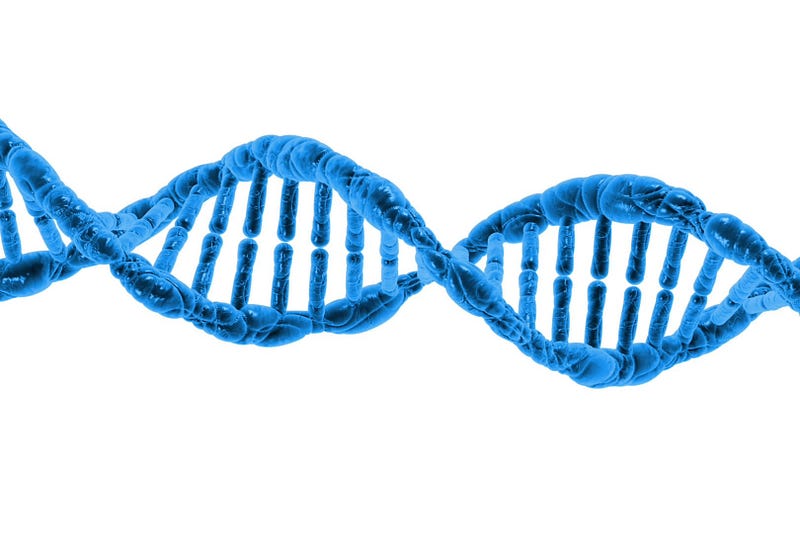
Have you ever wondered what makes life possible? The answer might surprise you… It is Amino acids.
There’s also sex, but that’s not relevant to this conversation.
If you have any interest in health and fitness, you have likely heard about amino acids before. But what even are amino acids? Do they have to do with protein or something?
In this article, we explore what makes amino acids the building blocks of our bodies and why they’re so important to us
What are amino acids and their functions?
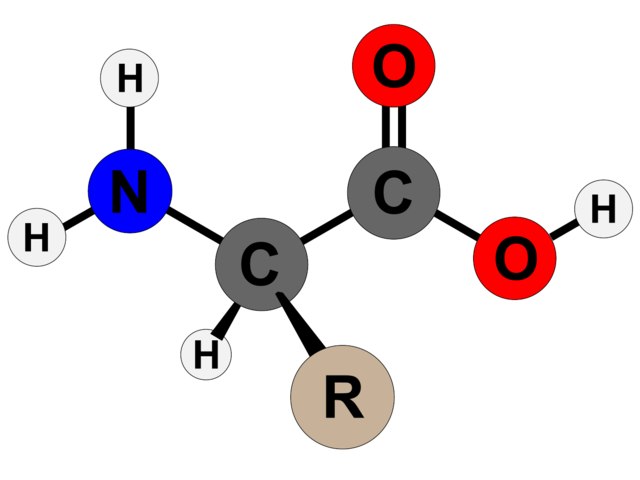
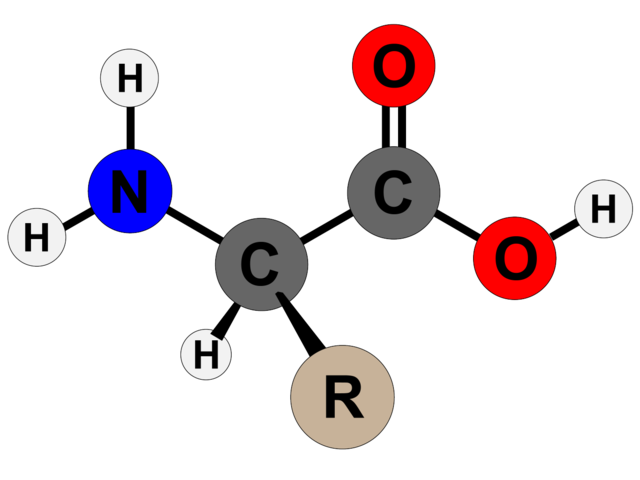
Amino acids are often referred to as the building blocks of life. This is because they are fundamental molecules in the structure of proteins, which underpin the foundations of all biological processes within our bodies.
Proteins are crucial for the structure and function of living organisms.
Amino acids are the building blocks of proteins, and proteins are the building blocks of the body.
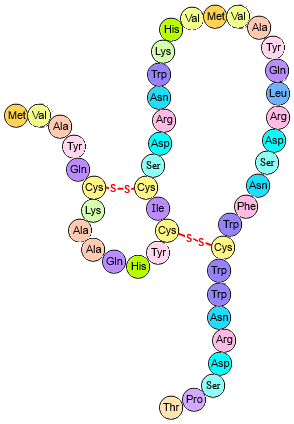
Proteins are composed of chains of amino acids, linked together in chains called polypeptides. Every protein is structured with a unique sequence of amino acids which determine its function.
When a gene activates to produce a specific protein, a process called translation strings amino acids together into a specific sequence.
“The primary structure of a protein is defined as the sequence of amino acids linked together to form a polypeptide chain. Each amino acid is linked to the next amino acid through peptide bonds created during the protein biosynthesis process.” — Sanvictores & Farci, 2022
Some of the functions of amino acids include repairing muscle fibres after a workout, enzyme production, and overall cellular function.
Amino acids naturally produced bodies are typically synthesised from glucose. You might be thinking, don’t we get them from food? You’d be right — but they also naturally occur in proteins within our bodies, playing a pivotal role in the structure and function of living organisms.
Twenty different amino acids combine in numerous ways to form a protein and are classified as essential or non-essential. Essential amino acids must be obtained through our diets, while our bodies can produce non-essential amino acids.
There are twenty different amino acids, which can be categorised into two main types: essential and non-essential.
Essential amino acids
Of the twenty amino acids, nine are essential. Essential amino acids are defined by their requirement of being obtained by diet because our bodies do not produce these naturally.
The nine essential amino acids and their functions are:
- Histidine — helps to make a brain chemical (neurotransmitter) called histamine, which plays a significant role in your body’s immune function, digestion, sleep, and sexual function.
- Isoleucine — a branched-chain amino acid [BCAA — we’ll get to this soon] essential for our muscle metabolism and immune function and helps our bodies make hemoglobin and regulate energy.
- Leucine — Another BCAA, it helps our bodies to produce protein and growth hormones, repair and grow muscle tissue, heal wounds, and regulate blood sugar levels.
- Lysine — crucial to producing hormones and energy, as well as for calcium absorption and immune function.
- Methionine — supports tissue growth, metabolism, detoxification, and mineral absorption, such as zinc and selenium.
- Phenylalanine — necessary to produce our brain’s neurotransmitters like dopamine, epinephrine, and norepinephrine. It also plays a crucial role in the production of other amino acids.
- Threonine — essential to produce collagen and elastin, which provides structure to our skin and connective tissues. It also plays a role in blood clotting and immune function and aids fat metabolism.
- Tryptophan — helps to maintain the ideal nitrogen balance and makes a brain chemical (neurotransmitter) called serotonin to regulate our mood, appetite, and sleep.
- Valine — the final BCAA, involved in muscle growth, tissue regeneration and energy production.
Non-essential amino acids
Of the twenty amino acids, eleven are non-essential, meaning our bodies can produce these themselves. The non-essential amino acids and their functions are:
- Alanine — helps to metabolize and clear toxins from the body
- Arginine — boosts nitric oxide production, which helps to improve blood flow
- Asparagine — an amino acid that supports the health of brain cells and the central nervous system.
- Aspartic acid — helps in the production of other amino acids and essential enzymes.
- Cysteine — helps to produce collagen and acts as an antioxidant by promoting glutathione production.
- Glutamic acid — serves as a neurotransmitter in the brain. It also helps regulate ammonia levels in the body.
- Glutamine — plays a crucial role in digestion, cognitive function, and immune health.
- Glycine — helps in healing wounds and aids in improving movement, vision, and hearing.
- Proline — helps to repair tissues and regenerate skin.
- Serine — plays a vital role in muscle metabolism, fat burning, immune health, and mood regulation.
- Tyrosine — a precursor for neurotransmitters like dopamine and adrenaline. It contributes to protein synthesis and melanin production for skin and hair pigmentation and alleviates hypertension, depression, and chronic pain.

Conditionally essential amino acids
We typically do not require non-essential amino acids from our diet. However, this changes when we are sick or stressed, and our body cannot produce its own sufficient supply.
Conditionally essential amino acids make up seven of the eleven non-essential amino acids. These are arginine, cysteine, glutamine, glycine, proline, serine, and tyrosine.
The importance of Branched-chain Amino Acids
Branched-chain amino acids (BCAAs) are essential amino acids with a branched molecular structure. There are just three BCAA, leucine, isoleucine, and valine.
BCAA are unique from other essential amino acids as they are primarily broken down in muscle tissue and not the liver.
Leucine is known as the most anabolic amino acid because of its vital role in muscle protein synthesis. It stimulates a signalling pathway in cells that produce new proteins — essential for muscle growth. In other words, leucine plays a crucial role in building muscle tissue.
Animal-sourced proteins such as beef and dairy are rich in BCAA. Consuming a whey protein shake a couple of times daily is an effective way to meet your daily amino acid requirements.
The problem with incomplete proteins
Incomplete proteins are missing one or more essential amino acids in the quantities required for our body to use all its amino acids for protein synthesis.
These lacking amino acids become a protein’s limiting factor or must be sourced from another food source concurrently, or our bodies cannot use all the protein. The image below illustrates this through the barrel analogy.
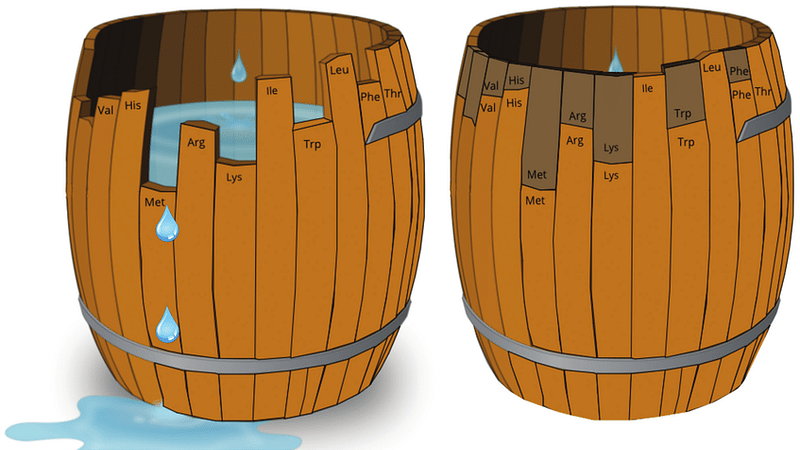
Many “staves” (planks) make up a barrel, much like many amino acids make up a protein.
If there is a stave shorter than all the rest, any water above this point pours out and can’t be used. It’s the limiting factor for filling the whole barrel with water. Think of incomplete proteins in the same way — just one essential amino acid in insufficient quantities means our body can only use the protein’s amino acids up to the amount of the limiting one, and the rest goes to waste.
In the image above, methionine and lysine are the limiting amino acids.
Unfortunately for vegetarians and vegans, plant-sourced proteins typically lack some essential amino acids. To complete the chain of amino acids for proper protein synthesis, combine different protein sources in meals throughout the day.
Incomplete protein sources include:
- Many vegetables
- Grains
- Legumes
- Nuts
- Seeds
- Tofu

Complete protein sources
Complete proteins contain all the essential amino acids in the adequate amounts required by our body.
Animal-based protein sources are complete, and their balanced profile of amino acids makes them an excellent choice for meeting our protein requirements.
Some of the complete protein sources include:
- Meat such as beef, poultry, and pork
- Fish and seafood
- Eggs
- Dairy products (such as milk, cheese, and yogurt)
Final Thoughts
In conclusion, the pivotal role of amino acids as the fundamental building blocks of life is undeniable.
Amino acids are essential to synthesise the proteins in our body. These proteins regulate various biological processes within our bodies, serving as the molecular foundation for all living organisms and playing critical roles in metabolism and cellular function.
This article explores what amino acids are, their distinct types, and their functions.
Understanding the importance of consuming complete proteins unlocks the door to optimal nutrition, fostering muscle growth, and maintaining overall health.
Thank you for reading.
If you enjoyed the content, you might be interested in the below article about 15 foods with a high protein content.