
The Equal Protection Clause Does Not Care What Color Your Shirt is at the Ballot Box. Here’s why.
How the Fourteenth Amendment helps make sure everyone is treated fairly and equally in America’s laws.
Suppose it is Election Day and you are standing in line at your local polling place, ready to cast your vote in what’s being billed as a historic election. The line snakes around the block, a reflection of the high stakes and public interest. As the morning sun climbs higher, an official announces a sudden, unexpected rule: only people in blue shirts will be allowed to vote before noon, ostensibly to manage crowds. Your shirt is not blue, even though you have arrived early and are ready to do your civic duty. That feels inherently wrong, doesn’t it?
Equal protection, one of the most important individual rights, established by the Fourteenth Amendment to the U.S. Constitution, mandates that no state shall deny to any person within its jurisdiction “the equal protection of the laws.” This fundamental principle ensures that individuals are treated equally under the law, regardless of race, religion, color of shirt or other status. From major Supreme Court cases such as Brown v. Board of Education (1954), which declared unconstitutional state laws that established separate public schools for black and white students, to more recent debates over voting rights and marriage equality, the doctrine of equal protection remains at the central core of our ongoing struggle to create a more just society.
“No State shall…deny to any person within its jurisdiction the equal protection of the laws.”

Strict Scrutiny
Simply put, the Fourteenth Amendment requires that government actions taken against individuals must not unfairly or invidiously discriminate or classify individuals. However, not all distinctions or classifications made by the government are unconstitutional, but those that are inherently suspect — such as those based on race, ethnicity, or religion — demand a higher justification due to their historical context and potential for harm.
In Loving v. Virginia (1967) the Supreme Court examined Virginia’s laws prohibiting interracial marriage. The justices ruled that any law that discriminates on the basis of race must be subjected to strict scrutiny, meaning that it must be shown to serve a “compelling government interest” and must be “narrowly tailored” to achieve that interest without unnecessarily infringing on individual rights. This standard is the most stringent form of judicial scrutiny.

Apart from laws discriminating based on race, the Supreme Court has also ruled that strict scrutiny is applied to laws discriminating based on religion and national origin. The need for such a strict standard stems from the historical background of laws that systematically marginalized certain groups. For example, Jim Crow laws in the southern United States enforced racial segregation, and policies like the Chinese Exclusion Act of 1882 severely restricted immigration based on nationality and ethnicity. These laws were often justified under the guise of the public interest, but in reality they perpetuated discrimination and inequality.
Strict scrutiny ensures that the government must provide a strong, compelling reason for any law that categorizes people in a way that might affect their fundamental rights or historical injustices. It also ensures that the law is precisely targeted to achieve its goal using the least restrictive means possible, thereby protecting individuals from broad, over-broad government action.
Intermediate Scrutiny
Intermediate scrutiny serves as another level of judicial review applied by the Supreme Court to evaluate the constitutionality of laws that classify individuals based on gender (sex). It offers a somewhat less rigorous test for laws that may not implicate these inherently suspect categories but still require careful scrutiny because of their potential to unjustly discriminate.
The evolution of intermediate scrutiny is marked by significant cases like Frontiero v. Richardson (1973) and Craig v. Boren (1976). Initially, Frontiero v. Richardson suggested that sex discrimination should be subject to strict scrutiny. However, in Craig v. Boren, the Court clarified the standard for such discrimination by establishing intermediate scrutiny. Under this standard, a law must serve an important government objective and be substantially related to achieving that objective in order to be upheld. This means that while the law must further an important government interest, it need not be the least restrictive means of achieving that interest, a requirement under strict scrutiny.
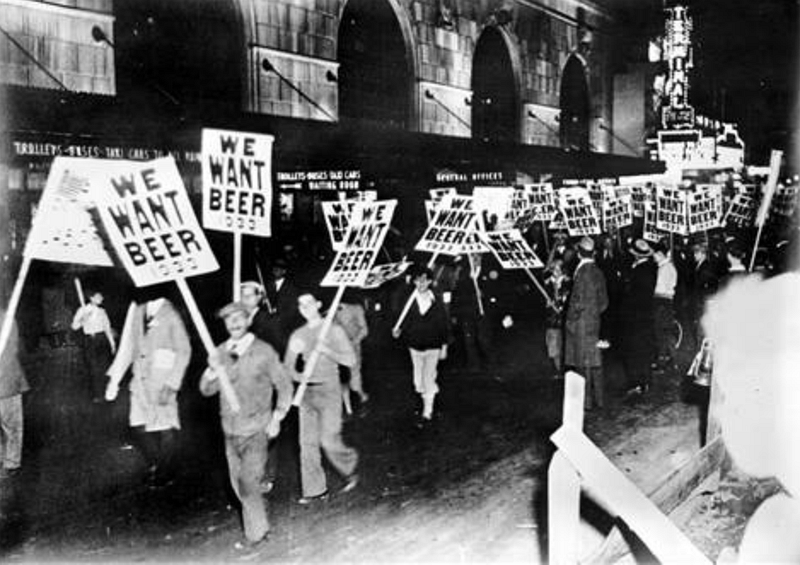
Craig v. Boren is illustrative. The Supreme Court considered an Oklahoma law that differentiated between young men and women with respect to the legal age for purchasing “low-point” beer. The state argued that the law was intended to reduce drunk driving among young men, who were considered to be at greater risk. However, the Court found that the law failed intermediate scrutiny; it was not substantially related to the stated goal of reducing drunk driving because it arbitrarily excluded young women from the same restrictions without sufficient evidence to support such a gender-based distinction.
Rational Basis Review
Rational basis review is the most lenient form of judicial scrutiny that courts apply when evaluating the constitutionality of government action under the Equal Protection Clause. This standard applies to a wide range of government actions that do not implicate fundamental rights or involve suspect classifications such as race or sex.
Under rational basis review, a government action need only be “rationally related” to a “legitimate government interest” to pass constitutional muster. This threshold is low, reflecting judicial deference to legislative judgment absent a clear violation of constitutional principles.
The case of United States v. Carolene Products Company (1938) serves as a foundational reference for rational basis review, emphasizing the presumption of constitutionality afforded government action in the absence of specific violations of fundamental rights or the use of suspect classifications. For example, Williamson v. Lee Optical Co. (1955) illustrates the application of rational basis review, where the Supreme Court upheld a state law restricting the fitting of eyeglass lenses to licensed practitioners. The Court reasoned that although the law was not directly related to improving public health or safety, it was not irrational because it could conceivably further those interests.
However, rational basis review includes a critical safeguard against arbitrary discrimination: if a law appears to be motivated by animus or ill-will toward a particular group without a legitimate objective, it will not survive constitutional scrutiny. It was illustrated in Romer v. Evans (1996), where the Supreme Court struck down a Colorado constitutional amendment that sought to prevent any local law from protecting individuals from discrimination on the basis of sexual orientation. The Court found that the amendment was not enacted in pursuit of a legitimate state interest, but was instead driven by animus, and thus failed even the lenient rational basis test.

Suspect Classifications and the Intent Requirement
Under the Equal Protection Clause, a critical aspect of constitutional law is identifying what constitutes discrimination based on “suspect classifications” such as race, sex, or religion. Discrimination can be explicit, with laws clearly targeting a particular group. However, the Supreme Court has established a more nuanced threshold for laws that may be facially neutral but discriminatory in effect. According to Washington v. Davis (1976), the mere fact that a law has a disparate impact on a particular group is not enough to subject it to heightened scrutiny. What matters is intent; the law or government action must be shown to have been designed to discriminate on the basis of a suspect classification in order to warrant such scrutiny.
This intent requirement raises the bar for proving unconstitutional discrimination, especially in cases where the law’s impact falls disproportionately on a particular group. For example, in Personnel Administrator of Massachusetts v. Feeney (1979), the Supreme Court held that a law giving preference to veterans in state employment did not constitute sex discrimination, despite the fact that the vast majority of veterans were men at the time the law was enacted. The Court found that the primary intent of the law was not to discriminate on the basis of sex.
The complexity of proving intent becomes even more apparent in the enforcement of criminal laws. To argue that law enforcement practices involve discriminatory enforcement on the basis of race, for example, one must show that the government systematically declines to prosecute individuals who are similar in all respects except race, as underscored in United States v. Armstrong (1996). This “prove a negative” requirement makes it extremely difficult to establish a case of selective prosecution.
The intent requirement means that when evaluating laws or policies for constitutional fairness, the courts look at the purpose behind them. This applies to all laws, whether they are made with good intentions (like promoting diversity) or bad ones.
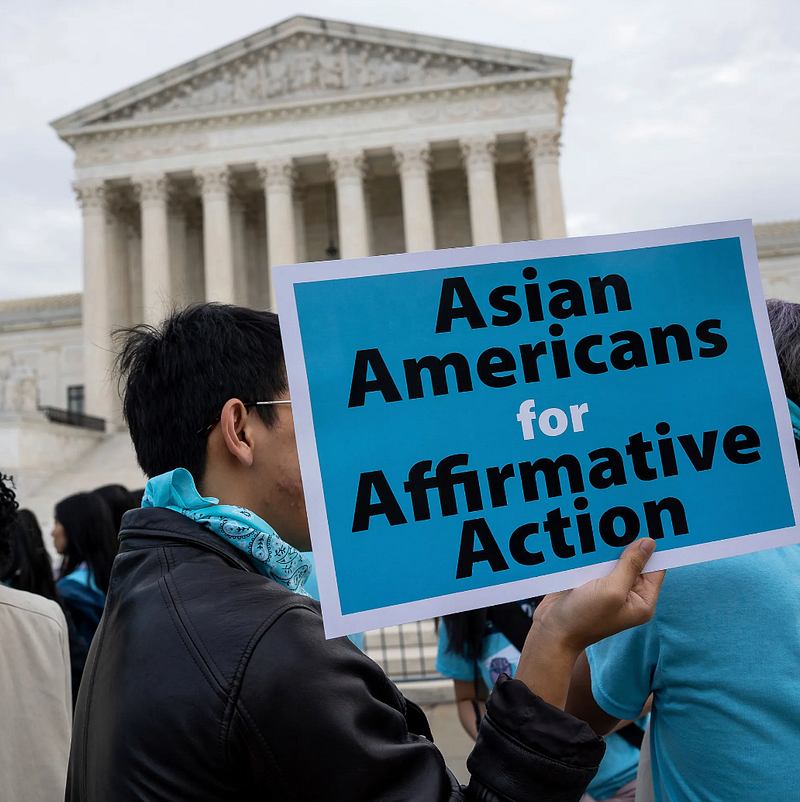
Affirmative action policies are a good example. These policies are designed to increase diversity within public universities by giving preferential treatment to historically underrepresented groups, based on race or gender. Despite their positive goals, these policies must undergo rigorous examination to ensure they don’t unjustly discriminate against others. This is where “strict scrutiny” (for race-based policies) and “intermediate scrutiny” (for gender-based policies) come into play.
The Supreme Court cases Fisher v. University of Texas (2013) and Grutter v. Bollinger (2003) address these issues. They question whether affirmative action policies can be designed to effectively promote diversity without unfairly disadvantaging other groups. Essentially, these cases and the scrutiny applied ask: Can we achieve the goal of diversity in a fair and balanced way, without excluding or unfairly treating others based on race, national origin or gender?
So, the core of this part is about balancing the noble aim of diversity with the constitutional mandate to treat everyone equally, ensuring that laws like affirmative action are carefully crafted to meet both objectives without stepping over the line into discrimination.
Extending Equal Protection Beyond States
The reach of equal protection principles extends beyond state action to the federal government, a crucial expansion established by the U.S. Supreme Court.
In Bolling v. Sharpe (1954), the Court held that the Due Process Clause of the Fifth Amendment, which traditionally limited only the federal government, embodied an equal protection component. This decision was important in ensuring that the federal government could not engage in discriminatory practices that the states were prohibited from doing under the Fourteenth Amendment. The ruling was historically significant because it came on the same day as Brown v. Board of Education, which declared unconstitutional state laws establishing racial segregation in public schools.
There is a delicate distinction, however, in how discrimination by the federal government is scrutinized, particularly with respect to alienage (non-citizenship). The Supreme Court clarified in Mathews v. Diaz (1976) that when the federal government discriminates on the basis of alienage, such actions are generally subject to rational basis review. This less stringent standard means that federal policies that distinguish between citizens and non-citizens need only be rationally related to a legitimate government interest. The rationale for this distinction lies in the federal government’s plenary power over immigration and the recognition that the management of entry into and exclusion from the country is a fundamental sovereign attribute.
In contrast, when state governments discriminate on the basis of alienage, such laws are generally subject to strict scrutiny, the most stringent standard of review, which requires that the law serve a compelling state interest and be narrowly tailored to achieve that interest. The exception to this rule is when states regulate political functions, such as voting or holding public office, where rational basis review is considered appropriate. This was articulated in Graham v. Richardson (1971), which recognized that certain functions are so integral to the operation of democratic government that states may justify distinctions based on citizenship, albeit within narrow limits.
Disclaimer
The information provided in this article is for informational and educational purposes only and is not intended to serve as legal advice or as a substitute for legal counsel. While efforts have been made to ensure the accuracy and completeness of the content herein, it is important to note that legal principles and regulations can vary significantly based on jurisdiction and specific circumstances. Therefore, this article should not be used as a definitive legal resource or as a basis for making legal decisions. Readers are strongly advised to consult with a qualified attorney for advice on legal issues or matters, as each individual case may require detailed and personalized legal analysis.
Reliance solely on the information provided in this article without seeking professional advice from an attorney may lead to unintended legal consequences or misinterpretation. The author or publisher of this article do not accept responsibility for any potential errors or omissions, nor will they be responsible for any losses, injuries, or damages arising from its display or use. The information provided here does not create an attorney-client relationship between the reader and the author or publisher.


