
The Entirety of Indian Philosophy Comes Down To This One Idea
Uniting millennia, nations, and languages as different as can be
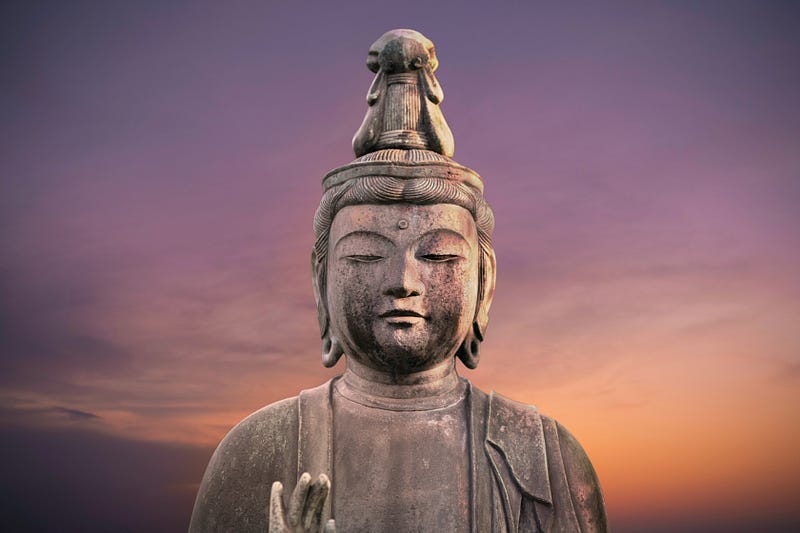
The word dharma is found in every single school of Hindu, Sikh, Buddhist and Jain philosophy. Yet it isn’t a “religious” term, nor solely materialistic.
Its root word, dhara, means to hold. The root of this in turn is dhri, which means ‘that without which nothing can stand.’
Dharma refers to sustainability, ecology, ethics, duty, and spirituality, in various contexts, but there is no direct translation into any English word.
That’s because Sanskrit is a property-oriented language as opposed to an object-oriented one; words carry meaning based on their spandana, or vibrational characteristic, which approximate a certain phenomena.
Compare this to English; where words such as dandylion carry absolutely no inherent correlation to flowers or weeds; but are merely decided upon as linguistic referents by consensus.
In Sanskrit, it’s said that very ancient sages known as rishis entered into cognitive absorption with the characteristics of nature, and devised a whole language based on the closeness of human palatial sounds to the qualities of the phenomena they were experiencing.
Thus from its inception, the ethos of India’s civilization has been to connect, as directly as possible, to reality.
Truth naturally becomes the highest value. That’s because each and every one of its indigenous knowledge traditions base their existence upon dharma, which is considered the sustenance for our reality.
Dharma is much more than ‘religion.’
The profound similarity of Buddhist and Hindu schools of thought reveals a deep insight into what Dharma means, from a higher perspective.
Reading the Vishnu Sahasranama, or ‘thousand names of the all-pervasive reality,’ one notices the divine referred to as the teacher of dharma, the revealer of it, and the upholder of it.
It is described not as a deity but rather the source of all deities and forms of existence; Vishnu “idols” are just skillful tools, for our limited capacities, for accurately conceptualizing this.
In Buddhism, the notion of dharmakaya or ultimate truth body of all the Buddhas describes the ultimate nature of our own minds, beyond our ‘sentient being-hood.’
It’s something to be empirically pursued and realized, not theorized or theologized. The Buddha’s teaching is the dharma which guides us to this supreme ground of reality itself.
This isn’t sectarian squabbling over our god vs. yours, which encourages exclusivist claims. It’s a diversely experienced consensus, which creates room for sectarian pluralism.
Dharma in India was never a solely religious affair either. What Westerners label “Hinduism” encompasses:
- Ego-transcendental psychology (by way of yoga)
- Medicine (by way of Ayurveda)
- Metaphysics and logic (by way of Nyaya)
- Artistries (kalās) such as sculpting, painting, and dance — all of whom share the aesthetic goal of pursuing expanded consciousness.
All of these spheres together constitute the traditions we label today as Hindu, Buddhist, Sikh, and Jain.
They are so much more than worship of some abstract ultimate power; they are the holistic pursuit of interdisciplinary civilization itself.
Yet their source is the same: truth, reality, ethics, ecology, morality, duty, and existential evolution, encompassed by the notion of dharma.
All for what? Not to trumpet some kind of superiority or convert others, as the book-bound, history-locked style of religion seeks to do. But to simply become the most self-actualized humans possible.
Modernity needs more Dharma, less Dogma
The earth is being ecologically torn asunder.
The cries of scientists remain unheard because economics, ecology, & culture are so separate that they seem incompatible in societal policymaking!
People who work most waged jobs are paid so little and treated with such poor dignity that they can’t even sustain their own livelihoods, whether it be in terms of mental health, physical health, or economic survivability.
This is what a Dharmic lens would call adharma.
The profound imbalance of the modern world’s values eats away at its very ability to sustain itself.
We need new ways to think through our problems, because the status quo fails to produce breakthroughs. Radically different, yet robustly dependable solutions are needed.
This is precisely the beauty of non-translatable terms that come from other civilizational cultures: they provide a lens on reality that our part of the world may have missed.
We’re already realizing this, on a huge scale.
The tools India tried & tested for millennia are gaining mass appeal, be it:
- Meditation, yoga, and mindfulness
- Ethical charity & selfless service
- Mantras & affirmations
- Ashrams, spiritually communal living, & organic farming
The only question is whether these will remain fragmented pieces of a fragmented society, or spun together into a civilizational safety net holistic and deep enough to tackle interdisciplinary challenges.
If all these disparate parts are so transformational, might integrating them all together in the service of ideals such as Dharma prove of even greater value?
It is a thought that requires great erudition to see — let alone enough detachment to cultural conditioning to inspire a higher vision of human institutional life.
Yet the possibility of forging a better world remains, as long as we are equipped with the tools to do so.
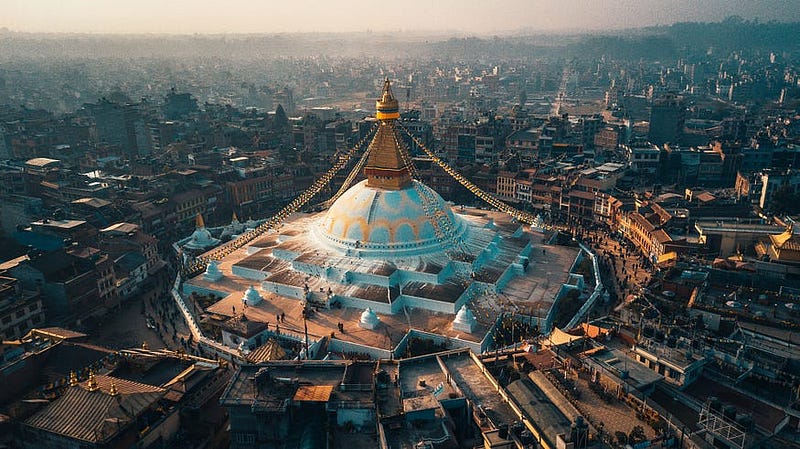
लोकाः समस्ताः सुखिनोभवंतु
Lokah Samastha Sukhino Bhavanthu.
May the whole world experience well-being.


