
The Enlightening Experience of Photographing a Sacred Lotus
Getting up close and personal from a distance
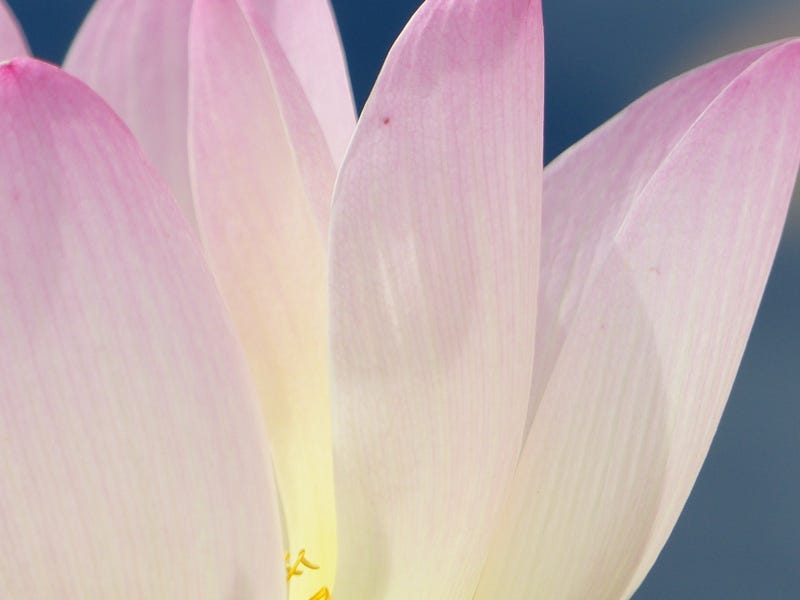
I’m not a portrait photographer, but I remember reading that it’s generally good practice to shoot from a distance to give your subject some breathing room to feel comfortable. For the Nelumbo nucifera, it’s a requirement because, well, they live in the middle of a pond. And I like to walk around in dry shoes, thank you very much.
These beautiful lotus flowers (not to be confused with the water lily) at the New York Botanical Garden were a revelation for someone who typically likes to get as close as possible to roses to capture some macro shots of their petals.
Shooting from a distance, you have to snap whatever you can as the wind and water sway and bob the flowers in unexpected directions. Whereas out in a garden, I can usually hold a stem steady or move a leaf out of the shot. The lotus is an untouchable target. You have to be patient and anticipate her movements like a photo assassin.
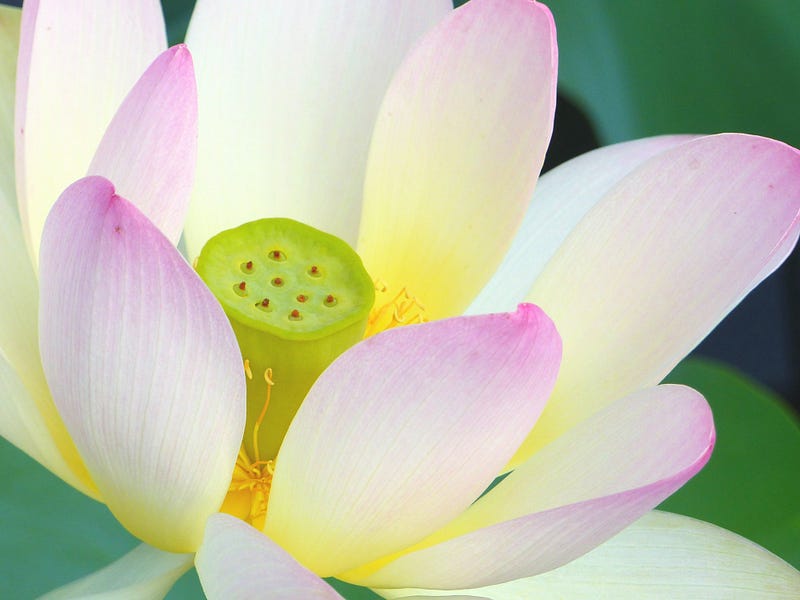
I have to do all the tricks I was taught by helpful pro photographers. Tuck one elbow in. Balance the other elbow on my knee. Take a deep breath. Hope for the best.
(Before you ask, yes I enjoyed Michael Fassbender’s performance in The Killer.)
Having absolutely no control over the environment and situation requires a level of peacefulness and acceptance typically associated with the symbology of the lotus. For thousands of years, Brahma and the Buddha have sat on this flower representing growth in its highest, most beautiful form from the mud below.
I’ve heard a lot of photographers say that they don’t like shooting in full sunshine, but I love it in floral photography. The color barely needs any adjustment when I get the photos on my computer, and the graphic shadows give visual interest. Clouds shmouds, who needs ‘em?
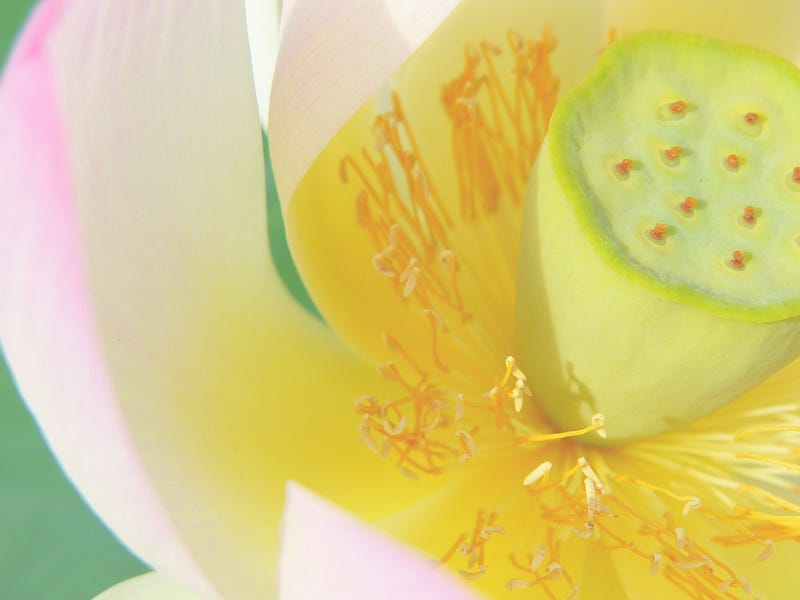
If you want to skip all my language and data stuff, check out my photos on this curated list!