avatarPapertiger Hunter Lachlan Chen

Free AI web copilot to create summaries, insights and extended knowledge, download it at here

4343

Abstract

can be decomposed into odd and even parts. Mathematically, this is represented as:</p><figure id="f273"><img src="https://cdn-images-1.readmedium.com/v2/resize:fit:800/0*7masrrP_1E06PISZ.png"><figcaption></figcaption></figure><p id="1e9d">where,</p><figure id="1f73"><img src="https://cdn-images-1.readmedium.com/v2/resize:fit:800/0*8ZnDVMKU_ccYpiHm.png"><figcaption></figcaption></figure><figure id="40c2"><img src="https://cdn-images-1.readmedium.com/v2/resize:fit:800/0*ngQGf_EBylVjvw3E.png"><figcaption></figcaption></figure><p id="a15a">In essence, this decomposition acts as the mathematical cornerstone that guides our journey to decode</p><figure id="a441"><img src="https://cdn-images-1.readmedium.com/v2/resize:fit:800/0*Kd7krCAbZ1Ati_i6.png"><figcaption></figcaption></figure><p id="3c5b">.</p><h1 id="cb19">## Charting the Unknown</h1><h1 id="c6ce">### The Initial Pathway</h1><p id="6d40">The clue that</p><figure id="4f58"><img src="https://cdn-images-1.readmedium.com/v2/resize:fit:800/0*skgwbhNsVatqZrSL.png"><figcaption></figcaption></figure><p id="0b7d">is real becomes our starting point. Armed with the knowledge that every real function can be split into odd and even components, we’re equipped to delve deeper.</p><h1 id="cf8a">### The Schematic Blueprint</h1><p id="405d">Our exploratory journey is best illustrated through this architectural framework:</p><figure id="a0d4"><img src="https://cdn-images-1.readmedium.com/v2/resize:fit:800/0*Y_-HxOB0DtfwLgzy.png"><figcaption></figcaption></figure><h1 id="772e">### The Crucial Insight</h1><p id="87d8">Since</p><figure id="cd10"><img src="https://cdn-images-1.readmedium.com/v2/resize:fit:800/0*hPUU6Tuszmj2MfEK.png"><figcaption></figcaption></figure><p id="09d3">for</p><figure id="5726"><img src="https://cdn-images-1.readmedium.com/v2/resize:fit:800/0*vLJLw9kee0xaChAV.png"><figcaption></figcaption></figure><p id="2b97">:</p><figure id="4a80"><img src="https://cdn-images-1.readmedium.com/v2/resize:fit:800/0*5Dwctb9CY2EUFtFu.png"><figcaption></figcaption></figure><p id="8897">We deduce</p><figure id="640e"><img src="https://cdn-images-1.readmedium.com/v2/resize:fit:800/0*7ONUx5FbCPD4pWfb.png"><figcaption></figcaption></figure><p id="6eb7">for</p><figure id="6293"><img src="https://cdn-images-1.readmedium.com/v2/resize:fit:800/0*HMMA90cW7McScaYQ.png"><figcaption></figcaption></figure><p id="45bf">. ## The Final Revelation As</p><figure id="5de2"><img src="https://cdn-images-1.readmedium.com/v2/resize:fit:800/0*YrG93vPzv_4YOgJC.png"><figcaption></figcaption></figure><p id="4652">is an odd function:</p><figure id="eec2"><img src="https://cdn-images-1.readmedium.com/v2/resize:fit:800/0*T-2JVAEDZJz8Okb2.png"><figcaption></figcaption></figure><p id="9bce">And so, the final piece of the puzzle falls into place. We find:</p><figure id="a1f1"><img src="https://cdn-images-1.readmedium.com/v2/resize:fit:800/0*Y3dWIYjXRkwtbiyZ.png"><figcaption></figcaption></figure><h1 id="d95d">## Epilogue: The Signal Decoded</h1><p id="c84e">In a grand revelation,</p><figure id="fddb"><img src="https://cdn-images-1.readmedium.com/v2/resize:fit:800/0*gtJ8d-jctdsNrCZP.png"><figcaption></figcaption></figure><p id="0819">stands before us, no longer an enigma. What began as a mathematical mystery ended as a scientific accomplishment, all thanks to the foundational understanding that every real function can be decomposed into its odd and even components. Our journey through this intellectual landscape has led us to this defining moment:</p><figure id="3aa3"><img src="https://cdn-images-1.readmedium.com/v2/resize:fit:800/0*VVUVUinVZL3Eyv6w.png"><figcaption></figcaption></figure><p id="e95d">is not just a set of symbols and equations; it’s a signal decoded.</p><h1 id="7798">## The Saga Continues: Unlocking Further Mysteries of Fourier Transforms</h1><h1 id="68c0">### Question 4</h1><p id="09f4">Consider two functions</p><figure id="5d09"><img src="https://cdn-images-1.readmedium.com/v2/resize:fit:800/0*Pok6eVwVKPtO3F27.png"><figcaption></figcaption></figure><p id="6bee">and</p><figure id="c306"><img src="https://cdn-images-1.readmedium.com/v2/resize:fit:800/0*vPnDneQ6RGbStpui.png"><figcaption></figcaption></figure><p id="22fb">, illustrated in Figure below. Their Fourier transforms are denoted as</p><figure id="12e3"><img src="https://cdn-images-1.readme

Options

dium.com/v2/resize:fit:800/0*njJbXgMm5nXnwQdT.png"><figcaption></figcaption></figure><p id="845d">and</p><figure id="303a"><img src="https://cdn-images-1.readmedium.com/v2/resize:fit:800/0*BcurrkHXUOzC7aui.png"><figcaption></figcaption></figure><p id="89a1">, respectively.</p><figure id="c918"><img src="https://cdn-images-1.readmedium.com/v2/resize:fit:800/0*RcBhuDkS8Wiy-hoU.png"><figcaption></figcaption></figure><figure id="86e9"><img src="https://cdn-images-1.readmedium.com/v2/resize:fit:800/0*PM7DGiP8izxGEHO1.png"><figcaption></figcaption></figure><p id="b923">1. Without performing any integration, what is the real part of</p><figure id="c123"><img src="https://cdn-images-1.readmedium.com/v2/resize:fit:800/0*VWaWPsEh7Qn5a7LF.png"><figcaption></figcaption></figure><p id="97d1">? 2. Given the imaginary part of</p><figure id="826a"><img src="https://cdn-images-1.readmedium.com/v2/resize:fit:800/0*WPEw3b_QlFMuygjY.png"><figcaption></figcaption></figure><p id="26b9">as</p><figure id="7644"><img src="https://cdn-images-1.readmedium.com/v2/resize:fit:800/0*M0YDpwFtsvT6DHMK.png"><figcaption></figcaption></figure><p id="2865">, what is</p><figure id="2658"><img src="https://cdn-images-1.readmedium.com/v2/resize:fit:800/0*9J3zGj0un0IY3wae.png"><figcaption></figcaption></figure><p id="7c0e">?</p><p id="6a80"></p><h1 id="3f16">### The Intricacies of Real Parts in Fourier Transformations</h1><p id="8444">The first question poses a new challenge, asking us to discern the real part of</p><figure id="6664"><img src="https://cdn-images-1.readmedium.com/v2/resize:fit:800/0*eMa713EgBA_U5jMO.png"><figcaption></figcaption></figure><p id="0f21">without resorting to integration.</p><p id="ce77">Drawing from the invaluable insights obtained from our previous exploration, we’re reminded that</p><figure id="f03b"><img src="https://cdn-images-1.readmedium.com/v2/resize:fit:800/0*0xx_Ky5jH7j4kuJg.png"><figcaption></figcaption></figure><p id="5ae9">is not a standalone entity but a blend of a scaled even function</p><figure id="3b52"><img src="https://cdn-images-1.readmedium.com/v2/resize:fit:800/0*kxnuGHr4D4M99POA.png"><figcaption></figcaption></figure><p id="cde0">and its corresponding odd counterpart</p><figure id="f484"><img src="https://cdn-images-1.readmedium.com/v2/resize:fit:800/0*g-2eMiIC5mP3ca7D.png"><figcaption></figcaption></figure><p id="7aa4">.</p><p id="b743">This is where the Fourier transform reveals its true prowess. The transformation process clarifies that only the even component contributes to the real part. Consequently, the real part of</p><figure id="0d02"><img src="https://cdn-images-1.readmedium.com/v2/resize:fit:800/0*nURGqooBz8FOGv9L.png"><figcaption></figcaption></figure><p id="72d6">elegantly emerges as</p><figure id="8b88"><img src="https://cdn-images-1.readmedium.com/v2/resize:fit:800/0*H0ooZdvfs5MMl4KK.png"><figcaption></figcaption></figure><p id="fa0e">.</p><h1 id="8a75">### Solving for</h1><figure id="01be"><img src="https://cdn-images-1.readmedium.com/v2/resize:fit:800/0*3Y4d3mvwyX_aNqyO.png"><figcaption></figcaption></figure><p id="373d">The second question pivots us to</p><figure id="d614"><img src="https://cdn-images-1.readmedium.com/v2/resize:fit:800/0*OpX1pSLRBJHdiVx7.png"><figcaption></figcaption></figure><p id="fe13">, extending the challenge with the gift of a known variable: the imaginary part of</p><figure id="5ed3"><img src="https://cdn-images-1.readmedium.com/v2/resize:fit:800/0*gaawPtHoemVNSFac.png"><figcaption></figcaption></figure><p id="438f">.</p><p id="7597">Building upon our earlier discussion, the task becomes remarkably straightforward. We deduce that</p><figure id="8e07"><img src="https://cdn-images-1.readmedium.com/v2/resize:fit:800/0*HqhVGobPaSncwXsd.png"><figcaption></figcaption></figure><p id="b0a1">is essentially</p><figure id="93d2"><img src="https://cdn-images-1.readmedium.com/v2/resize:fit:800/0*cBF9V_Iyhd1-79Mi.png"><figcaption></figcaption></figure><p id="9236">. Thus,</p><figure id="c34f"><img src="https://cdn-images-1.readmedium.com/v2/resize:fit:800/0*YOnvjSg1w_4oPU70.png"><figcaption></figcaption></figure><p id="5b99">is precisely expressed as</p><figure id="c2dd"><img src="https://cdn-images-1.readmedium.com/v2/resize:fit:800/0*chsB1EOn1SrzKJi1.png"><figcaption></figcaption></figure><p id="06a9">.</p></article></body>

Unveiling the Mysteries of Fourier Transform: A Practical Series — Part 3

The Enigmatic Signal: Unraveling the Fourier Transform of ( f(t) )

In the complex landscape of signals and frequencies, the Fourier Transform acts as an enigmatic guide, mapping the unknown terrains of time and space into the comprehensible domain of frequencies. I’m Lazying Art Lachlan Chen, and as I delve into the Fourier Transform and its multifaceted applications through my coursework, I’m inspired to share this transformative journey with you. Today, we set out to demystify the enigmatic signal f(t)f(t), navigating through mathematical terrains that reveal the underpinnings of both simple and complex phenomena. Prepare to explore, question, and decode the language of the universe in what promises to be an enlightening series. Welcome to Unveiling the Mysteries of Fourier Transform.

Table of Contents

## The Mystery Posed

### Question 3

Let

be a signal with Fourier transform

. We’re presented with a trio of clues:

1.

is real. 2.
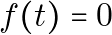
for

. 3.

.

Our quest: Find

.
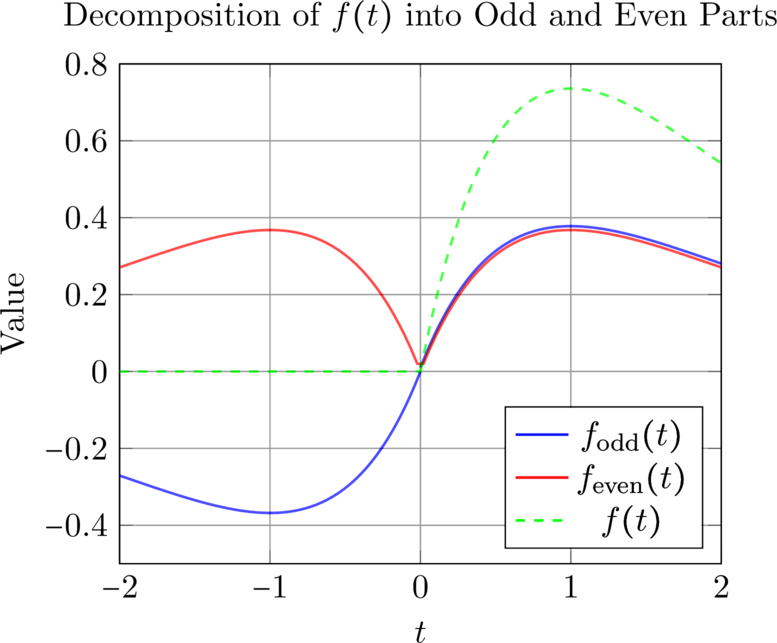
## The Mathematical Prologue: Odd and Even Functions

Before we delve into the complex world of Fourier transforms and real functions, let’s briefly focus on a mathematical gem: every real function

can be decomposed into odd and even parts. Mathematically, this is represented as:

where,
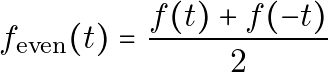
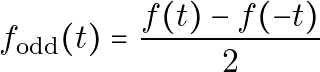
In essence, this decomposition acts as the mathematical cornerstone that guides our journey to decode

.

## Charting the Unknown

### The Initial Pathway

The clue that

is real becomes our starting point. Armed with the knowledge that every real function can be split into odd and even components, we’re equipped to delve deeper.

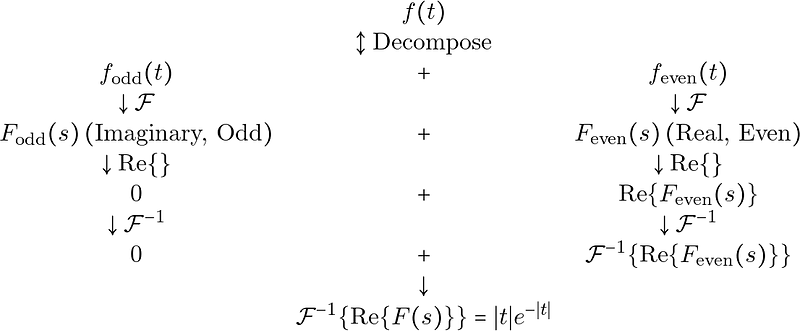
### The Schematic Blueprint

Our exploratory journey is best illustrated through this architectural framework:
### The Crucial Insight

Since
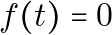
for

:

We deduce

for

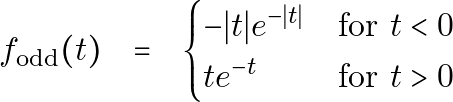
. ## The Final Revelation As

is an odd function:
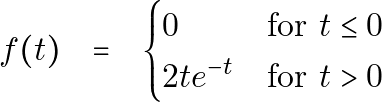
And so, the final piece of the puzzle falls into place. We find:
## Epilogue: The Signal Decoded

In a grand revelation,

stands before us, no longer an enigma. What began as a mathematical mystery ended as a scientific accomplishment, all thanks to the foundational understanding that every real function can be decomposed into its odd and even components. Our journey through this intellectual landscape has led us to this defining moment:

is not just a set of symbols and equations; it’s a signal decoded.

## The Saga Continues: Unlocking Further Mysteries of Fourier Transforms

### Question 4

Consider two functions

and

, illustrated in Figure below. Their Fourier transforms are denoted as

and

, respectively.
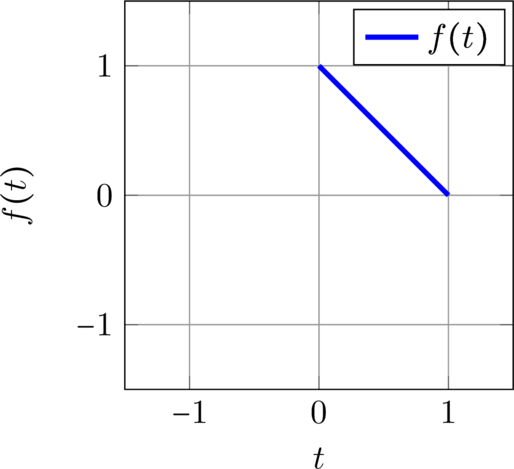
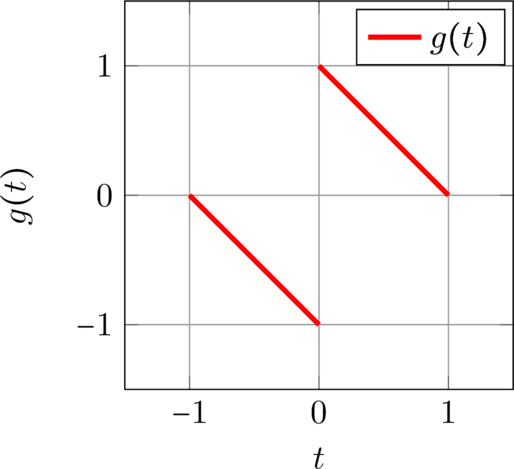
1. Without performing any integration, what is the real part of

? 2. Given the imaginary part of

as
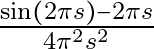
, what is

?

### The Intricacies of Real Parts in Fourier Transformations

The first question poses a new challenge, asking us to discern the real part of

without resorting to integration.

Drawing from the invaluable insights obtained from our previous exploration, we’re reminded that

is not a standalone entity but a blend of a scaled even function
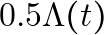
and its corresponding odd counterpart

.

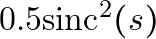
This is where the Fourier transform reveals its true prowess. The transformation process clarifies that only the even component contributes to the real part. Consequently, the real part of

elegantly emerges as
.

### Solving for

The second question pivots us to

, extending the challenge with the gift of a known variable: the imaginary part of

.

Building upon our earlier discussion, the task becomes remarkably straightforward. We deduce that

is essentially

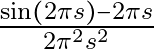
. Thus,

is precisely expressed as
.

Fourier Transform
Signal Processing
Electrical Engineering
Electronics
Recommended from ReadMedium