
The Enigma of Napoleon Hill
I do not always admire the man — but of his success program’s efficacy, I have no doubt
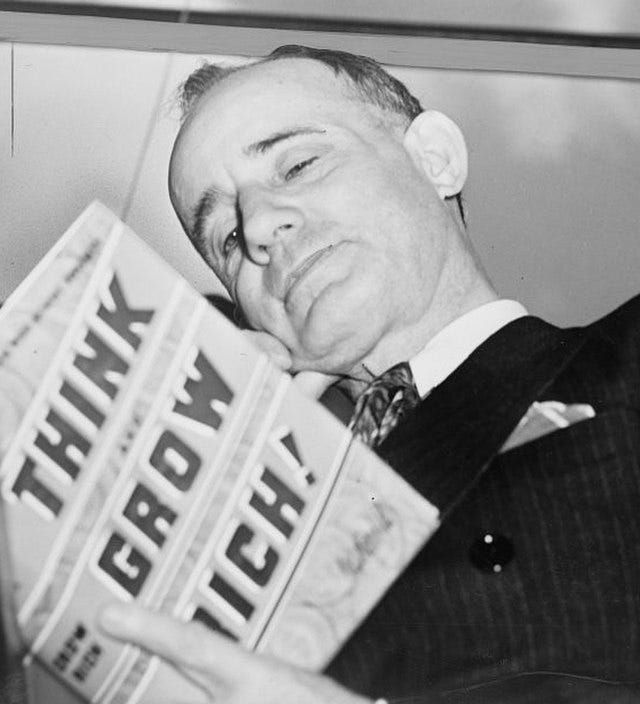
Few writers have made as deep an impact on the past century as Napoleon Hill (1883–1970). The Appalachian-born journalist virtually defined the field of motivational and success literature. His influence appears in the worldwide posterity of his most famous book, Think and Grow Rich, published in 1937.
Although you can certainly find more hallowed works of therapeutic and practical philosophy than Think and Grow Rich, few have attracted such sustained and varied readership.
And few, I believe, do more to hone your abilities and sense of purpose. My conviction grows from personal experience. Since I also write critically of Hill as a man in this piece, I want to open with my reasons for enduring fealty to his work.
I write these words about ten years from when I returned to Think and Grow Rich with real commitment in 2013. Until then I had read dozens of self-help books (including Hill’s), worked for years as a publisher in the field, and harbored something of a “been there, done that” attitude toward much of the genre.
However, in fall of 2013, believing that a corporate buyout jeopardized my longtime job as a publishing executive (it ended four years later), I revisited Think and Grow Rich with renewed vigor and urgency.
For the first time, I did every exercise as though my life depended on it, which I often call the “magic formula,” if there is any, to unlocking the book’s benefits. As I did this, my work as a writer, narrator, and lecturer dramatically expanded — work that is now my full-time vocation.
Writing this at age 57, I can state plainly: I’ve never been happier waking in the morning. Rather than wring my hands over whether another writer would fulfill his deadline and do his work in a quality fashion, I take those burdens wholly — and gladly — on myself. I owe that, in significant measure, to Hill’s program.
I’ve heard similar stories from many readers. Indeed, in more than 20 years as a publisher of spiritual and self-help literature — and equal time as a writer in these areas — I have never encountered a sustained reader of Hill’s work who was not changed by it in concrete, measurable ways. Just as I was completing this article, a reader wrote me: “My husband and many clients of mine credit that book to their spiritual awakening. I was skeptical of it because of the title but once I began to read I couldn’t believe the gems inside!”
Hill’s success philosophy is not just for those who desire material wealth or that alone. It is for anyone possessed of any wish — whether student, soldier, teacher, artist, entrepreneur, or activist — that he or she hungers to actualize. That said, Hill’s unsentimental attitude toward money-getting resonates with many readers.
Hill’s work tends to polarize. I mentioned the dedication it evokes, including my own. In recent years, however, journalists have sharply questioned Hill’s biography. I’ve likewise written critically of Hill, including in my 2014 history of the positive-mind movement, One Simple Idea, a point to which I return.
I have also encountered culture critics who blanketly deride Hill and related self-help authors. (Whether they’ve read them is questionable.) As I was working on this piece, an academic tweeted at me about authors who “make money selling popular books about wishful thinking to people who don’t know any better.”
Such criticisms conceal subtle social snobbery (people who don’t know any better) and, I believe, unacknowledged disdain for working and middle-class aspiration, not as politically idealized but as on-the-ground reality. Those unfamiliar with lack rarely understand, or interact with, the types of myriad and surprisingly varied readers who have brought greater sales to Hill’s book in the 21st century than during his lifetime.[1]
In adulthood, I’ve met people — literally from movie producers to career military officers — who hit a dead end in life only to immerse themselves in Think and Grow Rich and discover a new set of practical, actionable possibilities — of transforming fallow prospects into progressive ones. Indeed, I am continually touched by how regional, cultural, lifestyle, and political differences melt away when enthusiastic readers of Hill encounter one another.
Since I count myself among such readers — and venture that their experiences likely intersect with mine — I will briefly share my own story.
When I grew up in Queens in the 1970s, my father was a Legal Aid Society attorney who defended the poorest of the poor. For factors I deem outside his control, he lost his job and profession, leaving us to consider applying for food stamps and warming our always-unaffordable home with kerosene heaters. We wore used clothes and scraped together change and coupons to buy weekly groceries. There were no Hanukkah, Christmas, or birthday gifts. My older sister and I would buy them with our own money, earned from odd jobs, and pretend to friends that they came from our parents. In the words of The Notorious B.I.G., “Birthdays was the worst days.”
One night, in desperation, my father stole my mother’s engagement ring to pay debts, over which he may have been physically threatened. (He had started carrying pepper spray.) They divorced. My sister and I got by through after-school jobs, student loans, and precious availability of health benefits through my mother’s labor union, the 1199 hospital workers. Given the economic devastation visited on many American households, both during the lockdown and the still-unhealed 2008 recession, I do not consider our story exceptional.
This sense of need is, quite simply, what got me on the scent trail of practical metaphysics. There is, of course, a strong mind-metaphysics component to Think and Grow Rich. But critics or passersby rarely realize that Hill’s program is also, and above all, one of action. Anyone who begins his book without that commitment will almost certainly not finish it. Commonplace critical comparisons between Think and Grow Rich and The Secret reveal an observer’s lack of familiarity with either.
In various books and articles, I have noted my refusal to regard inspirational figures — even those, like Hill, whose work has touched me — as agreeable cyphers devoid of ethical failures, corruption, or weaknesses.
Sycophancy does not honor the memories of people whose work we admire. Indeed, artists, writers, and activists — no less motivational figures — cannot be maturely understood from either the hagiographic haze of semi-worshippers (or franchisees) nor the vitriol of cultural detractors. I reject both approaches in considering Hill’s life.
Oliver Napoleon Hill was born October 26, 1883, in a cabin in the Appalachian town of Pound in southwest Virginia. His mother died when he was 9. By the turn of the century, Hill began writing newspaper stories and embarked on a chequered business career as both a “man Friday” and entrepreneur.
In Hill’s autobiographical writings, he displays a repugnant lack of moral feeling as a young man by helping local businessmen conceal the 1902 killing of a black bellhop in Richlands, Virginia. Less than ten years before, the southwestern town was the site of a lynching of five black railroad workers. The bellman died after a drunken bank cashier — an employee of Hill’s boss Rufus Ayers, Virginia’s former attorney general — dropped a loaded revolver, which went off, killing the attendant. Nineteen-year-old Hill sprang into action as the consummate fixer, coaxing local authorities to label the criminally negligent death as “accidental,” he wrote, and getting the victim quickly buried. Ayers rewarded Hill by naming him manager of an area coal mine — the youngest such manager in the nation, Hill proudly reckoned.[2]
This incident reflected the troubling pattern of Hill’s life: he identified with power so fully that he almost never questioned the decency, ethics, and general outlook of the man in the corner office (or, for that matter, of himself). Nowhere in Hill’s accounts of high climbers is there any countervailing consideration of cunning, ruthlessness, or amorality — or of the kind of corrupt obsequiousness that Hill displayed in Richlands. Nor did Hill seem over-troubled by truthfulness when in 1914 he falsely claimed on his personal stationary to be a lawyer; he attended no law school.
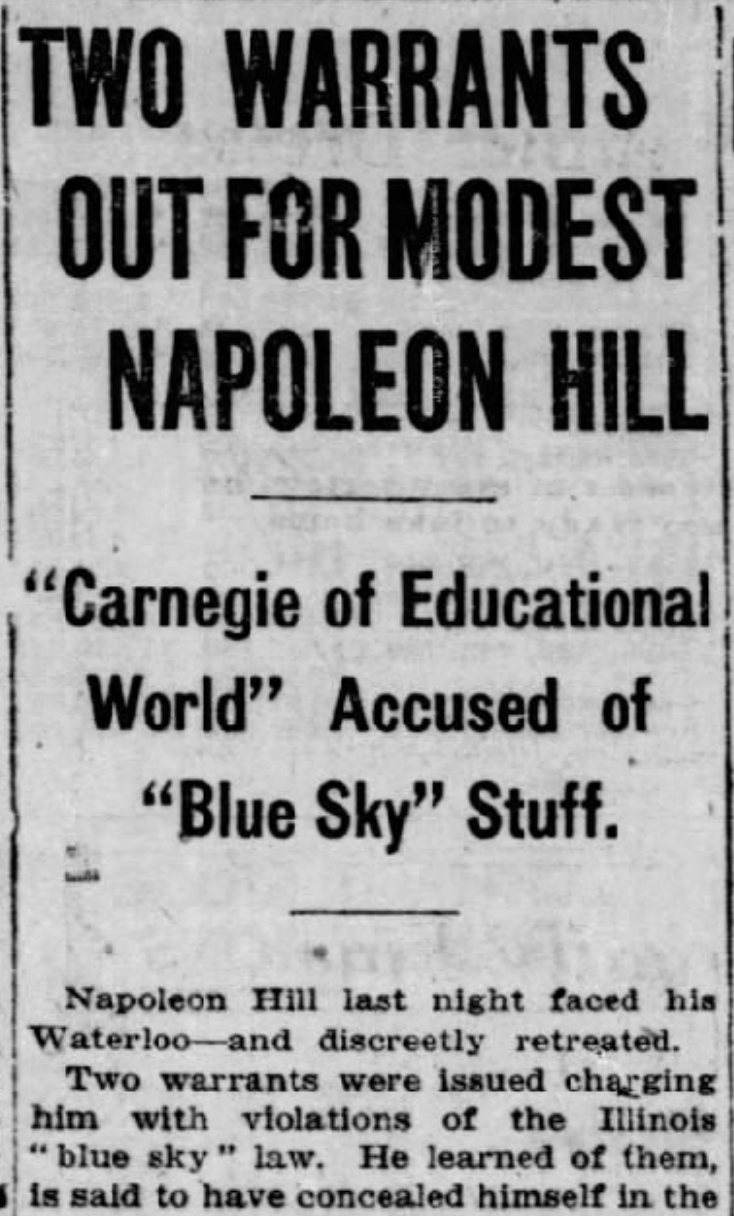
It was not an isolated episode. In 1918, state authorities in Illinois accused the educational entrepreneur of fraudulently inflating the valuation of his Chicago success school to prospective investors.[3] With disturbing repetition in his early business record, Hill darted among experiences where either he or those around him were accused of fraud or malfeasance.[4] These episodes played out during periods when the writer claimed, without evidence, to have advised presidents Woodrow Wilson and Franklin Roosevelt.
Hill’s interest in the “philosophy of success” seems to have emerged around 1908 while he was working as a reporter, including for Bob Taylor’s Magazine. It was an inspirational and general-interest monthly published by the former governor of Tennessee who continued his enterprise as a U.S. senator.
As publisher, Taylor favored up-by-the-bootstraps life stories of business leaders. Through Taylor’s connections, Hill was able to score the ultimate “get”: an interview with steel magnate Andrew Carnegie. Or so he said.
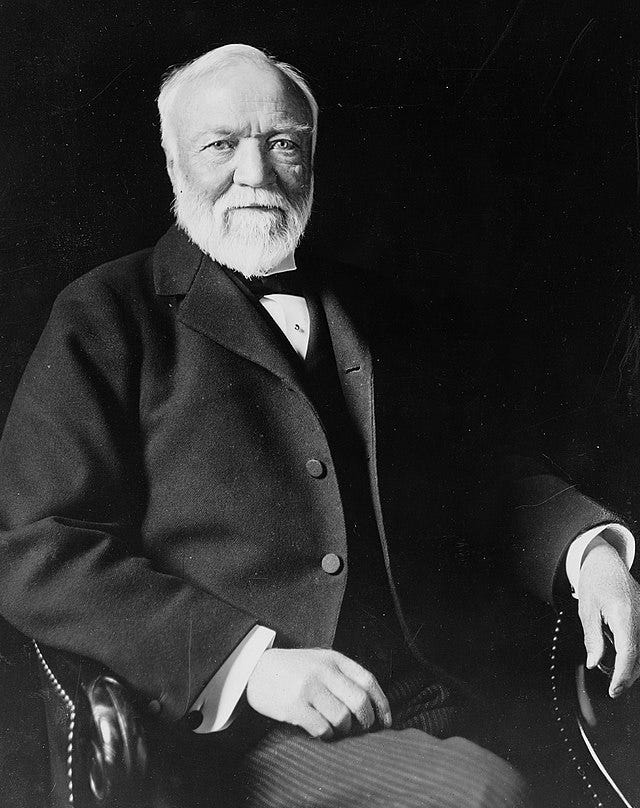
Hill described his encounter with Carnegie — “the richest man that the richest nation on earth ever produced,” as he wrote in 1945 in The Master-Key to Riches — in terms that evoked Moses receiving the tablets on Mount Sinai. During their interview, Hill said, the industrialist gave him marching orders to codify a philosophy of success, which formed the basis for Hill’s 1928 book The Law of Success and the wealth-building classic that followed nine years later, Think and Grow Rich.
Whatever impression Hill may have left on Carnegie, the industrialist made no mention of the younger man in his writings. Nor did Hill begin making references to their fateful meeting until nearly a decade after Carnegie’s death in 1919, a story he related with greater drama and vividness as the years passed. (I must also note that the “tributes to the author from great American leaders” at the front of Think and Grow Rich are all from figures deceased by its 1937 publication.) Critics question whether the Carnegie encounter occurred at all. I am agnostic on the matter. Bob Taylor’s Magazine featured how-I-did-it stories of millionaires — a staple of the day’s popular literature — and the job (and Taylor’s position) could have facilitated contact between journalist and subject.

In December 1908, under his birthname Oliver Napoleon Hill — one of the last times he used that byline — Hill produced for Taylor a regional essay on “Mobile and Southern Alabama,” accompanied by an author photo of the bow-tied writer. No interview with Carnegie ever appeared, nor have I found further bylines for Hill in the magazine.
In any case, Carnegie’s memoirs do paint the image of a man who enjoyed discussing the metaphysics of success. In his autobiography, published posthumously in 1920, Carnegie recalls that as an adolescent he “became deeply interested in the mysterious doctrines of Swedenborg,” the 18th century scientist-mystic. A Spiritualist aunt encouraged the young Carnegie to develop his psychical talents, or “ability to expound ‘spiritual sense’.”
Indeed, the industrialist was eager to be taken seriously as an author and reveled in probing whether there exist natural laws of money and accumulation. In June 1889, Carnegie published an essay “Wealth” for the North American Review, which might have been forgotten if not for its near-immediate republication by England’s evening newspaper The Pall Mall Gazette under the more alluring title by which it won fame: “The Gospel of Wealth.”
Taking a leaf from the neo-Darwinian views of philosopher Herbert Spencer, Carnegie described a “law of competition,” which he believed brought a rough, necessary order to the world:
While the law may be sometimes hard to the individual, it is best for the race, because it ensures the survival of the fittest in every department. We accept and welcome, therefore, as conditions to which we must accommodate ourselves, great inequality of environment, the concentration of business, industrial and commercial, in the hands of a few, and the law of competition between these, as being not only beneficial but essential for the future progress of the race.
Although contemporaneous success authors such as Ralph Waldo Trine and Wallace D. Wattles extolled creativity above competition, Carnegie welcomed “laws of accumulation” as a necessary means of separating life’s winners from losers. At his steel mills, the magnate sometimes backed his belief through ruthless and, by way of surrogates and business partners, brutal labor practices. Seven of his workers were killed by Pinkerton guards during the Homestead Strike of 1892.
Yet Carnegie’s wealth essay contained a surprising wrinkle. He emphasized that great fortunes — which he saw emergent chiefly from production of raw materials, real estate, utilities, and inventions (the manufacturer disdained financial speculation) — are the product of the community. And should ultimately be returned to it. Wealth, Carnegie argued, is amassed as a passive result of an industrialist or investor benefiting from mass shifts in demography, migration, and public need. The world’s reputedly richest man wrote that riches should be restored to the public rather than passed down through generations of family inheritance.
But in a sentiment that won jeers from contemporaneous radicals and reformers, Carnegie counseled that millionaires should electively dispense their money in acts of philanthropy during their lifetimes. He considered this disbursement the legitimate culmination of success, arguing that monopolistic capitalism must be leavened by voluntary largesse. The multimillionaire’s sense of volunteerism had limits, however: should the rich not find ways to disperse their fortunes through philanthropy during their lifetimes, Carnegie called for a nearly 100 percent estate tax to settle the matter for them.
Whether one agrees with Carnegie on every point — and I do not — it is worth noting that he followed through on his statements with wide-ranging acts of structured philanthropy. In so doing, the industrialist helped presage the nonprofit field as it exists today.
It is this outlook — not the imaginary dialogues with Carnegie that Hill ploddingly devised in his 1948 Think Your Way to Wealth — that reflects the authentic Carnegie philosophy, at least as publicly stated.
Carnegie’s counsel is for each individual to assess, but of one point he leaves no doubt — and it would’ve made him few friends among tech magnates of our era: great fortunes accrue not primarily due to the ability of their holders but to ancillary events and circumstances that emerge from public need and growth.
Back to Hill’s version of events. As he tells it, at their 1908 meeting, the fetching reporter questioned Carnegie about his success-building secrets. The manufacturer urged Hill to speak with other captains of commerce to determine whether a definable set of steps led to their accomplishments. Carnegie offered to open doors for Hill.
Hill writes that he spent the next twenty years studying and interviewing businessmen, diplomats, generals, inventors, and other high achievers in an effort to map out their shared principles. He finally named seventeen traits (distilled to thirteen in Think and Grow Rich) that these outliers seemed to share. They included concentrating your energies on one definite major aim; doing more work than you are paid for; cultivating intuition, or a sixth sense; showing persistence; reprogramming your thoughts through autosuggestion; practicing tolerance of opinion; gaining specialized knowledge; and convening around you a collaborative Master Mind group, whose members could blend their mental energies and ideas.
As alluded, Hill’s books never attracted critical attention other than to be dismissed or waved aside for shallow vulgarity. Indeed, New Thought and self-help literature became a category of book that went mostly unread by its detractors. But Hill was often subtler, shrewder, and surer in his understanding of human nature than many scoffers supposed.
I have written critically of Hill the man. But let me be clear — contradictions be damned — about the quality of Hill’s program of achievement: it is, in my experience as a writer, publisher, and seeker, the finest that has emerged from the motivational field.
Whatever the source of Hill’s inspiration, it is evident that the writer spent something like the twenty years claimed studying the lives of high achievers of all types — inventors, generals, diplomats, artists, statesmen — and catalogued their common traits into a step-by-step program. Hill was certain (as are many of his readers) that he created a model of what exceptional people do when translating an idea from conceptual to actual. I must add, crucially, that his written program is not one of trickery but of clean ledgers, ethical practices, and plain dealing. I have written disdainfully of popular books, such as The 48 Laws of Power, that counsel otherwise.
Can one finally distinguish between author and output? I have come to regard Hill in a similar vein to Carlos Castaneda (1925–1998), the self-made chronicler of indigenous North American magick: although his biography and encounters may be large parts fiction, Castaneda, like Hill, produced writing and insights that retain their hold on posterity due not to gullibility of audience but depth of insight. Critiques of Hill — while valid to varying degrees — are mitigated by the remarkable effectiveness of his program.
Wells either slake thirst or get abandoned.
Hill’s career matters because of his work as a writer. In that vein, let me highlight several of the most impactful themes of his outlook:
1. Definite Chief Aim. If a reader takes away one idea from Hill’s work, this should be it. In my experience, nothing does more to productively reorder your life than one penetrating, actionable, and obsessively felt aim to which all else is subordinated. The urge to this kind of exclusivity understandably evokes argument and pushback. Life places many demands on us — mustn’t we meet each on its own terms? There is validity in that objection. But I consider it a tough truth of life that unitary focus affords the greatest likelihood of arrival. Think of your heroes. Whatever their myriad and private traits, they are known for one core dedication. To clarify such an aim requires radical self-honesty. I should note that one well selected goal can cover many different bases and concerns in life.
2. Reciprocity. As noted, Hill’s written program is ethical: he emphasizes transparency, non-prejudice, and delivering clear benefits to your end user, client, or employer. He stresses how gossip, trash-talk, and frivolous opining degrade you and deter your goals. As I’ve often written, people have no idea the extent to which they defile their sense of self-respect by indulging in meaningless vitriol; the shame one feels — or sublimates — is coped with by throwing another stone, creating an endless loop. Nothing will make you stand taller more quickly than desistance from the perverse and fleeting thrill of gossip, smears, and lowbrow sarcasm.
3. Applied Faith. I once defined faith as persistence; but Hill’s work has taught me that faith is persistence combined with warranted confidence that you will, in some fashion, succeed based on immutable laws of effort and growth, which his program helps you identify. Rather than engage in toothless “wishful thinking,” most people, in fact, grossly underestimate their abilities and hesitate to exercise them. Absent extreme countervailing measures — which, it must be noted, do exist — persistence avails some form of personal deliverance.
4. Overcoming Procrastination and Fear. These two traits are the same. Learning to control one controls the other. For practical purposes, begin your effort with overcoming procrastination, which is task-specific and thus easier to work on than fear in general. If procrastination proves an unyielding barrier, it may indicate that you’re pursuing the wrong aim or one for which you’re emotionally mismatched.
5. Leadership. Hill defines leadership as initiative: doing what’s necessary without being told. You cannot claim leadership or have it bestowed on you. It is a form of behavior that stems from accountability and know-how. A real leader asks no one to do a task that he or she wouldn’t — or is afraid to. Anyone else is just a boss.
6. Master Mind. A Master Mind is a harmonious support group of two or more people convened at least weekly to support each member’s wishes. Hill taught that such a group pools and heightens each participant’s insights, intuition, enthusiasm, and acumen. It is vital to his program.
7. Sex Transmutation. In a note resounding in esoteric spiritual traditions from Tantra and Kabbalah to Gnosticism and Hermeticism, Hill taught that sexual desire is the force of life seeking expression. When you place the sexual urge at the back of your efforts, he wrote, you heighten your abilities and insights. His formula is simple: upon feeling sexual desire mentally shift your attention away from physical satisfaction and toward the achievement of a vital task. Do this at times of your own choosing. Does it work? Yes, in my experience.
8. Rebounding from Failure. Rather than impeding growth, obstacles often facilitate it. Setbacks and failures frequently impel refining plans, abilities, ideas, and relationships. Without opposition we would remain mental and emotional children. Search every failure for commensurate seeds of compensation. Are there assholes in your life? If you cannot get away from them determine, at least for the time being, to use their provocations as inducements to refinement.
9. Cosmic Habit Force. Generative habits and natural rotations, Hill writes, like orbital movement of celestial objects, changing of seasons, and cycles of birth and death, are the dynamic through which physicality maintains itself. This comports with ideas found in Taoism and Transcendentalism. When you dwell within the right personal habits and environment, Hill teaches, you merge, like a twig carried downstream, with waves or cycles of regenerative power and development.
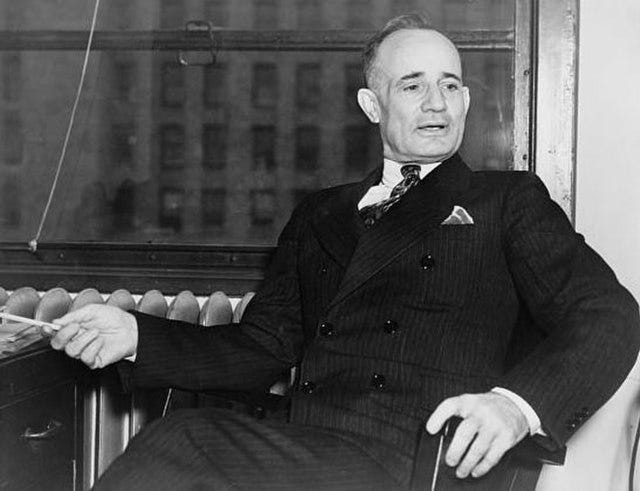
Hill writes alluringly of a “secret” that runs throughout Think and Grow Rich. This secret, he says, appears at least once in every chapter and no less than one hundred times throughout the book. But he does not specifically name it. Hill writes that it is more beneficial for you to arrive at the secret yourself. Some readers, he says, grasp it almost immediately. For others, it takes multiple readings. Sometimes, right in the midst of a chapter, the secret may flash into your mind, he explains.
I have previously written that the secret of Think and Grow Rich can be put this way: “Emotionalized thought directed toward one passionately held aim — aided by organized planning and the Master Mind — is the root of all accomplishment.” I stand by that. But a more basic conception of Hill’s secret, comporting with point nine above, occurred to me during this writing: the “secret” of Think and Grow Rich is to place yourself within the overall scheme of creation, obeying natural laws that inevitably and invariably beget growth, expansion, and renewal.
Each step in Hill’s work is designed to bring you into natural alignment with your surroundings. Once you are in this alignment and function within its flow — toward growth, utility, and regeneration — laws of creation appear at your back. You become like the seedling that eventually bursts through the soil. All of nature facilitates this process. Unlike the seedling or twig, however, a sentient being can consciously and selectively labor. Indeed, these laws possess greater potential for an aware being than for the seedling because they not only aid expansion but also allow for dramatic re-creation of self.
In that vein, I want to quote what I consider one of the most important passages in Think and Grow Rich. It appears in the chapter on “Imagination” and directly pertains to what I’ve been referencing:
You are now engaged in the task of trying to profit by Nature’s method. You are (sincerely and earnestly, we hope), trying to adapt yourself to Nature’s laws, by endeavoring to convert DESIRE into its physical or monetary equivalent. YOU CAN DO IT! IT HAS BEEN DONE BEFORE!
You can build a fortune through the aid of laws which are immutable. But, first, you must become familiar with these laws, and learn to USE them. Through repetition, and by approaching the description of these principles from every conceivable angle, the author hopes to reveal to you the secret through which every great fortune has been accumulated. Strange and paradoxical as it may seem, the “secret” is NOT A SECRET. Nature, herself, advertises it in the earth on which we live, the stars, the planets suspended within our view, in the elements above and around us, in every blade of grass, and every form of life within our vision.
Nature advertises this “secret” in the terms of biology, in the conversion of a tiny cell, so small that it may be lost on the point of a pin, into the HUMAN BEING now reading this line. The conversion of desire into its physical equivalent is, certainly, no more miraculous!
As Hill conveys, you can derive warranted confidence, realistic faith, renewed sense of self, and authentic help by placing yourself within the cyclical scheme of nature or creation.
After reading Hill and following his steps, I venture that you will approach your work (which is often the deepest part of a person’s life, whether or not acknowledged) more effectively, fully, and successfully. By committing yourself to the ideas in Think and Grow Rich you will experience progressive change. This is my own critical testimony.
I also recognize that Hill’s sometimes overwrought language, gee-whiz tone, outdated cultural references, ready use of spiritual metaphors, and even his title strike some readers as lowbrow, vulgar or gauche. I recognize that not every one of us feels at ease being judged by friends or peers for reading such literature. My advice: get over it. Ersatz seriousness is the greatest impediment to individual experiment and development. Most peer judgments are little more than personal taste informed by image-maintenance and the wish for security. If I’ve conveyed any sense that Think and Grow Rich may hold something for you, let no psychologized excuses deter you.
I finally want to close with a word of exceedingly — and deceptively — simple advice that Hill delivered in a transcribed but undated and unpublished talk. His statement touches, indirectly but penetratingly, on everything I’ve tried to get across: “Avoid persons and circumstances which make you feel inferior.”
Live with that for six months. See what occurs.
Notes
[1] A reissue edition of Think and Grow Rich that I published in 2004, when the book was otherwise languishing on backlists, gradually netted about a million copies, renewing Hill’s sales worldwide in myriad editions.
[2] The story of Hill covering up the bellhop’s death is from A Lifetime of Riches: The Biography of Napoleon Hill by Michael J. Ritt Jr. and Kirk Landers (Dutton, 1995). The book is basically an authorized biography; it is to the authors’ credit that the episode is included at all.
[3] “Two Warrants Out for Modest Napoleon Hill: ‘Carnegie of Educational World’ Accused of ‘Blue Sky’ Stuff,” Chicago Tribune, June 4, 1918.
[4] “The Untold Story of Napoleon Hill, the Greatest Self-Help Scammer of All Time” by Matt Novak, Gizmodo, December 6, 2016. Novak’s highly critical article is an important resource and cannot be discounted by any serious reader. That said, I have my criticisms of the piece. The writer displays intense interest in his subject for every reason but the one for which Hill is famous: his writing. Like journalist Albert Goldman in his “takedown” biographies of John Lennon and Elvis Presley, Novak appears so zealous to undo his subject’s reputation that a reader could easily believe (as many probably did aforethought) that such an author has nothing to offer. Novak’s research is laudable but his persistently caustic tone and frank unfamiliarity with Hill’s key book detracts from an otherwise significant historical investigation. E.g., Novak’s allegation that Rhonda Byrne’s The Secret “essentially plagiarized” Think and Grow Rich is patently absurd and revealing of an insouciant lack of attention to the contents of either book; likewise offkey is his claim that Norman Vincent Peale’s “ideas were borrowed heavily from Hill.” Indeed, in an earlier version of the article, Novak confused the title of Peale’s famous Power of Positive Thinking with an unrelated book by Hill and W. Clement Stone, Success Through a Positive Mental Attitude. New Thought has a long and diffuse history in America; Hill intersected with the philosophy considerably less than Byrne or Peale. These varying works, although nondescript to the ardent critic, are by no means interchangeable.