
Travel
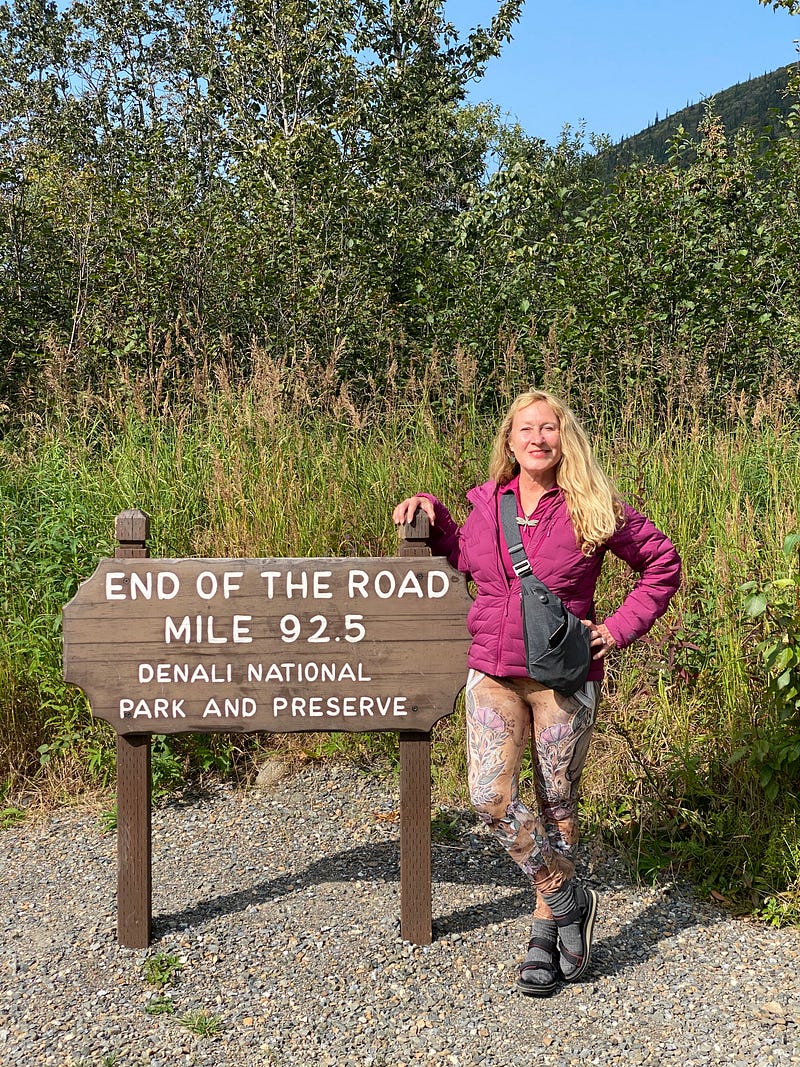
The “End of the Road” in Denali National Park
Seeing one of the most remote regions of Alaska during the COVID-19 pandemic
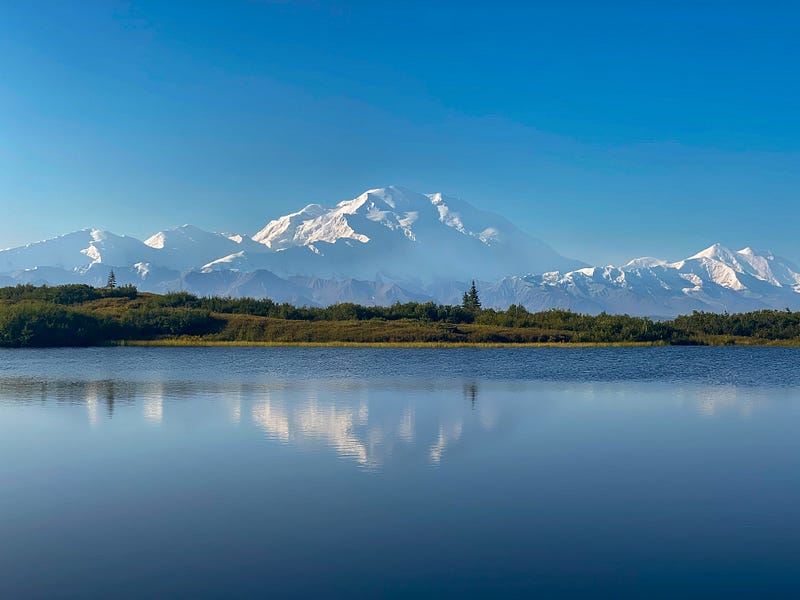
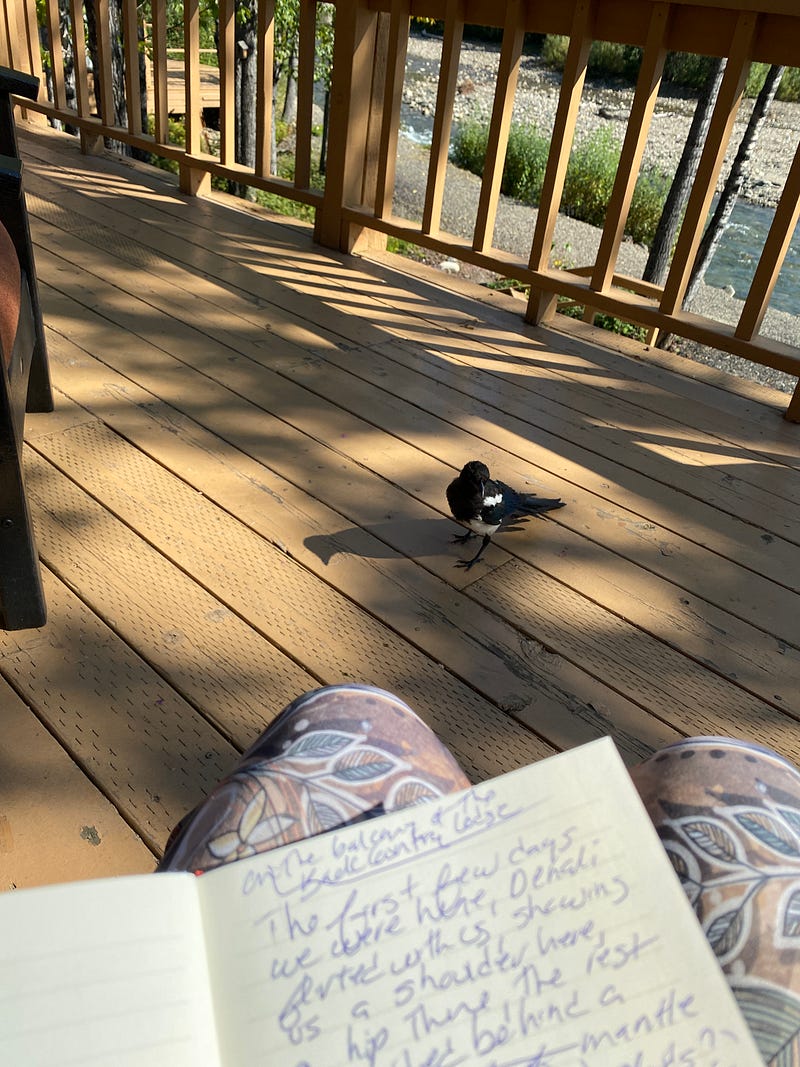
The first few days we were in Alaska, Denali flirted with us, showing us a shoulder here, a hip there, the rest shrouded behind a lacy mantle of clouds.
But she decided, yesterday, to do a full-on burlesque show, revealing the curvature of her entire form. — Notes from my journal, August 2020
It’s easy to see why ancient people from all over the world looked at the mountains and saw the realm of the gods.
The way the tallest peaks can hide themselves so thoroughly behind the clouds one moment, then pop out into full view the next just adds to the allure.
Alaska had been a dream of mine since I was a kid. My parents always wanted to take us up on a ferry from Canada, but it never did happen. And I’d been visualizing the expansive skies, towering mountains and fields of glaciers ever since.
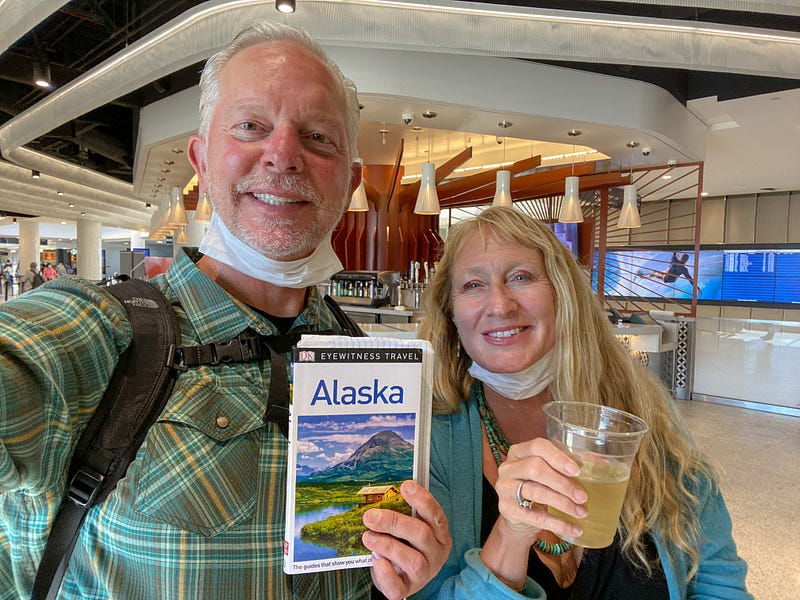
In August of 2020, when most of the world was still shut down, my husband and I, who had both had really quite bad cases of COVID in March (and we knew that we still had antibodies) decided that we would see if we could travel to some of the more remote regions of Alaska and make some dreams come true.
I didn’t let myself get too excited about this trip because there were a few roadblocks we had to get past in order to enter Alaska at that time. A negative COVID test (taken within 72 hours of your flight) was required. And in Southern California, tests were few and far between, and there was no guarantee that you’d get your results back that fast. We were pretty sure that we should test negative, but who knew at that time?
But, lo and behold, it all worked out, and we were off.
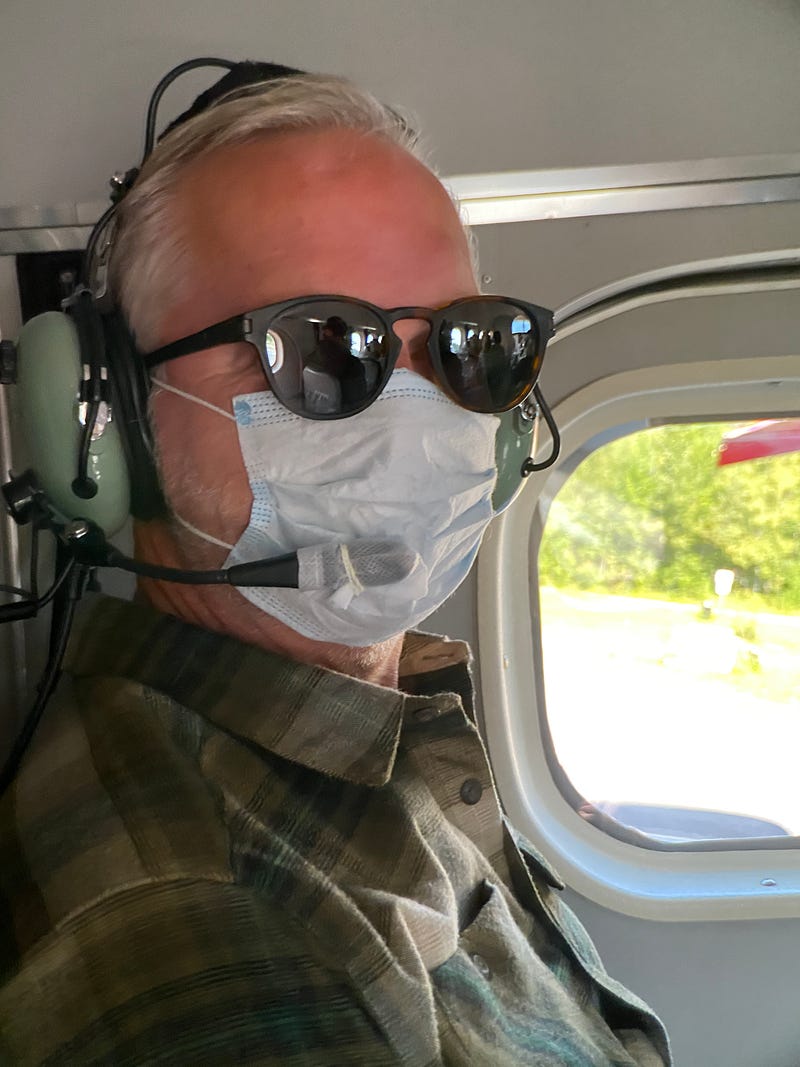
We flew into Anchorage, then drove to Talkeetna, where we took a tiny red plane up to the flanks of Denali, landing on “Base Camp.” Flying over those vaulted peaks was one of the most transcendent moments of my life.
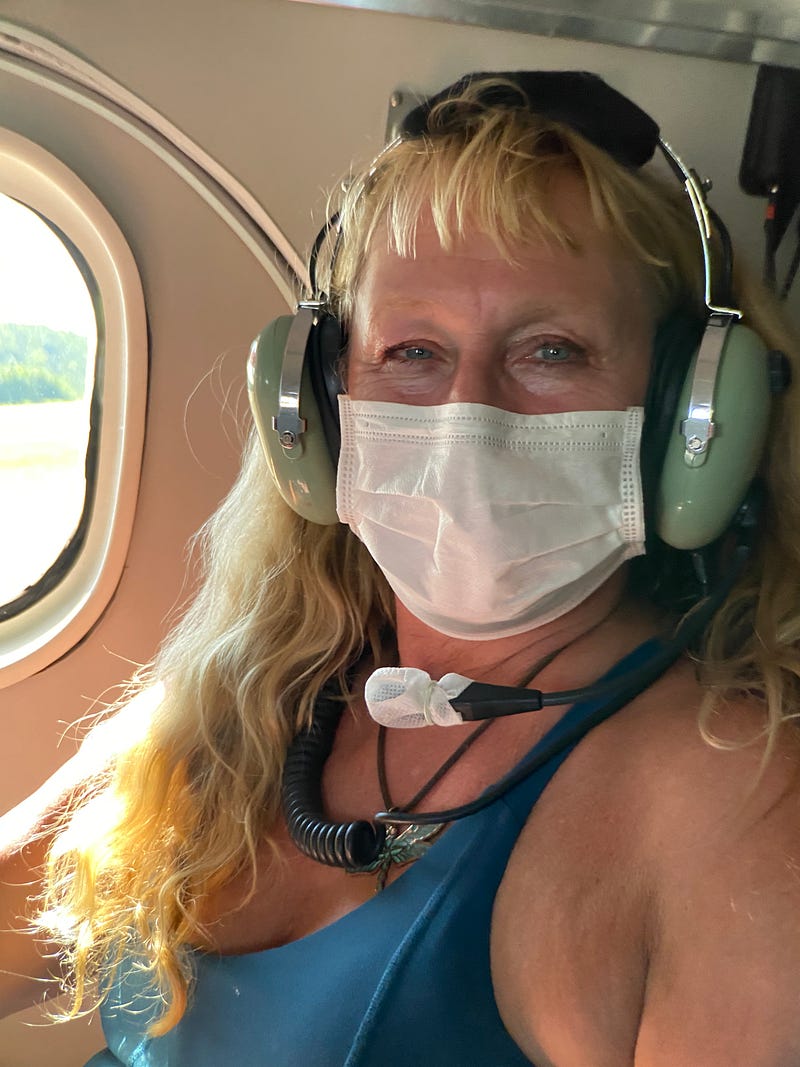
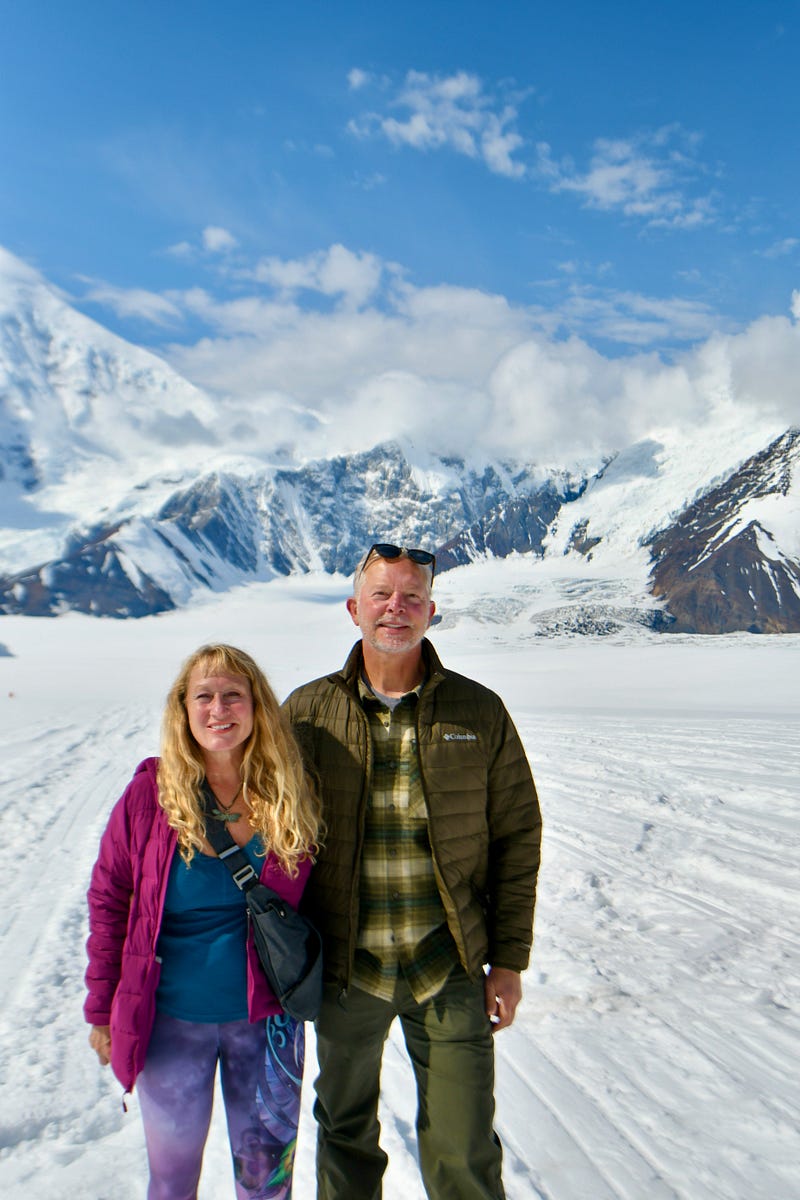
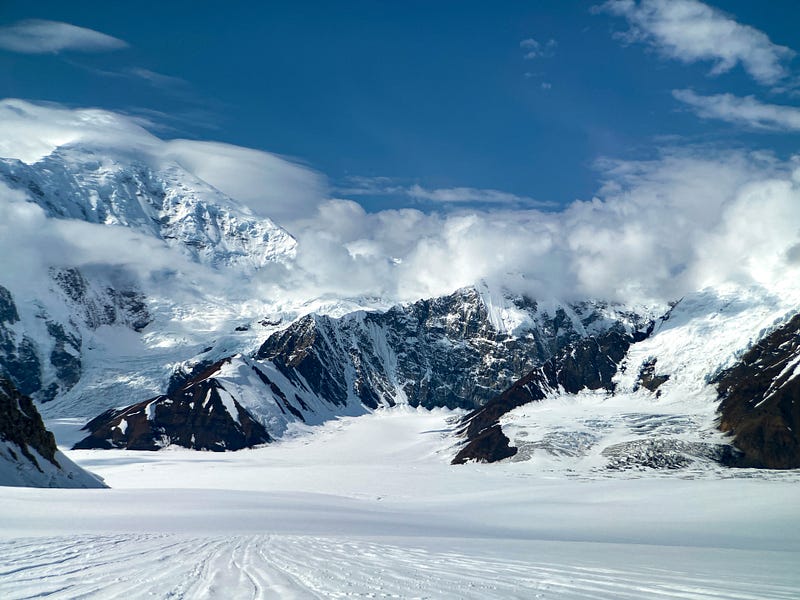
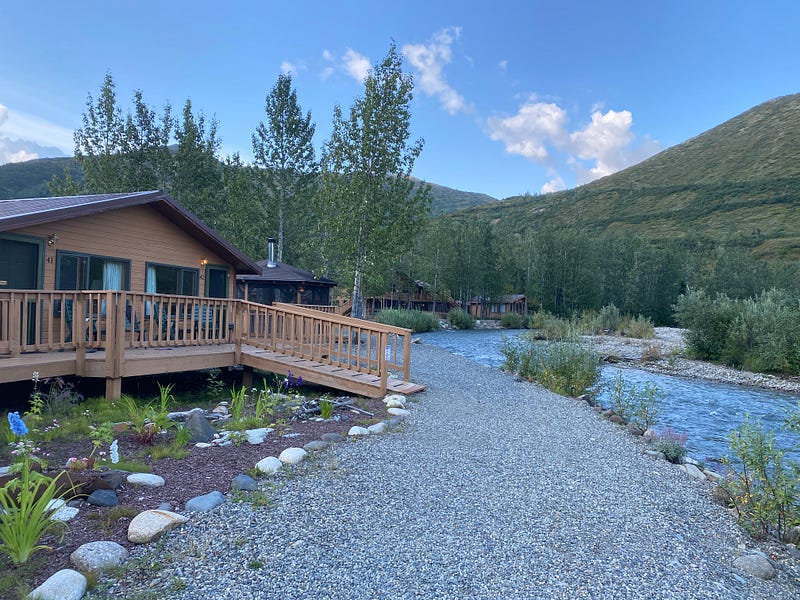
From Talkeetna, we drove to the entrance of Denali National Park, where we left our car and hopped onto the “Magic Bus,” a painted school bus that would take us the ninety-two miles into the park to the “Denali Backcountry Lodge,” which is, literally, at the end of the road.
Most of the tourists we encountered on this trip were native Alaskans — encouraged to travel by the fifty-percent discount they received. It was probably a “once-in-a-lifetime” opportunity to see their state with a discount and without the crowds. As non-Alaskans, we received a thirty-percent discount everywhere we stayed. But the bigger benefit to us was the ability to see the wild places without the usual throngs of people.
We were told that the lodge is only open for a few months a year because it is normally snowed in. Apparently, the cabins are often occupied by bears in the winter and have to be rebuilt in the spring.
The lodgings weren’t fancy.
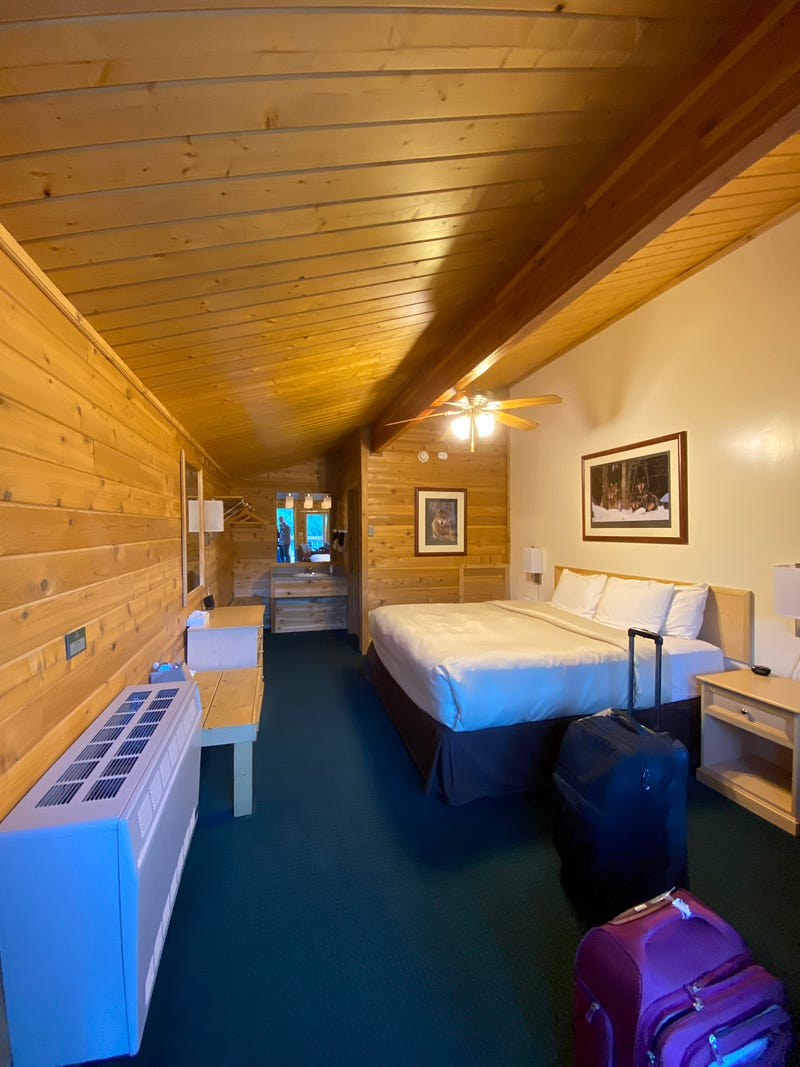
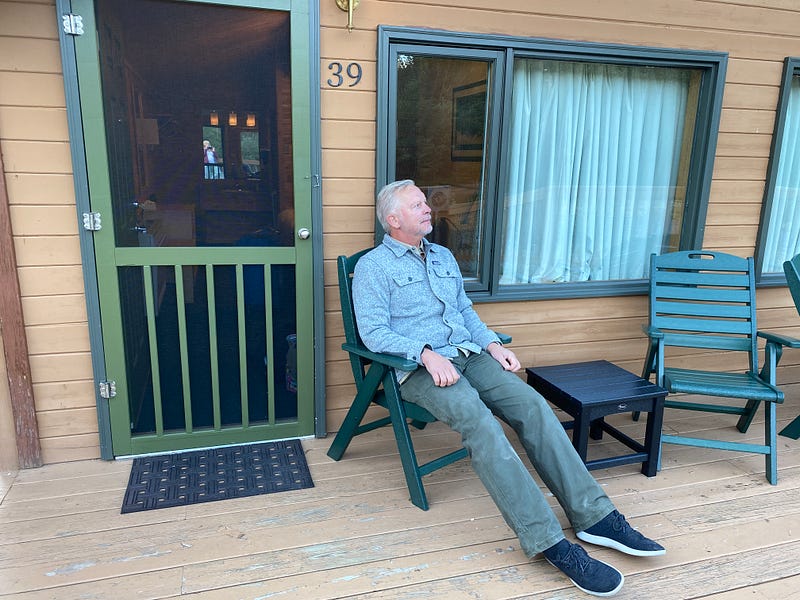
But the river danced and sang right at our feet. And the utter lack of the noises of civilization, such a rare thing, allowed us to melt into the vastness of Alaska.
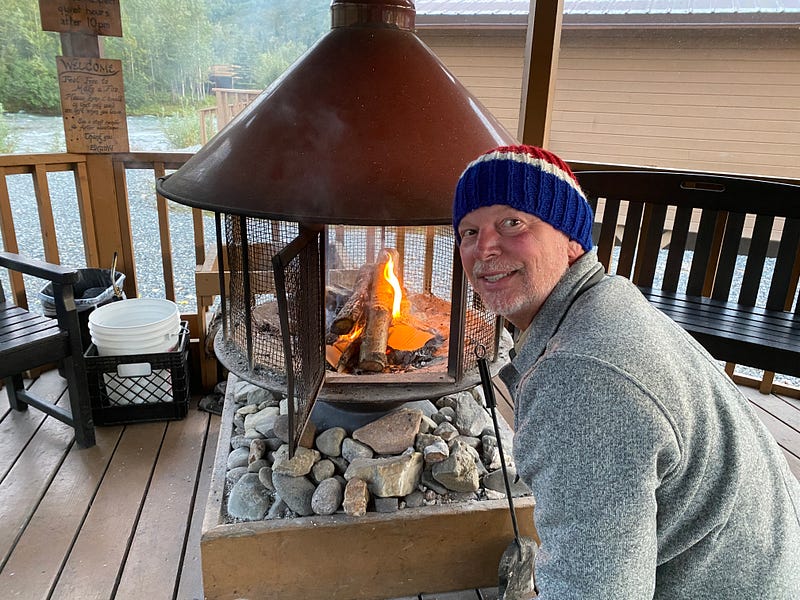
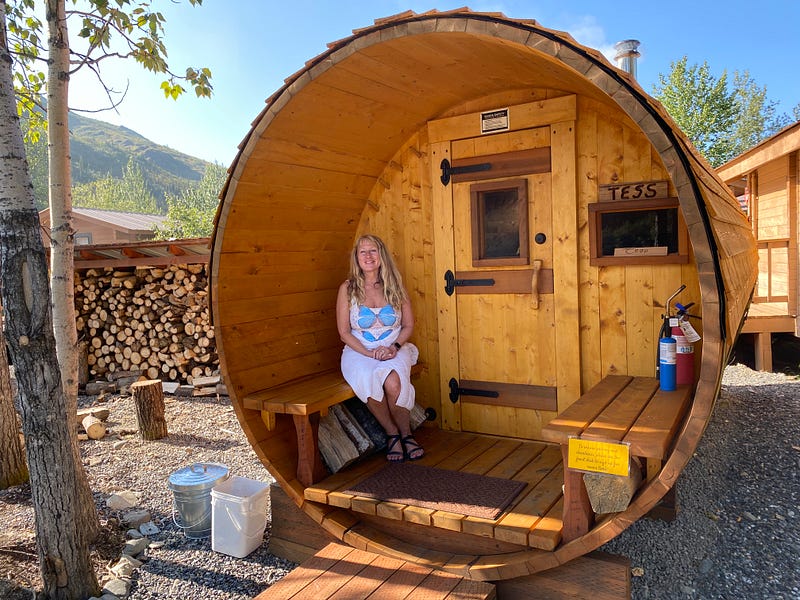
We lit a fire in the little firepit and took a sauna in the homemade “wooden barrel” structure. Then I pulled out my journal on a very-long summer evening to record my impressions of this magical place.
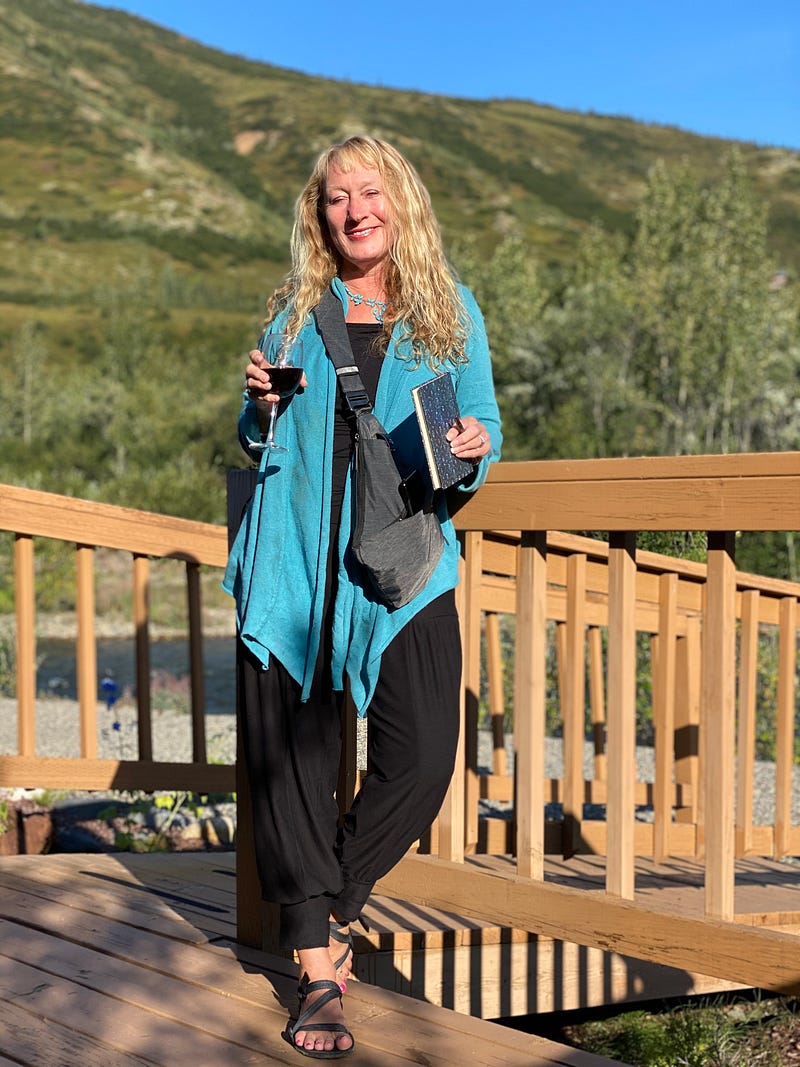
After dinner, we were driven to Wonder Lake and Reflection Pond, where Ansel Adams took his famous photo of Denali. We were lucky enough to see the “Alpen Glow.”
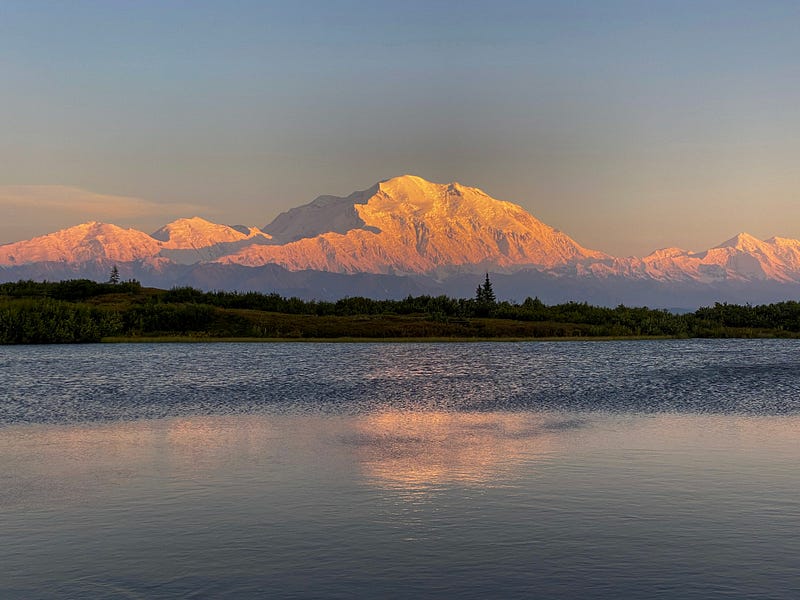
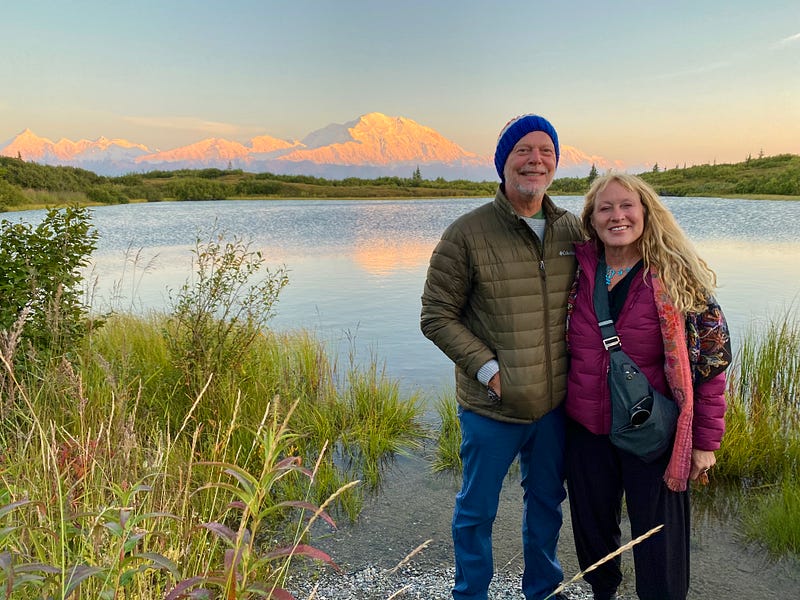
Although you cannot see the actual mountain from the lodge, they have a “Denali cam,” so they know when she is out from the clouds and ready for viewing.
We were lucky enough to be able to spend four nights in this magical place. We listened to talks on the different types of animal scat, so that we could identify it when we saw it on the trail.
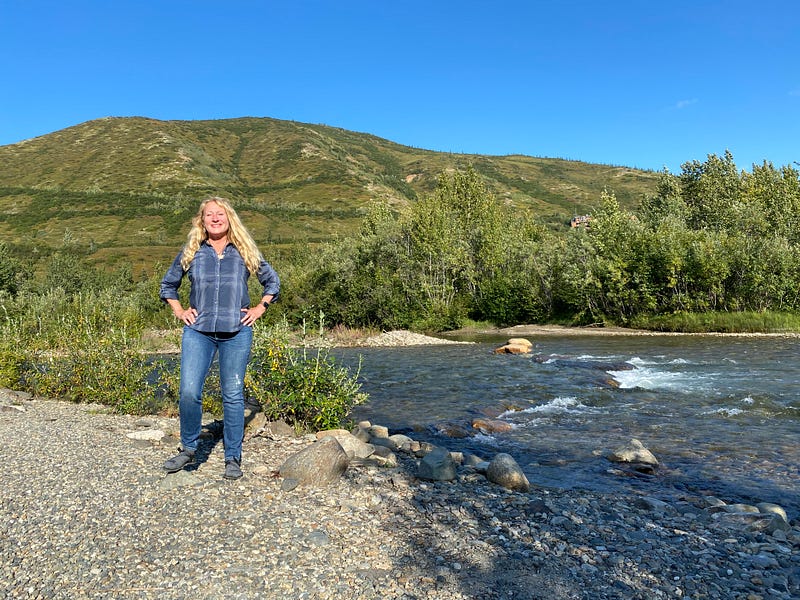
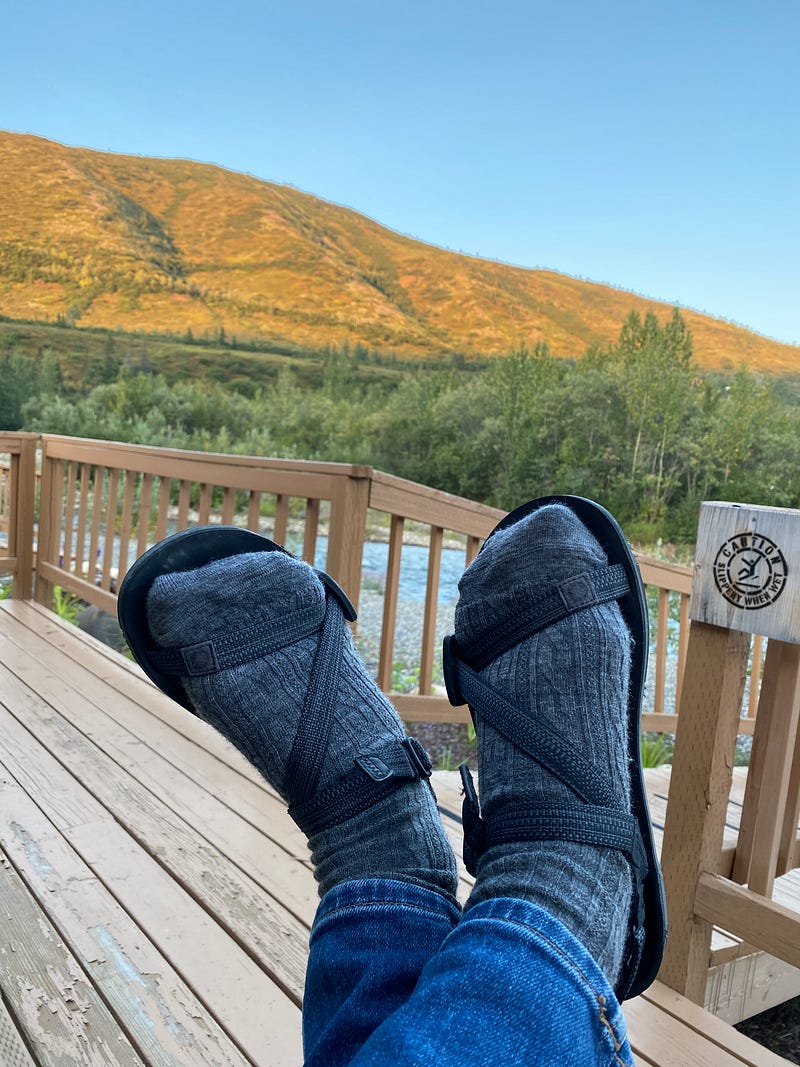
We hiked to braided rivers and across the tundra, following a guide armed with bear spray. We learned to “tuck and roll” if attacked by a bear and to run in a zig-zag if attacked by an elk or a moose (because their eyes are on the sides of their heads). And we saw stars splattered across the midnight sky. We learned that the haze in the air was from Siberia, which was closer to us than mainland America.
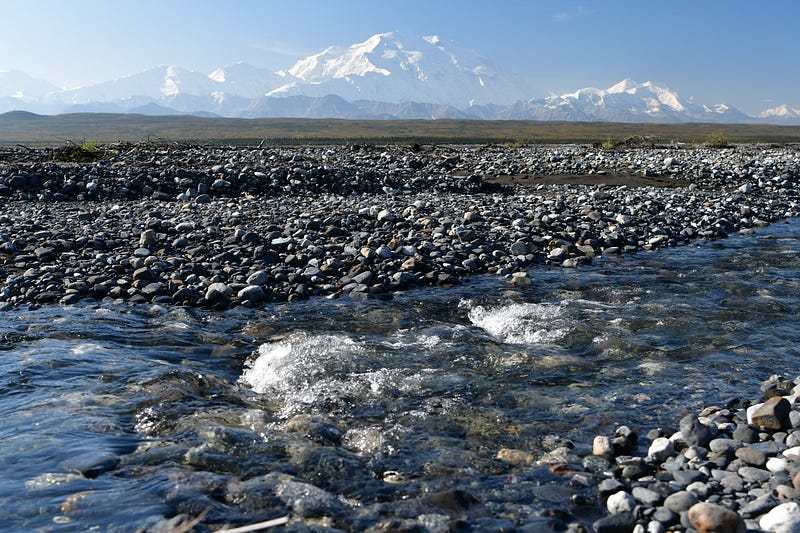
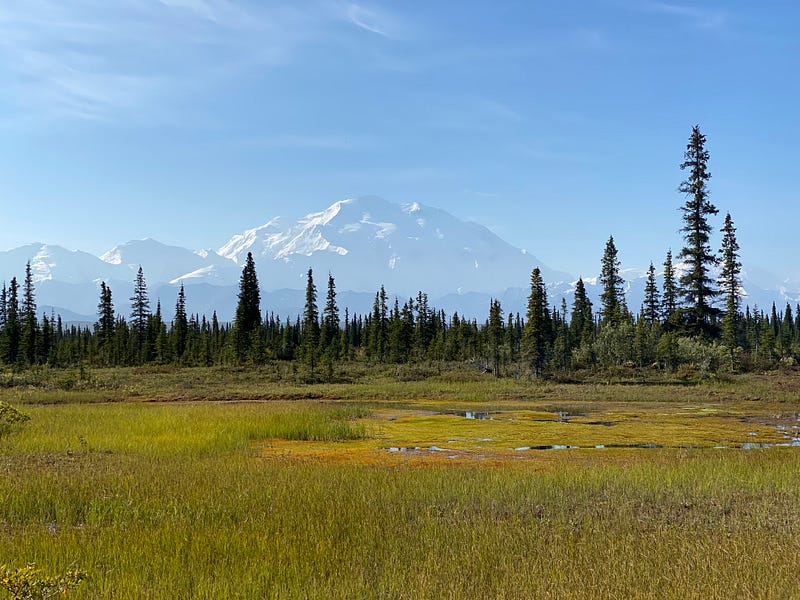
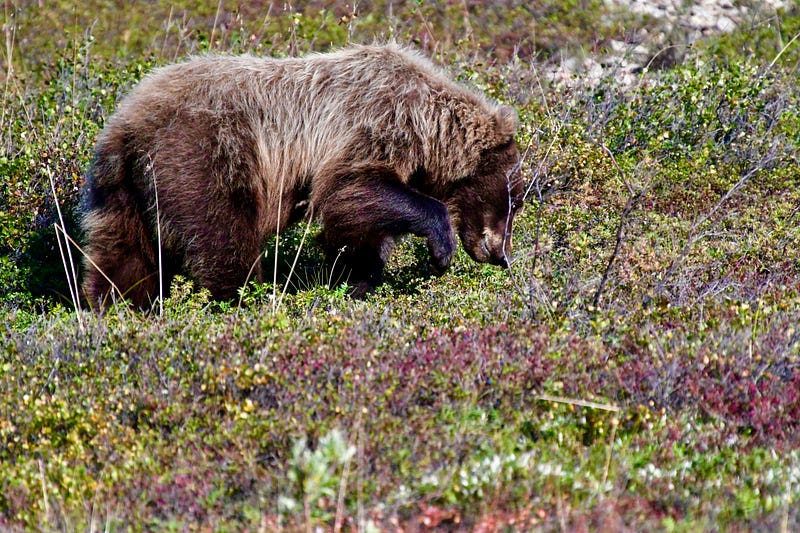
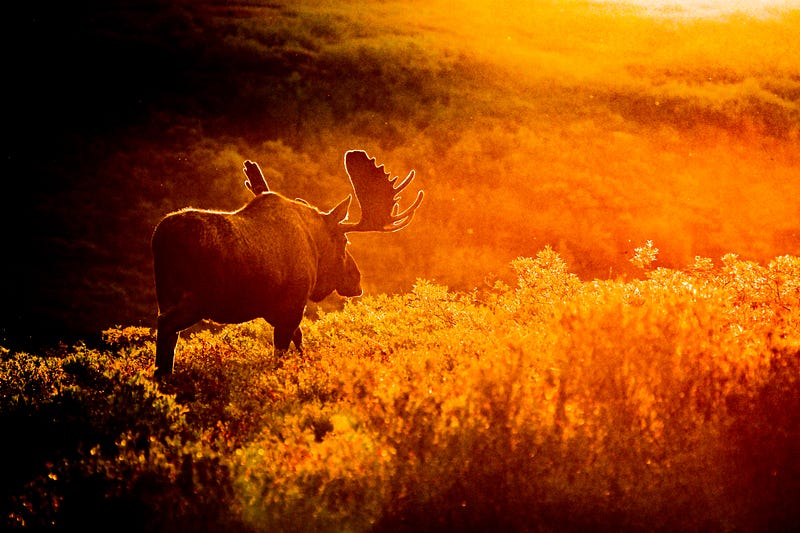
We saw brown bears, who were a lot more interested in foraging for blueberries than they were in people. And we encountered moose, elk, porcupines, and a lot of magpies.
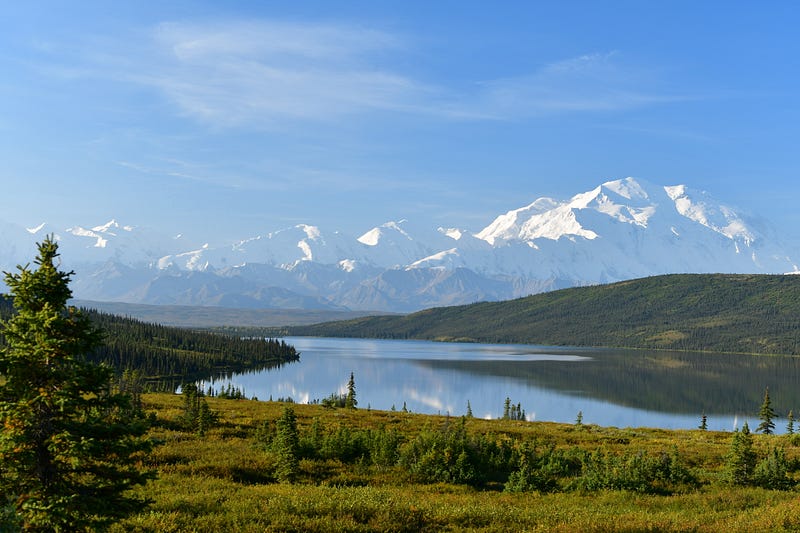
We did one thing that still evokes a bit of a fright in me. We missed the tour one morning and set out on our own for a little hike. The thrill of being alone in this enormous place still gives me the shivers. And I was able to capture several photos like this one, of Denali and Wonder Lake. But we also realized how small and vulnerable we were.
At the end of the road, rests a small cabin. It belonged to a woman named Fannie Quigley, who moved here in 1937. She lived many years of her life (and died here as well) alone, in a “Sears and Roebuck” house which she assembled in the wilderness. She prospected and gardened and survived in this harsh, but breathtakingly beautiful environment.
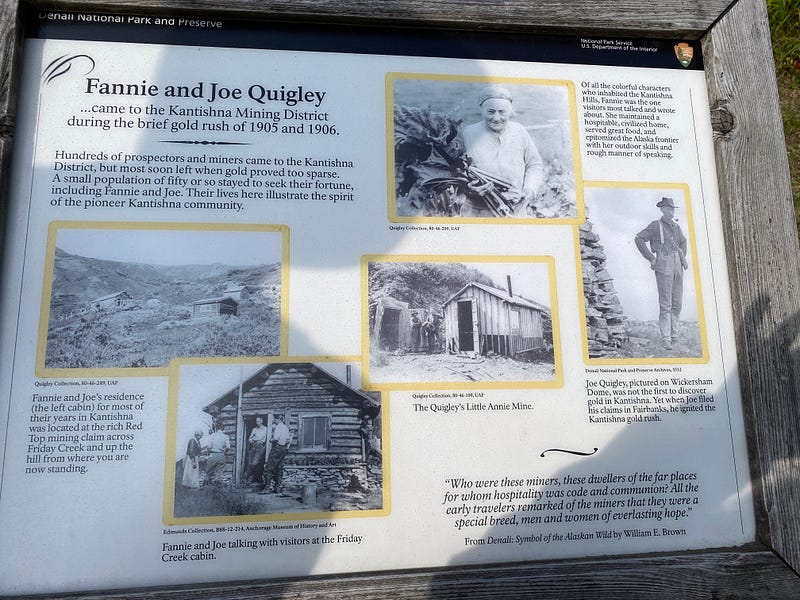
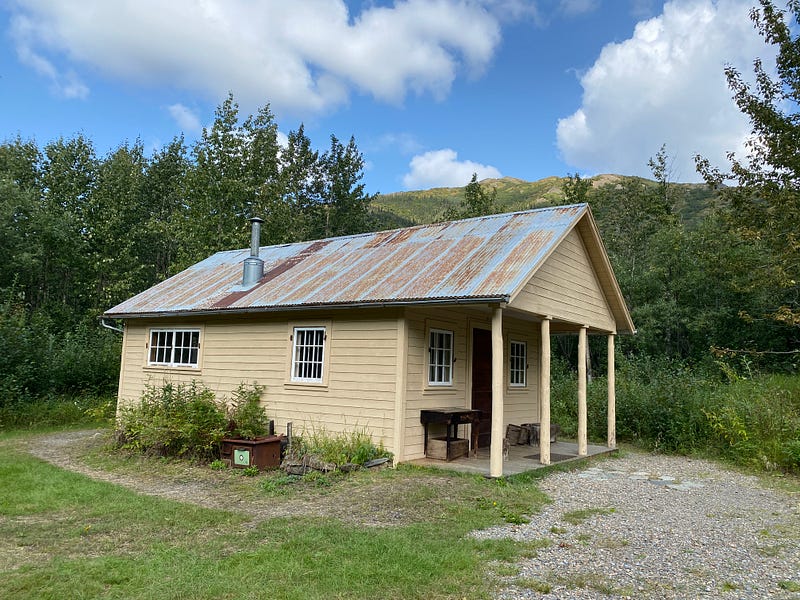
She hunted bears and moose and caribou and didn’t go to town for seven years straight. I can’t even imagine what her mind was like, what that type of deep immersion into the depths of nature does to the soul. Is it a returning to the source?
On the way back out of the park, on to our next adventure on Fox Island, another remote location, near Seward, we stopped at a viewpoint for a “photo break” and I snapped this shot. To this day, it remains one of my favorite images of our time in Alaska.
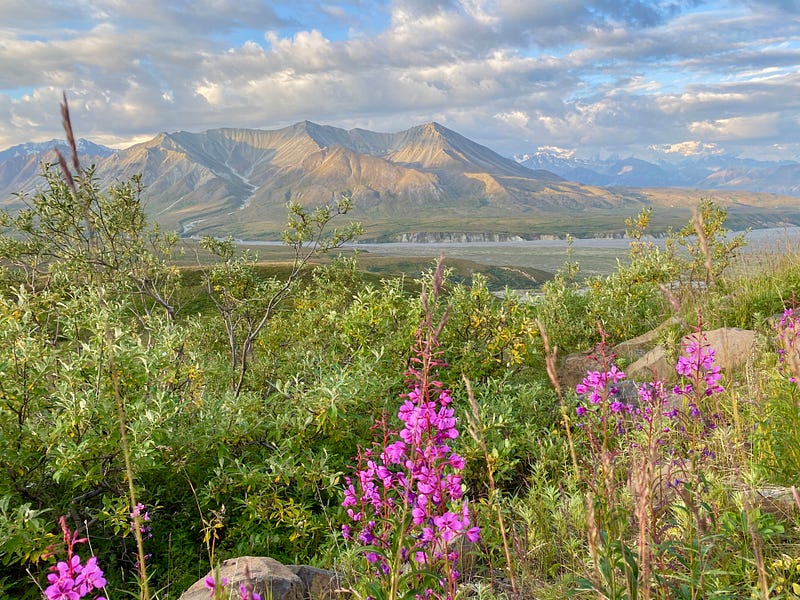
The fireweed exploding from tall stalks of purple, the moody sky, the river etching out the very landscape from the granite mountains and from the tundra floor sing to me the song of this place at the “end of the earth,” the point where the sky touches dirt and where the symphony of the mystery of life ignites in my heart and burns into my soul.
Erika Burkhalter is a yogi, neurophilosopher, cat-mom, photographer, and lover of travel and nature, spreading her love and amazement for Mother Earth’s glories, one photo, poem or story at a time. (MS Neuropsychology, MA Yoga Studies).
Thank you to Anne Bonfert for the Globetrotters’ “ signs” prompt:
I also really enjoyed Warren Thurlow’s story about “leaving no trace:”
And I also related to Michele Maize’s story about wanderlust and finding a potential new home in Oregon:
I also love this piece, by one of my favorite writers on this platform, Anne Bonfert, who always writes with a message of hope in her heart. Thank you, Anne, for being you and for sharing your life and your journey with us:
If you enjoyed this piece, you might consider subscribing to my stories. You’ll get an alert whenever a story gets published. Since I have had a few people asking, if you are interested in acquiring a photo, just leave me a note.
Photos and story ©Erika Burkhalter. All rights reserved.


