
The End of the Ottoman Empire & Creation of New Nations
Exploring the Transformation of Southeast Europe and the Middle East After the Fall of the Ottoman Empire
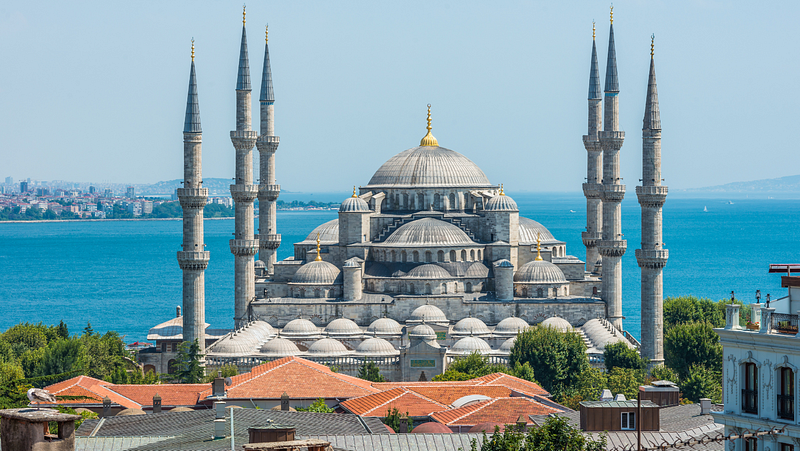
At the height of its power, between the 14th and 17th centuries, the Ottoman Empire was a formidable force that ruled over a vast region, extending across Southeast Europe, Western Asia, and North Africa.
This multi-ethnic and multi-religious empire, known for its military might and administrative efficiency, left an indelible mark on the annals of history. Its strategic location, straddling East and West, placed the empire at the centre of interactions between different cultures and civilisations, making it an influential player in world politics.
However, the empire that had stood strong for over six centuries gradually began to show signs of strain, setting the stage for a period of decline that eventually led to its dissolution.
The 19th and early 20th centuries witnessed the unfolding of a series of events that dismantled the Ottoman Empire and paved the way for the creation of new nations. These events were not just cataclysmic shifts in political boundaries but were transformative processes that gave birth to modern nation-states.
The dissolution of the Ottoman Empire is a significant historical period that has shaped the trajectory of the Middle East and Southeast Europe in profound ways. It facilitated the emergence of modern Turkey and led to the formation of several new nations within the territories of the former empire.
The geopolitical divisions that were established during this period have then since continued to influence the region’s political landscape, relations between nations, and even the socio-cultural dynamics within these countries.
The Ottoman Empire: A Historical Snapshot
Founded by Osman I in the late 13th century in northwestern Anatolia, the Ottoman Empire rose from a small principality to become a powerful empire that left a lasting impression on world history.
Over the centuries, it expanded its influence across three continents, commanding vast territories that extended from the gates of Vienna in the west to the shores of the Persian Gulf in the east, and from the Crimean Peninsula in the north to Sudan in the south.
The Ottoman Empire was characterised by its diversity, being home to various ethnic groups including Turks, Arabs, Greeks, Armenians, Jews, and Slavs among others. This rich tapestry of cultures, religions, and languages was a distinguishing feature of the empire, and it shaped its unique cosmopolitan character.
Politically, the empire was a hereditary monarchy with a highly centralised system of governance. It was headed by the Sultan, who held absolute power and was seen as the caliph, or spiritual leader, of Sunni Islam.
The Sultan’s authority was executed through a well-structured bureaucracy and a strong military system, with the elite Janissary corps playing a significant role.
The empire’s administrative system was a fusion of Turkic, Islamic, and Byzantine traditions. It established an efficient network of provinces (‘eyālets’) and districts (‘sanjaks’), each administered by appointed officials who reported to the central government in Istanbul.
The legal system was based on Islamic law (Sharia), although non-Muslim communities were permitted to maintain their own religious laws and courts.
Economically, the empire thrived on trade, benefitting from its strategic location between East and West. It was a significant hub on the Silk Road, facilitating the exchange of goods, ideas, and cultural practices between Europe, Africa, and Asia.
However, this empire, which boasted such an expansive and diverse milieu, was not impervious to change. The subsequent centuries would see a decline in its political and economic power, setting the stage for radical transformations in the form of the empire’s dissolution and the emergence of new nations.
Decline of the Ottoman Empire
The decline of the Ottoman Empire was a complex process that occurred over several centuries, encompassing a confluence of internal challenges and external pressures.
Beginning in the late 17th century, the empire started to lose its military edge. Consecutive military defeats in wars with Russia, Austria, and Venice began to erode the empire’s territorial gains, leading to the loss of significant lands in Europe and later in Africa and the Middle East.
Internally, the empire grappled with numerous issues. Administrative corruption and nepotism began to seep into the bureaucratic system, leading to inefficiencies and public discontent. Socioeconomic disparities increased, and instances of peasant revolts became more frequent.
The once formidable Janissary corps also became more concerned with political power and personal gain, weakening the empire’s military might.
The empire was also struggling with cultural and religious divides. The millet system, which allowed non-Muslim communities a degree of autonomy, gradually fostered nationalist sentiments among various ethnic groups within the empire, causing internal strife and demands for independence.
Externally, the empire faced mounting pressures from European powers. The rise of European colonialism and the strategic desire to control trade routes put the Ottoman Empire in a precarious position.
The geopolitical transformations of the 19th century, particularly the rise of nationalist movements in Europe, were also mirrored within the empire, adding fuel to the fire of nationalist aspirations among the empire’s diverse ethnic groups.
The final blow came with World War I. The Ottoman Empire chose to join the Central Powers, seeing an opportunity to regain lost territories and secure its position. However, the gamble failed. The empire suffered military defeats and economic devastation.
The war ended with the signing of the Armistice of Mudros in 1918, marking the defeat of the Ottoman Empire and setting the stage for its disintegration.
Thus, the empire’s decline was the result of a host of interconnected factors — military, political, economic, and social — that cumulatively eroded the empire’s strength and stability, leading to its eventual dissolution.
The Armistice of Mudros and Occupation of Istanbul
The Armistice of Mudros, signed on October 30, 1918, signalled the end of World War I for the Ottoman Empire. Signed aboard the British warship HMS Agamemnon, anchored in the Aegean island of Lemnos (Mudros), the armistice marked the formal capitulation of the Ottoman Empire to the Allied forces.
Under the terms of the armistice, the empire agreed to open the Dardanelles and the Bosporus straits to Allied warships and to demobilise its army. Ottoman troops were to be withdrawn from all fronts, and the Allies gained the right to occupy forts controlling the straits.
More broadly, the armistice gave the Allies the power to occupy “in case of disorder” any territory in case of a threat to security.
One of the most significant outcomes of the armistice was the occupation of Istanbul, the Ottoman Empire’s capital, by Allied forces in November 1918. British, French, and Italian troops entered the city, signifying a de facto control over the Ottoman government.
The occupation marked the first time the city had been occupied by foreign forces since the founding of the Ottoman state, shaking the foundations of the empire.
The immediate effects of the armistice were profound. The empire, already weakened by years of war, was further fragmented. The occupation humiliated and angered the Ottoman populace, sparking widespread resentment against both the occupiers and the Ottoman government that had agreed to the armistice terms.
The occupation of Istanbul and the perceived threat to the empire’s sovereignty spurred nationalist sentiments among the population and the military.
This would lead to the formation of a resistance movement against both the Ottoman Sultanate and the occupying Allied forces, ultimately playing a key role in the birth of modern Turkey.
The Turkish War of Independence and Treaty of Lausanne
The Turkish War of Independence, occurring from 1919 to 1922, was a pivotal period in the creation of the modern state of Turkey. It emerged as a direct response to the partitioning of the defeated Ottoman Empire and the occupation of Istanbul by Allied forces.
Leading this war was a committed nationalist, Mustafa Kemal Pasha, who would later become known as Atatürk, or “father of the Turks.” A distinguished military officer during World War I, Atatürk emerged as a unifying figure amid the empire’s dissolution.
He spearheaded a national resistance movement based in Ankara, away from the occupied capital, Istanbul. The movement was supported by various Anatolian resistance groups, which coalesced under Atatürk’s leadership to form a cohesive front against the occupying forces.
Over a period of several years, Turkish nationalist forces engaged in military and diplomatic efforts to secure the country’s independence. Key battles, including the Battle of Sakarya in 1921 and the Great Offensive or the Battle of Dumlupınar in 1922, resulted in significant victories for the Turkish nationalists.
By September 1922, Turkish forces successfully expelled the occupying Greek forces from Anatolia. The occupying Allied forces, recognising the determination and effectiveness of the Turkish resistance, agreed to negotiate.
This led to the Armistice of Mudanya in 1922, ending the hostilities and paving the way for the Treaty of Lausanne.
The Treaty of Lausanne, signed in 1923, officially marked the end of the Ottoman Empire and the birth of the Republic of Turkey as a sovereign nation.
This treaty reversed many of the impositions of the previous Treaty of Sèvres, which had been imposed by the Allies but never ratified. Crucially, the Treaty of Lausanne recognised the borders of the new Turkish state and ensured its international recognition.
Atatürk’s vision of a modern, secular state, free from foreign intervention, had materialised. The Republic of Turkey was formally declared on October 29, 1923, with Atatürk as its first president.
This war of independence and the subsequent establishment of the Republic of Turkey marked one of the most significant outcomes of the dissolution of the Ottoman Empire.
Creation of New Nations
The aftermath of World War I and the dissolution of the Ottoman Empire led to the birth of new nations across the Middle East and Southeast Europe.
As the empire fragmented, territories that were once part of a single entity found themselves either independent or under the rule of different foreign powers. The emergence of these new nations significantly redrew the geopolitical map of these regions.
One of the key mechanisms for this transformation was the Mandate System instituted by the League of Nations — an intergovernmental organisation founded in the wake of World War I.
The Mandate System was essentially a compromise between the Allies’ wartime claims and the principle of self-determination — a concept vigorously advocated by President Woodrow Wilson of the United States.
Under the Mandate System, territories formerly controlled by the Central Powers were divided into “mandates” governed by France and Britain.
The premise was that these powers would act as “tutors”, guiding the mandates towards eventual independence. However, the reality often differed from this idealised image, with the mandatory powers often pursuing their own geopolitical interests.
In the Middle East, Britain obtained mandates over Palestine, including what is now modern Israel and Jordan, and Iraq. France controlled the mandates of Syria and Lebanon.
The arbitrary borders drawn by the colonial powers, often with little regard for ethnic, religious, or tribal considerations, have been a source of conflict in the region to this day.
In Southeast Europe, new nations such as Turkey, Greece, and the countries that would later form Yugoslavia, emerged. The Republic of Turkey was established from the Anatolian heartland of the Ottoman Empire, while Greece expanded its territories.
Yugoslavia was formed as a kingdom of the southern Slavs, uniting Serbia, Montenegro, and territories formerly under Austro-Hungarian rule.
The creation of these new nations from the former Ottoman territories was a process fraught with conflict, negotiation, and intervention from foreign powers — the repercussions of which we still see continuing to reverberate through the region to the present day.
Legacy of the Dissolution
The dissolution of the Ottoman Empire was a pivotal moment in the history of the Middle East and Southeast Europe, fundamentally altering the political, cultural, and social landscapes of these regions. The empire’s disintegration and the subsequent creation of new nations have had lasting implications, many of which are still palpable today.
Politically, the dissolution of the empire set the stage for a new order. The birth of modern Turkey marked a shift towards secularism and republicanism under the leadership of Mustafa Kemal Atatürk.
In contrast, the establishment of the Arab states initially under colonial mandates and their subsequent struggles for full independence were fraught with complexities that contributed to political instability in many parts of the Middle East.
Culturally, the legacy of the Ottoman Empire remains imprinted on the region. Despite the empire’s collapse, elements of Ottoman culture — its architecture, music, language, and cuisine — still resonate in the diverse nations that once formed part of its vast expanse.
Socially, the impact of the empire’s dissolution is visible in the ethnic and religious complexities of the region. The re-drawing of boundaries during the partition of the Ottoman Empire often disregarded ethnic and religious groups, creating a mosaic of minority populations living within new states.
This has contributed to ongoing tensions and conflicts, such as the Kurdish issue in Turkey, Iraq, and Syria, and the Israel-Palestine conflict.
In Southeast Europe, the dissolution led to the formation of new nations, inciting nationalism and prompting demographic shifts. This region saw significant conflict during the 20th century, including the violent breakup of Yugoslavia in the 1990s, a direct consequence of the ethnic and religious divisions rooted in the post-Ottoman rearrangement.
The dissolution of the Ottoman Empire continues to cast a long shadow over the Middle East and Southeast Europe. As we seek to understand the current conflicts and issues in these regions, acknowledging and exploring the legacy of the empire’s dissolution provides a crucial piece of the historical puzzle.
The Ottoman Empire, at its zenith, was a beacon of multiculturalism, power, and prosperity, enveloping diverse nations under its administrative umbrella. However, its decline and ultimate dissolution shed light on the fragility of empires, irrespective of their power and influence.
This historical event underscores the inevitability of change and the enduring quest for national self-determination and independence.
The creation of new nations from the remnants of the empire illustrated the complexities of nation-building. The process was fraught with challenges, including drawing new borders, dealing with ethnic and religious diversity, and managing the political aspirations of different groups.
These issues, as they were addressed — or left unresolved — during the formation of these nations, still shape the sociopolitical dynamics in these regions.
Reflecting on this historical event, we can glean lessons about the impacts of colonialism, the consequences of arbitrary border-drawing, and the resilience of cultures and societies amidst monumental changes.
The dissolution of the Ottoman Empire and the creation of new nations was a monumental event that significantly reshaped the geopolitical and cultural landscapes of the Middle East and Southeast Europe.
This transformative period marked the end of a centuries-old empire and the birth of a new world order, with repercussions that continue to echo through to the present day.


