
The End of Originality?
There’s 7.4 billion people in the world and counting. There’s bound to be repetition somewhere. Will dwindling originality soon become a problem in the future?
Ever have the idea run through your head that you think is original, but then you immediately realize that someone’s probably, no definitely, already thought up something similar already?
To tell you the truth, I’m no stranger to this idea. As I sit in my nice cozy room with a heater turned on to fend off encroaching frostiness of the New Jersey winter and type out this article, I sometimes wonder if there’s someone out there doing something identical under the exact same circumstances.

Getting at the heart of the issue, there’s a finite number of words in the English language, but an arguably infinite number of ways to use them. Given the range of grammatical, social, and cultural restrictions, is originality in language and in innovation finally coming under threat with the prospect of a rapidly growing population?
If you have a smartphone, you’ve probably noticed the predictive feature for words as you type them — the words you use on an everyday basis in conversation are so common that a machine that doesn’t have any idea about the meaning of those words can predict which ones you might use just based on the statistical frequency.
On occasion, I even wonder how many people have played some random, esoteric game that I remember from my childhood. Small thoughts like that get me wondering about the nature of originality as the human population grows exponentially.
What happens when we exhaust sources of originality and everything becomes a derivative or remake? Just by existing, communicating, and building we are mining creativity and squeezing harder and harder to get something original.
It’s not sustainable.
As we move forward in time, music, writing, games, and anything you can think of that involves thinking is threatened by the possibility of not being original.

Let’s start with the most basic examples before moving forward. People with the same name as you. They’re everywhere. You probably know at least three people with the same name as you.
But who cares about names, that’s not the important stuff when we conceptualize originality. After all, it’s trivial to distinguish who someone is referring to based on body language, tone of voice, the subject, and more when they address two people with the same name in the same space.
You’d be surprised at the number of things that you think are you unique, either about the world or yourself, but that are actually commonplace
So, let’s turn it up a notch and look at a number of circumstances in general.
Literature
The problem of originality actually represents a common issue when it comes to lawsuits involving copyright claims for intellectual property such as books.
As a high-profile example, renown author Dan Brown receives plagiarism suits over his most successful works like The Da Vinci Code regularly and he’s even received one just this year.
Now, the plaintiff in this case might just be delusional or malicious, but the fact remains that originality concerns are plausible and that they are not something that can easily dismissed.
Music
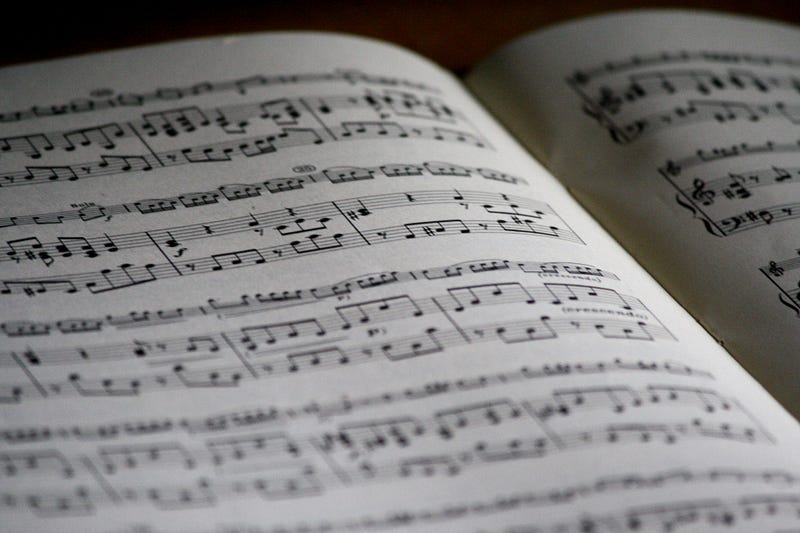
When it comes to music, there are also similar cases of originality “running out,” so to speak.
Consider the idea that Chopin’s famous Fantasie Impromptu had some of its musical motifs based around Beethoven’s Moonlight Sonata, and author Ernst Oster argues that the former was a tribute to the latter.
Moreover, there’s also this interesting phenomenon in called cryptomnesia, a quirk of memory where we remember something unconsciously and believe it to be an original thought.
Cryptomnesia occurs when a forgotten memory returns without it being recognized as such by the subject, who believes it is something new and original.
So, it’s entirely reasonable that you may have heard a song in your childhood and then have had that memory return in your adulthood. All the while, the return of the forgotten memory is mistakenly categorized by the mind as original.
Academia
Academia, universities, and colleges. Home to lectures and an ostensibly endless stream of writing work in the form of essay-based assessments scattered throughout the system. Because of the propensity of students to cheat, these institutions have attempted to developed sophisticated means to confirm originality.
We have the major players TurnItIn, which is like a one-size-fits-all solution to your plagiarism troubles, why other plagiarism checkers like SafeAssign - an app integrated in the Blackboard academic platform - are gaining traction because they focus more exclusively on identifying essays submitted in the past by former students of the institution.
Further, with the rampant credentialism that seems to have worked itself into the American hiring and job-seeking system, people have been more desperate to turn to writing services since they are working jobs and don’t have time to complete essays.
Borrowing notes from a friend and paraphrasing the main ideas is not an uncommon strategy, among other methods, to simply pass. If the incidence of plagiarism shows anything, it’s that original discoveries, ideas, or breakthroughs are simply harder to actualize.
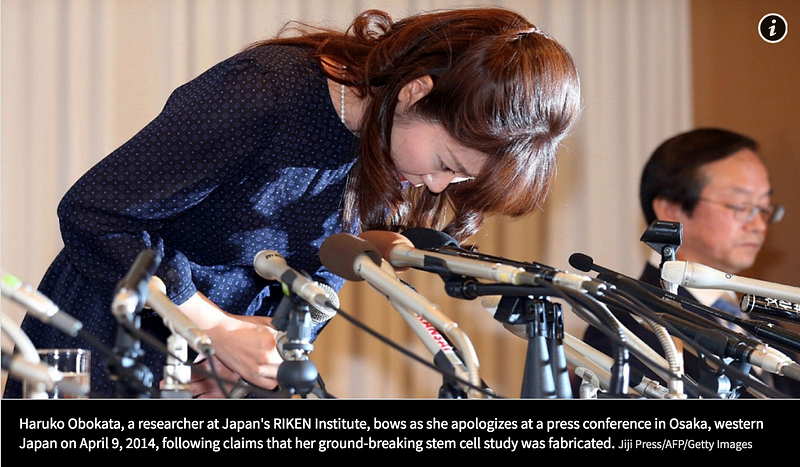
In more professional academic circles, there are even more egregious examples of this desperately shrinking originality. In 2015, Haruka Okobata publishing of her pivotal paper in stem cell research in Nature turned out to have doctored and manipulated results.
The incident was so shameful and caused such controversy that Okobata’s co-author and mentory, Yoshiki Sasai, committed suicide from the guilt of defrauding the scientific community.
The Rundown
In the post-modern age, we’re headed towards a direction where originality is fast disappearing. What’s appeared in its stead is a series of rehashed content that is so vague and contrived that it no longer holds any value whether it concerns writing, academia, music, research, language, and any conceivable human aspect of innovation you can imagine.
Will there be anything to rescue us from the inevitable repetition of ideas? Without originality, can we still innovate and advance?