
The Emotional Burden of a Parent’s Health Crisis
My dad wasn’t the only one paralyzed by his stroke
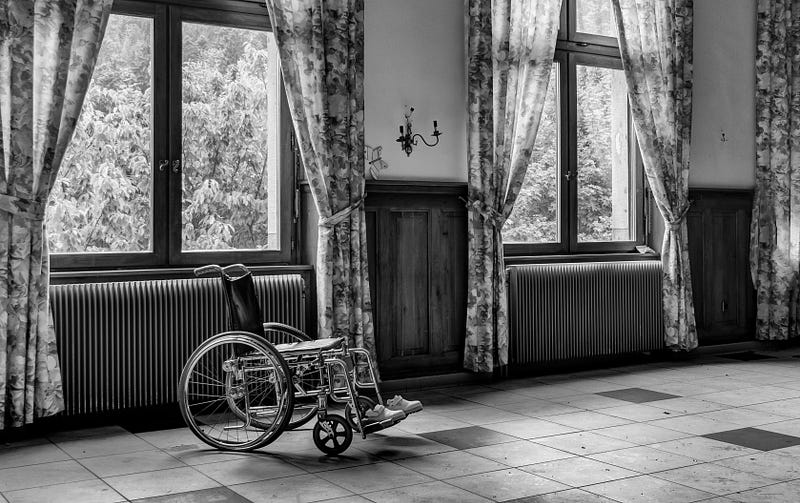
My dad had a stroke in 2010 that left him with serious, debilitating health problems, including partial paralysis. In a move I didn’t see coming (but perhaps should have), he and my mother separated immediately after, finalizing their divorce within a year.
My dad lived alone for a few years after that, first in a series of assisted living facilities, then in his own apartments. I couldn’t sleep at night, tortured by visions of him facing life alone after 35 years of marriage. And in the state he was in, he was struggling to even fold his laundry or make his bed.
Were we supposed to clear out a room in one of our houses and try to create space for his walker, his wheelchair, and his huge stash of medical supplies?
Most of his children lived out of town. Most of us were raising families, except for me. I was preparing to get married (or so I thought, at the time) and so anxious, at 34, to finally have an excuse to focus on my own life.
We “kids” didn’t know what to do. Life was overwhelming. Were we supposed to clear out a room in one of our houses and try to create space for his walker, his wheelchair, and his huge stash of medical supplies? Shouldn’t we?
I was wracked with guilt over this. I felt so much empathy for what he was going through, I could barely breathe.
Then there was my own emotional pain from the divorce and all its collateral damage. I was also dropping into depths of conflict with my partner that would ultimately lead to internal bleeding that I wouldn’t notice at the time, but would eventually destroy our relationship.
In truth, I could barely keep my head above water. Just getting out of bed was a feat.
I visited my dad as often as I could. We had dinners. I helped him endlessly sort through his possessions. He moved from one apartment to another and through it all, I helped him pack and move and unpack and pack and move and unpack. I sometimes brought my nephews for a visit — their presence was like a balm to me during that heavy, sorrowful time.
But no matter what I did, the guilt never lifted. I never felt like I was doing enough. I was the only unmarried, childless person in the family, and I couldn’t shake the feeling that it was somehow my duty, my responsibility, to take care of him all by myself. And that feeling often made me react in odd ways — trying to detach myself from the situation, pulling away, becoming angry.
I never felt like I was doing enough.
In the midst of all that, my dad was so brave. I know he spent endless nights alone in his early apartments, dissecting what had gone wrong in his marriage. He’s a thinker, an analyst. I know he must have been lonely and scared. I know he struggled so hard just to walk from the kitchen to the bathroom on some days.
One winter night, after picking my dog up from surgery, my partner and I went to my dad’s for dinner. It was very cold — in the 30s — and because my dog was still quite sedated, I didn’t want to move him from the car. So I reluctantly left him there, wrapped in a blanket, and rushed through dinner in 20 minutes, eager to get back downstairs and turn on the heater for my sweet little pup.
My dad mentioned that he had to pick up his prescription that night. I was stunned. It was dark outside, he was wheelchair-bound, and the thought of him going outside by himself after dark, in his wheelchair, in freezing weather, crossing one of the busiest and most dangerous intersections in town to get to the pharmacy… I couldn’t handle it. I told him I would go.
I stood there in the waiting area, pressing my hand against my mouth, trying not to cry.
Instead of walking, as I would normally have done, I drove my car the short distance across the street so I could turn on the heater for my dog, and I ran inside. I stood in line for 20 minutes only to discover I had been in the wrong line and had to go through the waiting process all over again in a second line. And then I had to wait another 30 minutes for the prescription to be filled.
I stood there in the waiting area, pressing my hand against my mouth, trying not to cry. My dog was in the car, shivering. My partner was doing the dishes at my dad’s apartment, no doubt frustrated that we hadn’t gone home yet. The night seemed like it would stretch on forever.
And I felt so goddamn guilty that I was frustrated, impatient, and angry. I kept picturing my dad wheeling across that intersection in his puffy jacket, trying to get across all those lanes of the highway before the light changed. I couldn’t handle the vulnerability of it.
I often find that what is perhaps most admirable about my dad is also what frustrates me the most. Some part of me wants him to fight back. Yell at the heavens. Complain about his health. Howl at the idea of having to cross a dangerous intersection in his wheelchair after dark on a freezing cold winter night.
“No,” I want him to say. “I didn’t want things to turn out this way!”
God knows that’s the way I feel. I don’t want him to struggle like this through the end of his life. Ten years of navigating post-stroke symptoms and whatever comes next as he rapidly declines while nearing 80? It’s unthinkable. It’s not fair.
Some part of me wants him to fight back.
And throughout it all, I struggle with guilt, with anger, with frustration. I struggle to determine how much responsibility I should take on. To identify what I can help with, change, affect, and what I cannot.
I’m grateful for little mercies: the fact that he found a community that made him feel loved and accepted, a girlfriend who has become a trusted companion, a safe home, pets, a life that fulfills him. There won’t be any more need to consider a late winter’s night run across dangerous intersections in his wheelchair.
It occurs to me that he has some stuff figured out that I’ve not yet learned. A few years after that night at the pharmacy, my partner left me. The dog died. I lost my home. I railed against it all, the way I had always wished my dad would. I yelled at the heavens. I screamed at the injustice of it all.
And it did no good. Like my dad, I had lost my family and I was never going to get it back.
He just kept going. Like a mountain climber, he scanned the area for a toehold, and when he found one, he’d hike himself up another few inches. Day by day, second by second, two or three inches at a time. In quiet dignity.
That’s all he can do. And maybe that’s all any of us can do.
© Yael Wolfe 2020
On the subject of parents:


