
The Embodied Transition: Sex After Surgery
Desire, sex, and orgasm for trans women after surgery

Testicles affect a lot less than you think (but also a lot more)
Even in barbaric times of war, combatants fought to maim and kill but hesitated to go for another person’s manhood.
The idea was that killing them was war, but if they survived, you couldn’t take their genitals. You weren’t just cutting off their ability to create heirs. You were removing an essential aspect of their identity.

Back in those days, if a person lost their testicles, they couldn’t jump through a thousand hoops to get gender-affirming therapy. They lived on as one of the most devastating losses in character history for Game of Thrones.
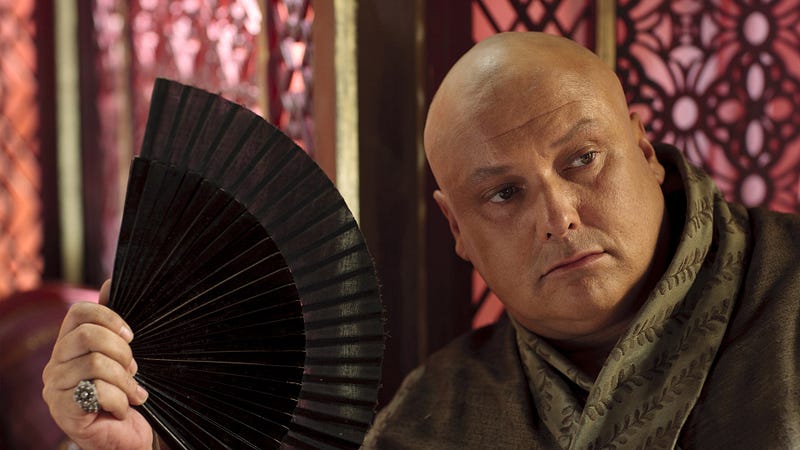
You’ll never watch Game of Thrones the same way again
Game of Thrones on HBO depicted Varys as asexual (Vox), a terrific step in the right direction for increasing Ace rep. What the show didn’t get into, however, was what it feels like for Varys to live in a castrated body.
It would be easy to criticize the show runners as once again getting it wrong. One of the most common myths about castration — spoken literally by the characters on GoT — is that removing a person’s testicles removes a person’s sexuality.
Were they suggesting that castration by default makes a person asexual?
But HBO’s Game of Thrones redeemed itself with Grey Worm, a cisgender male eunuch who pursues a romantic and sexual relationship with Missandei.
While swimming, Grey Worm notices Missandei bathing naked with other women down the stream, and gazes at her intently… It is made apparent that some sexual desire may still reside in him, even with his castration, and Missandei is not averse to his interest, later speculating with Daenerys as to “how much” the masters took from him. — Game of Thrones Wiki
In the season 7 episode “Stormborn,” Grey Worm and Missandei do more than pass shy glances. They finally admit their feelings. They take each other to bed. They f***.

Because in the real world, eunuchs aren’t asexual by default. Castration removes a person’s testicles, not their sexuality.
So…the Unsullied weren’t asexual?
Not necessarily.
Maybe if the Unsullied had zero hormones, but look at those chiseled bodies. Do you think they didn’t find the Westeros equivalent to HRT?
Makes you rethink their day-to-day existence. The Unsullied were mutilated so as to remove the distraction of sexuality, but castration may not have done anything to remove their sexuality. Given the degree of their injury, they may now be physically incapable of satisfying their still-present sexual desire.
But some of those Unsullied — my hope is most of them— are just like Grey Worm. He not only still experiences sexual desire, he’s still capable of satisfying it.
And while Grey Worm is a cisgender man, his love scene with Massandei brings up a great question for those of us in the gender non-conforming community pursuing surgery to remove the family jewels.
What does sex feel like after you lose your testicles?
It’s…different.
Grey Worm and Missandei, undeterred by Grey Worm’s castration, emphasize that sex does not rely solely on male genitalia, and that sexual satisfaction can be achieved in numerous ways. — Business Insider)
It’s not even the same as what you experience on hormone blockers. When you take Spironolactone, the hormone blocker stops your body from responding to testosterone. But the hormone is still flowing in your body. Those testicles are still doing their thing.
Losing those testicles sounds downright awful for people who can’t imagine sex without testicles. Some cis and trans men go so far as to get implants. They really do find it difficult to experience their sexuality without one or two bean bags. Take away the testicles and you disrupt their sexuality.
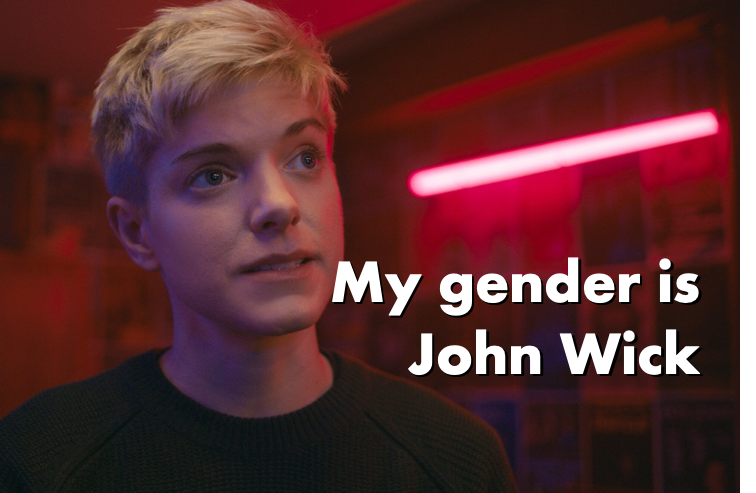
On the other hand, for many women with trans experiences — as well as non-binary people, and those men whose bodies are as fluid as their minds (we love our GNC community) — having and then not having testicles doesn’t disrupt their drive or ability to feel desire, enjoy sex, and have orgasms.
Sex after surgery may, in fact, be the first time you connect with the embodied experience of your gender and desire.
Removing your dysphoria won’t remove your sexuality
This study concluded that while gender-affirming hormone therapy may initially diminish or disrupt an individual’s sex drive, individuals return to a baseline libido over a longer period of time.
“Sexual Desire Changes in Transgender Individuals Upon Initiation of Hormone Treatment: Results From the Longitudinal European Network for the Investigation of Gender Incongruence”
-snip snip-
Conclusion: Gender-affirming HT only induces short-term changes in sexual desire in transgender people. Over a longer period of time, a net increase in dyadic sexual desire in TW receiving feminizing HT and sexual desire scores comparable with baseline in TM receiving virilizing HT, were observed.
Defreyne J, Elaut E, Kreukels B, et al. Sexual Desire Changes in Transgender Individuals Upon Initiation of Hormone Treatment: Results From the Longitudinal European Network for the Investigation of Gender Incongruence Study. J Sex Med 2020;17:812–825.
Similarly after surgery, an individual may at first experience what they perceive to be a drastically lower libido.
But for a person overcoming a traumatizing level of dysphoria, they are finally experiencing not so much a lower libido as a normal libido. At least what’s normal for them.
Removing that constant sense of wrongness has simply allowed their body to calm down. To escape that compulsion to always find escape or relief from that feeling of wrongness. To finally feel desire without the specter of a trauma-based hyper-sexuality.
It was liberating to not feel controlled by it
Even Joe Rogan has talked about the insatiable desire people with testicles so often cannot escape. Indeed, for some trans women, sacrificing their testicles liberates their experience of sex.
Back in 2017, video game streamer Stef Sanjati spoke with Chase Ross, a longtime trans male queer content creator, about the transformative experiences that were only possible for her after surgery.
“It was like a need that I had to control. A need that I had to satisfy.
I didn’t like it. I was controlled by it.
Now I don’t feel controlled by it. And the way my body is stimulated and stuff is completely different.
I’m not sexually passive, but I don’t feel the need to have sex all the time.
If I’m going to be sexual, I need it to be deeply personal. Now I’m basically like an emotional sexual person now.
I was ruled by my penis. I’ve heard that from a lot of trans girls. It was liberating to not feel like controlled by it.”
— Stef Sanjati, from upperCaseChase1 “TRANSGENDER SEXUALITY CHANGE?! (ft. Stef Sanjati)”
Just so, once the people under discussion lose their testicles, their experience of sex expands into more than they thought possible.
When they had testicles, sex was as much (or more) about the simple act of ejaculation. Cleaning out the pipes, as it were. The feelings that came with an orgasm might have felt good beyond relief. Maybe even euphoric.
But the aspect of dysphoria was baked into the experience. For a person who experiences dysphoria from having testicles and/or penis-shaped genitals, the sense of relief they feel from an orgasm is only in part — if at all — sexual.
It is instead mostly — or entirely — about relieving their dysphoria.
Relieve the dysphoria, heal the addiction
Have you seen or been a trans person suffering with what SEEMED like sex addiction — but might have just been your compulsive need for relief from dysphoria?
If you’re a person that doesn’t enjoy those parts of your body sending spikes of desire to remind you they exist, you might experience intense dysphoria and compulsive sexual behavior to find relief.
It may not be a compulsion for the pleasure — it may be a compulsive need for relief from dysphoria. Remove the dysphoria and the compulsive relationship can begin to heal.
Clearing away the fog of dysphoria helps the individual finally take a clear assessment of their body, the terms available to them, and what steps will next help them feel a little more whole.
Pursue the gender-affirming therapy right for you
A lot changes after gender-affirming therapy. But a lot may not change, too. The one change you can count on is clarity.
An asexual person may continue to have an asexual orientation.
A pansexual person may continue to have a pansexual orientation.
A heterosexual person may continue to have a hetero orientation.
You won’t know until you take those steps to cultivate your authentic self.
Gender-affirming therapy can feel scary — as much to the people undergoing it as the people supporting their loved ones.
Despite that fear, HRT, surgery, and other forms of gender-affirming therapy can also be what brings your experience of desire, sex, and orgasm into a healthy form meant for you.
Additional reading
- For the other side about boys who never had testicles, read the eye-opening piece “Let’s Talk About Bottom Growth” by theoaknotes and “I Was a Drag Queen at My Own Wedding” by Logan Silkwood (Prism & Pen)
- Evelyn Carroll, MD, shares her journey as a doctor and mentor who is also publicly trans (Twitter)
- Mae Martin talks ‘Feel Good,’ comedy and John Wick as gender (Xtra Magazine)
- | Asexuality is still hugely misunderstood. TV is slowly changing that. (Vox) | Game Of Thrones Finally Delivered Its Most Feminist Sex Scene (Refinery29) | Why Missandei and Grey Worm’s intimate scene on ‘Game of Thrones’ is a ‘really big deal’ (Business Insider) | Could Grey Worm And Missandei Actually Have Sex On ‘Game Of Thrones’? We Asked The Experts (MTV; be forgiving, MTV wrote this in 2014) |
The end (of the article)
If you like my work and want to support it, buy me a cup of coffee! For more of my content, you can follow me for free (3 articles a month) or for $5 a month (unlimited access).
I’m also an editor for best-selling and award-winning authors, but to hire me, you need to go to Stephenie Edits (offsite).


