
The elephant in the dark — a story for UX design
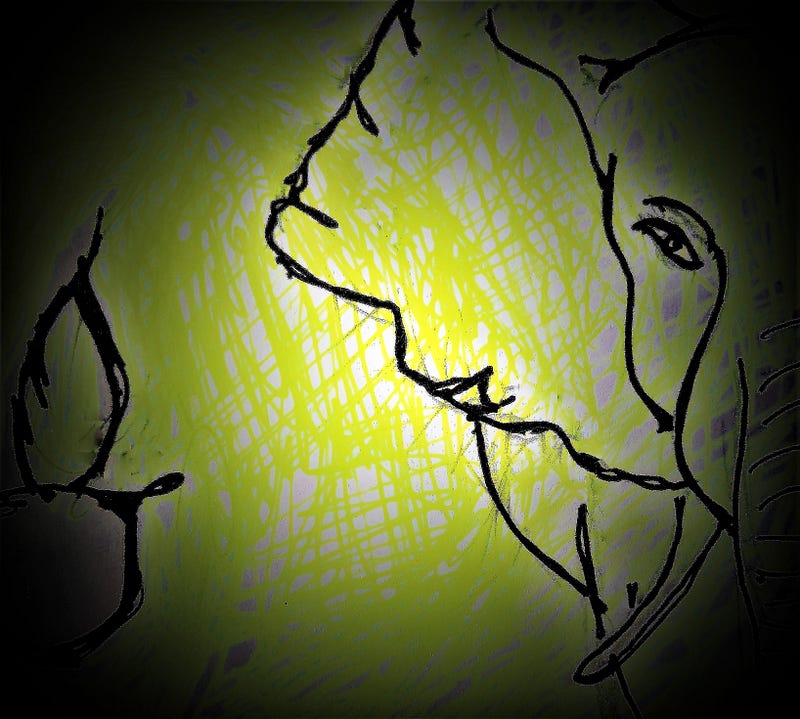
Last month I was in a workshop for designing a medical product and we were defining the minimum size of the product. The workshop was attended by an engineer, a designer, user researcher, project manager, and a marketing manager. Each of us brought our perspectives to the topic, for example, I mentioned that the current size is too big and makes the product unusable, someone mentioned that for a safe electric circuit, we need to have a certain minimum size. Someone else said that a smaller electronic board means higher costs. And so we challenged each other and worked together to create a meaningful user experience. This session reminded me of the ancient Indian story Elephant in the dark. The story appears in many Hindu, Buddhist, Jain texts, and below is how the Sufi Mystic Rumi tells it:
“Some Hindus have an elephant to show. No one here has ever seen an elephant. They bring it at night to a dark room. One by one, we go in the dark and come out saying how we experience the animal.
One of us happens to touch the trunk. A water-pipe kind of creature. Another, the ear. A very strong, always moving back and forth, fan-animal. Another, the leg. I find it still, like a column on a temple. Another touches the curved back. A leathery throne. Another, the cleverest, feels the tusk. A rounded sword made of porcelain. He is proud of his description.
Each of us touches one place and understands the whole that way. The palm and the fingers feeling in the dark are how the senses explore the reality of the elephant. If each of us held a candle there, and if we went in together, we could see it.”
To me, the User Experience is like the Elephant in the dark. Though unlike an elephant, it seems ever-changing to me. A manifestation of the whole when the parts come together; parts such as the design, the user, the system, the services, and the world inside as well as outside of the user. When one of these changes, the manifestation of user experience may change entirely too.
Multi-disciplinary workshops and UX
Then how do we work towards delightful, supportive, meaningful, ethical, respectful, user experiences? May be the parable has an idea here for us:
If each of us held a candle there, and if we went in together, we could see it.
In my experience, multi-disciplinary workshops are a very effective way to facilitate this coming together and shining a light to reveal and build the ‘whole’ of the UX experience. I sort of stumbled on to this way of working and later discovered approaches like Co-creation which are founded on this idea of working together. Here are some examples* of the different types of multi-disciplinary workshops I have conducted and how they helped me and my teams in taking a step towards designing meaningful experiences. Though most of these examples come from healthcare, I believe that they are easily applicable to other domains too.
Example I. Assumption Storms and Group Therapy
I learned about Group therapy/Assumption storms** recently and this helped me tweak my approach for reviewing study plans or briefs and helped bring implicit assumptions to light.
For a recent study, when we were in a work session reviewing the study plan with the stakeholders, I actively questioned the stakeholders on what do they want/think to get from the study and where does the heart of the study lie for them?
While I didn’t quite whip up a storm, this probing revealed a difference in understanding of the scope between the stakeholders and us (the user researchers). The stakeholders (implicitly) wanted the user research to focus on a specific topic in the workflow instead of the conducting research for the general, overall workflow. They had not mentioned it explicitly as they were afraid of biasing us. On the contrary, this discussion helped in clarifying what the product team thought the focus of the design improvements should be. Thus, we expanded our study scope to check if the team’s assumption and the user’s feelings on ‘what is important’ match or not.
Example II. Brainstorming Ideas with Empathy
This was while working on developing a solution to help patients do their exercises regularly. I donot suffer from this order so did not quite know how the patients experience their everyday life and in order to design, we needed to understand this in details.
So, we came together in a group with two patients, a User Researcher, a Designer, and a Domain Expert. After the introductions, each patient shared their story and experience with the disorder. Then the designer shared some design ideas and later we all brainstormed for additional design ideas with the patients. At the end of the workshop, the patients voted on their favorite design ideas along with the reasons for the same.
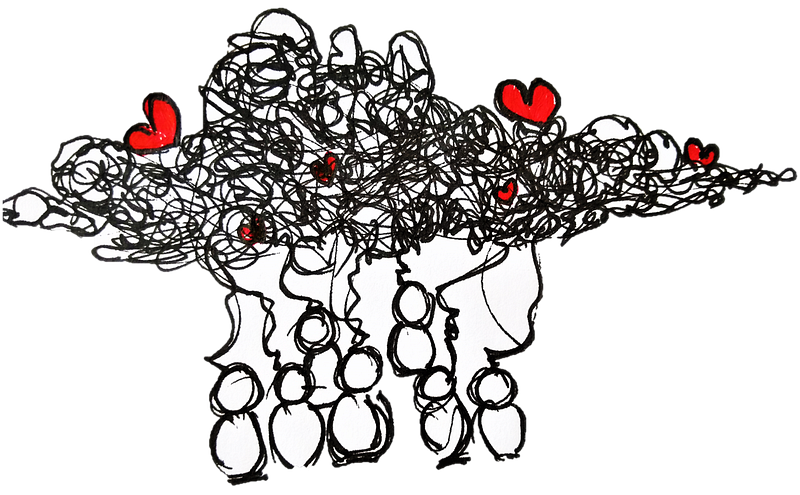
The presence of patients (users) in this workshop brought empathy to the table — which we often talk about but don’t always practice. No one needed to ‘represent’ the user, the users were there, representing themselves! This made the whole design exercise much more grounded in reality and meaning.
Example III. Use scenarios
This is about a workshop that almost did not happen. In my experience, multi-disciplinary workshops for writing scenarios are one of the most effective ways to get the team on one page about what is the world of our users and which parts are we focusing on. I developed an approach called KeyS for writing scenarios with multi-disciplinary teams (with a colleague Jon Pluyter). KeyS helps to identify scenarios beyond the ‘Happy Flow’. However, as humans tend to do, I ignored my own advice.
For one of my projects which deals with diagnosis and monitoring, I thought we didn’t need a workshop as the product seemed simple. And then, over coffee, a colleague mentioned, “The scenario with the multiple patients in one room is interesting” and my response went like, “What multiple patients?”, because no one had mentioned this during our user research and hospital visits. And multiple patients in the same room meant possible errors in identifying patients. So from ‘No workshop’, in a few seconds, I went to “We need a workshop to complete the scenarios!”.
We would probably have discovered this use scenario later during one user study or the other, but timely workshops help reveal such gaps early on — where it makes the most difference.
Example IV. Detailed Design Workshop
I have rarely seen examples of multi-disciplinary teams designing and reviewing the details of an interface together and this is such an example. This was an interface to support professional users in making decisions while repairing a complex system. I joined the project a bit late and the design was already in progress (that never happens to you, I am sure ;)).
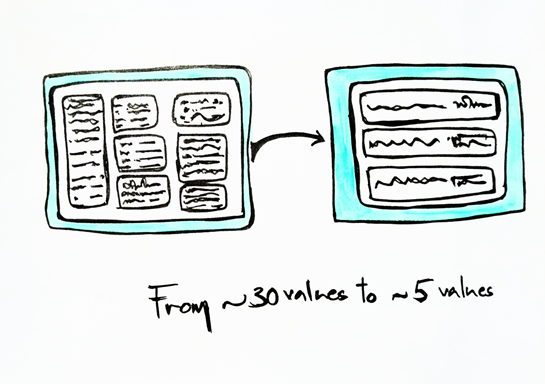
My job was to create Use Scenarios and conduct Task Analysis and lead the User studies. I was working with a lovely team but was sort of getting bored with sitting in a corner writing scenarios. So, at a certain point, I suggested that we (Designer, Usability Engineer, the Domain Expert) start to meet together. We didn’t have a fixed agenda at the start but these sessions ended up being some of the most effective design sessions I have participated in. In these sessions, a complicated UI with around 30 or more values was simplified to around 5 values because together our three disciplines could shape the design around the user goals and the clinical needs.
Example V. Usability Evaluations & Follow-up
Early in my career, I learned that presenting a perfectly carved report followed by applause does not mean that the product would be improved.
It was then that I started including a follow-up workshop with the team after every user research or user testing activity. This is where we as a team (usually designer, user researcher, domain expert, system engineer, software engineer) would go through each finding and decide if an issue is important to solve, and then we would categorize it as Low, Medium or High priority. And in most cases, I see that how good the user experience for a product will be depends on how successful these follow-up workshops are. Here is one of my articles describing an approach for follow-up for user evaluations.
In conclusion,
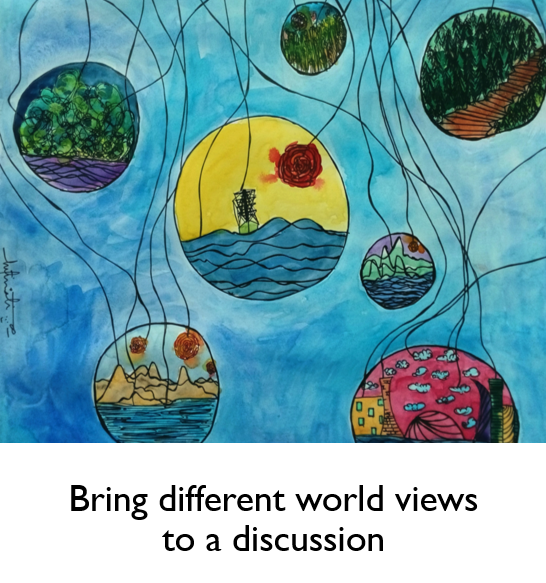
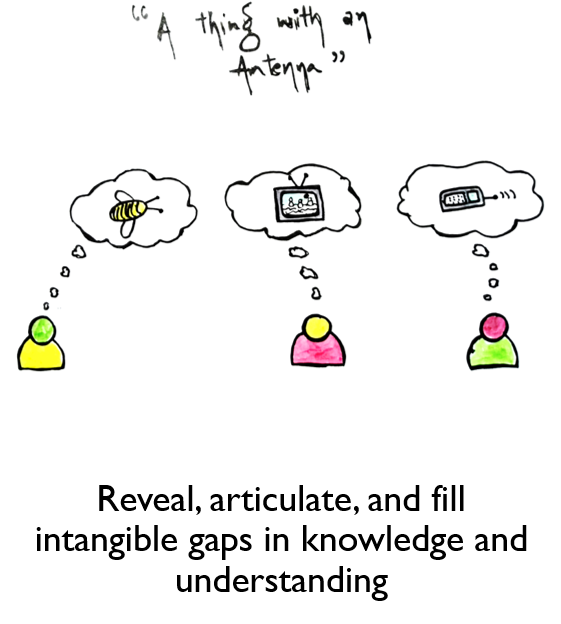
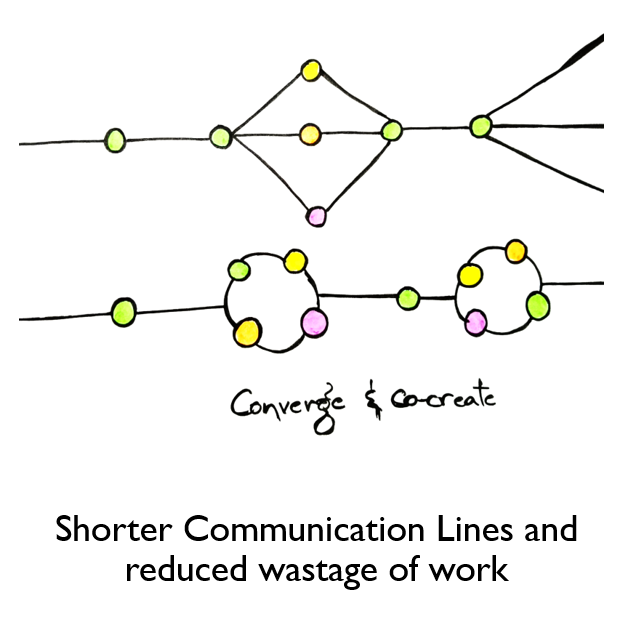
I find multi-disciplinary workshops to be an incredibly simple and valuable approach for designing User Experiences as they help in the following ways:
On the contrary, I think workshops are not good for:
- Fixing dysfunctional teams: Though workshops may help reveal the dysfunction in a team, I have not seen them help fix it. By dysfunction, I mean where two teams are competing with each other for credit, budget, or simply survival.
- Replacing the expertise of a missing role: Even if 10 people come together, they cannot replace the expertise of a specific discipline, so getting the right roles in the workshop is very important.
I wish you the best of workshops to help manifest the elephant of meaningful user experience :) and leave you with this article on holding an effective multi-disciplinary design workshop.
Have you had similar experiences — where you did or did not ‘see the elephant in the dark’?
*I modified some identifying details of the projects for confidentiality reasons. **Group therapy by Julie Norvaisas in the book Interviewing Users and Assumption Storms at UXinsight in a talk by Aryel Cianflone


