
The electric sports car still can be saved
But the first decent one hasn’t arrived yet
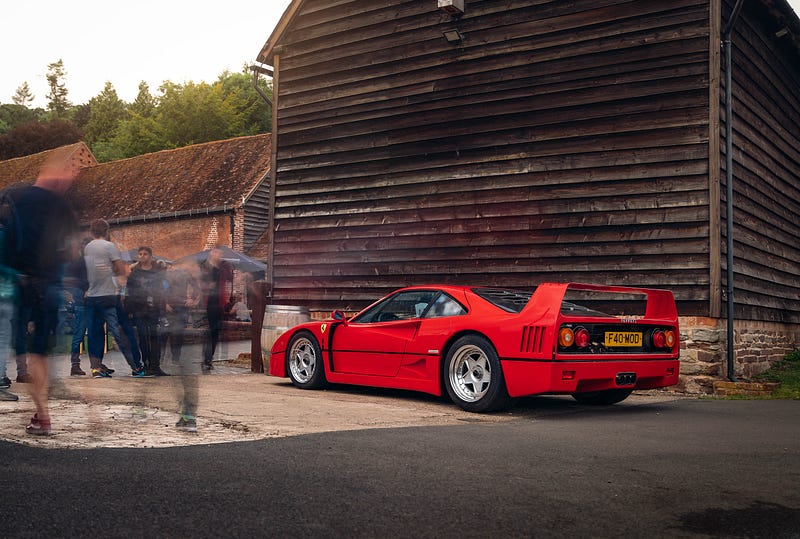
I think I was five years old when I saw a Ferrari F40 for the first time in my life. As all five-year olds, I’m sure I was doing something that seemed terribly important at the time, like drawing on a notebook or running around the house. That I can’t remember; what I can remember is the moment I looked out of the window of our living room and I saw it idling outside, freezing time with its mere presence. Rather than standing there to observe it, my reaction was to run to get my mom and tell her immediately, completely ignorant of the fact that somebody might not share the obvious excitement that was to see the almighty F40. It was gone when I got her to come with me, but the scene will always stay in my memory.
This is one of many things that mark my childhood as a car lover in the making. I learned to read on car magazines (I kid you not). I had posters of Porsches on my wall. I grew up thinking that cars were not a means of transportation, but a fantasy, a supreme toy for grown ups.
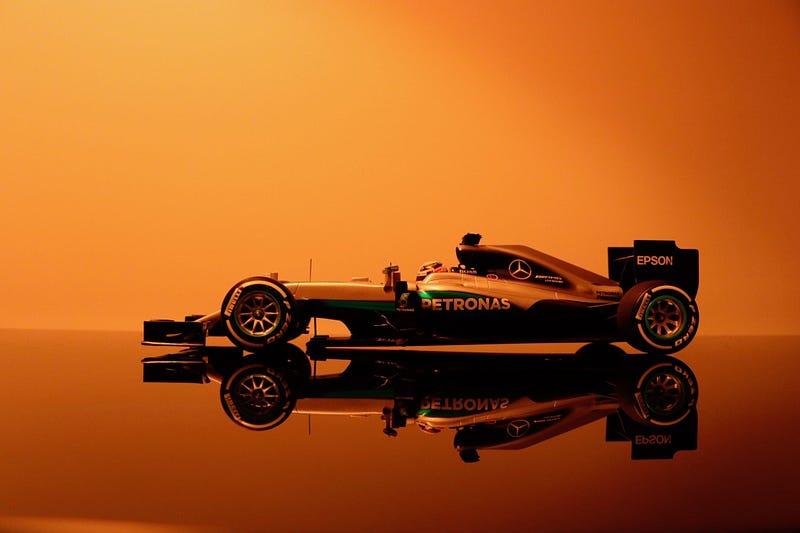
It has always been a disappointment to see Formula 1 cars go down in displacement and cylinder count. After all, it represents the peak of what the automotive engineering can achieve. The spectacularity of a naturally-aspirated V12 engine roaring at 19,000 revolutions per minute just cannot be replicated with the modern, smaller, turbo engines.
Which brings me to the electric motors. When it comes to sound, they are yet another order of magnitude (or two) in terms of impressiveness.
Unfortunately, it seems our good old friend the internal combustion engine is on the way out. It has had a good run, but nobody can argue that once the shortcomings of the electric car have been sorted, the electric motors are going to take its place.
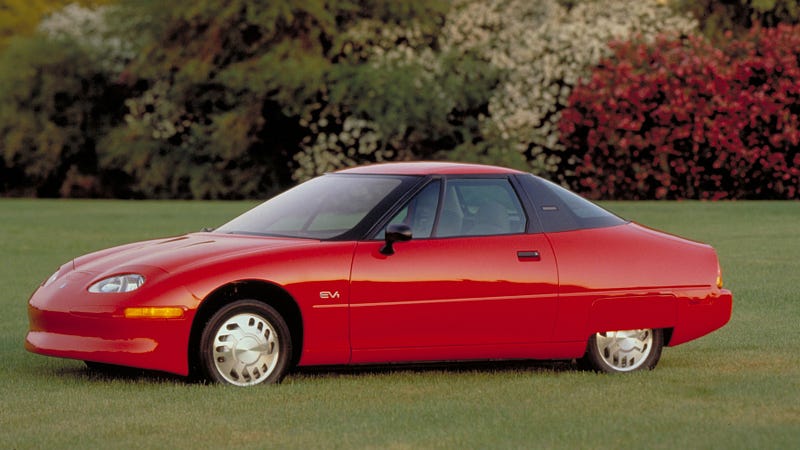
However, another thing I love is engineering. As thoroughly critical as I am, I always manage to see the benefits of technology, and there have been a few times in my life I’ve forced myself to take a step back and look at technological advances in a positive light (you can’t work in tech and be a luddite, after all).
Some of these times have been caused by an epiphany. I had one with the electric motors back when I was an engineering student working on Formula SAE (or Formula Student), which are student-developed, student-built single-seat racecars. My team’s car (of which years later I am still proud) had an engine that found its life originally in a racing quadbike. It was loud, it was fast, it was lightweight. Sitting at a grandstand, we were ecstatic watching one of our teammates drive it.
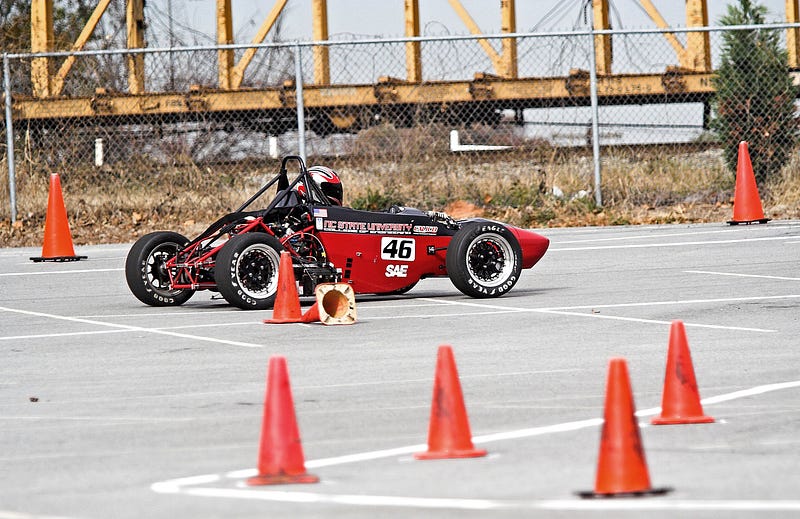

Back then, electric motors in Formula Student were not common, but some teams had made the choice to use them. Oh boy. When this car went around the track it looked like it was turning around itself, dancing by the cones like I wouldn’t have thought possible.
This was the first implementation I had ever seen of torque vectoring. By making the electric motors on one side drive faster than on the other, it was turning with an impossible nimbleness, jumping around the corners like it was the lightest car on the track rather than one of the heaviest.
That’s how my perception shifted in one swift blow. Back then, electric cars were heavy, and the range was terrible. So much so, that the magnificent and weightless race car I had seen had to pace itself in the endurance event to the point of sluggishness, to preserve its battery for the whole race. But I already knew those problems were not going to stay with us forever, and I had just witnessed what would be left once we got rid of those.
In 2022, the lawmakers have their sights set on banning the internal combustion engine. This unfortunate turn of history is partly caused by one realisation: electric cars are no longer an experiment but a product. Electric cars are ready.
The range or the weight are no longer issues that prevent automakers from selling what the majority of the public desires— a smooth, luxurious SUV — . The electric car is finally a decent means of transportation, which makes virtually no noise and can get enough juice in under an hour to drive for more than 200 miles.
And yes, we have electric hypercars, that get around the weight issue by using more power than a WW2 fighter airplane (the Rimac Nevera produces almost literally twice as much horsepower as the Rolls-Royce Merlin that used to power the Spitfire)… and by costing — again, literally — millions. It doesn’t matter what your currency of choice is, prices are not in the thousands anymore.
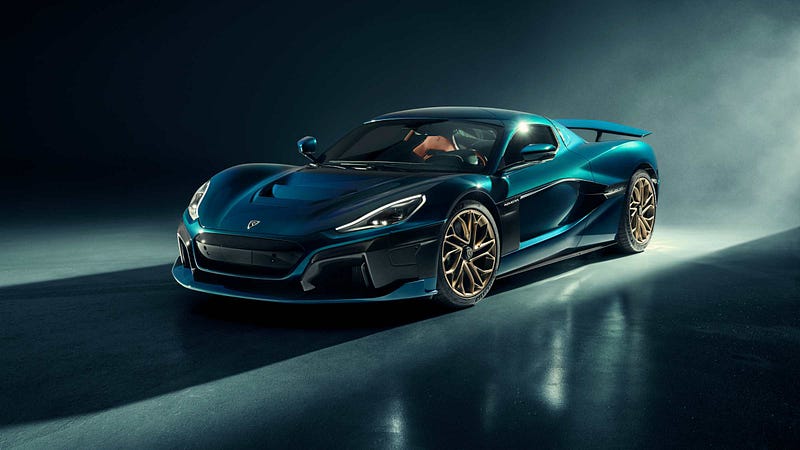
But here is the thing: that is not what constitutes a fun sports car. For years, the Lotus Elise and the Mazda MX-5 have been touted as some of the best sports cars money can buy. Yet if we look at their engines, there is not much to impress. Small, four-cylinder engines give life to these world-acclaimed sports cars. Some opt for bigger, flat-six engines, like the Porsche Cayman. But what makes them a true sports car isn’t that. It’s the driver engagement, the potential for being that ultimate toy we lust for as kids. After all, there are sedans that nobody would consider “sporty” even though they might be a lot faster than an MX-5.
As an electric car, this kind of sports car isn’t on the market yet. But that doesn’t mean that it can’t be.
The electric cars need to improve further, so that we can stop compensating their tank-like weights with tank-like sums of power. They need to keep improving in fun factor, not just enabling the driver to go faster but to have them with a smile. That permanent grin on their face that comes when you’re one with the machine. If you’ve somehow made it here without liking cars: do you really like skiing, downhill cycling, skateboarding, or a similar sport? Then chances are you have experienced what I am talking about.
There is always going to be a market for this type of cars. The niche is obvious: some people are only willing to part with luxury-like amounts of money if they can have luxury-like amounts of fun with their new toy. But fortunately for us, there are still a few car manufacturers that know this.
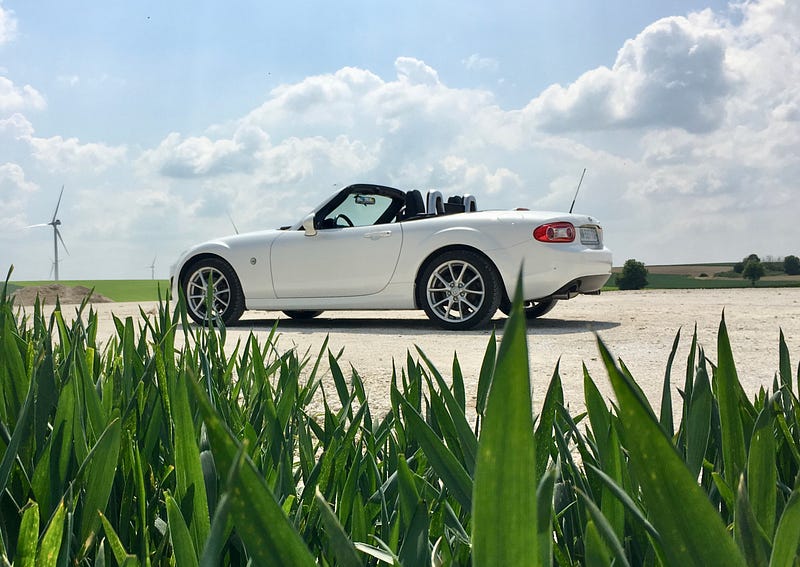
The stubborn Mazda hasn’t dropped the MX-5 despite the current climate. Nissan is giving us a new generation of Z, and Porsche, while still offers sublime non-turbo engines that defy all trends, is sharpening their tools to show us they can also make an electric sports car.
It’s not like they can’t offer us the appeals of the current-day sports car. There are electric cars with a multiple-speed gearbox. Their centre of gravity is inherently low, meaning they can corner flat as go-karts. Acoustic trickery could mean that we get to enjoy a symphony of electric motors working at more than 10,000 rpm, rather than trying to drown them in noise insulation.
And oh, that sweet, sweet torque vectoring.
The electric sports car is not here yet, but there is still hope. It is just a matter of time.