
The eight-year Iran-Iraq war saved China’s military industry
The eight-year Iran-Iraq war devastated the Middle East, drove away the United States, and at the same time saved the Chinese military industry.
From the beginning of 1980 to the end of the war, the total value of China’s weapons and equipment exports to Iraq was US$13 billion, accounting for nearly half of China’s total arms exports in the 1980s.
In addition, China also sold $1 billion in weapons to Iran.
There is a joke circulating on the Internet that people from Iran and Iraq stayed in the same hotel when they came to China to sign a contract.
At that time, the Chinese military factory produced orders from Iraq on odd-numbered days, and produced orders from Iran on even-numbered days. It was very orderly and harmonious.
So, why did Iran and Iran turn to China to purchase so many weapons? Why did China’s military industry almost enter a cold winter at that time?
In September 1980, Iraq secretly mobilized three divisions and more than 1,000 tanks to the border area.
On September 22, Saddam issued an order at dawn to launch a devastating strike against Iranian military targets.
His original intention was to follow the example of Germany in World War II and launch a blitzkrieg in the Middle East.
But unexpectedly, although the Iranian side rushed to fight, it mobilized five divisions of defensive forces at an extremely fast speed.
The two sides fought from Iran to Iraq, and from Iraq to Iran, back and forth.
Although the two sides fought fiercely at that time, their actual military qualities were very average.
On the third day of the war, the Iraqi Air Force received an order to attack the Iranian air force base.
As a result, these Iraqi pilots were obsessed with bombing the runway and turned a blind eye to the fighter jets parked at the airport, which greatly reduced the effectiveness of the air strike.
Iran’s combat qualities are equally unflattering.
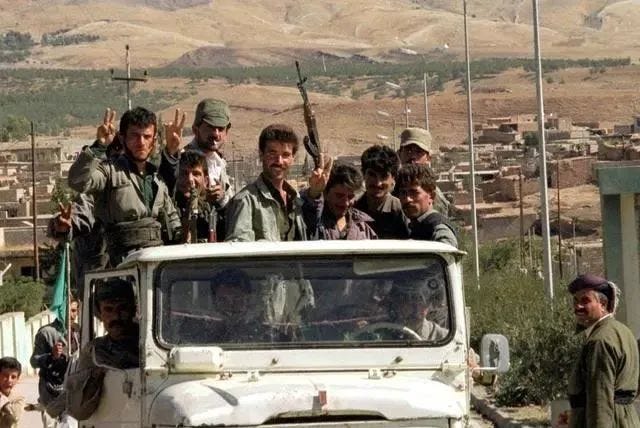
At that time, Iraq was accustomed to laying mine arrays in front of positions.
The Iranian army did not have enough demining personnel, so it asked a group of civilians to shout God is great while rushing towards the mine array and detecting mines with their bodies.
After killing one group, they would replace them with the next. Sometimes a single charge could consume thousands of civilians.
Therefore, the Iran-Iraq war was simply a primitive war.
However, although both warring parties do not understand strategy and tactics, they do understand a basic principle. If you want to do your job well, you must first sharpen your weapons.
Whoever has more advanced weapons will have an easier time gaining an advantage.
Therefore, these two oil giants have spent their wealth to buy arms from developed countries.
The biggest winner among them is of course the United States and the Soviet Union.
During the Iran-Iraq War, the United States and the Soviet Union signed hundreds of billions of dollars in arms orders.
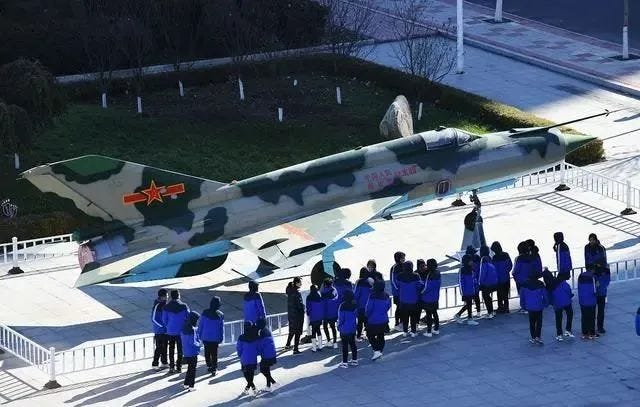
The US military’s M47 tanks, Sidewinder anti-aircraft missiles, and Harpoon ship-to-ship missiles are continuously shipped to the Middle East.
The Soviet Union’s T72 tanks, MiG fighter jets, and SAM series anti-aircraft missiles are also objects of competition between Iran and Iran.
It is worth mentioning that while the United States sells arms to both parties, it also initiates an embargo in the international community, forcing Iran and Iraq to purchase second-hand equipment from countries such as Israel, Jordan, and Egypt.
As the intensity of the war continues to increase, both sides are extremely eager to obtain more cost-effective and better-quality military equipment.
At this time, China, not far away, became an excellent purchasing target.
China in the 1980s was troubled by two things -
1. Although strategically, economic construction has been set as the centerpiece, economic development is struggling due to lack of foreign exchange.
2. After the one-million-dollar disarmament, military factories everywhere are facing the problem of lack of orders.
In order to keep military-industrial enterprises alive, the country put forward the general policy of converting the military into civilians. Many military factories have begun to produce civilian goods. A well-known case is Lanzhou 504 Factory.
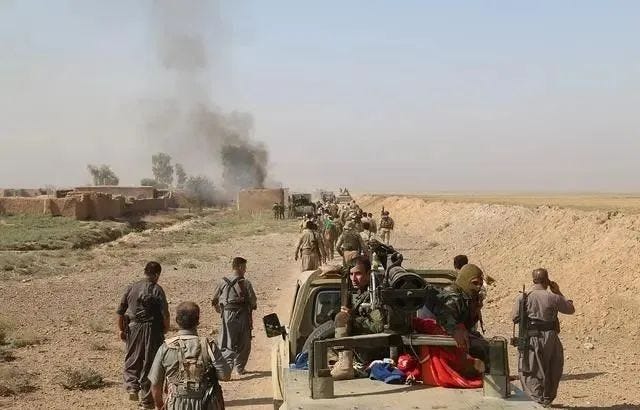
The plant once provided nuclear fuel for China’s first hydrogen bomb, first nuclear submarine, and first nuclear power plant. It is known as the cradle of China’s oil enrichment industry.
However, in the 1980s, Lanzhou 504 Factory’s most famous products were ice cream and soda.
To this day, many Lanzhou people still have the shadow of 504 Ice Cream in their childhood memories.
In addition, Nanjing 720 Factory, which specialized in producing radars, had to produce electric fans in order to survive.
The resulting Bat brand electric fan was of astonishingly good quality and was said to be able to rotate continuously for two years without rest. It even won the first prize in the home appliance category at the 1984 World Expo.
Similar products include Chongqing Jialing motorcycles, Chengfei washing machines, Changan Automobile, etc., which are all classic cases of military-to-civilian conversion.
However, there is also a huge hidden danger in this wave of entrepreneurship.
After all, military industrial enterprises serve national defense. Without military orders, weapons manufacturing technology cannot be passed on and advanced.
If things go on like this, it is likely to lead to the decline of China’s national defense strength.
Therefore, when Iran and Iraq approached China to purchase a large amount of military equipment in 1981, Chinese military industrial enterprises faced a golden opportunity.
At that time, the two countries were at war with each other, and almost all the weapons and equipment provided by China were what they wanted.
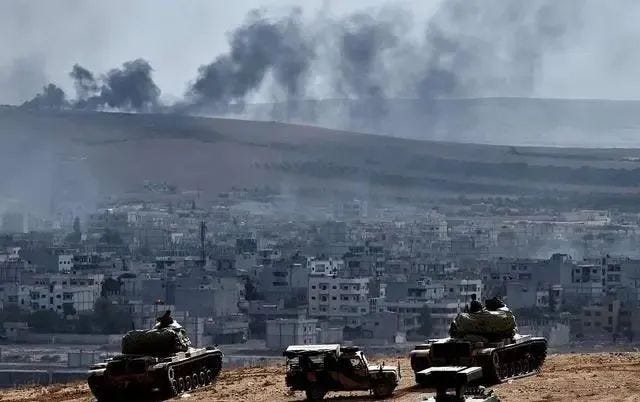
In May 1981, China, Iraq, and several third-party countries jointly signed a US$1.6 billion super order for 2,860 69 series main battle tanks and 286 rescue tractors. The average unit price per unit was $500,000.
How important was this money to China at that time?
In 1980, China’s total foreign exchange reserves were only US$1.296 billion.
This order alone has more than doubled China’s foreign exchange reserves.
A month later, Iraq sent another big order, 80 J-72 improved aircraft, each worth US$3 million, with a total value of US$240 million.
In 1982, Iraq purchased another 3,000 Hongjian-8 anti-tank missiles and 1,000 sets of launchers from China, each priced at US$100,000, for a total price of US$100 million.
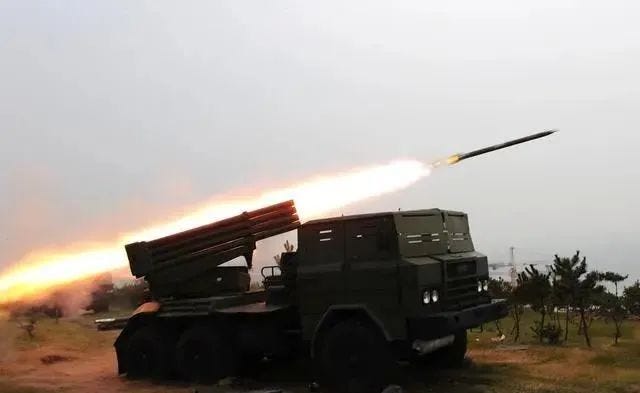
In 1983, the aggressive Iraq purchased 1,000 122mm self-propelled rocket launchers and 3 million rockets at a total price of US$250 million.
These orders not only helped China’s military factories complete the destocking work, but also allowed the dusty military production lines to resume operation at full capacity.
Take the Mongolian 617 Factory as an example. In the 1980s, the factory earned US$1 billion in foreign exchange just by exporting tanks.
In order to complete orders on time, many production lines work in shifts 24 hours a day, and they work in full swing.
After being put into the battlefield, the Chinese weapons, which are of high quality, low price and durable, immediately received unanimous praise from buyers.
A typical example is the domestically produced Type 56 submachine gun. Due to its reliable performance and large quantity, it is called the Chinese AK by both warring parties.
The Type 63 107mm rocket launcher has become the most beautiful weapon on the guerrilla battlefield because it is easy to carry and launch.
In addition to guns and tanks, the most important product between Iran and Iran is Chinese aircraft.
At the beginning of the war, the air forces of both sides used American and Soviet fighters. No matter which type, they were much more advanced than the Chinese aircraft at the time.
However, as the war wore on, both sides gradually discovered that the prices of imported American and Soviet aircraft were too high, and many American-made fighter jets were unable to take off normally due to the lack of spare parts due to the arms embargo.
Therefore, they turned to China to purchase aircraft, the main models of which are the J-7 and H-6D.
In 1986, Iraq signed a US$960 million contract with China to purchase eight H-6D bombers.
These bombers, carrying China’s self-developed C601 air-launched anti-ship missiles, carried out precision strikes on Iranian ports, coasts and ships during air strikes.
Iran also purchased more than 30 J-7B1 and J-7N fighter jets in two installments. However, due to the late delivery, it was unable to have a fair showdown with the Chinese aircraft in Iraq in the air.
Some people say that the Iran-Iraq War in the 1980s brought a golden decade to China’s military industry. This is not true at all.
Iran and Iraq spent a total of US$14 billion to purchase weapons and equipment from China.
Although this figure is insignificant compared with the hundreds of billions of dollars in the United States, it is an outright huge sum of money for China, which has just reformed and opened up.
If we include Saudi Arabia, which spent US$3.5 billion to buy Dongfeng in order to save its life, the total benefit brought to China by the Iran-Iraq war is as high as US$17.5 billion.
This can be said to be the first time since the founding of the People’s Republic of China that I have personally experienced what it means to have a cannon fire and a thousand taels of gold.
In addition to real money, China’s military industry in the 1980s also received a major technological upgrade.
At that time, in order to unite China and resist the Soviet Union, the United States signed a series of military and technical cooperation agreements with China, including helping China produce anti-tank missiles, transforming the electronic systems of fighter jets, etc.
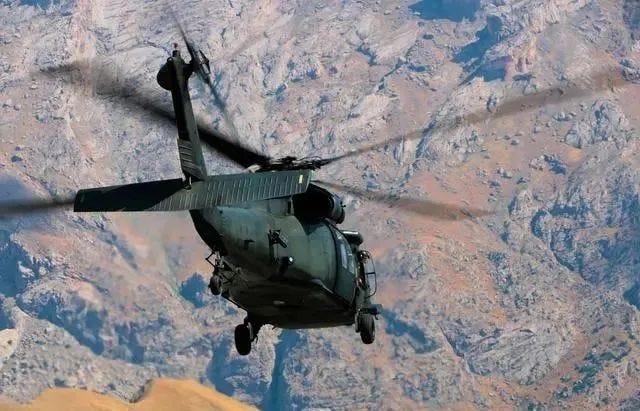
At that time, China even purchased 24 Black Hawk helicopters directly from the United States, which greatly improved the air defense problem in China’s plateau areas.
This period was later called the honeymoon period between China and the United States. Although in the early 1990s, as the international situation changed, the friendly cooperation between the two sides quickly turned into mutual hostility, and many military projects were forced to abort, the impact of this period on China’s military industry Still very profound.
Projects such as China’s 56F core aircraft early warning aircraft and Snapdragon fighter jets have benefited a lot from American technology.
So looking back now at the Iran-Iraq War, you will find that it was a very subtle war.
Iran and Iraq fought for 8 years, killing 1 million people and more than 900 billion US dollars.
The two oil-producing countries that were once extremely rich were reduced to ruins, and it took more than ten years for them to recover slightly.
The United States, the driving force behind the scenes, was full of food and drink, and the Soviet Union also relied on selling weapons to survive for half its life.
The Chinese military industry took a sip of the soup and then spent the money it earned on technology research and development, laying the groundwork for future technological explosions.
Even neighboring countries in the Middle East such as Jordan, Israel, and Egypt have made a fortune by reselling arms.
Former US Secretary of State Kissinger once said this: “We often say that there are no permanent enemies in international politics, and the enemies of our enemies are friends. But in the Middle East, the enemies of our enemies are still enemies.”
In fact, this is not a rational judgment, but a goal he desires to achieve.
As an advocate of the U.S. Greater Middle East Plan, he devoted his life to driving a wedge between Middle Eastern countries, and in 1975 he tried to provoke Iran to attack Iraq.
After the Iran-Iraq war started, he once said that it was a pity that both sides could not lose in this war.
But eight years later, Kissinger discovered that he was wrong. Iran and Iran finally negotiated a peace, and the result of the war was that both sides suffered losses.
The ancients said: Soldiers are an ominous weapon and should be used as a last resort.
I believe that no one knows this sentence more deeply than Iran and Iraq at that time.


