
The Economics of Charity
Iqbal’s economic philosophy was rooted in wealth redistribution
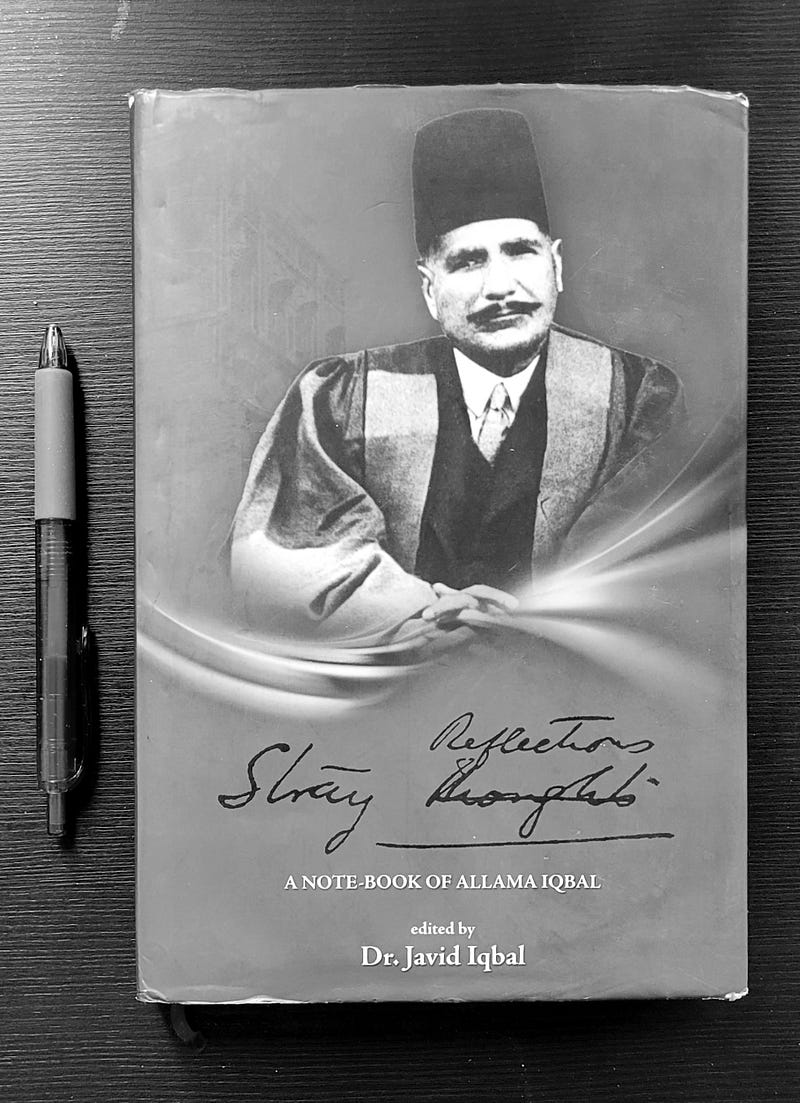
Dr Muhammad Iqbal, famously known as the ‘Poet of the East’ was a Muslim philosopher, author, politician, and poet from the Indo-Pak Subcontinent. His poetry is considered to be among the greatest of the 20th century.
Most of his poetry and writing revolved around issues of religion, philosophy, and science.
Apart from his poetry, he is known for his magnum opus, The Reconstruction of Religious Thought in Islam. A series of lectures, published in 1930.
Iqbal the Economist
However, almost 27 years before its publication, Iqbal wrote Ilm Al-Iqtisad (The Subject of Economics) — although it turned out to be his least acknowledged work.
However, this demonstrates Iqbal's’ concern for economic matters.
Iqbal’s philosophy was holistic, seeking to find meaningful relationships between religion, philosophy, and science. Therefore, it makes perfect sense that economics would be a critical element of it.
In Stray Reflections, The Private Notebook of Muhammad Iqbal, he says:
The charitable man really helps the non-charitable, not the indigent. For what is given to the poor is virtually given away to those who do not give anything to the poor. The non-charitable, therefore, are kept in their state of non-benevolence, and the benevolent man pays for them. This is the economics of charity.
This small quote sums up Iqbal’s economic philosophy aptly. Iqbalian economics is permeated with a sense of purpose. It has a direction and a higher aim.
The goal here is to enhance the economic prosperity of humanity by promoting wealth circulation, thereby reducing the disparity between different socioeconomic groups.
Achieving this goal involves encouraging individuals who are not inclined towards charity to contribute generously.
This goal and the means to reach it are inspired directly by the teachings of Islam’s Holy Book, The Quran, which makes wealth circulation its primary concern in its discussions on economic affairs.
….. so that wealth may not merely circulate among your rich. Ch 59, Verse 7
Juxtaposition of Contemporary and Iqbalian Economics
Contrast Iqbal’s economic philosophy with our present-day economic condition and supporting theories.
Mainstream economic theories consider self-interest as the primary driving force behind human actions, arguing that individuals, organizations, and nations seek to maximize their gains or profits.
These theories not only present self-interest as a reality but also idealize and place it on a pedestal, contributing to the prevalent individualistic narrative in many Western societies today.
Furthermore, Trickle-down economics is often used to justify global wealth inequality. The idea is that by allowing the wealthy to keep more of their income, they will invest more, create more jobs, and ultimately benefit everyone, even those lower down the economic ladder.
Trade liberalization is often touted as the sole path to economic prosperity for developing nations. However, it mainly benefits the political elite and multinational corporations in wealthy countries, effectively stifling any potential for wealth circulation.
Moreover, our interest-based economic systems hinder wealth distribution by concentrating riches in the hands of a small minority.
Recall Adam Smith’s famous words here:
All for ourselves, and nothing for other people, seems, in every age of the world, to have been the vile maxim of the masters of mankind.
Economic growth has become an end in itself. The means to reach that end need only to be efficient and cost-effective, even if they’re morally questionable.
Ethics and economics have been compartmentalized into irreconcilable spheres. Free-market economic theories vehemently oppose any external interference with market forces, whether political or moral, let alone religious, as in the case of Iqbal.
Hyper-consumerism, cut-throat competition, monopolies, deregulated markets, and the unbridled pursuit of self-interest are now defining features of our time.
Summary
Iqbal’s message is as intuitive and simple as it is profound. The ultimate aim here is the well-being of humanity at large.
This is not achieved by individuals purely pursuing their interests and relying on market mechanisms to distribute the benefits but by consciously reforming our economic thought and systems such that they align with that ultimate aim and create means that facilitate the circulation of wealth.