
The Eclipse of our Time: Mysterious Cosmic Correlations with the Israel-Palestine Conflict
Reinforcing the Simulation Theory with Supplementary Evidence
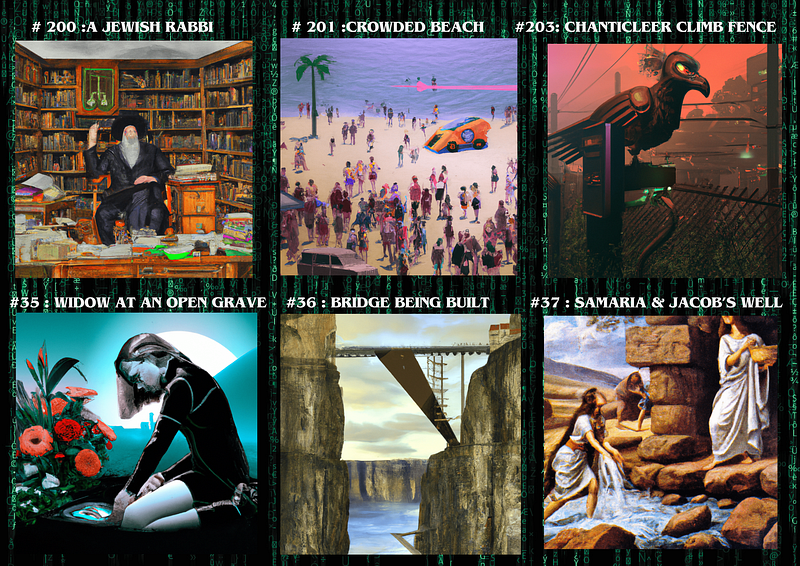
In this article, we’ll explore the intriguing alignment between psychically divined Sabian Symbols associated with the October 2023 eclipses, both solar and lunar, and the tragic events that unfolded on the global stage. Figure 1 presents associated images/symbols linked to the specific lunar degrees for each eclipse: the top row pertains to the solar eclipse, connected to the Solar Saros Series 134, while the bottom row corresponds to the lunar eclipse, associated with the Lunar Saros Series 146. It’s worth noting that these symbols were divined nearly a century ago with origins seemingly intertwined with the ancient cultures of the Middle East.
Marc Edmund Jones believed that an ‘unseen agency,’ an esoteric and external influence, played a role in the creation of the Sabian Symbols. He connected this influence to a ‘Brother,’ a member of the ancient Mesopotamian brotherhood known as the ‘Sabian Brotherhood’. Jones posited that these individuals acted as spiritual conduits behind medium Elsie Wheeler, delivering the messages that ultimately manifested as the Sabian Symbols.
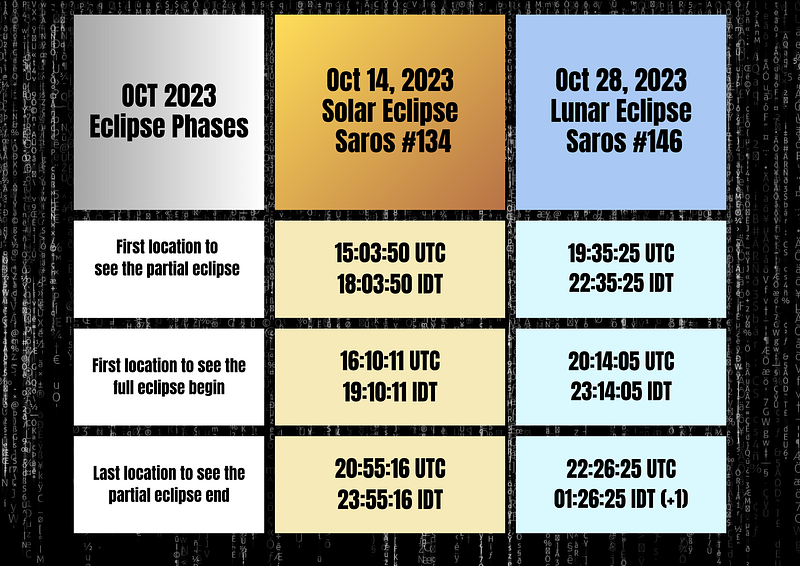
The sequence of symbols for these particular celestial events as evident in Figure 1 is as follows: The solar eclipse on October 14th, 2023 commenced at 15:03 UTC, coinciding with the moon’s Sabian Symbol #200: “A Jewish Rabbi.” As the moon swiftly progresses, the Sabian Symbol for the subsequent stage of the eclipse, or the moment of the full eclipse at 16:10 UTC, transitions to Symbol #201: “A Crowded Beach.” The final phase of the eclipse at 20:55 UTC aligns with the moon’s Sabian Symbol #203: “A chanticleer Climbing Fence.”
Similarly, the lunar eclipse on October 28, 2023 initiates at 19:35 UTC, corresponding to Sabian Symbol #35: “Widow at an Open Grave.” This is succeeded by Sabian Symbol #36: “Bridge Being Built” during the peak of the eclipse at 22:26 UTC. The eclipse concludes at 22:26 UTC, coinciding with the moon’s position on Symbol # 37: “A woman from Samaria/Jacob’s well.”
It’s important to emphasise that the likelihood of encountering these exact symbols is exceedingly rare, as many of these keywords (e.g., “Rabbi,” etc.) appear only once within a pool of 365 symbols.
However, we conducted a rigorous statistical analysis while examining Oppenheimer’s chart and symbols to illustrate the striking absence of randomness and a notable deviation from ‘coincidence’ in these occurrences. For a detailed exploration of the mathematical aspects, please refer here.
Moreover, when you explore your own Sabian Symbols or those of your loved ones, you’ll likely find that your doubts dissipate. I’ve encountered numerous clients who have been astounded by the striking correspondences between their life themes and their distinct Sabian Symbols. Even a cursory examination of the Sabian Symbols of celebrities and historical figures underscores this point. It’s not uncommon for even the most skeptical individuals to begin pondering the significance of these mysterious synchronicities and correlations.
Possible Evidence Supporting the Simulation Theory
This article offers further evidence bolstering our core hypothesis regarding the concept of life existing within a meticulously programmed and scripted reality. As previously explored in detail, our investigation delves into the often overlooked realms of ancient scientific and pseudoscientific disciplines, including astrology, poetry, divination, and symbolism. This includes the in-depth examination of psychically divined Sabian Symbols associated with each zodiac degree to decipher a wide array of phenomena. It’s worth noting that while this body of evidence remains compelling, it faces challenges gaining access to traditional peer-reviewed scientific journals and circles. This is largely due to the prevalent biases and the tendency to dismiss ‘new-age’ fields, both from religious and scientific communities
The concept of reality as an “information-processing system” suggests that our perceived reality could exist within a simulated framework governed by intricate underlying scripts. This notion raises profound questions about the nature of the programming language that shapes this grand construct and the mysterious mechanisms orchestrating this simulated existence. Within this hypothetical matrix, the programming language transcends conventional computing, potentially representing an advanced abstract language in which intelligence itself resides.
The neural network plays a fundamental role, akin to universal software, connecting our consciousness with the matrix and enabling us to influence the simulation through our thoughts. This hypothesis has intriguing implications, providing potential explanations for astrological mechanism, astrological archetypes, and the entire occult phenomena, as it challenges our understanding of reality, offering a multifaceted perspective that combines both correlation and causation-related mechanisms governing this mesmerising world of synchronistic and self-evolving simulation.
Pivotal Role of Eclipses in Deciphering Cosmic Correlations
I. Ancient Views on Eclipses
Eclipses have held cultural, scientific, and historical significance for civilisations throughout history. They have often been interpreted as powerful omens and have influenced mythology, religion, and folklore (13,19, 29). Scientifically, eclipses have played a crucial role in advancing our understanding of celestial mechanics. For example, solar eclipses were historically used to confirm Einstein’s theory of general relativity, and lunar eclipses have been used to study the Earth’s atmosphere (15, 27, 31).
Eclipses have also been interpreted as disruptions in the natural order, frequently associated with ominous signs, especially for the leaders and the monarchs. Many ancient, and not-so-ancient, civilisations resorted to spiritual explanations to make sense of these seemingly inexplicable and sporadic phenomena (13, 23, 26).
In ancient China, it was widely believed that solar eclipses transpired when a celestial dragon launched an assault on and devoured the Sun. Chinese records of eclipses date back over 4,000 years, with at least one succinctly noting, “the Sun has been eaten.” To dispel the dragon and rescue the Sun, people resorted to drumming and creating loud disturbances during an eclipse (28). Ancient Hindu mythology offers a vivid yet unsettling explanation for solar eclipses. According to legend, a greedy demon named Rahu aspired to attain immortality by consuming the nectar of the gods. Disguised as a woman, Rahu attempted to infiltrate a banquet of the gods but was exposed by Vishnu. As punishment, the demon was swiftly decapitated, and it is his severed head, soaring across the sky, that obscures the Sun during an eclipse. Some versions of the story even suggest that Rahu managed to steal a sip of the nectar but was beheaded before it could reach the rest of his body. His immortal head, forever chasing the Sun, occasionally catches and engulfs it, only for the Sun to quickly reemerge since Rahu has no throat (28).
The Inca civilisation held Inti, the all-powerful sun god, in high regard. While Inti was typically perceived as benevolent, solar eclipses were interpreted as manifestations of his anger and displeasure. Following an eclipse, spiritual leaders sought to discern the cause of his wrath and determine the appropriate sacrifices to appease him. Although the Inca seldom resorted to human sacrifice, it is believed that certain eclipses were deemed grave enough to warrant such actions. Fasting was also a common practice, and the emperor often withdrew from public duties during and after an eclipse. Among Native Americans, some tribes attributed the cause of eclipses to a mischievous black squirrel nibbling on the Sun. Similar to the Chinese dragon, the squirrel is believed to be frightened away by the clamour and shouts of human witnesses during an eclipse (28).
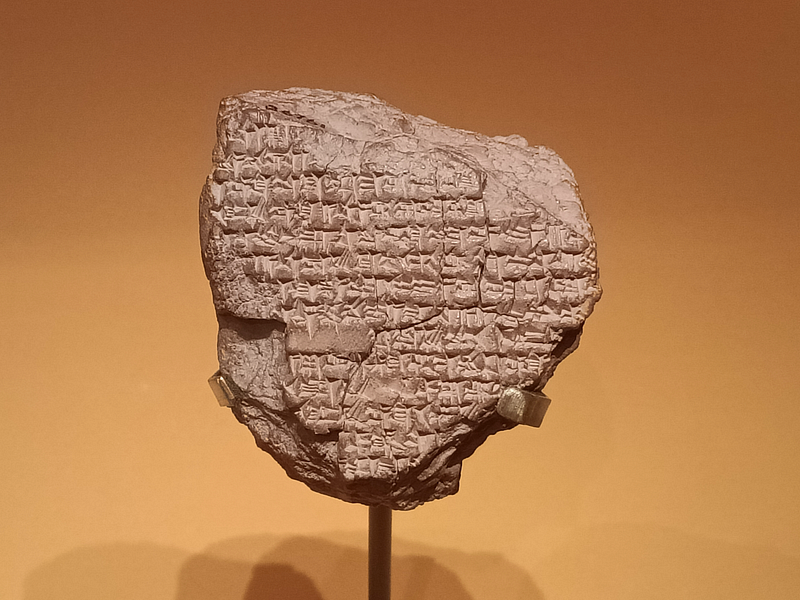
However, in the realm of eclipse research, the Babylonians undeniably claim the top honours. For centuries, Babylonian astronomers meticulously documented lunar and solar eclipses, earning them the title of early pioneers in the fields of astronomy and eclipse prediction. While only a fraction of their original records has survived the test of time (Figures 3 &4), these ancient scholars managed to preserve observations of nearly a hundred distinct eclipses (13, 19, 21, 26, 29, 30).
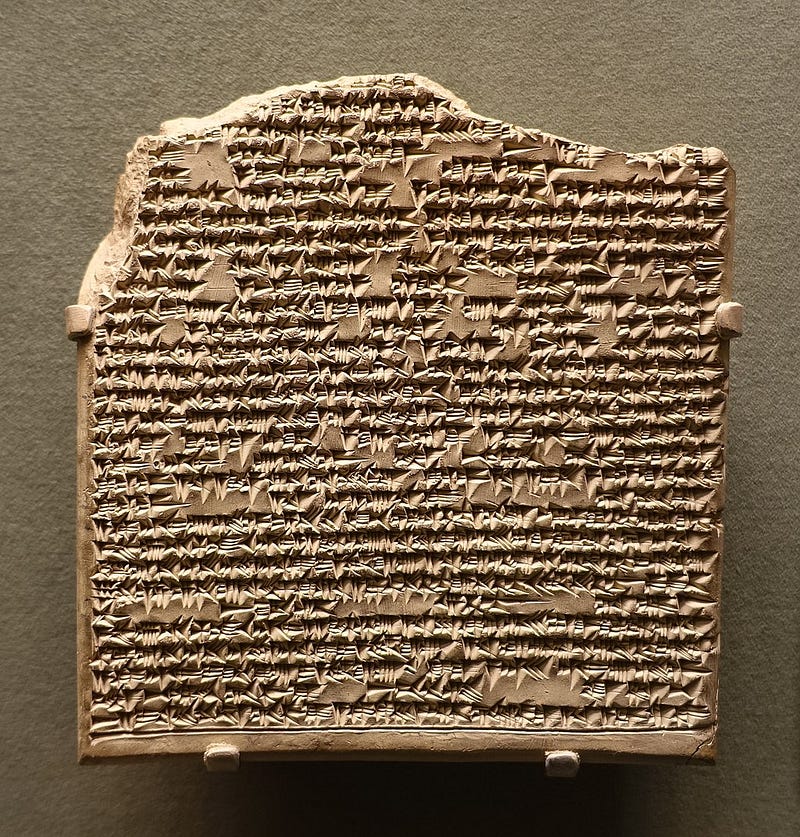
The intriguing question arises: how did people living millennia ago, who hadn’t even discovered iron, manage to predict solar eclipses that remain accurate to this day? Remarkably, the Babylonians from 4,000 years ago possessed the capability to foretell the timing of a solar eclipse much like the one we experienced in October 2023. Without the aid of modern computers, they relied on time-tested methods: the collection and preservation of records spanning generations, astute pattern recognition, and mathematical calculations. Cuneiform tablets discovered in Babylonia and Uruk reveal their adept use of advanced geometric techniques — knowledge that had been previously attributed to 14th-century Europe. These tablets clearly show these ancient people meticulously mapped the stars, recorded celestial events, and tracked the movements of visible planets, including both solar and lunar eclipses (13, 19, 21, 26, 29, 30). These valuable observations were painstakingly etched into clay tablets, exemplified in Figures 3 &4.
II. Astronomy of Eclipse Phenomena
a. What is an Eclipse?
The word “eclipse,” finds its roots in the ancient Greek noun ἔκλειψις (ékleipsis), signifying concepts such as ‘the abandonment,’ ‘the downfall,’ or ‘the darkening of a heavenly body’, further reflecting the profound significance attributed to these celestial events by the ancients. Around 1300 AD, the term found its way into the English language through Old French and Latin.
Much like their counterparts in other ancient cultures, the ancient Greeks held the belief that eclipses were ominous signs, often perceived as a manifestation of divine anger and ‘Gods’ displeasure with humanity. To them, the Sun’s temporary disappearance symbolised the abandonment of Earth, foretelling a period of untold suffering and misfortune. Eclipses were thought to exert a profound influence, not just on individuals, but especially on rulers, kings, and entire nations, with their effects often lasting for months and leaving lasting impacts on the course of history (19, 21, 23, 24, 26).
The word ‘eclipse,’ therefore, encompasses its ancient origins that link it to the concept of abandonment and the celestial phenomenon that so deeply concerned ancient cultures. Solar and lunar eclipses occur several times each year on Earth, but they are not evenly distributed around the globe. The frequency of eclipses is affected by the orbital mechanics of the Earth, Moon, and Sun. During a solar eclipse, the Moon covers part or all of the Sun, creating a mesmerising celestial event (15, 31).
Solar eclipses occur during the new moon phase, when the Moon passes between the Earth and the Sun, temporarily blocking out the Sun’s light and casting a shadow on Earth. Despite a new moon occurring approximately every 29.5 days, solar eclipses are less frequent. This is due to the misalignment between the Earth’s orbit around the Sun and the Moon’s orbit around the Earth, which deviates by about 5 degrees. As a result, a solar eclipse can only take place when a new moon coincides with the precise synchronisation of the Earth’s and Moon’s orbits, which occurs for just 69 days each year. In other words, there are two specific points where the Moon’s orbital plane intersects with Earth’s solar orbit, known as the nodes. A solar eclipse can only occur when the Moon is in proximity to one of these nodes, causing its shadow to fall on Earth. If the new Moon is too distant from either node, the lunar shadow misses Earth, passing either above or below our planet. This makes eclipses rather rare compared to other moon phases (15, 31, 23–25).
In essence, there are a minimum of two solar eclipses each year, and this number can potentially rise to five. Among these eclipses, achieving a total solar eclipse is even more rare as it necessitates even closer proximity to a node (within approximately 10.9°), allowing the Moon’s central shadow, or umbra, to cross Earth’s surface. In other words, total solar eclipses, where the Moon completely covers the Sun, are relatively rare events for any given location. They occur roughly once every 18 months somewhere on Earth, but a specific location might experience a total solar eclipse only once every few decades. In contrast, a lunar eclipse takes place when the Earth comes between the Sun and the Moon, causing the Earth’s shadow to fall on the Moon (15, 14, 31, 23–25).
b. What are Saros Cycles?
Predictive astrology, in the context of eclipses, typically considers a mosaic of outcomes that can exhibit remarkable diversity, seemingly transitioning from one eclipse event to another. Traditionally, astrologers have delved into the intricacies of specific eclipse charts. Yet, a more profound understanding can be attained by taking a step back and exploring the ‘geometrical underpinnings’ of eclipse cycles, not in isolation but within the broader context of life’s cyclic fabric (30). What becomes evident is that each individual eclipse, it turns out, is elaborately woven into a ‘grander pattern’, as part of a distinct family, each possessing its own unique characteristics (Figure 5).
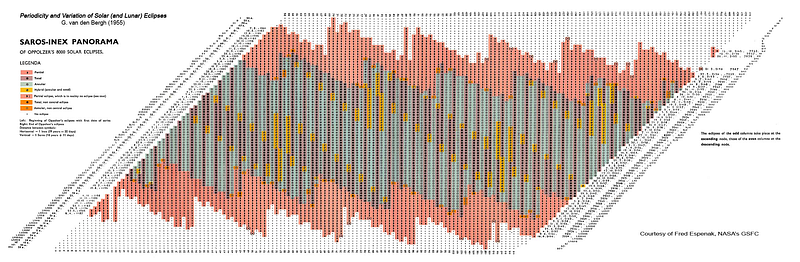
At the heart of this realisation lies the ‘geometry of Saros cycles’. The Babylonians and Chaldeans pursued this path, and by 747 BCE, they possessed the ability to predict lunar and solar eclipses with remarkable precision. In fact, by the 4th century BCE, they discerned that eclipses transpired in organised sequences known as “Series.” These Series were subsequently labeled “Saros Series” or “Cycles” by the Greek lexicographer Suidas in the 10th century CE, with “saros” connoting repetition or the act of being repeated. Each Saros Series produce a solar eclipse every 18 years, with a margin of 9 to 11 days. Each Saros Series has a precise birth time and then runs for approximately 1300 years (14, 30).
Remarkably, any two eclipses separated by one Saros cycle share very similar geometries (14). These familial cycles, also initially uncovered by the Babylonians & Chaldeans in the last several centuries BC, encompass distinct phases of ‘inception’, ‘culmination’, and ‘conclusion’ (29,30). Computing Saros cycles were already enabled in the ancient astrological computer or ‘Antikythera Mechanism’, an ancient device that is believed to date back to around 100 BC (Figure 6). It is thought that the ancient Greeks used this device to predict astronomical positions, including eclipses and numerous other things. The device is consisted of a complex system of gears and dials and is sometimes referred to as the world’s first analog computer.
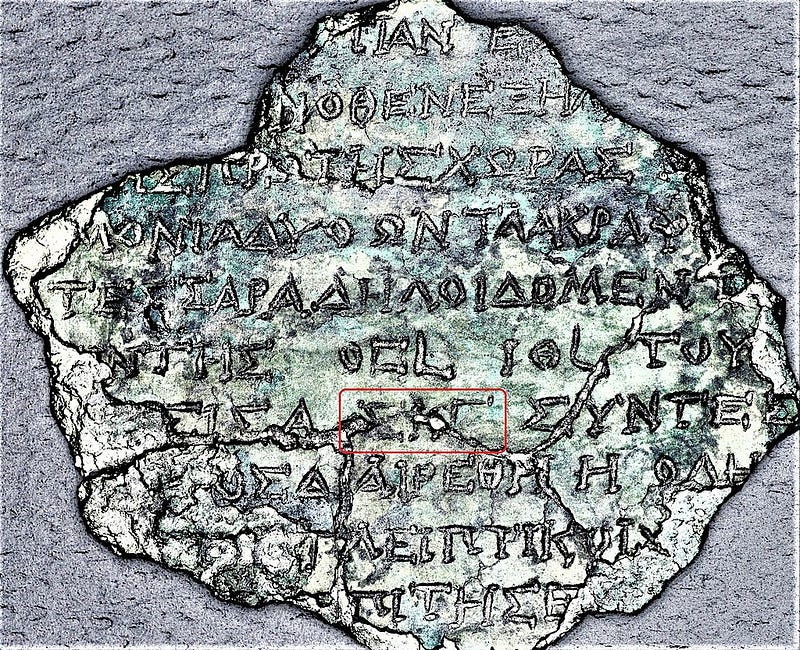
Fascinatingly, since a single Saros cycle can encompass well over a millennium, making the examination of individual eclipses akin to studying the growth of a mighty ‘hardwood tree’. Astrologer Bernadette Brady initially employed the tree analogy to illustrate these series (30). When observing within a limited timeframe, certain eclipse events may seem disjointed and erratic in the tree’s life story. However, with an extended viewpoint spanning a millennium, what appears as random events can gradually evolve into a systematic and orderly pattern, unfolding across the centuries. Alternatively, a more efficient approach involves bypassing the extended wait and immersing ourselves in an exploration of the tree’s intrinsic nature, its species, and its unique characteristics (30).
Due to the ellipticity of the orbits of Earth and the Moon, the exact duration and number of eclipses in a complete Saros is not constant (14). A series may last 1226 to 1550 years and is comprised of 69 to 87 eclipses, of which about 40 to 60 are central eclipses (i.e., total, hybrid or annular). Figure 5 illustrates the different types of eclipses, and it’s noteworthy that ‘total’ eclipses make up a smaller portion, relatively speaking (14).
Each Solar Saros series commences as a modest partial eclipse, manifesting either at the North or South Pole. As the timeline unfolds within a specific Saros series, each subsequent eclipse within that family draws nearer to the nodal axis, whether it be the north or south node. This gradual convergence results in a diminishing gap between the eclipse and the axis, a process that takes place over centuries. Remarkably, as this inexorable narrowing of the orbital separation transpires across the span of centuries, the eclipses within a particular Saros series undergo a remarkable transformation. They evolve from being partial eclipses to becoming total eclipses when they approach within a proximity of 9° to 11° of the Nodal axis (14, 30).
After roughly 650 years, the eclipses of the series reach a momentous juncture where they align precisely with the nodal axis, and subsequently, they embark on a journey away from the nodal axis. Over time, they recede from this pivotal alignment until they once again revert to partial eclipses, positioned approximately 9° to 11° behind the axis (14, 30).
At any given time, there are typically around 42 active Saros series performing on the celestial stage, with half of them traversing from the North Pole to the South Pole and the other half undertaking the exact opposite journey. Picture these Saros series as rhythmic waves, gently cascading over the globe. Within the realm of Saros cycles, we discern the presence of North Saros Series and South Saros Series, each of them presenting a mesmerising cosmic journey spanning a number of eclipses as they gradually traverse from one polar extremity to the other (14, 30).
This might seem complex at first glance, but in reality, these celestial waves adhere to a well-defined geometrical and predictable pattern. Within the course of a single year, we witness two of these distinct eclipse seasons.
c. Utility of Eclipses & Saros Cycles in Astrological Predictions
Throughout history, a multitude of prominent ancient rulers and leaders, including figures like Alexander the Great, Julius Caesar, Cleopatra, Roman Emperors (such as Nero), Chinese emperors, Persian kings, Islamic Caliphs, Indian rulers, as well as various European royals and monarchs like Queen Elizabeth I and King Louis XIV, turned to astrologers and practitioners of divination for guidance. They often relied on astrology to make decisions regarding military campaigns, governance, and personal matters. The practice of seeking counsel from astrologers was widely embraced, regarded as a valuable means to gain foresight into the future and to comprehend cosmic influences on their rule. Figure 7 is an excellent example of eclipse-related publication by a 16th-century professor of Astronomy, catering to diverse clients (16–17, 20, 22, 26).
It is rumoured that Queen Elizabeth I chose not to marry, solely based on advice from her astrologer and advisor, John Dee. Personally, when examining Elizabeth I’s birth chart, or as I refer to, her “Cosmic QR Code,” one can discern why this advice, if indeed true, was astute and may have positively altered the course of the British monarchy, potentially safeguarding its future and improving its trajectory.
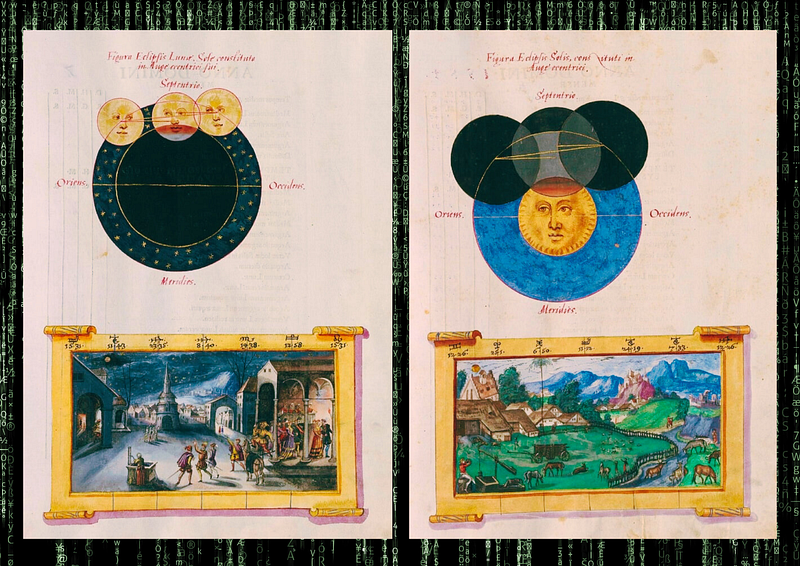
Comprehending the rhythmic ebb and flow of the diverse Saros Cycles, offers astrologers a powerful tool for deciphering the larger cosmic narrative and its impact on human life. These distinctive patterns and signatures grant astrologers profound lens through which to discern the complex patterns and influences of these Saros cycles on our world and the lives of individuals.
By retracing the path of eclipses within a specific saros series, it is possible to pinpoint the inaugural eclipse of the series, thereby determining its precise historical occurrence. The initial eclipse of any given Saros cycle effectively serves as a “birth chart” for the entire series, establishing the fundamental theme that will shape the character of every subsequent eclipse within the series. Once that foundational eclipse takes place, the subsequent occurrences over the course of more than a millennium, potentially follow a predetermined geometric pattern, creating a harmonious and predictable sequence.
There is compelling evidence to support the intriguing notion that the evolution of human thought and pivotal historical events within specific fields are intimately connected to individual Saros Series. For instance, astrologer and researcher Bernadette Brady provides a few such examples (30). She has researched the significant years when revolutionary ideas and breakthroughs reshaped our world in the context of eclipse patterns.
She notes that in 1452, Johannes Gutenberg invented the printing press, which ushered in a new era of communication; in 1543, Nicolaus Copernicus published his groundbreaking heliocentric theory; in 1687, Sir Isaac Newton presented his Laws of Physics; and in 1905, Albert Einstein introduced his Theory of Relativity. Astonishingly, all these transformative years coincided with the activity of ‘Saros Series 14’. It’s striking to observe how these years, linked astrologically and astronomically to a single Saros Series, share a common historical theme of world-altering publications. In another example, in the context of English history, ‘Saros Series 6’ appears to intersect with key moments of expansion and significance relevant to the British history and monarchy (30)
III. Historical & Astrological Analysis of October 2023 Eclipse Season
a. Unlocking Symbolic Significance via Sabian Symbols
To facilitate this comprehensive analysis, we generated a total of Nine charts and symbols for the following events:
i- Phase 1, 2, 3 of Oct 14th Solar Eclipse
ii- Phase 1, 2 , 3 of Oct 28th Lunar Eclipse
iv. Chart of Israel’s Creation
v. Chart of Current Israel’s Leader
Given the sheer volume of symbols, it is impractical to include and discuss them all within the confines of this article. We encourage our readers to explore these symbols independently. Figures 8 & 9 below showcase screenshots of these symbols for all the eclipse charts. In your leisure time, please explore these charts and their associated symbols. You can find the symbol’s details and divined texts behind each Sabian image/symbol displayed above when you click on them.
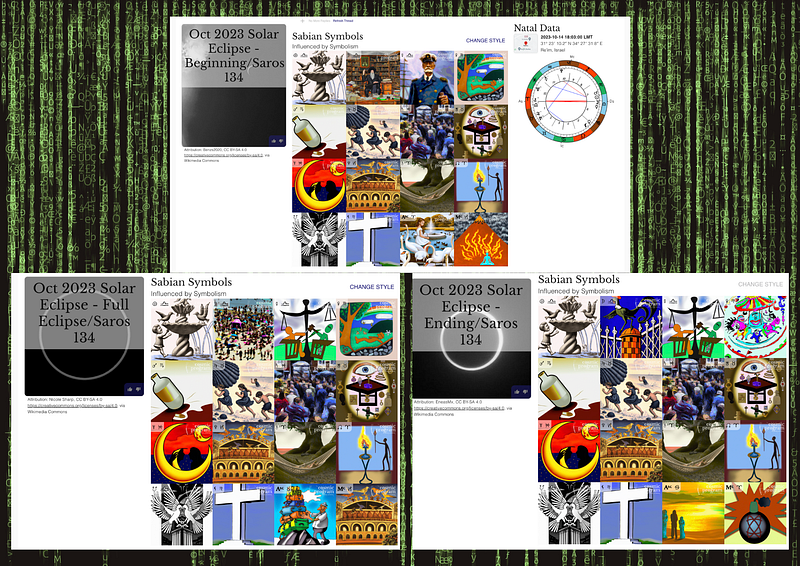
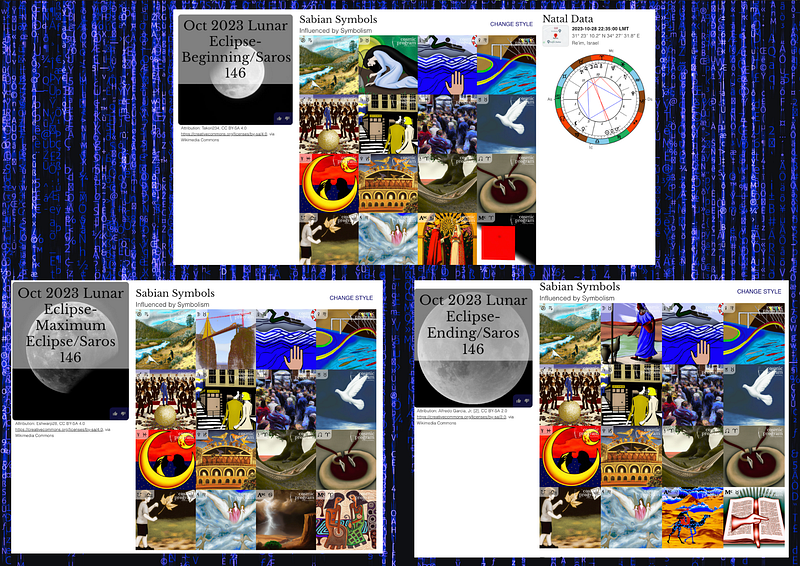
When delving into the analysis, it’s worth noting that the Sabian Symbol associated with the Moon at the outset of the eclipse season on October 14th was Symbol #200, “A Jewish Rabbi” (Figure 1). Remarkably, as emphasised earlier, this reference to Judaism stands alone among a total of 365 symbols corresponding to all degrees of the zodiac. Furthermore, considering that the Moon traverses approximately 13.5 degrees each day, it becomes evident that on the 24-hour timespan of October 14th, the Moon could have positioned itself among any of the other 13 or 14 symbols surrounding Sabian 200 within the zodiac sign of Libra, had the eclipse event occurred at a different time that day. Such occurrences beg the question of whether repeatedly dismissing these synchronicities as mere “coincidence” or “random” aligns with the mindset of rigorous scientific inquiry.
In the realm of omens, symbolism, oracle consultation, and diverse divination practices, the significance of drawing connections and finding parallels is at the very heart of these traditions. It forms the core of such practice, where the occurrence or themes of one event is linked to the likelihood or certainty of another. This concept is rooted in the ancient Hermetic principle of “as above, so below,” where the macrocosm is reflected in the microcosm, and vice versa. Across numerous ancient texts in nearly every culture, these symbols are explored, along with methods for their interpretation.
As secular scientists, we have come to appreciate the substantial value inherent in these methods and age-old beliefs. However, this value is not attributed to divine communication from Gods or Fairies. At Cosmic Program, we contend that their merit lies in the realm of quantum phenomena, simulation theory, and a holistic application of the scientific method. Scientifically, dismissing new age concepts, old wives’ tales and omens is not the approach we advocate. Instead, we should regard them as decoding and decrypting actions — whether accurate or not — generated by the human brain or the quantum computer within our own bodies, linking us to the complex web of scripted existence. Harnessing this ‘quantum computer’ can indeed aid in accessing, decoding, and deciphering relatively accurate knowledge of forthcoming narratives and, consequently, future events or themes. This knowledge, in turn, empowers us to prepare for what lies ahead, for being forewarned is always being forearmed.
Continuing the analysis, Figure 1 presents all the six symbols corresponding to the ‘six phases of the moon’ during the significant eclipse seasons of the past month. Consider a scenario in which an individual, isolated from external media, is presented with these images (Figures 1, 8, 9) for interpretation. To such a person, the initial chart, which essentially marks the beginning of the eclipse season, may appear to place an emphasis on ‘children at play’ (Figure 10). Additionally, they might notice elements related to ‘Abrahamic religions’, particularly Christianity (as symbolised by the cross) and Judaism (with the reference to a rabbi), along with allusions to the Moon’s significance in Islam. The symbols also touch upon themes such as caged birds, a jewellery shop, numerous references to crowds or individuals in a state of ‘cluelessness’ (it’s noteworthy that the Moon’s degree during the peak phase of the solar eclipse coincides with the ‘crowded beach’ symbol). Notably, the Supernova concert was held in the desert near southern ‘beaches’, marking the inaugural Israeli iteration of Brazil’s famed ‘beach concerts’ under the banner of “Universo Paralello” or “Parallel Universe.” I find the synchronicity here astounding.
Furthermore, we see symbolic associations with ‘arrests and war’ (symbolised by bombing), and a visual depiction of an eagle and a dove engaged in conflict. There are indications of panic in the image of a ‘broken bottle’ and an ‘empty hammock’, along with a reference to migration or relocation involving the burden of ‘heavy luggage’.
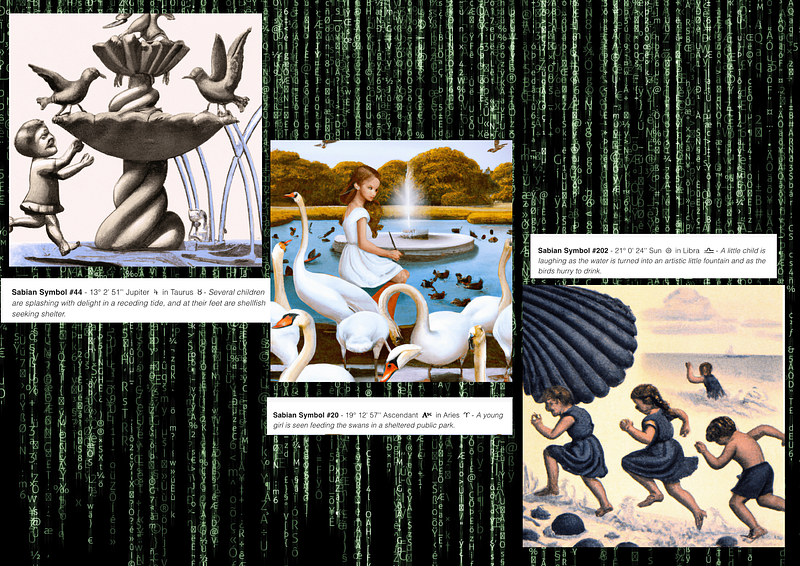
As our analysis progresses and we delve into the symbols associated with the Lunar eclipse of October 28th (6–8), an intriguing pattern emerges. We observe that the symbols tied to the slow-moving planets remain consistent. For instance, the Pluto symbol of ‘caged birds’ or the Saturn symbol of ‘Market crowd on a Saturday afternoon’ are recurrent themes. In the realm of symbolism, this repetition signifies that these themes hold fundamental significance within the framework of the ‘scenes’ woven into the simulated reality.
However, what truly sparks the imagination is the introduction of the new symbols, with a special emphasis on the Moon’s symbols, considering the Moon’s rapid movement and the significance attached to each symbol. Take, for instance, the Moon’s degree during the initial phase of the lunar eclipse, featuring the striking imagery of ‘a widow on an open grave.’ The synchronicity here is truly remarkable, with astronomical odds at play. The only other Sabian Symbol that makes reference to the term ‘widow’ is Sabian #253. Even if we set aside the symbol’s relevance and focus solely on the word ‘widow,’ it becomes evident that the Moon doesn’t reach this particular symbol for several weeks into the future.
As the eclipse unfolds, the Moon’s symbols transition to depict ‘bridge building between two opposing sides’ during the maximum eclipse phase, culminating in a particularly telling biblical reference tied to the story of a Samaritan woman at Jacob’s well, which I believe is a reference to John 4. Given that solar eclipses often foreshadow new events that may extend over months, while lunar eclipses foretell the culmination of events, a logical interpretation suggests that these symbols and themes should be considered in sequence when making predictions.
Additionally, other symbols seem to correlate with themes of ‘rescue’, possibly hinting at efforts to free hostages. References to ‘double promises’ made and numerous symbols evoking the ‘divine’ realm’s potential intervention add further layers of complexity to this cosmic narrative related to the lunar eclipse of past month.
By now, you might be pondering the astonishing astronomical odds presented here. Each of these occurrences on its own holds statistical significance, and when we combine just the six symbols involved in the moon’s transit during the two eclipse events, the odds become even more staggering. Remarkably, even the order of these symbols appears to follow a chronological sequence of a story or a scene, starting with a reference to Judaism and beach crowds, and concluding with symbols associated with widowhood and a Samaritan woman at Jacob’s well.
b. Deciphering Major Themes via Astrological Analysis
In the scope of this article, we are unable to delve into the exhaustive analysis of all nine charts we’ve scrutinised. However, we aim to spotlight the vital connections between these charts. Our investigation’s underlying objective is to elucidate a palpable link between cosmic alignments and the timing and nature of terrestrial events. Thus far, we’ve provided compelling evidence, primarily through symbolism, that underscores the profound correlation between psychically divined symbols of the zodiacal degrees and the transformative events of October 2023, events with the potential to catalyse a global conflict impacting the collective. However, to approach this from a scientific standpoint, we require more concrete and empirical data.
Traditionally, astrologers served as trusted advisors to monarchs and rulers across the globe. The case of Elizabeth I and John Dee, as mentioned earlier, represents a typical scenario from that era. Even in more recent history, modern presidents have sought the counsel of astrologers. A notable example is the secret engagement of astrologer Joan Quigley, renowned for providing astrological guidance to the Reagan White House during the 1980s.
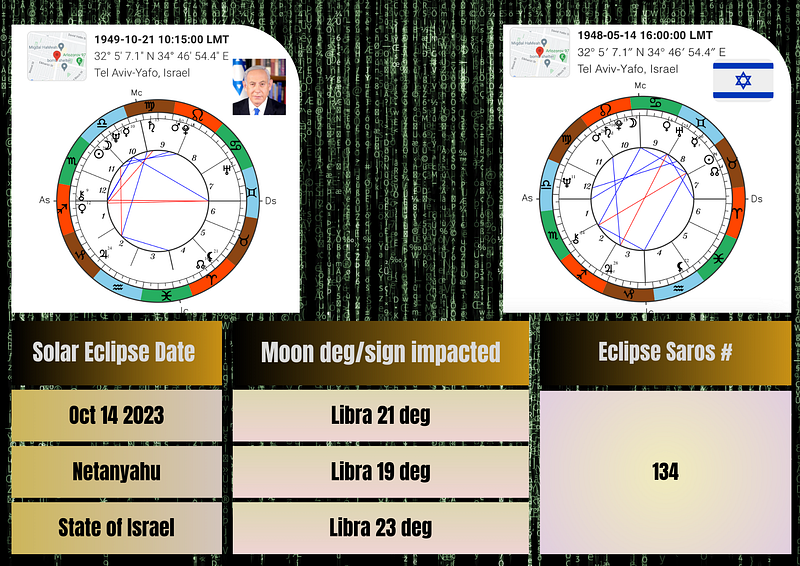
All of these observations lead me back to the situation in Israel and its leadership. In a world where astrology was not marginalised and dismissed, it’s likely that the Israeli government would have employed astrologers as part of their staff. The initial step for an astrologer when forecasting the future trends for a specific nation or organisation is to meticulously analyse the chart of that nation or company, as well as the chart of its current leader (Figure 11). In most cases, nations lack a known date of birth, let alone a time of birth. However, Israel stands as an exception, a fortunate one at that, allowing us to make predictions and analyse future themes with a remarkable degree of statistical accuracy.
When it comes to analysing charts of most other nations, astrologers often focus on the charts of national leaders, as it provides insights into what the future may hold. For instance, in the case of the United States, we’re entering a phase remarkably reminiscent of 1861, particularly in terms of cosmic alignments. At the very least, I anticipate themes and developments akin to the era of Abraham Lincoln in the upcoming year’s election.
Turning our attention to Israel, examining the nation’s chart along with the charts of its leader (Benjamin Netanyahu) and considering the transits and eclipse seasons of 2023 would have prompted any knowledgeable astrologer to issue a resounding warning. In fact, October would have been a month marked as ‘extremely dangerous’ for Israel by virtually all astrologers, especially around the solar eclipse occurring on October 14th. Eclipses typically warrant exponential precautions and defensive measures for the entire month leading up to them. To put it simply, if astrological configurations were analogous to fire hazard warnings, both Israel’s national chart and that of its leader, Benjamin Netanyahu, would have been assigned the highest category of alerts this past month. I can’t recall seeing such a striking alignment of cosmic configurations foretelling an imminent event during the eclipse season of 2023 for Israel and its leadership.
When we scrutinise the charts of Israel and Netanyahu (Figure 11), a remarkable correlation emerges. The degree of the Moon during the maximum phase of the solar eclipse closely aligns with both Israel’s chart and its leadership. The eclipse significantly impacts Israel’s ascendant (representing its entire existence) and virtually hammers the stellium of planets, including the luminaries in Netanyahu’s chart. For astrologers, when both the leader and the nation’s chart are significantly influenced, the level of concern is raised exponentially.
Furthermore, the eclipse begins on the ‘Jewish Rabbi’ Sabian symbol, which intriguingly matches the exact degree of Benjamin Netanyahu’s natal moon. This symbolises that the leader’s ‘moon’, representing elements such as the collective psyche of one’s tribe, home, homeland, mother, and parental influences, will be eclipsed. The rarity of such a precise eclipse degree reinforces the immense significance of this cosmic alignment.
Continuing our analysis, the pursuit of additional evidence remains a fundamental aspect of scientific inquiry. While we acknowledge that mainstream science may never fully embrace or appreciate these findings, true scientists understand the significance of continued research, even in unconventional or fringe areas of study. The accumulation of more evidence consistently fortifies and bolsters any theory. Thus, we delved deeper into our investigation
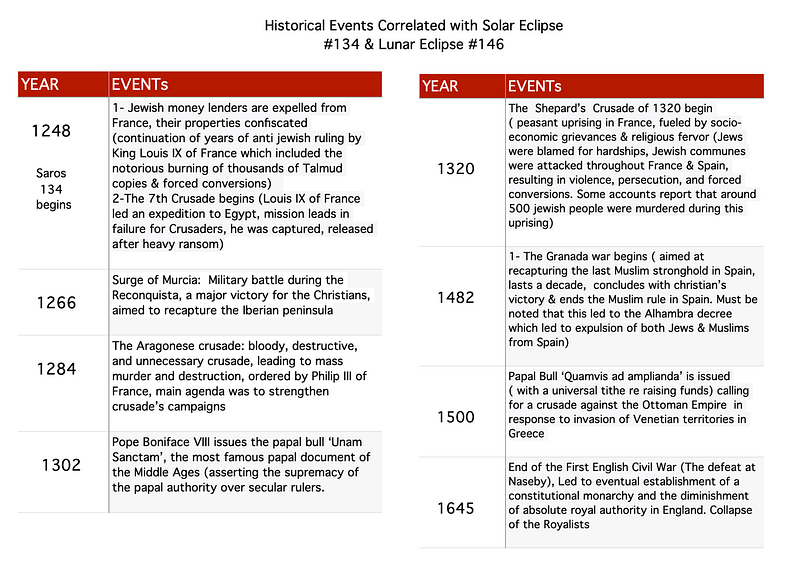
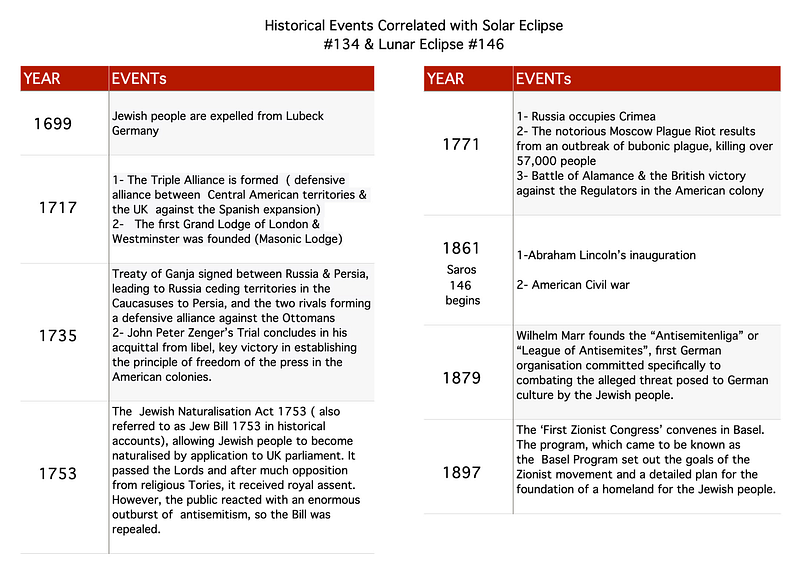
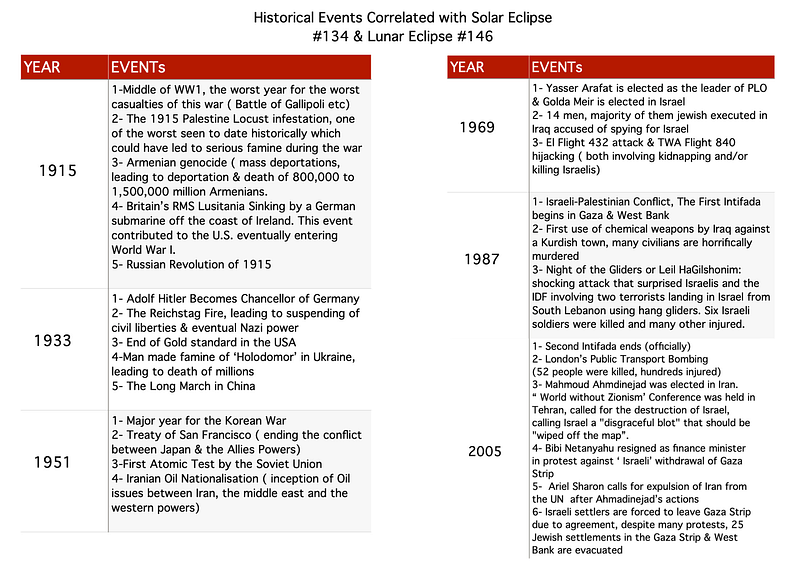
Similar to astrologers such as Bernadette Brady, known for her meticulous research into historical eclipse patterns and cycles, we delved deeper into our investigation by comparing the Saros series linked to the October eclipse season with historical events associated with these series. Undoubtedly, this task was quite time-consuming, but the effort invested in it was certainly worthwhile (Figures 12–16).
It’s important to acknowledge that astrologers who align with the causation theory of astrology and uphold ancient beliefs that highlight the significance of the location, path, and observability of eclipses, which were pivotal for traditional astrologers in predicting events, may hold varying viewpoints regarding our stance. We adhere to the belief that reality is essentially a data-based simulation. The ample evidence we’ve gathered strongly suggests that cosmic patterns and alignments correlate with the scripts woven into this simulation. By understanding these alignments, we gain insights into ‘which scripts’ are active at any given time and when they will unfold.
In a simulation, everything, including individuals, nations, and events, is grounded in data and driven by scripts. The script manual, akin to the QR codes of each entity, is correlated directly with cosmic alignments for every ‘birth’, and by scrutinising these charts or QR codes, we gain the ability to discern which scripts will play out and when they will do so. In our view, this is precisely how predictions work and why they often manifest with astonishing, seemingly science-defying accuracy and synchronicity.
Hence, whether an eclipse casts its shadow upon a land, whether it’s observable, or the direction from which the eclipse arrives, as well as other physical details related to the eclipse phenomena, while important for providing additional cues, should not hold as much significance. What truly matters is the activation degree of an eclipse, as in a simulated reality, it impacts anything and anyone prominently aligned with that degree, and therefore, the script that degree is ‘correlated with’. In fact, we are demonstrating this right here and in the case of the October eclipse, where the lunar eclipse was partially visible in Israel, while the solar eclipse was not. The nation and its leader were impacted regardless.
Regarding our analysis of the Saros series, our initial step involved determining the precise commencement date of each series. In astrology, the very beginnings of any event or birth are akin to the trailer of an upcoming movie. This concept gains significant relevance, particularly when we consider the theory of simulation, and I have witnessed its validity on numerous occasions.
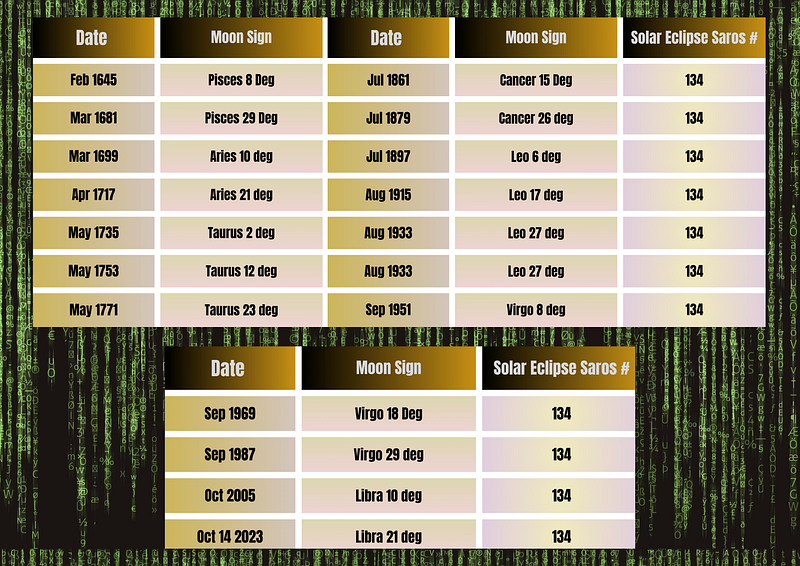
The Solar Eclipse on October 14th, 2023, was part of the Saros 134 solar cycle, a recurring pattern that repeats every 18 years and 11 days, spanning a total of 71 events (11, NASA). This series commenced with a partial solar eclipse on June 22, 1248 AD, and it will conclude with its 71st event, which will be a partial eclipse on August 6, 2510. Considering the extensive time span, we focused on the specific degrees of the Moon involved in every eclipse event within this series, and whether those degrees have any relevance in 2023. Remarkably, we identified that these historical years exhibited striking thematic similarities to the events we have recently witnessed. We have summarised the relevant historical events in Figures 14–16.
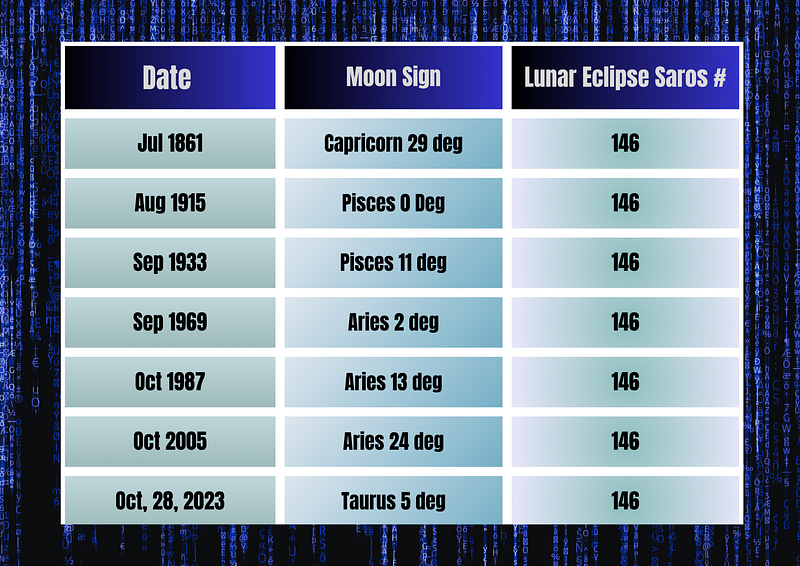
The Lunar Eclipse that occurred on October 28th was part of the Lunar Saros 146 series (12). This lunar eclipse cycle commenced on July 11, 1843, and it will conclude with a penumbral eclipse near the southern edge of the penumbra on August 29, 3123. In total, the Saros series 146 spans an impressive duration of 1280.14 years (NASA).
The figures below (14–16) offer a concise overview of the specific years during which this eclipse pair was in effect and the corresponding events that unfolded in each of those years.
c. Other Omens and Synchronicities
Throughout history, the analysis of unusual omens has held a significant role in occult and metaphysical research. In 2023, my circle couldn’t escape the fervour surrounding the potential supernova explosion of Betelgeuse sooner than expected (18). Supernovas mark the spectacular end of massive stars (Figure 17). An intriguing unpublished study, circulating online mid-year, suggested that Betelgeuse, one of the night sky’s most prominent and brilliant stars, might be on the verge of a magnificent supernova explosion within our lifetime (18).
Betelgeuse, a colossal, red-hued celestial body adorning the left shoulder of the unmistakable Orion constellation, became the centre of our focus. Situated at a distance of approximately 650 light-years from our planet, Betelgeuse typically holds the title of the tenth-brightest star in the night sky. However, since early April, it had risen to the seventh position, radiating at over 140% of its usual luminosity (18).
My own analysis of the ephemeris led me to speculate that the most likely window for this supernova event of Betelgeuse would be in the final quarter of 2031 (followed by 2025 as the second most likely year). This conjecture aligns with a rare celestial event involving the conjunction of Uranus and Saturn with this fixed star in late Gemini, while being opposed by both Mars and Jupiter in the late Sagittarius.
Returning to the discussion of omens, I was taken aback when I discovered that the concert where many innocent souls perished, the very first concert of this format in Israel, was named Supernova. While I don’t typically place excessive reliance on correlations and omens based solely on catchy names, the connection struck me as noteworthy.
In another intriguing omen, which is somewhat related, August 2023 witnessed the emergence of Comet C/2023 P1 (Nishimura or Western Village) in our celestial consciousness. Even popular astrologer Mystic Medusa shared her thoughts on this comet:
“ It’s named Nishimura — after the discoverer — aka C/2023 P1 if you want to track it in an app or something. Many ancient cultures felt that the position of a comet at first discovery or the presence of one in a zodiac sign/constellation presaged unusually cool developments or sudden inspo — so Geminis, how is Nishimura feeling for you? I have not had a close look at this phenom yet, I just know the comet zapped out of interstellar space near Betelgeuse and zoomed straight to neighboring Gemini.”
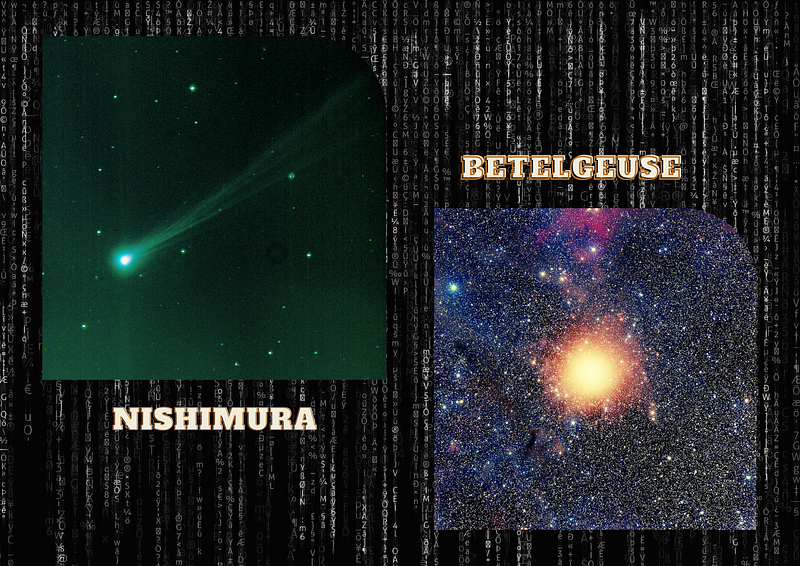
When it comes to analysing comets, every detail holds significance. Traditionally, astrologers considered everything, from the comet’s shape and colours to its trajectory and position in the celestial sphere. Astrologers who immersed themselves in the study of this comet observed a prominent feature: the prevalence of the colour ‘Green’ (see Figure 17). Throughout history, the colour green has consistently been symbolically linked with Islam. During our monthly Facebook group gatherings in September, some astrologers shared their intrigue regarding the possibility of news pertaining to Islam or Muslims taking centre stage in the headlines soon. Interestingly, none of us at the time made the connection between Nishimura and Betelgeuse, reminding us that hindsight is always 20/20.
I would also like to conclude this analysis by addressing the profound implications of Pluto’s ingress into Aquarius. While I will delve into this subject more extensively in a future paper, Pluto’s entry into the fixed sign of Aquarius, which will have malefic implications for all the other fixed signs, foreshadows a period where the Middle East, represented by the various ancient tribes and religions in the region, is likely to take centre stage in global headlines for the next two decades. The fixed signs align with the archetypes of the major Middle Eastern tribes/religions, emphasising the significance of this important cosmic cycle.
Along with many astrologers, occultists, and particularly given our unique perspective on the simulated reality, we have been meticulously documenting developments since Pluto entered the pivotal 6-month period preceding its ingress into Aquarius. This method of analysis holds great significance in predictive astrology, as it aligns with the ancient belief that the universe, the divine, or as we suspect, the simulator, often provides us with a preview of forthcoming events involving the archetypes or the scripts a planet or the cosmic body codes for when transitioning into new zodiac signs. This is especially relevant when slower-moving planets are involved.
In my diary from Oct 2022, I wrote “ Pluto : 6 months before ingress, Mahsa Amini of Iran was killed, huge uprising in Iran, IS this the French Revolution we were expecting to see with this cycle of Pluto (hitting all fixed signs including Iran/Leo/CAT)? …Is Iran is the modern version of France of the past? …Are Ayatollahs going to be the modern archetype of medieval European religious ruling on the world stage?! to test: will they behave like 12th century crusaders? If so, the answer is yes!…watch this space until 2025…look for synchronicities involving Iran & medieval religious ruling during christian Europe”.
So far, my diary is open and it’ll reach conclusion stage when Pluto’s back and forth motion gets settled into Aquarius which will happen in 2024. The major headlines for the world will then be assessed, the ones relating to Saturn and Jupiter will be short-lived and therefore excluded for any meaningful global prediction of upcoming cycles, However, the ones relating to Transneptunian planets, even in our personal lives will be used to make final forecast.
Furthermore, we are in the midst of a difficult celestial alignment involving Pluto squaring the lunar nodes. This particular cosmic configuration tends to be associated with conflicts characterised by tribal affiliations, deeply rooted traditions, and the classic “My side vs. Yours” dynamic. It evokes thoughts of the age-old feud between the “Montagues and Capulets.” Historical events such as the Partition of India and Pakistan (1947–1948) and the Israel-Palestine conflict unfolded during periods when Pluto was squaring the lunar nodes in Taurus from the fixed sign of Leo. Moreover, during the American Revolutionary War, Pluto’s position in Capricorn squared the lunar nodes in Libra in the years 1773 and 1774. This alignment was a precursor to a series of events that ultimately led to the outbreak of the American Revolutionary War. In July 2023, the lunar nodes transitioned into the Aries/Libra axis and began squaring Pluto in the final degree of Capricorn.
Many astrologers had already discussed the likelihood of conflicts, including the potential for a war, during the last quarter of 2023. This heightened risk is anticipated to persist until the conclusion of the last quarter of 2024. The current cosmic alignment becomes even more concerning when we draw parallels to historical events. In 1939, precisely when World War II erupted, Pluto was squaring all the fixed signs from 0 Leo, the exact opposite position relative to where it is currently in 0 Aquarius. Uranus also occupied a position identical to its current placement, harkening back to its position in 1939 (given Uranus has an approximately 85-year orbit). To further mirror the past, Neptune was located exactly 180 degrees across from its present Pisces position, being in Virgo in 1939.
The eerie ‘geometrical pattern’ between the celestial positions of 1939 and the current cosmic configuration from 2023 to 2025 raise concerns. As if the situation couldn’t become more concerning, we are now facing impending hard aspects involving Uranus, Saturn, and Neptune, coming into conjunction with, or squaring, the fixed stars ‘Algol’ and ‘Scheat’. Astrologers are acutely aware of the potential implications of such alignments. The hope lingers that history will not, once again, unfold in the same ominous manner and this possibility exists due to the inclusion of ‘free will’ in the calculations of this simulated reality.
Concluding Remarks
The dramatic nature of solar eclipses raises a fundamental question: why does the Moon almost perfectly align with the Sun during an eclipse? To achieve such a perfect alignment, the Sun must appear nearly identical in size to the Moon when viewed from our vantage point on Earth. This astonishing cosmic coincidence, where the Moon, despite its smaller stature, emerges as a celestial twin to the Sun due to its proximity, serves as a captivating enigma. We propose that the simulation theory, with its concept of a meticulously scripted reality, offers the most compelling explanation for this phenomenon.
At Cosmic Program, we hypothesise that eclipses might be akin to universal software updates or versions, like various iterations of an operating system, designed to instigate evolutionary leaps within the simulation.
Through the diligent study and analysis of eclipses, we can gain profound insights into the themes and trends that await us, both in our individual lives and within the collective. We hope that this article has presented ample evidence to support these claims.
As scientists, we have grown to recognise the significant merit of these methods and ancient beliefs. However, we attribute their value not to divine communication from deities or mystical beings, nor do we believe planets are causing anything. Instead, at Cosmic Program, we contend that their worth lies within the realm of quantum phenomena, the simulation theory, and the holistic application of the scientific method. From a scientific perspective, we advocate against dismissing concepts from the New Age, old folklore, or omens.
Rather, we encourage viewing them as processes of deciphering and decoding — whether accurate or not — emanating from the human brain or the quantum computer within our own bodies. This approach allows us to navigate a world where cosmic patterns and quantum connections reveal a deeper understanding of our scripted reality, ultimately preparing us for the future. Harnessing this quantum capacity can indeed assist in accessing, deciphering, and understanding relatively accurate knowledge of forthcoming narratives and, by extension, future events or prevailing themes. This knowledge empowers us to prepare for what lies ahead, as being forewarned is always being forearmed.
Written by: Gaia from Cosmic Program
To our readers: Crafting these articles is a time-intensive endeavour. We are employed full-time researchers with busy lives, plus, we never do things half way. Regrettably, for reasons you’re all aware of, it’s impossible to publish our work in scientific or mainstream journals to reach a broader audience. We encourage you to engage in the comments; responding to inquiries is a personal religion of mine. Also, we’d appreciate if you share this article. We don’t have a strong online presence, being self-proclaimed “nerds” with limited social connections, and as explained previously, we’re unable to share our work even within our own community of scientific colleagues and connections.
Our mission doesn’t revolve around fame or material gains. What we truly aim for is to challenge the unfounded, unscientific, prejudiced skepticism against astrology and New Age subjects that has persisted since the 1600s. This accounts for 99% of our aspirations. Please consider reading well-rounded balanced articles authored by Graham Pemberton for a comprehensive understanding of this matter. We greatly appreciate your support in advancing this cause. Thank you in advance!
References:
29- Babylonian Timings of Eclipse Contacts and the Study of the Earth’s Past Rotation
30- The Saros Cycle — Eclipses come in Families
http://www.bernadettebrady.com/Pdfs/SarosCycles.pdf
31- Extraordinary behaviour of the Moon
https://www.iop.org/explore-physics/moon/extraordinary-behaviour-moon#gref


#/media/File:Manual2021-X_MOUSSAS_SAROS.jpg)
