avatarRobert Gowty

Free AI web copilot to create summaries, insights and extended knowledge, download it at here

2045

Abstract

<p id="7d47"><b>In over a decade in Tasmania, I’ve never seen an echidna as roadkill.</b></p><p id="1331">Were you to run over one, your tyres most certainly would be destroyed. Most motorists are aware of this and avoid them. Yes, those spikes are as sharp as they look.</p><figure id="3df2"><img src="https://cdn-images-1.readmedium.com/v2/resize:fit:800/1*gC9Epc8qUgacLKtdANOZAA.jpeg"><figcaption></figcaption></figure><figure id="81e9"><img src="https://cdn-images-1.readmedium.com/v2/resize:fit:800/1*Smr7RItSc2QIIFJ6_Oaw6A.jpeg"><figcaption>Echidna in front of the guinea pig run.</figcaption></figure><p id="55a3">At one stage, we free ranged some of our guinea pigs at the shack. The piece of iron shown in the photo above was formed into a makeshift run.</p><p id="dcfd">One day the echidna showed up and the guinea pigs certainly seemed perplexed. There’s really not a lot to fear from an echidna unless you’re an ant.</p><figure id="218f"><img src="https://cdn-images-1.readmedium.com/v2/resize:fit:800/1*N4u3pLXQZg_LRDGr7yLlPA.jpeg"><figcaption>Do you think the echinda is going to take our carrots?</figcaption></figure><figure id="4a92"><img src="https://cdn-images-1.readmedium.com/v2/resize:fit:800/1*CmY38rYb5tsxPRNPvCwqfg.jpeg"><figcaption></figcaption></figure><figure id="3d36"><img src="https://cdn-images-1.readmedium.com/v2/resize:fit:800/1*3OMKF3pyeE37JBSfKoFmOQ.jpeg"><figcaption>The spikes or quills covering the echidna are both strong and sharp.</figcaption></figure><figure id="9eb2"><img src="https://cdn-images-1.readmedium.com/v2/resize:fit:800/1*6Iw9Y6n-9pT75nGcnGTzTA.jpeg"><figcaption>Some indication of the size of an echidna. The is a medium sized one.</figcaption></figure><figure id="38da"><img src="https://cdn-images-1.readmedium.com/v2/resize:fit:800/1*AyZIGjMhRvLVHoieWmbA2A.jpeg"><figcaption>In defensive mode.</figcaption></figure><p id="2114">If an echidna is feeling threatened, it will form up into a ball, dig its claws into the ground and stay that way until it thinks the threat has passed.</p> # Options <figure id="239b"><img src="https://cdn-images-1.readmedium.com/v2/resize:fit:800/1*G5sUAND0kSuQjrDLmkAtVg.jpeg"><figcaption>Its narrow beak ideal for collecting up ants.</figcaption></figure><figure id="c2da"><img src="https://cdn-images-1.readmedium.com/v2/resize:fit:800/1*HUR5GOkWiJKOcILUypbcig.jpeg"><figcaption>Possum, Platypus and Skink.</figcaption></figure><p id="255e">Tasmania has a myriad of interesting wildlife, including the other type of monotreme, the platypus. While I also regularly see them in the river, they are notoriously hard to photograph. They usually only surface for a few seconds before diving back into the river.</p><p id="7d61">Here are some more stories on the wilds of Tasmania.</p><div id="e32d" class="link-block"> <a href="https://robertgowty.medium.com/greetings-from-southern-tasmania-6ecdaf05083d"> <div> <div> <h2>Greetings from Southern Tasmania</h2> <div><h3>Lake Pedder, National Park and shacklife.</h3></div> <div><p>robertgowty.medium.com</p></div> </div> <div> <div style="background-image: url(https://miro.readmedium.com/v2/resize:fit:320/1*C6OmMbu6I0oklfg5rfC00A.jpeg)"></div> </div> </div> </a> </div><div id="5e60" class="link-block"> <a href="https://readmedium.com/roadkill-and-loathing-in-southern-tasmania-part-i-a6caebda0594"> <div> <div> <h2>Roadkill and loathing in Southern Tasmania. Part I.</h2> <div><h3>The Journey Begins.</h3></div> <div><p>medium.com</p></div> </div> <div> <div style="background-image: url(https://miro.readmedium.com/v2/resize:fit:320/1*l7a0NP049GyV_2D2dirZNg.jpeg)"></div> </div> </div> </a> </div><p id="7acc">For <a href="undefined">Cristina Cattai</a> I hope your family enjoys the pictures!</p></article></body>

The Echidna of Tasmania

A different approach to life.
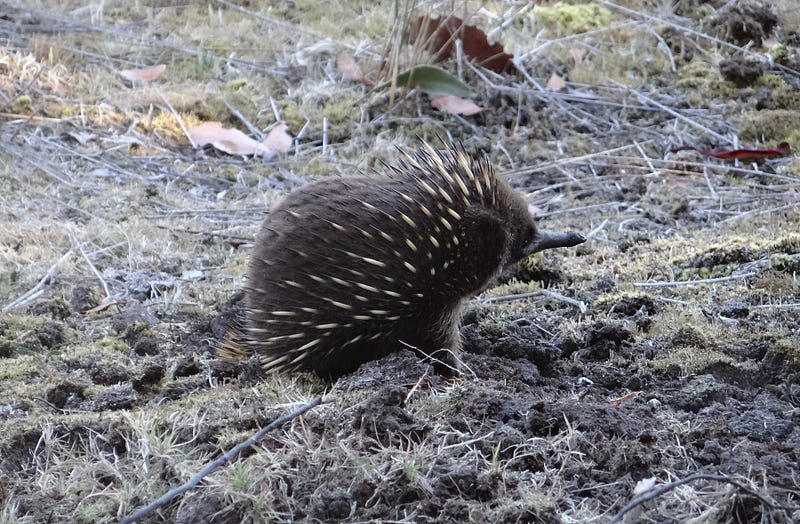
Echidna in the wild. All pictures by the author.

Monotremes are prototherian mammals and they come in only two varieties, the echidna (four species) and the platypus (one species).

They a fairly plentiful in Tasmania and I often come across them in the bush and around my shack. The species above is a short-beaked echidna.

The Tasmanian echidna, while not is separate species, is distinguished by its hairiness. Tasmania, a large island off the southern coast of the Australian mainland is cold in winter, at times seeing snow to sea level.

The echidna is small, solitary and slow moving, making it an easy target for photography.

It is not, however, an easy target for predators. Its spikes and claws offering some effective defense strategies.
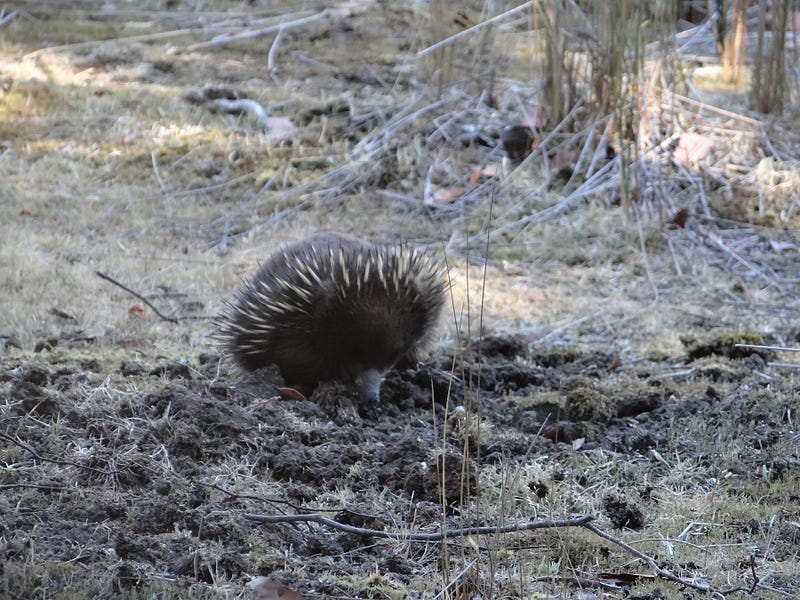
Digging into the earth for ants.

I was once on the road from Westerway to Tyenna when I saw a white VW Combi parked by the side of the road with an agitated hippy pacing up and down.

As I approached, I noticed a brown lump in the middle of the road and pulled over. It was an echidna. The hippy was very distressed it would be run over.

I’ve tried but I simply can’t move it!

The echidna, with its powerful claws, had dug itself into a pothole and was not letting go. I got a lever from the car, wrestled it free and it shuffled on its way, into the bush. The hippy was relieved and we were both on our way again.

Not that I should have been too concerned.

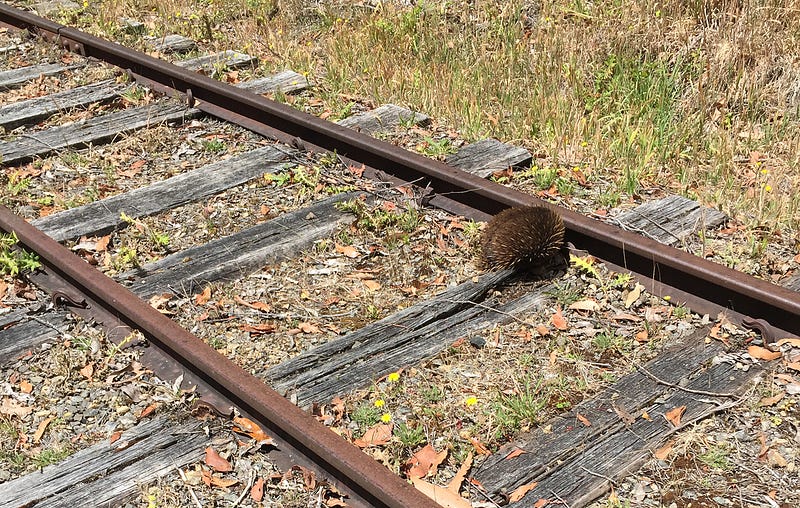
In over a decade in Tasmania, I’ve never seen an echidna as roadkill.

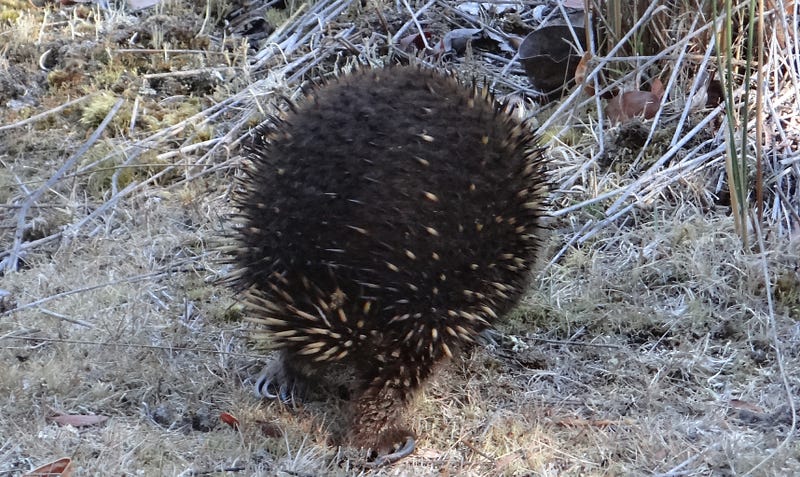
Were you to run over one, your tyres most certainly would be destroyed. Most motorists are aware of this and avoid them. Yes, those spikes are as sharp as they look.
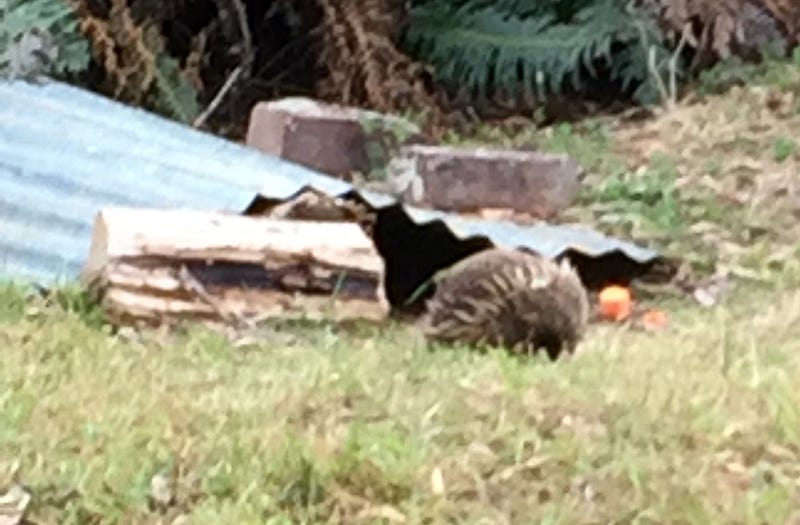
Echidna in front of the guinea pig run.

At one stage, we free ranged some of our guinea pigs at the shack. The piece of iron shown in the photo above was formed into a makeshift run.

One day the echidna showed up and the guinea pigs certainly seemed perplexed. There’s really not a lot to fear from an echidna unless you’re an ant.
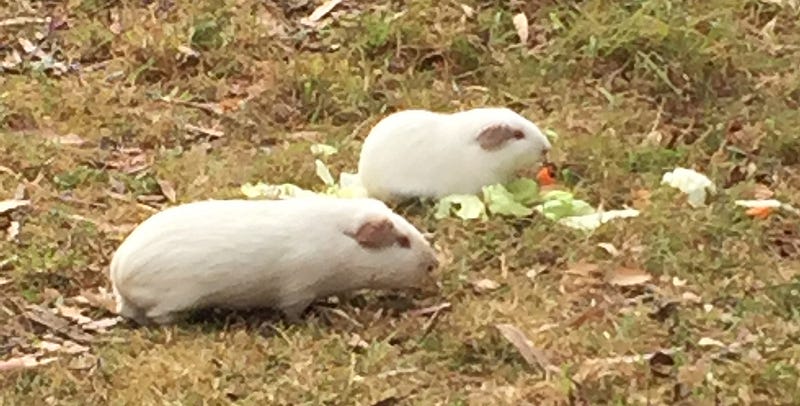
Do you think the echinda is going to take our carrots?
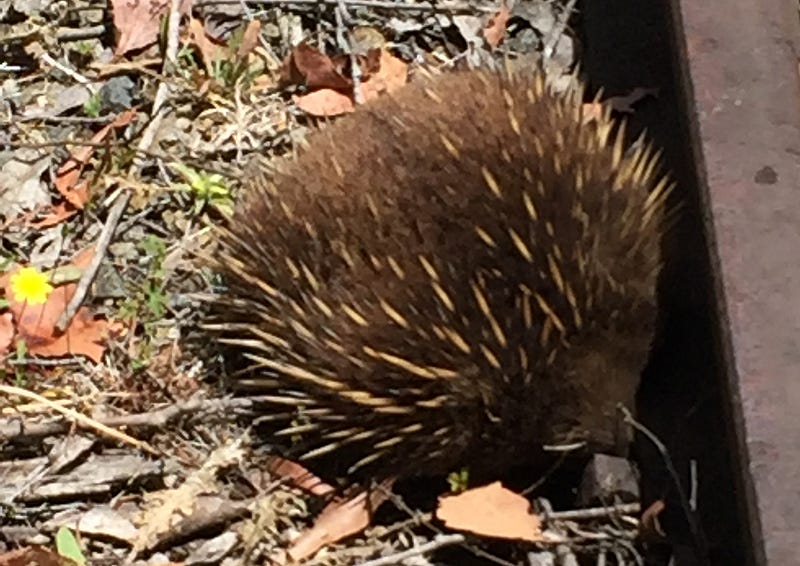
The spikes or quills covering the echidna are both strong and sharp.
Some indication of the size of an echidna. The is a medium sized one.
In defensive mode.

If an echidna is feeling threatened, it will form up into a ball, dig its claws into the ground and stay that way until it thinks the threat has passed.
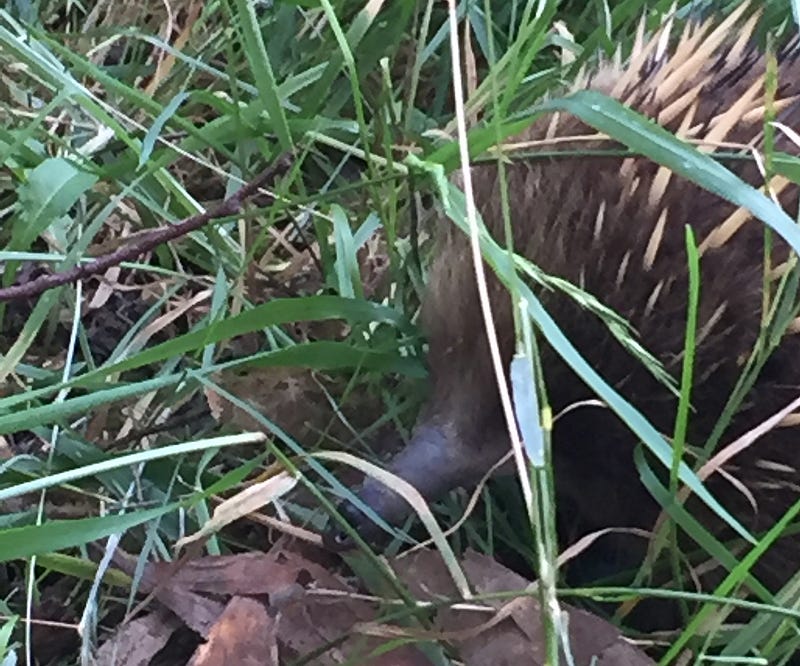
Its narrow beak ideal for collecting up ants.
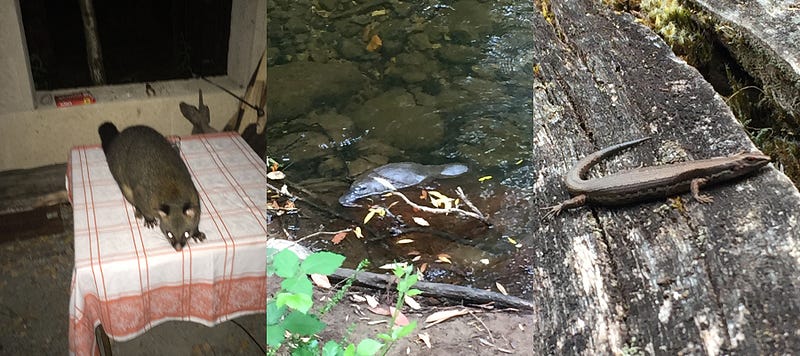
Possum, Platypus and Skink.

Tasmania has a myriad of interesting wildlife, including the other type of monotreme, the platypus. While I also regularly see them in the river, they are notoriously hard to photograph. They usually only surface for a few seconds before diving back into the river.

Here are some more stories on the wilds of Tasmania.

For Cristina Cattai I hope your family enjoys the pictures!

Animals
Tasmania
Nature
Wildlife
Recommended from ReadMedium