
The Easy Way to Hit 1K words!
Because A Picture Is Worth a Thousand Words
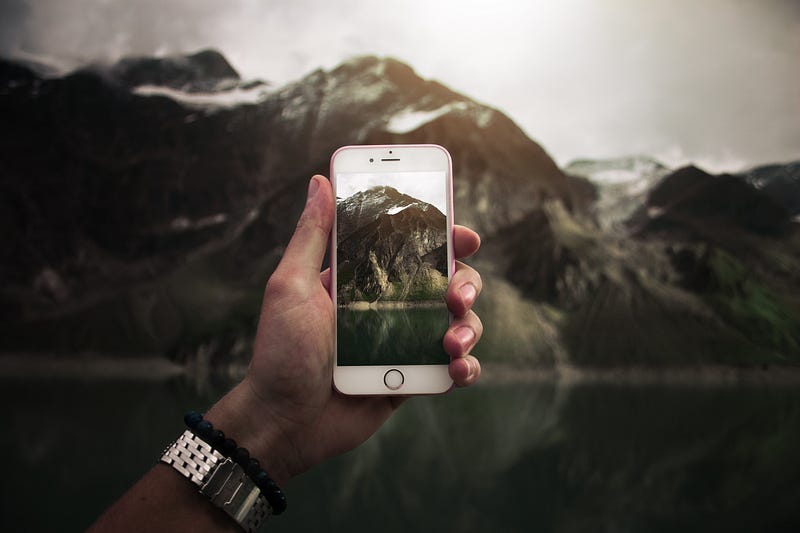
Everyone has heard the famous quote:
A picture is worth a thousand words.
Photographers and artists make a living out of it. Brilliant advertisers use them to lure their audiences. Paintings have inspired people for ages and cartoonists have catalyzed change, simply with a few clever strokes.
There is no denying that a captivating image can invoke emotions, and spur us to action.
But what if writers used this tried and tested method to kickstart our writing tasks?
What if we spun the old adage to not only get more eyeballs on our craft but also for beginning the process of creating itself?
What if we used pictures to come up with new ideas?
Content generation is a game of consistency. There are never too many sources of inspiration and muses. The art of writing is undoubtedly easier with founts that help unleash the flow of words like falling snowflakes in a midwestern February snowstorm.
And what better than a technique that literally promises not one or two or hundred but a thousand words!
Using Pictures to Spark Ideas
The concept is not a new one- it is just rarely used and at the moment only fleetingly popular.
An intriguing picture has always been presented as a device to start conversations, and add flavor to essays, opinion pieces, and stories. It is also frequently used as a prompt. While not prolific, my favorite writing exercises on Twitter are indeed six-word stories based on the image of the week.
Considering the plethora of free and easily referenced options available to get compelling, professional images, it is a simple matter to find a photo that speaks to us and gets us penning a tale.
Medium automatically integrates Unsplash to make thousands of free images available to use. (If you are a WordPress user, then the images can easily be integrated from Pexels).
An Example
I find it easy to start writing whenever I attempt a picture prompt — but for the sake of being unbiased, I decided to test this theory.
No good time to start like the present.
I literally typed ‘mystery’ into the image search feature. On the second page, I found a photograph that immediately grabbed my attention. I clicked on the picture and stared for a few seconds. Within that scant period of time, I was pondering over a dazzling array of questions:
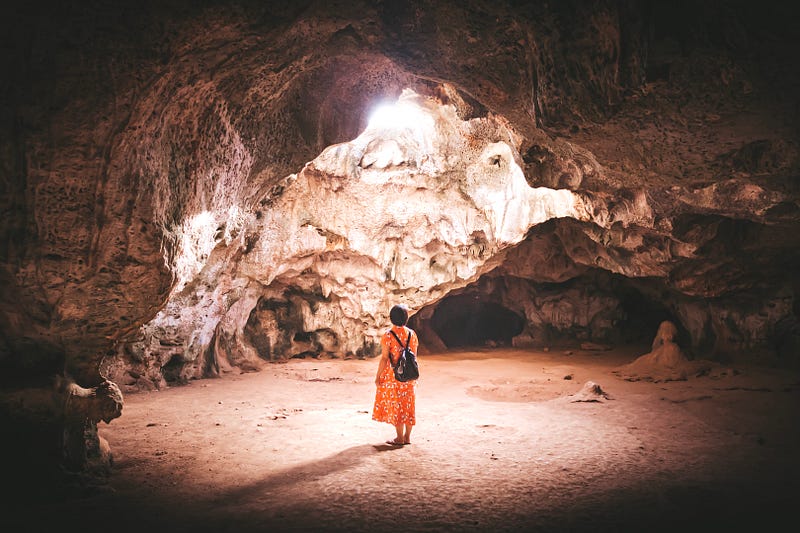
Who is this young woman?
Why is she here?
Did she come willingly? Is she trapped?
What is she searching for? What lured her to this cavern? What will she find?
What is that sandy mound to the side? Is it a sculpture? A treasure? Or something sinister?
We can see a fork in the tunnels. Which one is the right one? How will she decide? Is it a metaphor?
Bright sunlight is visible through the ceiling but the entrance is dark- do they add to the story? Is it a meta for the decision she is trying to make?
The questions above alone summed up to a hundred words.
Let me repeat that statement one more time- because that is extremely significant. The questions alone added up to 100 words.
Those questions are pretty straightforward and obvious ones — and I came up with those in less than a minute. With more imagination, who knows what twists and turns of the literal and abstract kind can come up. A masterpiece in the making? That’s absolutely within the realm of possibility, as long as there is a good round (or more) of editing.
Because these questions are so open-ended, they can be used to craft an article in a variety of genres: mystery, drama, even segue to a self-help piece. How fantastic is that!
In fact, I keep a running list of images that made me pause. While searching for photos to add to my stories, if I come across an image that makes me pause, I will add a note on the keyword I used and the page the picture was on. Similar to a list of ideas for stories, I have a running list of images that held my attention.
Practical Tactics
For those who want to begin right away, or alternately are still unconvinced, here are some techniques to start writing.
Pick a word from the following list: mystery, random, adventure, or tree, and search in the images. Select one that beckons to you.
If you are of the cohort that thrives best with “creativity within constraints”, the third image on the fourth page.
Next, follow one of the prompts below-
- Look at the picture. Set a timer for ten minutes and start freewriting.
- This one is basic but classic. Describe the image. What can you see?
- Give detailing a try. What objects do you see? What is their size, shape, color, texture? Which one is the most compelling? Irrespective of whether the skill of observation is your strong suit or not, you will be forced to truly see and soak in all the finer details of what you see. (I like the picture below for this reason- a variety of completely unrelated and differently sized objects)

- Captioning an image is a deceptively challenging exercise. Despite our experience with social media and commenting, captions that describe yet hook, are an art form in themselves. What does your attempt look like? Short terse descriptions usually have an opposite effect- the words flow unchecked. (That’s why Shortforms are trending on Medium of late)
- Imagine a child describing this image. What would they say? What would their eyes linger on? Abandon your own perspective and try to think like a person completely unlike yourself? Now, what do you see? In case you are wondering about the merits of this prompt, it actually is a good way to get under the skin of different personalities and in developing authentic characters.
Summary
We all know how effective images can be in complementing our writing.
But, visual pieces are also an excellent way to get started with writing. They can serve as a starting point for creative pursuits, help conquer a blank page, spark writing exercises.
So, let your imagination soar and start penning your tales.