
The Earth Is About to Burn
Will the Supreme Court choose water or gasoline?

Once again, the U.S. Supreme Court is considering the Environmental Protection Agency’s (EPA) authority to regulate greenhouse gases. I know what you are saying — of course, EPA can regulate greenhouse gases.
And yes, back in 2007, in Massachusetts v. EPA, the U.S. Supreme Court determined that EPA did have such authority and mostly because the Clean Air Act, passed by Congress, says so.
Yet, last week, the Court decided to again weigh in on the issue of EPA’s authority. Scientific American called the decision by the Court to hear the case — “stunning.” It is, and especially so, as the era of climate disruption grows ever more obvious by scientific facts.
The decision the Court will make is critical to getting carbon numbers in the U.S. on a different path. The U.S. wants to slash emissions in half in just 8 years. Regulating the pollution that power plants emit is essential to that goal.
Maybe the Court is setting itself up to do something extraordinary some have suggested? For the record, there was a rule issued under President Obama on how to regulate power plants. Yet, when his successor reached office he issued a new rule that was soft on pollution and a joke. That rule was tossed out.
President Biden can reinstate the Obama-era rule or perhaps go further which was the plan when the high Court stepped in and decided to review several cases all at once. Champions of polluting the earth for profit and others who support the status quo of fossil fuels loved the Court’s decision. They are hopeful the Court limits EPA’s ability to regulate greenhouse gases.
The Guardian writer, George Monbiot just last month asked an important question that applies to this judicial activity — “Why is life on Earth still taking second place to fossil fuel companies?” He answers himself later when he says — “when a party pursues incompatible aims, the first casualty is logic.”
Monbiot is noting that the carbon-emitting entities and other pollution outlets are chasing profit; we, the people, are chasing a reduction of carbon emissions so the earth can begin to cool one day or not get any hotter than it already is. Businesses, in other words, are abandoning logic. They just want to make money.
Yet, it is kind of clear what the very conservative Court could be doing. It could be about poised to use the country’s dysfunctional legislative branch to limit any government intrusion into business and profit-making entities. In that respect, I would not be surprised if the Court limited EPA’s ability to do anything.
Somehow the question before the Court is whether Congress has the authority or does EPA have the authority to deal with greenhouse gases in the atmosphere. The Court has already determined that answer multiple times; yet, here we go again.
If the Court declares that Congress did not extend broad authority to EPA and kicks the problem back to Congress, this would be disastrous. Congress is dysfunctional and incapable of taking the necessary steps to truly address climate disruption issues. There will be no regulations or rules to address the issue if Congress is assigned that task by the Court.
We all know the chances of the Republicans agreeing to reign in polluters is nil. If it is a profit-making entity, the GOP will side with profit.
This is why the entities who challenged EPA’s authority were joyous when the cases were accepted for review. They suspect the Court will limit EPA’s authority and then they can go on polluting and setting the earth on fire. This is the gasoline.
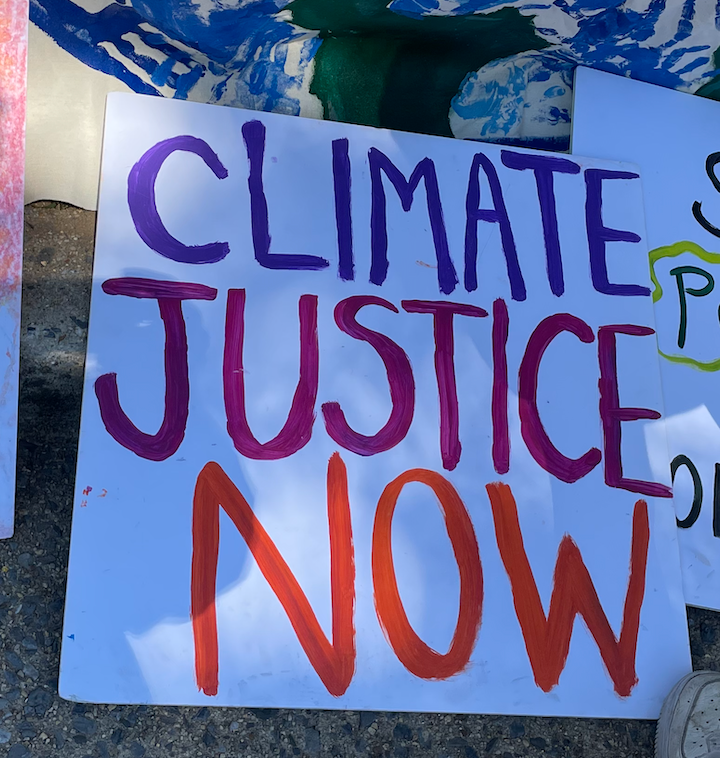
It is hoped by those who continue to press for urgency from our government on climate disruption that the majority will rule that EPA has broad authority that has already been afforded to the agency. The decision is to just make it clear. The Obama administration was correct, in other words, to push back hard against these polluters. Obama’s successor wasted four years with his foul policies on greenhouse gases.
This is the water. EPA gets granted clear and broad authority from the Court and then Biden will pass a rule that reflects this aggressive future.
The results at COP26 make this decision even more important. While the nations departed the conference with a deal, everyone agrees that the agreement will not limit a rise in temperature to 1.5 degrees Celsius. And without an aggressive EPA and an aggressive executive branch, the U.S. has zero chance of reaching its Paris and Glasgow benchmarks.
The Court might believe in tradition and ideology but the time to act is now on climate disruption. Any delay now to act decisively and consistently is death for people all over the world.
Additional Writings
Greenpeace A Greener World @GreenerTogether The Good Men Project GOOD #ClimateDisruption