
Birds, Animals, Nature, and Mississippi River
The Eagle Has Landed
The bald eagles entertained me on their perches and in the sky during my first nature photography outing of 2022
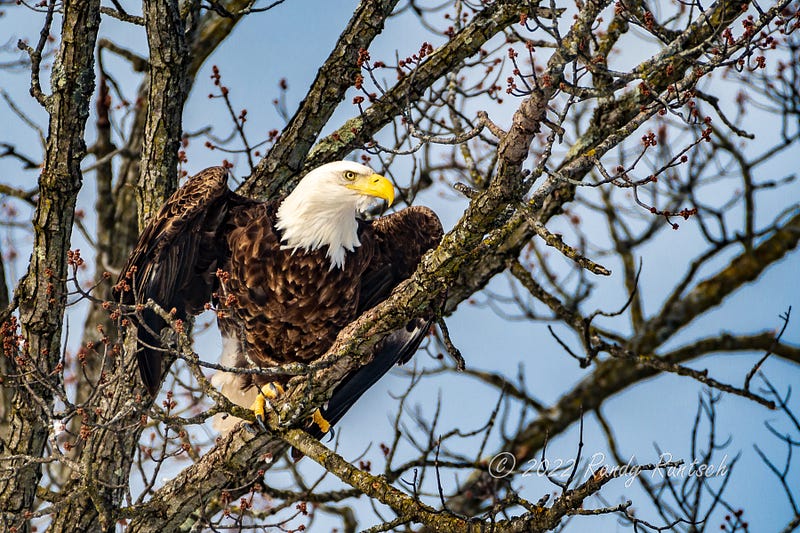
An arctic blast ushered in the new year as temperatures plummeted to -15° F (-22° C) in Southeast Minnesota, USA, in the middle of North America. Having decided to stay indoors, satisfied with watching birds and squirrels through a window, I checked the weather forecast. Monday, January 3, with mostly clear skies, and highs of 25° F (-4° C), appeared to be a perfect day for the first nature photography outing of the year. So, on Monday morning, I ventured out before sunrise. By sunset, I felt satisfied because fair weather, bald eagles, and other birds and wildlife had rewarded me all day long.
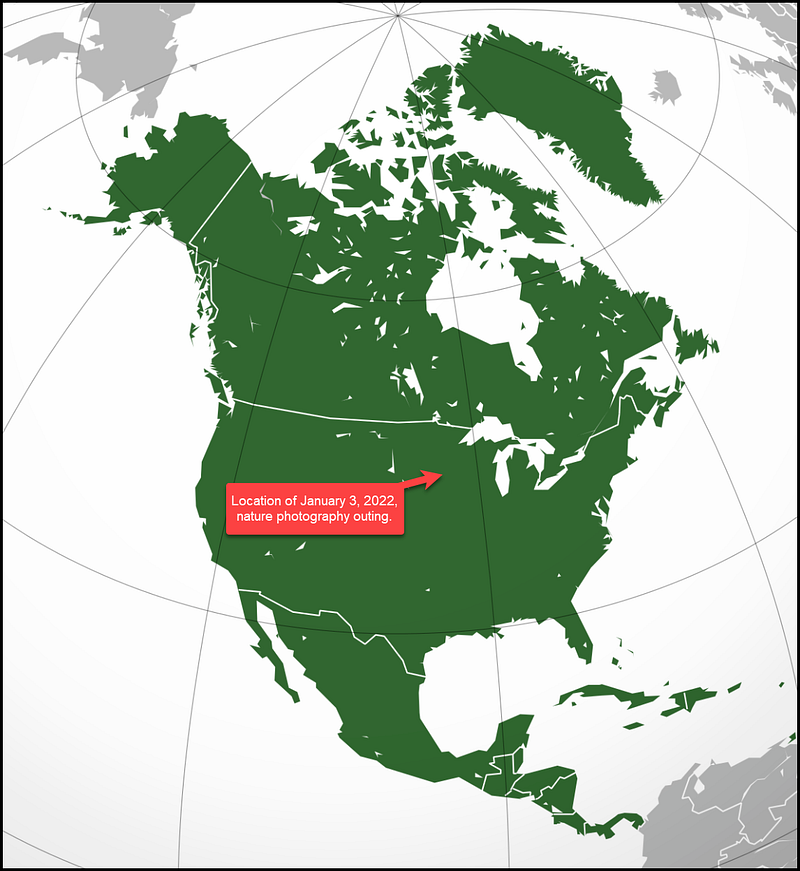
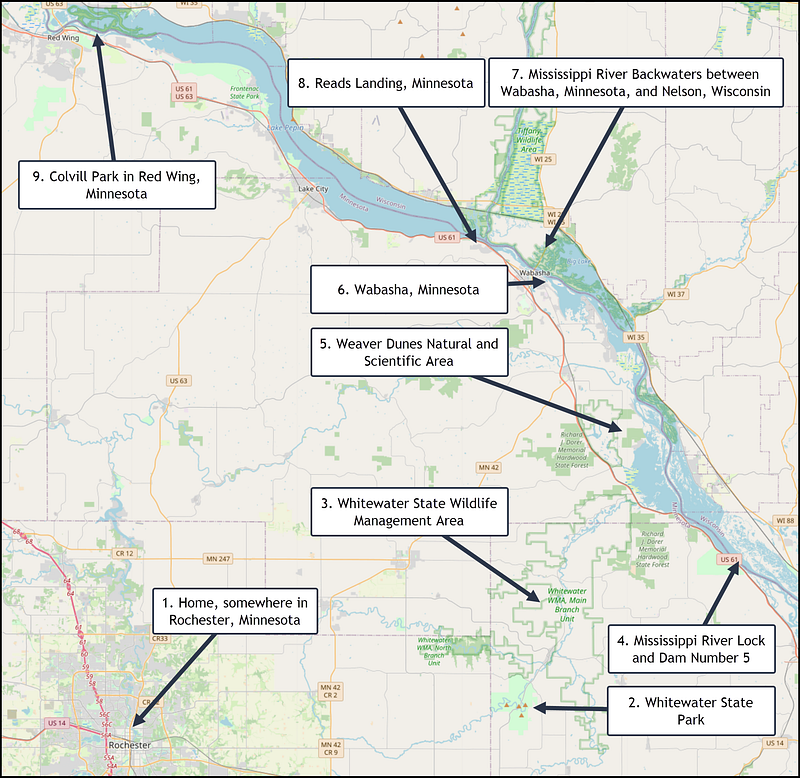
I decided to take my typical route to the Mississippi River with bald eagles in mind. Hundreds of eagles congregate and fish in groups as open water shrinks, most of it being replaced by ice by midwinter. The first stop was in the Whitewater River Valley, the closest thing to wilderness within a thirty-minute drive of home.
Whitewater River Valley
The Whitewater River Valley, with Whitewater State Park and the Whitewater State Wildlife Management Area tucked between bluffs for most of its length, is filled with birds and other wildlife. I sometimes see beaver, fox, muskrat, skunk, and deer in the area. A short drive from home, the secluded valley features trumpeter swans year-round and several pairs of sandhill cranes from spring through fall.
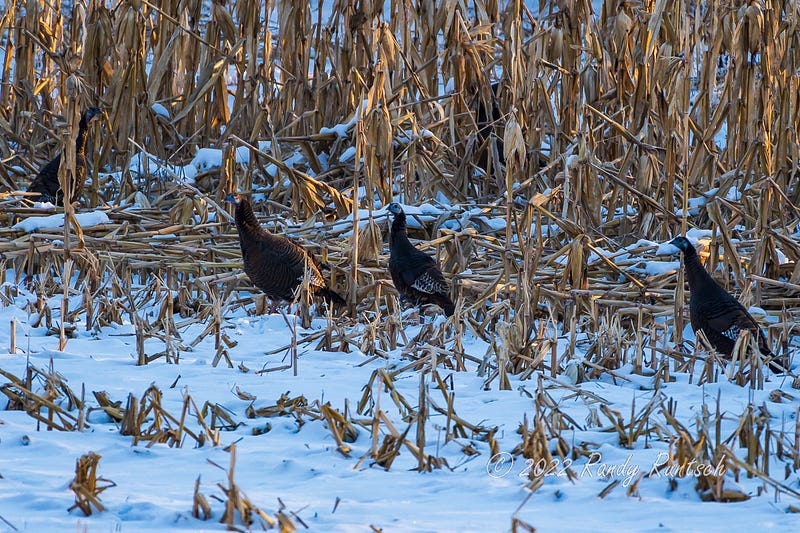
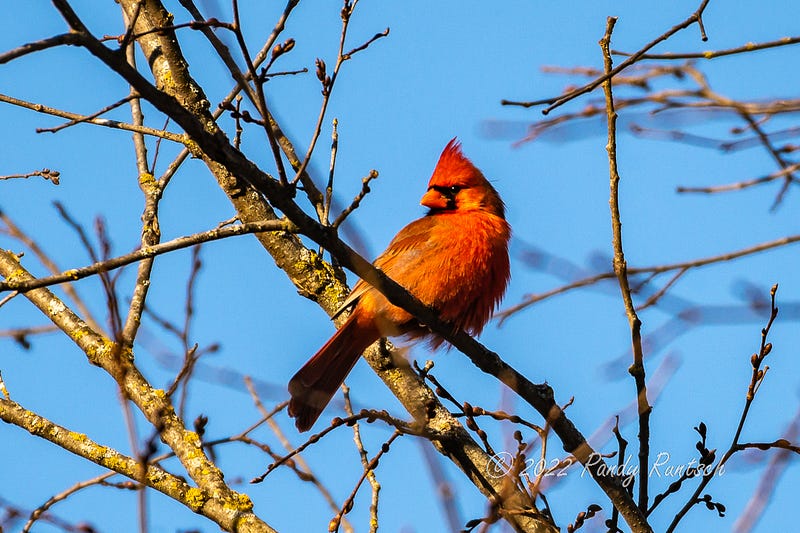
As the road wound and descended into the forest of the Whitewater Valley, several whitetail deer scampered across the road, staring at me while I stopped and took their pictures. After they leaped away, I continued to the state park. Seeing little there, I drove north to the wildlife management area. I hiked on a wide path between woods and a cornfield, where a dozen wild turkeys cackled away. Once they spotted me, they flew into the trees on the bluff side. As I continued my hike, northern cardinals perched nearby, and downy woodpeckers searched for food on oak tree trunks and limbs.
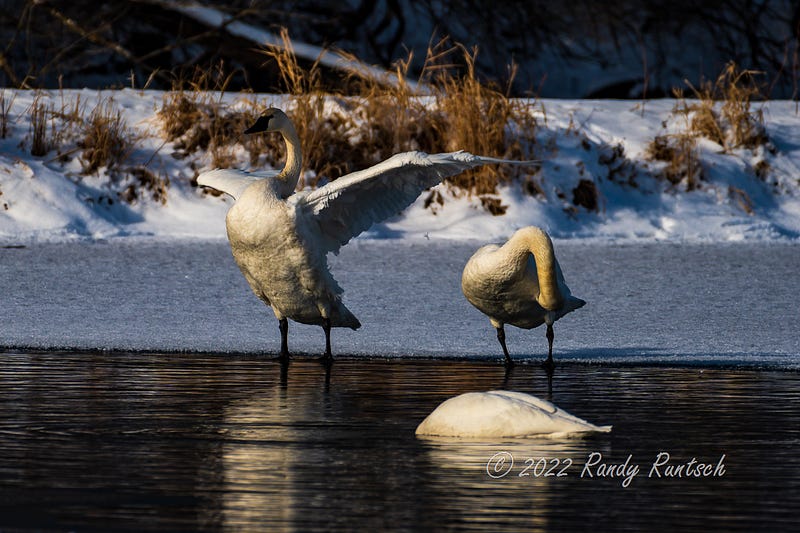
I continued through the valley and stopped to watch, photograph, and capture video of a dozen or so trumpeter swans who are residents year-round. The heaviest birds in North America, the swans moved with grace and seemed worried about nothing.
Mississippi River Lock and Dam Number 5
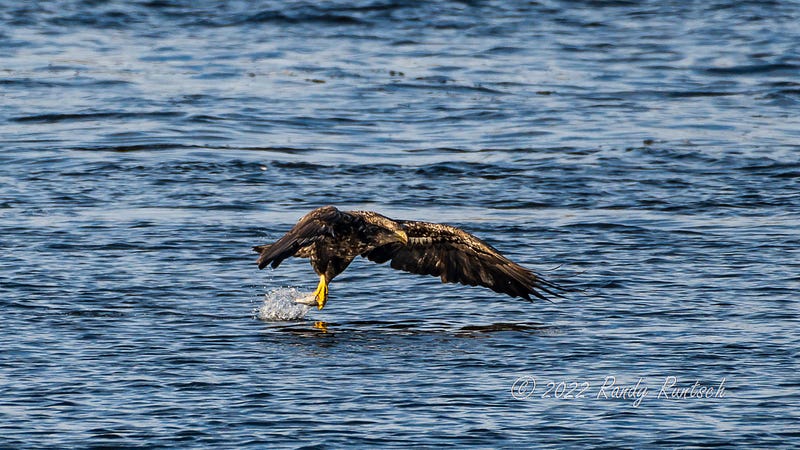
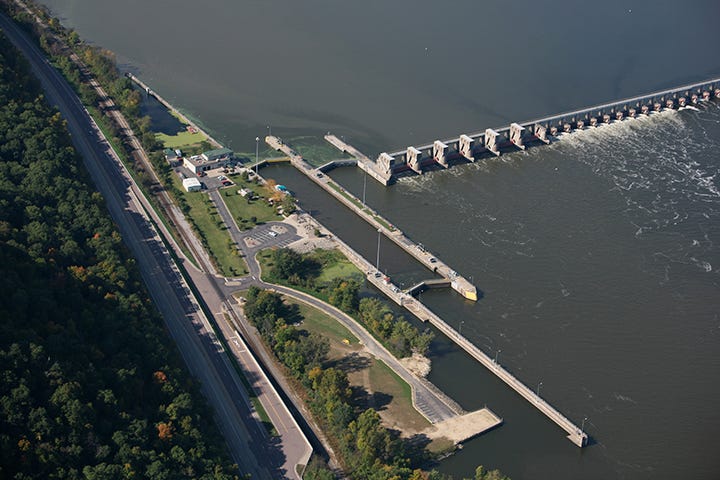
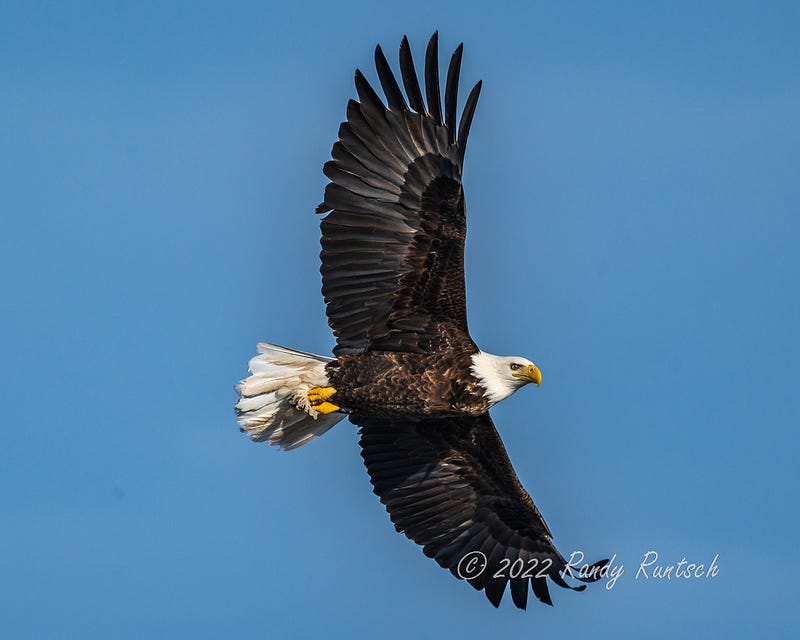
To tame the Mississippi River, making much of its length navigable by barges and other watercraft, the U.S. Army Corps of Engineers built dozens of locks along the river’s 2,340 miles (3,770 km) in the twentieth century. While much of the Upper Mississippi River is frozen all winter long, the churn of water below the dams keeps pools of water open all season long. The waters below Lock and Dam Number 5 are no exception. Here, perhaps one-hundred bald eagles amazed me as they fished in open water, stood on river ice, or perched in trees on the Wisconsin riverbank.
The corps has built viewing platforms at most locks, including this one, allowing visitors to watch lock operations while towboats pushing barges, and other watercraft, pass through on their way upstream or downstream. The lock measures 110 feet (34 m) wide by 600 feet (183 m) long. There were many opportunities to watch and photograph eagles, even with the lock’s structure between the eagles and me.
Two other bird photographers enjoyed the eagles’ show. I met Ron from central Iowa, about 200 miles south. He informed me that the National Eagle Center in nearby Wabasha estimated the local population of bald eagles at 500, up from 100 in the previous week. After giving him a few tips about where two see eagles, we headed upstream in our vehicles to seek more views of the raptors.
Weaver Dunes Natural and Scientific Area
My next stop was Weaver Dunes Natural and Scientific Area, where I enjoy hiking and canoeing from spring into fall. The grass-covered dunes are home to the endangered Blanding’s turtle. While they were hibernating for the winter, a couple of white-tailed deer bounded ahead of me on the hiking trail. Later, a red fox trotted across the road as I drove to my next stop.
Wabasha, Minnesota
Wabasha is a hotspot to watch bald eagles and golden eagles. The Mississippi River channel narrows as it passes by the city and remains primarily clear of ice all winter long, likely because of the current of the Chippewa River as it flows into the mighty Mississippi a few miles upstream. A dozen eagles fished at the south end of town, but most were out of range for good photography.
Mississippi River Backwaters
I left Wabasha and drove across the bridge to Wisconsin and the river’s backwaters on the way to Nelson, a small town that features Nelson Creamery. The creamery offers light lunches, a wine bar, cheeses, and ice cream cones. My wife and I often stop there for lunch or an ice cream cone on our trips to the river in the summer. The long line that sometimes extends out the door moves quickly.
Today, dozens of people were ice fishing on the backwaters. The weather was pleasant; many fished out in the open while others took cover in their ice fishing tents. It seems that tents have supplanted ice fishing shacks. The fishing area reminded me of the movie, Grumpy Old Men, which was set in Wabasha but filmed in Faribault, about 100 miles west.
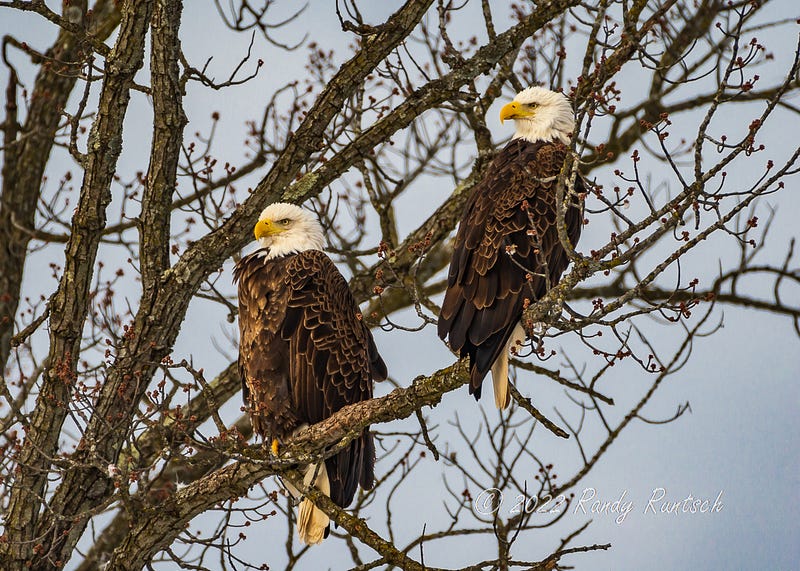
As I approached Nelson, I spotted two bald eagles perched together (as seen in the photo above). They allowed me to approach them on foot to get a good shot.
Reads Landing, Minnesota
Next, returned to Minnesota, and drove upstream to the tiny town of Reads Landing. It features a brewpub with tasty food and beer and a historic school building that serves as a county history museum. But best of all, visitors can watch eagles and swans from shore.
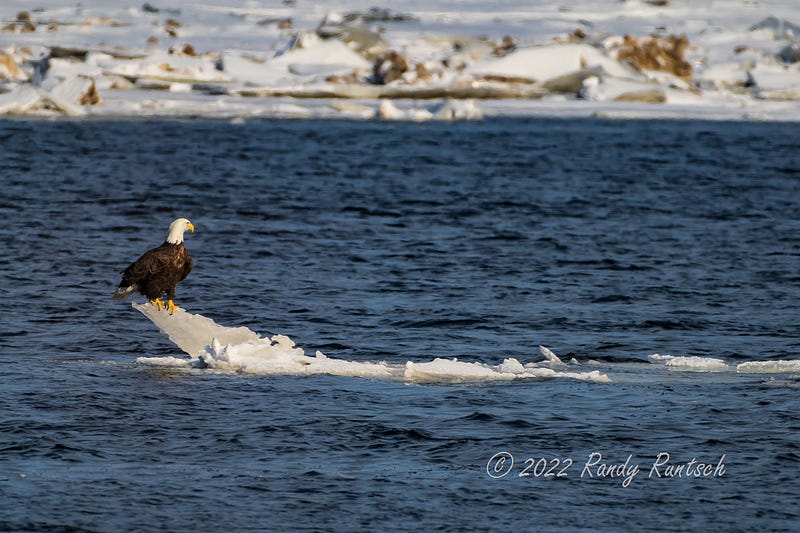
Dozens of eagles and swans thrilled me as they flew by. Eagles swooped down to the water, catching fish in their talons. Then, they carried the fish to shore or an ice flow to consume their prey.
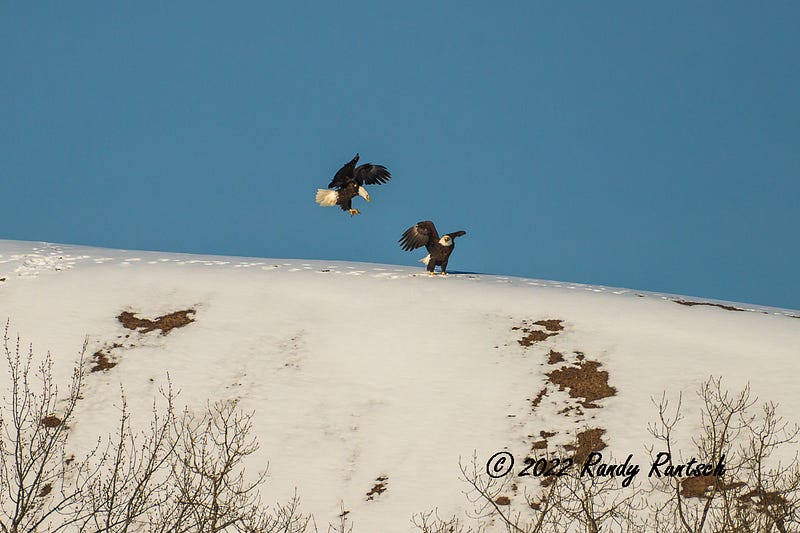
Bald eagles land on a sand dune across the river from Reads Landing. © 2022 Randy Runtsch.
Colvill Park in Red Wing, Minnesota
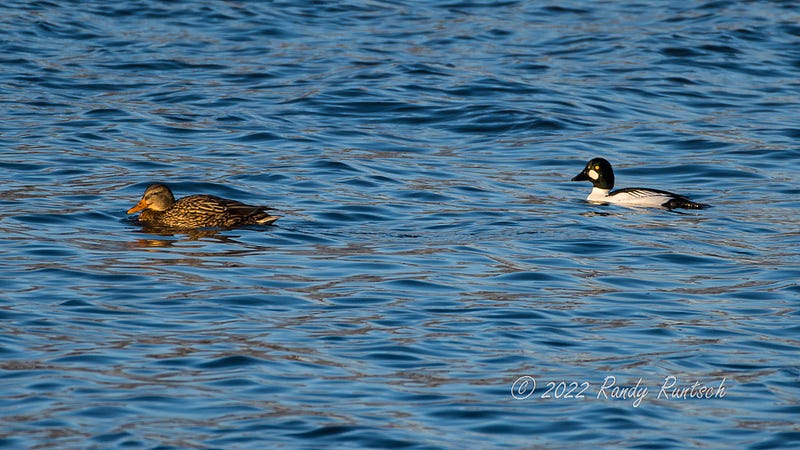
Colvill Park in Red Wing, Minnesota, features a waterpark, boat harbor, and picnic grounds. Set on the bank of the big river, eagles and ducks feed at the park all year, but especially in winter. I noticed that Ron from Iowa was shooting away with his mirrorless camera and long lens as I drove up. We agreed that it was one of the best days for watching and photographing eagles we had ever experienced. The eagles had put on a good show.
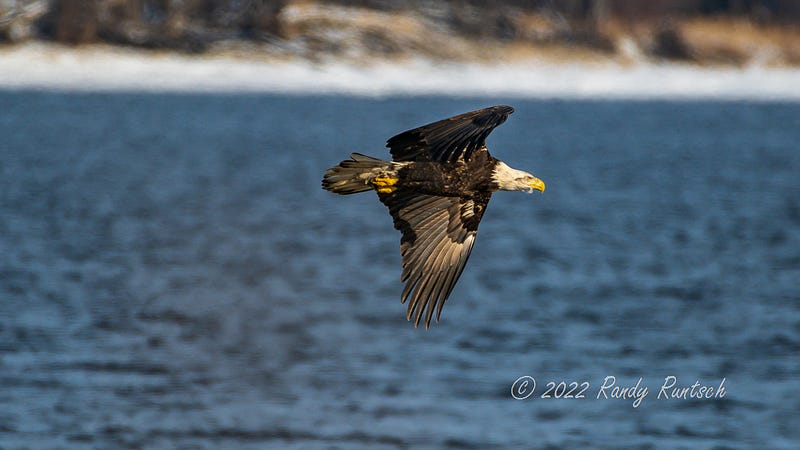
Ron said that he may return to the Upper Mississippi River in Minnesota next weekend with his wife and another couple to watch and photograph the eagles. If the eagles are busy fishing, they will not be disappointed. Maybe I’ll see him there.
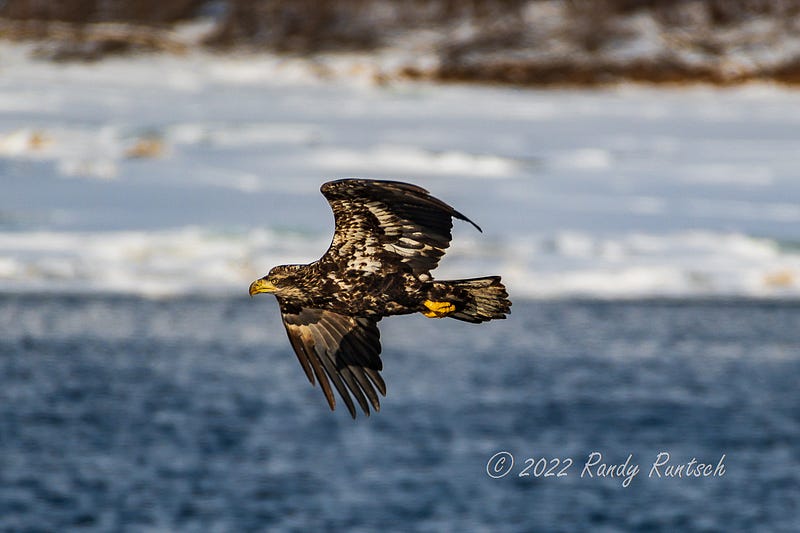
If you love to watch birds and wildlife as much as me, here are other writers who enjoy them, too:
- Alan Asnen — Tennessee, USA
- Anne Bonfert — Thailand (by way of Africa and Germany in 2021)
- Anthony Overs — Australia
- Christopher Lovelace @ChristopherLovelace — USA
- David Acaster — On the North Sea in the UK
- Dennett — Florida, USA
- Eira Braun-Labossiere 🌻— Alberta, Canada
- Erika Burkhalter — California, USA
- Gary Every— Arizona, USA
- Petrus van Eck — South Africa
- Sandra B — USA
Dear Reader,
I hope you enjoyed this story and the accompanying wildlife photos. If you would like access to all stories on this platform, consider a monthly subscription. Your membership supports writers like me.
All the best,
Randy


