
Dystopia? How Close Are We?
Where we stand right now on a scale of 1–10 and what we can do about it.
“I was not predicting the future, I was trying to prevent it.” -Ray Bradbury
If there is one overriding concern with the science-fiction of the 20th and early 21st centuries, it is the Dystopian future.
Novels like George Orwell’s 1984, Anthony Burgess’s A Clockwork Orange, Aldous Huxley’s Brave New World, Ray Bradbury’s Fahrenheit 451, Margaret Atwood’s The Handmaid’s Tale, and films like Hunger Games, Children of Men, V for Vendetta, Blade Runner, Terminator and on and on… these stories have prepared us as a culture in the same way faerie tales prepare a child to leave home for that first day of school or as the great myths of any culture prepare us all for the challenges of adulthood when there will be greater ‘monsters’ to fight and tragedies to endure.
But, prepared us for what, exactly?
I think they’ve been preparing us for right now.
Welcome to the inflection point. We are living, right now, in the time when the dystopian visions and warning of our artists and writers will either come true or we prove them false.
The Future is now.
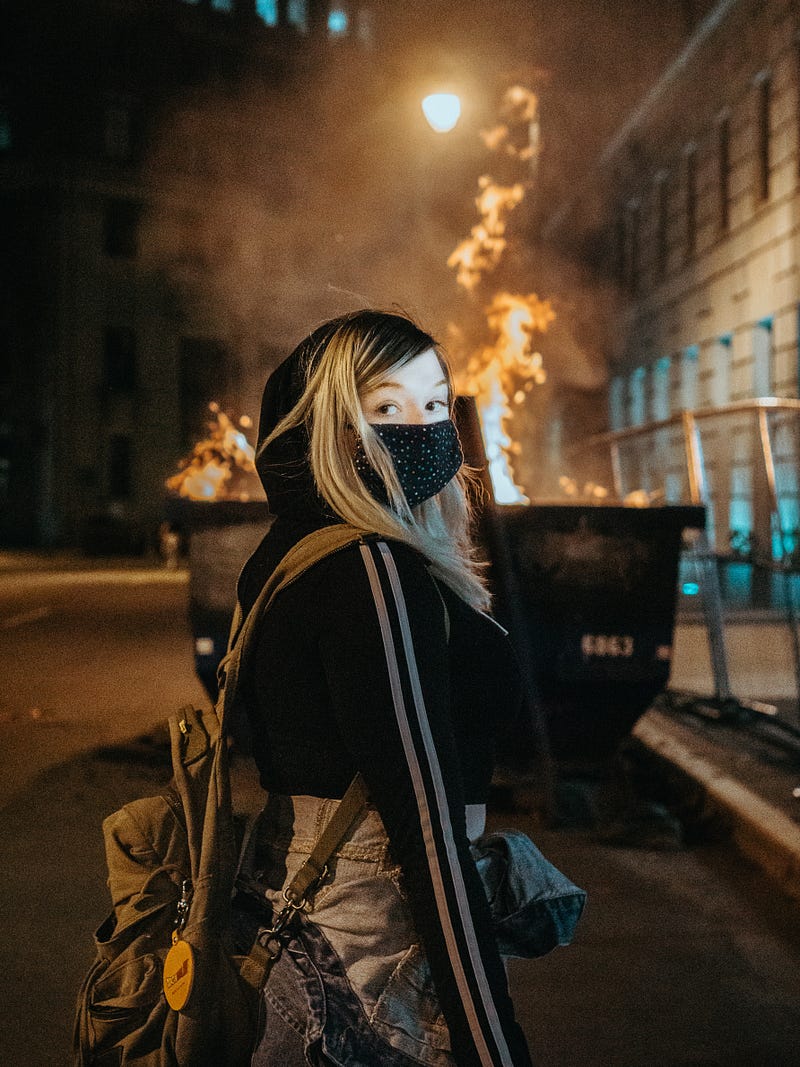
“Individual science fiction stories may seem as trivial as ever to the blinder critics and philosophers of today, but the core of science fiction — its essence — has become crucial to our salvation, if we are to be saved at all.”― Isaac Asimov
As dark visions of the future are slamming up against reality, the great dystopian tales of our lifetimes have prepared us for this moment when we will choose who and what we are and how we want to live. For better or for worse.

I’ve broken down an academic definition of “Dystopia” found at study.com into 6 primary qualities. Each quality will be graded against the current state of the world on a scale of 1–10, with “1” being “Star Trek” (old school ToS or TNG), where there is no need for money, and everybody is encouraged to develop into their best possible selves. And with “10” as a true and thorough dystopia, like… for instance “Man in the High Castle,” where the Nazis won World War 2 and everything is accordingly awful.
Let’s see how the definition of “Dystopia” matches up with where we are in the timeline right now:
1. A society where you live under the oppression of some organization controlled by a tiny group of privileged elites. It may be a despotic government, a religious organization, or an all-powerful global corporation.
Current Dystopia Level: 7
We are definitely controlled to a great extent by a small group of privileged elites, but it is unlikely that there is a single organization truly in control.
Terence McKenna once made the observation that (paraphrasing) the scariest truth about the elites of the world is not that they are secretly in control of everything, but rather that no one is in control. And no one knows that better than them. That’s what keeps them up at night. They are terrified that it could all come crashing down at any minute.
The power to dominate is not yet centralized. Some of that “tiny group” really are religious fanatics, some really are power-hungry, and some really just want to be rich. And we can add a fourth category, some were just born into incredibly wealthy families.
We don’t need a “grand conspiracy” to explain the state of the world when many smaller, far more vulnerable conspiracies will suffice. Each of those power centers is a distracting head on what is, in reality, one big dragon that “no one is in control” of. Including them.
What this means for the Future: The fight for freedom and self-determination has not been won or lost. Yet. But “Dystopia” is winning.
2. Every aspect of your life is controlled. You are told what to think and how to act through propaganda and brainwashing.
Current Dystopia Level: 7
Again, we can see this everywhere. Power coalesces into the hands of the few in ominous ways. The influence of money over our political leaders is not a new thing. But the number of hands grabbing (or buying) the levers of power is shrinking all the time. That means more control for the few and less for the many.
But the influence of the few is still not complete.
What this means for the Future: The fight for control of society has not been won or lost. Yet. But Dystopia is winning.
3. Individual thoughts and actions in contradiction to what is permitted are not tolerated and are severely punished if discovered by the authorities.
Current Dystopia Level: 5
This one happens, but again, it is not everywhere. And when we see evidence of “authorities” trying to grab this degree of control, it exposes their weakness.
Three years ago, Colin Kaepernick, a wealthy professional athlete, contradicted “what was permitted” by kneeling for the national anthem as a peaceful protest hoping to draw attention to police brutality and specifically the egregiously disproportional brutality against black people. His protest was “not tolerated” and “severely punished” with the loss of his career and multi-million dollar income as an NFL quarterback. This served as a message to everyone - like a crucified rebel slave of Rome along the Apian Way 2000 years ago, or a “lynching” anywhere in the United States - stepping out of line to seek justice can get you killed if you are poor, or it can cost you millions if you are rich.
Yet, as we’ve seen in the time since the murder of George Floyd, we are still very capable of adding millions of voices to this fight.
Earlier this week, the commissioner of the NFL finally bowed to public sentiment and stated that their stance for the last three years has been wrong. He went on to encourage NFL players to do whatever they wished to peacefully draw attention to the issue. https://www.washingtonpost.com/sports/2020/06/06/roger-goodell-black-lives-matter/
This is not perfect but it is progress. This is a moment in time where we can move forward or backslide depending on what happens next.
What this means for the Future: The fight for justice has not been won or lost. Yet. It could still go either way.
4. You live in constant fear of stepping ‘out of line,’ where every co-worker, neighbor, or even a beloved family member may be an informer.
Current Dystopia Level: 2
Not yet in the United States.
This problem arises when control is complete, and it happens on the left and the right. Populist movements on the left, like The French Revolution of 1789 gave way to the Reign of Terror in the 1790s. In the early 20th century, the rise of communism in Russia and China quickly became totalitarian nightmares, as did the rise of fascism on the right in Germany, Italy, and Japan during World War 2. Not to mention the monarchic societies that brought about the need for the French, Russian, and Chinese revolutions in the first place.
We don’t have anything approaching that kind of fear here, because no one, yet, has total control of anything.
The transgressions against the corporate state by people like Edward Snowden and Chelsea Manning were very high profile. The examples of power coming down on whistleblowers are egregious, but they are not the same as being afraid to speak your mind at the dinner table or the barbershop. You can still try to explain to your uncle what Black Lives Matter” actually means, and he can still tell you how much he hates Colin Kaepernick, but neither one of those things is necessarily a heroic act that might land you or your uncle in a gulag. You’re both free to argue it out.
Meanwhile, we have seen incredibly inspirational examples of free speech and peaceful protest since 2016, in the Women’s March, the March For Our Lives, and the ongoing and consciousness shifting Black Lives Matter demonstrations currently sweeping the country and the planet.
What this means for the Future: The fight for freedom of expression has not been won or lost. Yet. But we are winning.
5. Your life is one burdened by extreme poverty, where you are given barely enough resources to survive. But you must be ever ready to give your all, including your very life, to the powers that be.
Current Dystopia Level: 5
Many of us are there. Many of us are not. The go-to power-move for the few who control almost everything is to play these two groups — those who have nothing and those who have enough — against each other. This has always happened in America, for example. Convince those who have enough that those who have nothing are their enemy, and no one notices the few who have almost everything. It’s nothing new and can be defeated with awareness, empathy, and cooperation between these two groups.
What this means for the Future: The battle for the pursuit of happiness has not been won or lost. Yet. It could still go either way.
6. And perhaps worst of all, imagine that there is absolutely no hope of change.
Current Dystopia Level: 2
No. Despair of the many is the final victory for the few who would rule a dystopia. We are not there yet. Not even close.
What this means for the Future: The battle for our hearts and souls has not been won or lost. In fact, we are fighting hardest against this point right now. We are winning and victory here will mean victory on all fronts.
What the Future Holds:
Imagine a great cocoon and all of us are sleeping inside.
The pattern set before a worm in a cocoon is to sit perfectly still and do nothing. That’s what it does and all it knows.
But there comes a time in the life of the worm inside the cocoon where it sees a chance for a different path. To fall back asleep at that moment is to die. To take the new path, and live, it must kick at the inside wall of the cocoon until it breaks.
Breaking free of a cocoon is a leap of faith born of desperation without even knowing what might happen.
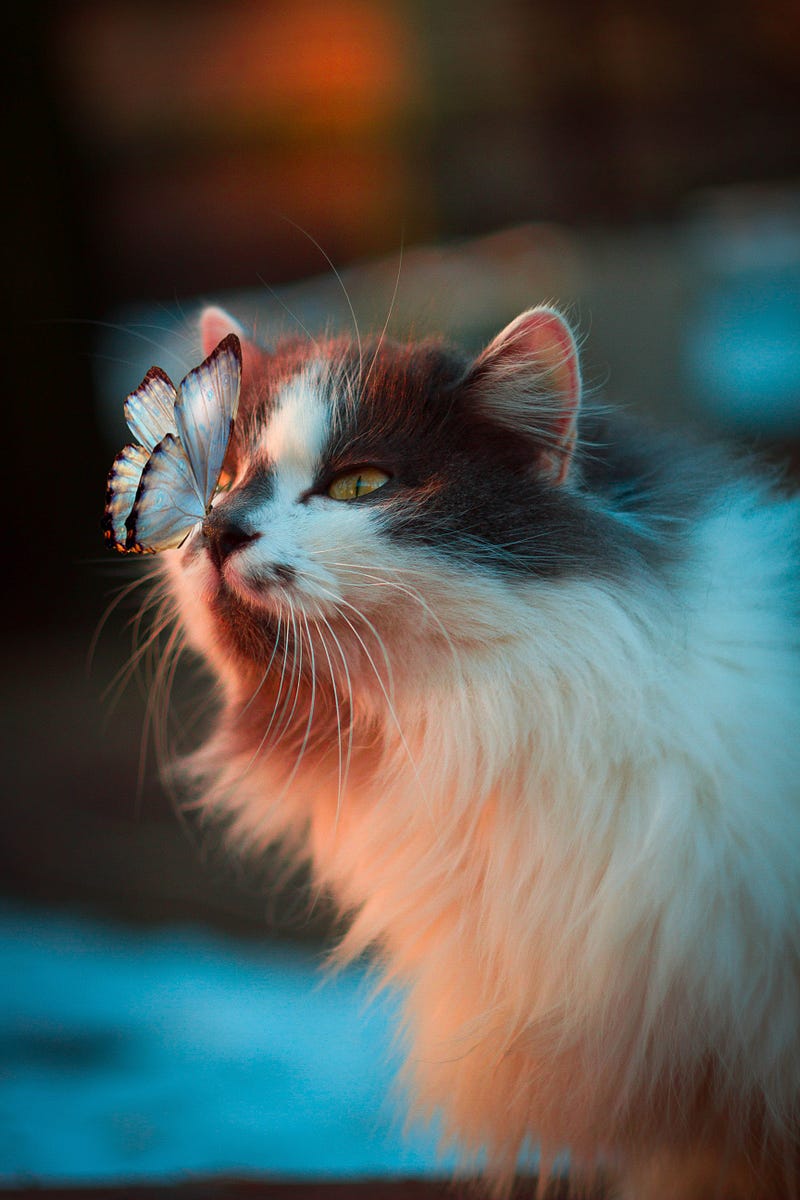
We are all in a cocoon together. Some near the wall are kicking frantically at it right now. Others, deeper inside the mass, don't see what’s at stake. To them, the ones that are kicking seem like a dangerous nuisance.
What happens next? A dead worm drying in an aging cocoon? Or a butterfly?
A better society? Or a worse society?
A living, evolving society? Or a dead one?
If we are able to break free at all, what comes next will be a result of how prepared we are to build a better world.
But the time to kick out of the shell is now.
We can’t afford to lose the arguments we are having right now. We are winning them with peaceful action and righteous protest. But all of that can change. We can still lose arguments when we are right. We can still turn to violence when we want peace. We can still choose weakness when we are strong and despair when we are at the edge of triumph.
The Good News: Take all the above figures and average them out and guess what? We score 4.66 on the Dystopian scale. That means that, despite the way it looks much of the time, we are winning. Yeah… it’s not exactly official or remotely scientific, and it’s by just 0.44 of a percentage point, but still, we are winning.
Our cultural myths of a dystopian future, our great stories of what could be, have prepared us for a choice, a particular moment when we must use our hearts and minds to follow the pattern set out before us or to transcend it.
“Faerie tales are more than true — not because they tell us dragons exist but because they tell us dragons can be beaten.” — Neil Gaiman
That time is now. Will we step up, wake up, and win a better future? Or will we slip into an uneasy sleep in a nightmare world of our own creation?


