avatarBrynn Mahnke

Free AI web copilot to create summaries, insights and extended knowledge, download it at here

1284

Abstract

084">I think it’s because I don’t feel that I’ve reached “Guru” status, so I elect to say nothing at all. “I don’t know enough yet,” is almost always the response I give him.</p><figure id="c471"><img src="https://cdn-images-1.readmedium.com/v2/resize:fit:800/1*B71s38cynIduHJ3tQANnfA.png"><figcaption>Source: <a href="https://upload.wikimedia.org/wikipedia/commons/4/46/Dunning%E2%80%93Kruger_Effect_01.svg">https://upload.wikimedia.org/wikipedia/commons/4/46/Dunning%E2%80%93Kruger_Effect_01.svg</a></figcaption></figure><p id="d105" type="7">“Even a fool, when he keeps silent, is considered wise; When he closes his lips, he is considered prudent.” Proverbs 17:28</p><p id="c833">But are there really any gurus? Subject matter experts frequently disagree; even if you know everything there is to know, someone with just as much knowledge is bound to approach an issue from an opposing viewpoint. Two people with the same amount of expertise can reach a different conclusion altogether — does that make either of them wrong?</p><p id="07c0">I’ll let one of my Philosopher friends handle that question, but it got me thinking. At what point can you offer advice or information on a subject and know for sure that you aren’t on Mt. Stupid?</p><p id="c33a">I think it comes down to a

Options

few key ideas which are always true, no matter where you are in your knowledge journey.</p><h2 id="2cc3">Why are you offering your opinion or advice?</h2><p id="e589">Is it so you can sound smart? Is it so you can try to wow everyone in the room with your knowledge? Or do your words come from a genuine desire to share interesting information or help people improve their lives?</p><h2 id="0794">Are you speaking with humility?</h2><p id="abdc">Are you willing to accept the fact that you might be wrong? Are you ready to dialogue with others who might have opposing viewpoints? If your knowledge and advice aren’t taken, can you move on from that without giving in to anger or bitterness?</p><h2 id="f3ee">Are you speaking with empathy?</h2><p id="aa95">It’s not just what you say, but how you say it. Can you put yourself in the other person’s shoes and see how they might come to a different answer than you did? Can you speak to them with kindness even if you disagree?</p><p id="fbec">These three points are important to keep in mind. Whether you’re someone who shares their opinion readily or someone who is more guarded, being aware of your intentions and your relationship with humility and empathy are essential before voicing your thoughts and opinions.</p></article></body>

Life Lessons

The Dunning-Kruger Effect — Do You Have to Be a Guru?

How to know when you’re ready to give your advice or opinion

Photo by Paul Gilmore on Unsplash

Yesterday I wrote about my experience with the Dunning-Kruger Effect. I’m happy to report that I’ve learned to keep my mouth shut before offering opinions or advice on subject matters that I haven’t studied for very long.

However, I’ve found myself vacillating in the opposite direction — even when I’m reasonably knowledgeable about the subject matter, I’m nervous to say anything for fear that I’ll be wrong or called out by someone else in the group who has more knowledge than I do.

More than once, my husband has pointedly asked me why I don’t speak up when I have relevant knowledge to share.

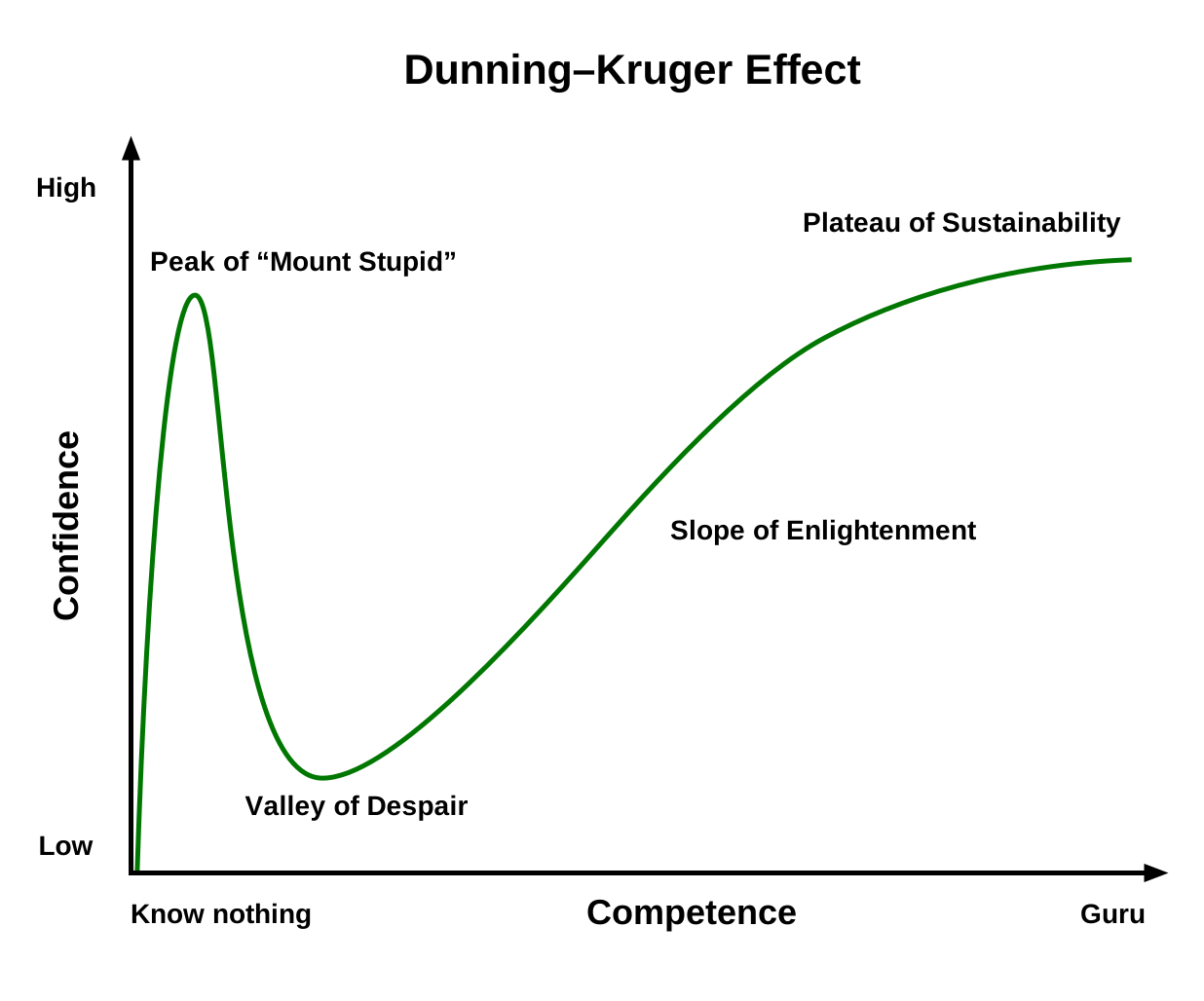
I think it’s because I don’t feel that I’ve reached “Guru” status, so I elect to say nothing at all. “I don’t know enough yet,” is almost always the response I give him.
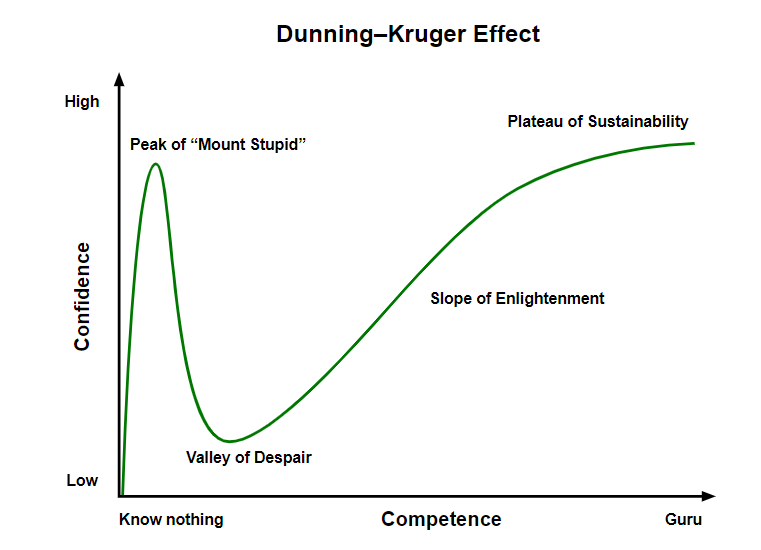
Source: https://upload.wikimedia.org/wikipedia/commons/4/46/Dunning%E2%80%93Kruger_Effect_01.svg

“Even a fool, when he keeps silent, is considered wise; When he closes his lips, he is considered prudent.” Proverbs 17:28

But are there really any gurus? Subject matter experts frequently disagree; even if you know everything there is to know, someone with just as much knowledge is bound to approach an issue from an opposing viewpoint. Two people with the same amount of expertise can reach a different conclusion altogether — does that make either of them wrong?

I’ll let one of my Philosopher friends handle that question, but it got me thinking. At what point can you offer advice or information on a subject and know for sure that you aren’t on Mt. Stupid?

I think it comes down to a few key ideas which are always true, no matter where you are in your knowledge journey.

Why are you offering your opinion or advice?

Is it so you can sound smart? Is it so you can try to wow everyone in the room with your knowledge? Or do your words come from a genuine desire to share interesting information or help people improve their lives?

Are you speaking with humility?

Are you willing to accept the fact that you might be wrong? Are you ready to dialogue with others who might have opposing viewpoints? If your knowledge and advice aren’t taken, can you move on from that without giving in to anger or bitterness?

Are you speaking with empathy?

It’s not just what you say, but how you say it. Can you put yourself in the other person’s shoes and see how they might come to a different answer than you did? Can you speak to them with kindness even if you disagree?

These three points are important to keep in mind. Whether you’re someone who shares their opinion readily or someone who is more guarded, being aware of your intentions and your relationship with humility and empathy are essential before voicing your thoughts and opinions.

Life Lessons
Relationships
Life
Self Improvement
Productivity
Recommended from ReadMedium